What aspects are mainly reflected in the value of a small-leaf red sandalwood bonsai?
Small-leaf red sandalwood is the raw material for redwood furniture and is a scarce resource. Many people invest in growing small-leaf red sandalwood. Once mature, small-leaf red sandalwood has a notable reputation and a very high market valuation. As a flower enthusiast, if you are only growing small-leaf red sandalwood for ornamental purposes, it is also a fully deserved first choice. Small-leaf red sandalwood is one of many tree species, with dense, deep green foliage that gives a very strong sense of spring. It gives people a suddenly brightened and open state of mind.
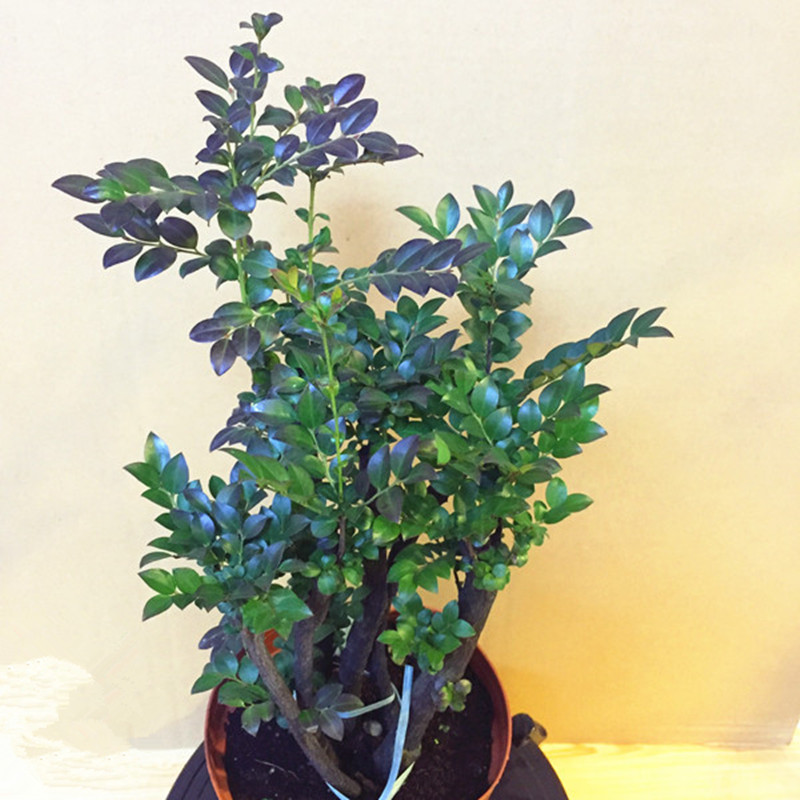
Now have you learned how to deal with a small-leaf red sandalwood bonsai that is dropping leaves? If your small-leaf red sandalwood shows leaf drop, please handle it promptly. We cherish our plants, and plants will also repay you with their beauty.
The aristocrats among bonsai: cliff cypress bonsai, boxwood bonsai, small-leaf red sandalwood bonsai
Flower and Bonsai Network introduction: Today, the Flower and Bonsai Network editor shares with you an article about the aristocrats among bonsai: cliff cypress bonsai, boxwood bonsai, small-leaf red sandalwood bonsai. Let's take a look.
Cliff cypress bonsai
Speakingof collecting, people usually think of traditional collectibles such as calligraphy and painting, antiques, and jade, not realizing that plants can also be collected. In recent years, with the popularity of wooden cultural-play prayer beads, some cultural-play enthusiasts have taken a different approach and included the original plants of prayer beads, in bonsai form, in their collecting scope. So-called "cultural-play bonsai" are plants such as cliff cypress, boxwood, small-leaf red sandalwood, and Chinese yew, which are used to make prayer beads. Most of these plants are quite expensive. Collection requires caution, because unlike wooden prayer beads, they need a suitable growing environment and professional daily care; otherwise they easily die, bringing collectors relatively large economic losses.
Cliff cypress bonsai
In fact, bonsai differs from other collectibles in that it emphasizes artistry more. From the perspective of a bonsai enthusiast, tree species should not be divided by size or price; as long as you like it, that is enough. Do not blindly follow trends, because after all, the pleasure bonsai brings to collectors is what matters most. Of course, if your financial conditions allow, you might as well play with these so-called "cultural-play bonsai," because they are indeed very beautiful. Below, follow the editor to appreciate them together.
1
Cliff cypress bonsai
Cliff cypress is a completely natural plant that cannot be artificially bred or planted. It is scarce and non-renewable. In particular, cliff cypress growing on cliffs and precipices is relatively even scarcer. Light coffee-colored cliff cypress, commonly known as "aged material," has endured hundreds to thousands of years of wind and sun. Its scent is steady, and its fragrance smells very comfortable. Market prices are mostly above 10,000 yuan. Cliff cypress bonsai is even harder to obtain than root carving. First, it is difficult to dig down from cliffs; digging it out from cracks in stone means it has very few fibrous roots, and transplanting it alive is even harder. There is a saying: "Keep one alive, earn a cartload."
2
Boxwood bonsai
Like cliff cypress, boxwood bonsai can also be called an "aristocrat." A boxwood with a diameter of 10 cm requires about 150 years of growth, which determines its "aristocratic" status. Among wild boxwood stumps there is no lack of fine specimens, especially pearl boxwood. Pearl boxwood has lived for generations in high mountain ridges or stone cracks. Through the harsh tempering of wind, frost, ice, and snow, it naturally grows into a tree form with gnarled branches, curved trunks, and strange, varied shapes.
3
Small-leaf red sandalwood bonsai
Small-leaf sandalwood is a fine variety among sandalwoods and is usually also simply called "sandalwood." It has relatively high density and small pores. It is mostly produced in tropical and subtropical primeval forests, with Indian sandalwood being the best. It is mainly found in Mysore State, while the remaining various sandalwood types are classified under the rosewood category. It is often said that among ten sandalwood trees, nine are hollow. The largest sandalwood trunk is only about 20 cm in diameter, so its preciousness can be imagined.
4
Chinese yew bonsai
Chinese yew is an ancient tree species with a hundred-year history and has a long history of cultivation in our country. Because of its graceful plant shape and deep green foliage, it is also very effective when made into bonsai and is deeply loved by people. Chinese yew has extremely strong medicinal value and can be used to extract paclitaxel. It is an internationally recognized anti-cancer agent and is a national first-class protected tree species. The Chinese yew gets its name because its red berries look like red beans.
Old bonsai stump black-bone fragrant, tree-stump bonsai sandalwood black-bone tea
Flower and Bonsai Network introduction: Today, the Flower and Bonsai Network editor shares with you an article about old bonsai stump black-bone fragrant and tree-stump bonsai sandalwood black-bone tea. Let's take a look.
Tree-stump bonsai sandalwood black-bone tea
Black-bone fragrant is a variety of Formosan persimmon, also known as black-bone tea. Some people unreasonably call it small-leaf red sandalwood. Bonsai made from black-bone tea is high-end, grand, and classy, and also has very good collection value.
Sandalwood bonsai tree stump black-bone fragrant with pot
Black-bone tea grows very slowly. Mature large tree-style works often appear in bonsai magazines in Taiwan, China. Although its name is not as impressive as small-leaf red sandalwood, as a bonsai it is truly better than small-leaf red sandalwood.
Sapling potted sandalwood black-bone tea
Black-bone fragrant is mainly a foliage-oriented bonsai tree species. Its leaves are relatively small and evergreen throughout the four seasons. Its bark and roots appear black, and its wood is also very hard.
Sandalwood tree-stump potted black-bone tea
Black-bone tea is also one of the slowest-growing tree species in Lingnan bonsai, so when selecting stumps, special attention should be paid to choosing stumps that have grafted supports or, preferably, young branches.
Bonsai tree stump ebony black-bone tea
Black-bone tea has very strong sprouting ability and roots quickly. After cutting the stump, it can sprout within a few days, and by 60 days new roots can be seen, so its survival rate is very high.
Sandalwood tree-stump bonsai black-bone fragrant
After the root system of black-bone tea grows, it likes fertilizer very much. It is only necessary to apply decomposed farmyard manure on the pot surface, so that each time it is watered, its nutrients are slowly dissolved, which is even more beneficial for absorption by the tree stump.
Office tree-stump potted black-bone fragrant ebony
Black-bone tea can sprout new shoots once every quarter, and pruning can be done in all four seasons of the year. Each pruning must be carried out after the new shoots have matured, with spring and autumn being the best.
Sandalwood tree-stump potted black-bone tea
When watering a black-bone tea bonsai, you must follow the principle of heavy drying and heavy wetting, do not water when not dry, and water thoroughly when you do water. After Minor Snow, stop fertilizing, and do not let slow growth occur because of a shortage of fertilizer and water.