What points should be noted when growing dwarf gardenia?
1. Be careful to prevent the leaves from turning yellow.
During the growth of dwarf gardenia, light is a very important factor. In spring and autumn, when the light is suitable, it can be placed outdoors to receive direct sunlight. In summer, when the temperature is high and the sunlight is strong, a shade shelter can be set up to block some of the sunlight. And in winter, when the outdoor temperature is low, potted dwarf gardenia must be moved indoors to a sunny spot for care, and the indoor temperature must be kept above 15°C.
2. Be careful of pests and diseases.
The disease that dwarf gardenia is most prone to is leaf spot, which usually occurs easily from winter to spring, so pay attention to observation at ordinary times. Once diseased leaves are found, prune them promptly to prevent the disease from affecting other leaves.
The main pests of dwarf gardenia include aphids, flea beetles and hawkmoth larvae, etc. Aphids and flea beetles can be killed by spraying with insecticides such as trichlorfon, while hawkmoth larvae can be controlled by spraying with 666 powder or caught by hand.
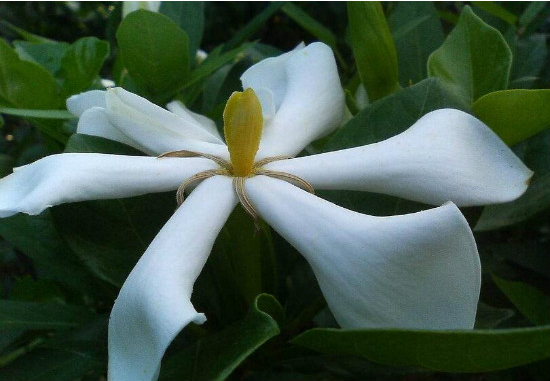
Dwarf gardenia in northern regions is usually introduced from the south, and is generally transplanted with soil. Friends in northern regions can store some rainwater during the rainy season to water the potted plants, which can prevent the potting soil from becoming alkaline and allow dwarf gardenia to be grown better. Thank you all for reading.
How to grow dwarf gardenia
1. Soil.
Dwarf gardenia is usually planted in pots for ornamental purposes, so when growing dwarf gardenia, the potting soil is very important. Dwarf gardenia is suited to loose, well-drained, slightly acidic soil, so when growing it, you can choose leaf mold or fertile peat soil for planting.
2. Light.
Gardenia is a light-loving, sun-facing plant, and dwarf gardenia is no exception. When growing dwarf gardenia, place the potted plant in a sunny, well-ventilated spot, which can ensure that the dwarf gardenia receives sufficient light, making the leaves greener and the flowers bloom better.
3. Watering.
Dwarf gardenia likes a warm and humid environment. During the growth of dwarf gardenia, pay attention to watering at the right time. In the hot summer season, you can also spray water mist on the leaves, which helps the leaves absorb water and increases their luster. In winter, reduce the amount of watering somewhat to prevent root rot. At the same time, dwarf gardenia is generally watered during the daytime, and watering at night should be avoided.
4. Fertilizer.
During the growth of dwarf gardenia, the demand for fertilizer is relatively large, especially during the vigorous growth period. Apply soybean cake, sesame paste residue or peanut bran once every half a month, which can help dwarf gardenia produce more flowers and bloom abundantly.
Now that we have finished discussing how to grow dwarf gardenia, let us next talk about the points to note when growing dwarf gardenia.
How to grow dwarf gardenia and points to note
Dwarf gardenia is a flower we commonly see. Its flowers are pure white and beautiful, and it gives off a rich, delicate fragrance, so it is loved by many friends. The flower language of dwarf gardenia is "eternal love, a lifetime of waiting and joy," which complements its beautiful appearance. Dwarf gardenia is not only suitable as a courtyard flower, but also suitable for growing on indoor balconies. When it blooms, its fragrance can be smelled from far away. Moreover, growing it is not particularly complicated, and it can adapt to harsh environments. As long as sufficient light and water are ensured, it can grow and bloom quickly.
How to grow dwarf gardenia
Sufficient water
Gardenia likes a warm, humid and sunny environment, so its demand for water and air humidity is also very important. During the growth period of gardenia, pay attention to appropriately increasing the amount of watering, and also pay attention to spraying some water on the leaves of gardenia, which can effectively increase air humidity. At the same time, also note that watering in winter should not be excessive, to prevent root rot from occurring;
Sufficient light duration
During the growth period of gardenia, also pay attention to the appropriate demand for light. Gardenia is a light-loving plant, so it is recommended to pay more attention to increasing light duration during spring and autumn. In summer and winter, it is recommended to place it indoors in a spot with light for care, to avoid temperatures that are too high or too low during the growth period;
Appropriate fertilization
Supplement the nutrients needed for growth. Gardenia's demand for nutrients is also very high. In order to meet gardenia's demand for fertilizer during the growth period, it is recommended to apply fertilizers such as soybean cake, sesame paste residue and peanut bran once every half a month during the vigorous growth period of gardenia. This is also beneficial for producing more and more abundant flowers;
Pay attention to pruning
During the growth period, gardenia tends to have overlapping branches and poor ventilation. Therefore, during this period, carry out an appropriate amount of branch pruning, which can also effectively promote growth. Cut off other branches sprouting from the root suckers.
Soil requirements
Gardenia likes to grow in a slightly acidic soil environment. Therefore, when choosing soil for gardenia, pay attention to choosing slightly acidic soil for growing it, and also note that the soil pH value should preferably be controlled between 4.0-6.5. Therefore, the choice of soil is also very important for growing needs;
Suitable growth temperature requirements
Based on gardenia's growth temperature requirements, the best growth temperature is 16°C-18°C. However, note that temperatures that are too high or too low are both unfavorable to gardenia's growth needs. Therefore, in summer and winter, it is recommended to choose a well-ventilated indoor space for care, so growers should also pay attention to this.
Points to note when growing dwarf gardenia
(1) Gardenia likes fertilizer, but fears concentrated fertilizer. Generally, before flower buds appear, apply cake fertilizer water rich in phosphorus and potassium twice as a top dressing. After flower buds appear, stop fertilizing. If too much fertilizer is applied, it can easily burn the roots and cause bud drop.
(2) Gardenia likes semi-shade and fears direct strong light, requiring a shade density of about 50%. If exposed to the sun, the leaves will turn yellow and white until they fall off, so in summer it must be placed in a shaded spot or a place with scattered light for care. Let it receive light in the morning and evening to avoid yellowing of the leaves.
The flowers of dwarf gardenia are relatively dense. If grown properly, the flowering period is relatively long, and the flowers will also be numerous and large. Gardenia likes a warm environment, so air humidity and temperature must be ensured. It is best to place it in a spot with sufficient sunlight, but avoid exposure to strong sun. In summer, it is best to move it to a cool place. The branches of dwarf gardenia grow relatively quickly, so reasonable pruning can also promote flower density. Master the knowledge above, and you will certainly be able to grow dwarf gardenia full of delicate fragrance.