How to grow String of Nickels? Growing methods and precautions
1. Choosing potting soil and containers
String of Nickels is basically a plant that can grow in any soil, but to make it grow more luxuriantly, you should still use fertile, loose potting soil, such as succulent potting soil bought at a flower market or general-purpose nutrient soil for plants; after buying it, add peat fertilizer as a base fertilizer. This trailing green plant must be paired with a hanging planter to make it more aesthetically pleasing, and the size of the container depends on the plant.
2. Light and temperature control
String of Nickels likes an environment with plenty of light. Under sufficient light, the leaves will be more glossy green, and it will also produce white flowers. If there is too little light, the plant will become leggy, the leaves will be dull and lusterless, and it will lose its ornamental value. It is best to provide more than 6 hours of light per day; the optimal growing temperature for String of Nickels is 18-30 degrees, and the winter temperature must not be lower than 5 degrees.
3. Water and fertilizer supply
String of Nickels has strong drought tolerance and does not like an overly moist growing environment, but it also cannot remain in a drought state for a long time. If the potting soil becomes dry and soft, it needs watering, or if the leaves appear shriveled, it also needs watering; String of Nickels also has a low demand for fertilizer, and a thin liquid fertilizer can be applied once a month. Remember that the concentration must not be too high, otherwise fertilizer burn will occur.
4. Pruning and shaping
String of Nickels grows extremely fast. If it is not pruned in time, the plant shape will become messy. You can trim it according to your own preferences. If you like a trailing look, promptly prune the branches growing upward and let them naturally trail downward. If you like a climbing look, you can set up a trellis to let the vines climb upward, but be sure to promptly prune diseased and old branches.
The above has introduced the question of how to grow String of Nickels. In addition to the above, if we want to grow a pot of String of Nickels well, we also need to understand what to pay attention to during the growing process.
String of Nickels Dischidia nummularia String of Nickels illustrated guide: how to grow String of Nickels / how to propagate String of Nickels
String of Nickels profileString of Nickels Dischidia nummularia
Growing methods and precautions for String of Nickels Introduction to String of Nickels
String of Nickels, also known as Button Vine, has silver-green leaves that are thick and succulent, opposite, and can be used as an ornamental plant for viewing.
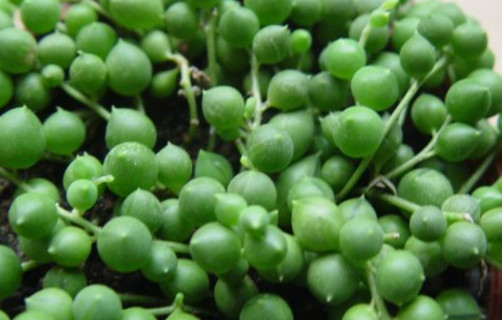
String of Nickels is native to Australia and is a perennial herbaceous plant belonging to the genus Dischidia in the family Apocynaceae. The leaves are bright green with a hint of silver-gray, thick and succulent, and the plant has trailing stems, capable of climbing or trailing growth, with yellow or white flowers in spring. The leaves are broadly ovate, about 0.7-1 cm wide, opposite, broadly elliptic or broadly ovate, with a abruptly pointed tip. Each leaf is almost the same size and shape, resembling a "button," very small and cute.
Morphological characteristics of String of Nickels
String of Nickels is native to Australia and is a perennial herbaceous plant belonging to the genus Dischidia in the family Apocynaceae. The leaves of String of Nickels are bright green with a hint of silver-gray, thick and succulent, and the plant has trailing stems, capable of climbing or trailing growth, with yellow or white flowers in spring.
The leaves of String of Nickels are broadly ovate, about 0.7-1 cm wide, opposite, broadly elliptic or broadly ovate, with a abruptly pointed tip. Each leaf is almost the same size and shape, resembling a "button," very small and cute.
Ecological habits of String of Nickels
The leaves of String of Nickels remain green all year round. It likes moisture and a semi-shaded environment, is relatively drought-tolerant and heat-tolerant, and the optimal growing temperature is 20°C-30°C. The growing medium is generally made of materials with good aeration, and a nutrient soil can be mixed using tree fern fiber plus an appropriate amount of perlite.
Cultivation techniques for String of Nickels
The growing medium for String of Nickels is generally made of materials with good aeration, and a nutrient soil can be mixed using tree fern fiber plus an appropriate amount of perlite.
String of Nickels has strong drought tolerance, and the medium must not remain overly wet for a long time. Especially in the rainy season, the medium must not remain overly wet for a long time, otherwise it may cause root and stem rot or weak growth. Water according to the principle of watering thoroughly after the soil dries out. Its fertilizer requirement is not large; apply a thin liquid fertilizer once a month, and the concentration must not be too high, otherwise fertilizer burn is likely. Million Hearts is easy to propagate. During the growing season, use the cutting method: cut mature branches into sections of 3-4 nodes, insert them into well-drained peat soil or perlite, keep the medium slightly moist, and roots can form in about 1 week.
Because String of Nickels climbs on tree trunks in its native environment, the growing medium must be well-drained and highly breathable, and can be made by mixing tree fern fiber with potting soil and perlite.
The light at the cultivation site should also not be too strong. Half-day sunlight or a sheltered eaves or windowsill is suitable. It has good drought tolerance, and care should be taken not to overwater during cultivation. Usually, cultivation failure is mostly due to overwatering, which causes the roots and branches to rot and gradually weaken. It is recommended to wait until the medium is completely dry and then water thoroughly at one time. If the branches look messy, they can be pruned and tidied. The optimal growing temperature is about 20-30°C. If the temperature is lower than 10°C, it needs to be moved to a warmer place, and the watering frequency should be reduced to avoid cold damage. After a 3-inch small pot has been cultivated for a period of time, it is recommended to repot it into a larger container.
Propagation methods for String of Nickels
String of Nickels is mainly propagated by cuttings, which can be done in both spring and summer.
Cut the branches into sections of 3-4 nodes each, insert them diagonally into a well-drained medium, keep the medium slightly moist, and they can take root and survive in about 1 week. Its fertilizer requirement is not high. Osmocote No. 2 can be applied once every 3 months, and in spring and summer, Hyponex No. 2 or No. 4 can be applied, diluted 1,000 times, once every 2-3 weeks.
Distribution area of String of Nickels
String of Nickels is native to Australia and is a newly introduced foliage variety in recent years.
Uses of String of Nickels: ornamental and potted value
String of Nickels can not only be grown as a small potted plant, but can also be used in floral design. By choosing a special container and adding a little creativity, it can present a different style. It can also be allowed to climb on walls or tree trunks for beautification. The characteristic of requiring little management also makes String of Nickels one of the entry-level plants that gardening beginners can choose.
String of Nickels pictures
How to grow String of Nickels Growing methods for String of Nickels
The leaves of String of Nickels are thick, silver-green on the surface, and opposite, especially beautiful and elegant, with an auspicious meaning, making it a favorite green ornamental plant for growing at home. It is a perennial herbaceous plant that can purify the air and beautify the environment, and it has especially strong vitality. However, some people still do not know how to grow it. I will now give a specific introduction to its growing methods. Those of you who want to grow String of Nickels, come and learn.
1. Growing environment for String of Nickels
This plant likes to grow in a warm, humid, semi-shaded environment. It has relatively strong heat tolerance, the ambient temperature can be controlled between 20 and 30 degrees, and the growing medium should maintain good permeability. With timely watering and reasonable fertilizing, String of Nickels can be grown well.
2. Potting soil preparation for String of Nickels
When growing String of Nickels, potting soil preparation is especially important. It likes soil with good permeability. It is best to mix tree fern fiber and perlite, and some cake fertilizer can be placed at the bottom as a base fertilizer. This will make String of Nickels grow more vigorously.
3. Fertilizer and water management for String of Nickels
When growing String of Nickels, fertilizer and water management is very important. This plant has relatively strong drought tolerance, so it is usually not easy to overwater. Water once every 3 to 5 days, and water thoroughly each time, but do not let water accumulate in the pot. If water accumulates in the pot, its roots will rot, and in severe cases it will cause the death of String of Nickels. During the growing period, String of Nickels does not need much fertilizer. Fertilizing once a month is enough, and the fertilizer concentration must not be too high. It is best to choose a thin liquid fertilizer.
4. Light management for String of Nickels
When growing String of Nickels, light management is also especially important. It is a green plant that likes to grow in a semi-shaded environment. Usually, it cannot be placed directly under strong light, otherwise its leaves will be scorched. However, it also cannot be kept without sunlight for a long time, otherwise its leaves will turn yellow or become dull in color, and its ornamental value will clearly decline.