What are the care tips for growing Acalypha hispida?
1. Pruning
Whether for landscaping or indoor home decoration, Acalypha hispida needs frequent pruning during cultivation. First, it makes the plant shape more attractive; second, it promotes healthy growth. Because Acalypha hispida grows quickly, prune and pinch back the tips at irregular intervals to encourage more branching, which makes the plant fuller. Also cut away overly dense branches, dead branches and diseased branches to help Acalypha hispida grow healthily.
2. Pest and disease control.
Common pests and diseases of Acalypha hispida include aphids and red spider mites. During growth, as soon as pests or diseases are found, spray the plant with pesticide to kill the pests and eliminate the damage.
。
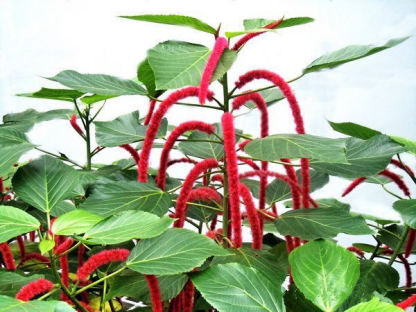
How to grow Acalypha hispida and care tips
How to grow Acalypha hispida
Temperature and light
Acalypha hispida likes a warm environment, is not cold-tolerant, and requires plenty of sunlight. Its suitable growing temperature is between 20°C and 30°C. Because it is not cold-tolerant, the wintering temperature in winter must not be lower than 15°C; below 10°C it will suffer cold damage, with leaves turning yellow or even dropping.
Acalypha hispida likes plenty of sunlight and needs sufficient direct light every day. If light is insufficient, the plant will grow leggy. In summer, when the sunlight is intense, shade is needed.
Water and fertilizer management
In terms of water and fertilizer, Acalypha hispida has quite high demands. Acalypha hispida is relatively drought-intolerant, so water must be sufficient. During the growing season, keep the potting soil moist and water frequently. In summer, when temperatures are high, increase watering appropriately; in winter, watering needs to be controlled. To maintain higher air humidity, spray the Acalypha hispida plant frequently.
During the growing season, pay attention to fertilizing, applying a dilute, well-rotted liquid fertilizer or a fertilizer containing potassium once a week to promote flowering.
Potting soil
Acalypha hispida likes fertile soil and needs repotting and soil replacement every spring. Dig out the plant, remove excess soil, replace with fresh soil, water thoroughly, and keep it in a shady place for a week before returning to normal care.
Propagation methods
Acalypha hispida is mainly propagated by cuttings, which is relatively quick.
Care tips for growing Acalypha hispida
Pruning
During the growth of Acalypha hispida, frequent pruning is needed to keep the plant shape attractive and to promote healthy growth. Because Acalypha hispida grows quickly, it needs frequent pruning and pinching back, which encourages more branching and controls the plant shape, making it fuller. Generally, overly dense branches as well as dead and diseased branches need to be cut away to promote healthy growth.
Pest and disease control
Common pests and diseases of Acalypha hispida include aphids and red spider mites.
How to grow Acalypha hispida - Acalypha hispida complete guide
Acalypha hispida (Acalypha hispida Burm. f.), whose Chinese scientific name is red-spiked copperleaf, is also known as bristly copperleaf, green-leaf copperleaf, long-spike copperleaf, etc. It is a woody plant in the genus Acalypha of the family Euphorbiaceae, native to tropical Asia. The plant is shrub-like, with a height of 0.5-3 m. The leaves are alternate and ovate, 12-15 cm long, bright green, slightly paler on the underside; the petioles are downy, 5-6 cm long. The spike inflorescences grow in the leaf axils, are cylindrical and drooping, 30-60 cm long, bright red or dark red, with small flowers, no petals, and unisexual. The flowering period is from February to November.
It is now widely cultivated as a garden ornamental plant in tropical and subtropical regions. In northern China it is usually grown as a greenhouse potted flower, and when potted it generally does not exceed 1 meter in height.
There are weeping cultivars in cultivation, with many branches, suitable for use in hanging baskets.
Acalypha hispida picture gallery
Flowers like peonies and roses may be of national beauty, but after looking at them for a long time, don't you feel a bit of aesthetic fatigue? This strangely shaped Acalypha hispida might give you a different feeling.
The flower language of Acalypha hispida
The flower language of Acalypha hispida is longing for nature. Seeing this strange Acalypha hispida growing in the woods, blending with its surroundings as if formed by nature, it longs for nature and can also blend into nature, which truly makes people love it.
Acalypha hispida picture appreciation
The large emerald-green leaves, a full view of verdant green, make people feel the cool refreshment coming toward them. The cleverest part is that among the layer upon layer of green leaves, several thin, long red tails stick out their heads, just like a little dog's drooping tail. It also quite gives the feeling of a few touches of red among a mass of green!
Some people like to use Acalypha hispida as a hanging basket flower. Just like in the picture, the hanging pot tilts down thick green, with a few touches of bright red, dainty and lovely.
A little dog wagging its tail gives the feeling of frolicking with joy, and one almost worries that the "tail" of this Acalypha hispida will also wag, frolicking at the slightest provocation.
The flower spikes of Acalypha hispida are long and fluffy, very endearing, and feel just like the swaying green foxtail grass by the roadside. They look very similar, but Acalypha hispida is more brilliantly colored.
Don't be fooled by how strange the flower spikes of Acalypha hispida look; hanging them up is still quite effective. A stretch of fiery red and a stretch of verdant green complement each other and set each other off beautifully. When the wind blows, the flowers sway, lovely indeed.
The main ornamental part of Acalypha hispida is that strange dog's tail, but looking at the big green leaves, they are also very lovely. You can enjoy both the leaves and the tail, endless fun!
The "dog's tail" of Acalypha hispida has the same charm as the common green foxtail grass by the roadside. Its fluffy little appearance is so appealing, you can't put it down.
The flower spikes of Acalypha hispida do not feel very hard, but rather soft and fluffy, just like a soft girl.
How to grow Acalypha hispida and care tips
Acalypha hispida is a very interesting plant, with a unique flower shape, very endearing. In the process of growing Acalypha hispida, what work needs to be done well, and what points need attention?
How to grow Acalypha hispida
Temperature and light
Acalypha hispida likes a warm environment, is not cold-tolerant, and requires plenty of sunlight. Its suitable growing temperature is between 20°C and 30°C. Because it is not cold-tolerant, the wintering temperature in winter must not be lower than 15°C; below 10°C it will suffer cold damage, with leaves turning yellow or even dropping.
Acalypha hispida likes plenty of sunlight and needs sufficient direct light every day. If light is insufficient, the plant will grow leggy. In summer, when the sunlight is intense, shade is needed.
Water and fertilizer management
In terms of water and fertilizer, Acalypha hispida has quite high demands. Acalypha hispida is relatively drought-intolerant, so water must be sufficient. During the growing season, keep the potting soil moist and water frequently. In summer, when temperatures are high, increase watering appropriately; in winter, watering needs to be controlled. To maintain higher air humidity, spray the Acalypha hispida plant frequently.
During the growing season, pay attention to fertilizing, applying a dilute, well-rotted liquid fertilizer or a fertilizer containing potassium once a week to promote flowering.
Potting soil
Acalypha hispida likes fertile soil and needs repotting and soil replacement every spring. Dig out the plant, remove excess soil, replace with fresh soil, water thoroughly, and keep it in a shady place for a week before returning to normal care.
Propagation methods
Acalypha hispida is mainly propagated by cuttings, which is relatively quick.
Care tips for growing Acalypha hispida
Pruning
During the growth of Acalypha hispida, frequent pruning is needed to keep the plant shape attractive and to promote healthy growth. Because Acalypha hispida grows quickly, it needs frequent pruning and pinching back, which encourages more branching and controls the plant shape, making it fuller. Generally, overly dense branches as well as dead and diseased branches need to be cut away to promote healthy growth.
Pest and disease control
Common pests and diseases of Acalypha hispida include aphids and red spider mites.
The efficacy and uses of Acalypha hispida
The scientific name of Acalypha hispida is red-spiked copperleaf. It has a certain ornamental value, is widely cultivated, and also has certain medicinal effects.
The ornamental value of Acalypha hispida
Acalypha hispida is between half a meter and 3 meters tall, with ovate leaves, emerald green in color and graceful in shape. Its long flower spikes are red and droop slightly, just like a little dog's tail, with a lovely and very interesting posture. The lovely Acalypha hispida actually has great ornamental value. If not grown indoors, it can be planted in parks, gardens or courtyards, and whether planted in groups or singly, it has a very good ornamental effect.
The long bright red tail of Acalypha hispida has a unique ornamental effect. Planted in groups, it can form a small grove of Acalypha hispida. When the red tails droop from the branches and sway in the wind, it is also a very beautiful scene. Acalypha hispida planted singly can be combined with other flowers, and the effect is also great. As a flowering ornamental plant for courtyards, Acalypha hispida has an obvious ornamental effect.
In northern regions, due to climatic differences, Acalypha hispida is mostly used as small and medium-sized potted plants. Potted Acalypha hispida placed in living rooms, bedrooms, studies and other indoor places where people commonly spend time, such as on desks, on cabinets, or as hanging basket flowers suspended, are all very beautiful, greatly enhancing the ornamental appeal.
The medicinal effects of Acalypha hispida
The scientific name of Acalypha hispida is red-spiked copperleaf, and it has medicinal uses.
The whole plant can be used as medicine. The roots and bark have an expectorant effect and can treat asthma. Its leaves have an astringent effect, and the flower spikes clear heat and promote diuresis, can cool the blood and stop bleeding, and can be effective in treating conditions such as enteritis and dysentery. When used externally, it can treat scalds, burns and so on.