How Does Saffron Propagate? A Detailed Explanation of Propagation Methods
Division Propagation
1. Saffron's growing period is in winter and spring, and division is usually carried out in August-September; the earlier it is done, the better it is for seedling growth.
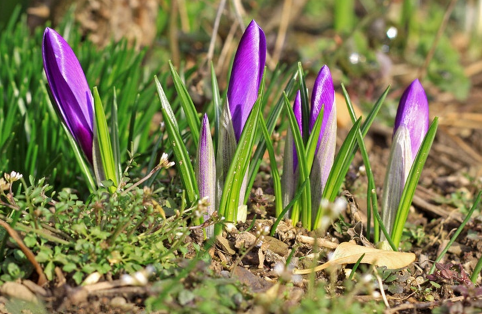
2. After flowering in spring, remove the faded flowers to avoid consuming nutrients, and apply a phosphorus- and potassium-based liquid fertilizer twice; continue care until the above-ground parts wither and yellow in summer, then take out the corms, dry them and store them.
3. In autumn, bulbs that have developed daughter corms can be divided; simply break them apart and plant them in pots.
Seed Propagation
Saffron does not easily set seed and requires manual pollination to obtain seeds, which can be bought at flower shops. Generally, sow the seeds in pots in spring or autumn, keep the spacing appropriate, and water and fertilize as needed; it usually takes three to four years for the grass to bloom.
Saffron has extremely high value and efficacy, so it is relatively expensive; therefore, when buying it, you must distinguish the genuine from the fake to avoid being cheated.
The Benefits and Effects of Saffron, and Saffron's Propagation Methods
Saffron originated in Greece, Asia Minor and Persia, and was introduced to Tibet via India, then from Tibet into China's interior, hence the name saffron. Today we will share with you knowledge about the benefits and effects of saffron and saffron's propagation methods.
The Benefits and Effects of Saffron
The Benefits of Saffron
Saffron has the effects of dredging meridians and activating collaterals, promoting menstruation and resolving blood stasis, dispersing stasis and breaking up masses, reducing swelling and relieving pain, cooling blood and detoxifying, and relieving depression and pent-up emotions; taken consistently over the long term, it can produce delightful results and comprehensively improve the body's immunity.
Saffron is renowned worldwide for invigorating blood and nourishing blood, and has unique magical effects. It is widely used by the medical circles at home and abroad to prevent and treat cerebral thrombosis, vasculitis, myocardial infarction, blood deficiency and physical weakness, irregular menstruation, postpartum blood stasis, general body pain, traumatic injuries, neurasthenia, palpitations and mania, and other diseases.
The Effects of Saffron
Saffron is not only a medicinal material with wide uses and remarkable medicinal effects, but its flowers are also beautiful and uniquely fragrant, making it an excellent material for embellishing flower beds and arranging rock gardens. Saffron can also be grown in pots or in water for indoor viewing; because saffron's plant form is short and it is cold-tolerant, it can be used as an indoor decorative flowering plant in cold weather.
Saffron's Propagation Methods:
For propagation, saffron can use the division method and the sowing method, but division propagation is the main method. For pot cultivation, it is advisable in October to select spring-flowering corms weighing about 20 g and plant them in flower pots with an inner diameter of 15 cm, with 5 to 6 corms per pot. After planting, first place them outdoors for care. Roots form after about two weeks; move them indoors to a place with ample light, fresh air and humidity, and they can bloom around New Year's Day. After flowering, immediately remove the faded flowers to avoid nutrient consumption, and apply 1 to 2 additional applications of a compound chemical fertilizer solution mainly based on phosphorus and potassium to promote robust and strong bulb growth. Saffron can also be grown in water for viewing, using the same method as soaking and growing narcissus.
How to Grow Saffron? Cultivation Methods and Precautions for Potted Saffron
Saffron, also known as fanhonghua, xihonghua and so on, is a perennial herbaceous plant in the genus Crocus of the family Iridaceae. Saffron comes in diverse flower colors, and its flowers are elegant and clear, with a distinctive fragrance, making it a very good ornamental flower, often grown in pots indoors. So, how do you grow saffron? The cultivation methods and precautions for potted saffron are introduced below.
Image: Potted Saffron
I. Cultivation Methods for Potted Saffron
1. Planting:Prepare the potting soil in advance, choosing fertile, loose soil rich in humus. When selecting corms, you must choose robust corms that are large and plump, without mold spots or disease spots. In autumn, plant the corms in flower pots. In principle, one plant per pot, but according to the size of the plant and the pot, 4-6 plants can be appropriately planted per pot; after planting, cover with 5-8 cm of soil. Within one week after planting, place the flower pot in a cool, ventilated place; after one week it can be moved to a bright place for care.
2. Watering:Saffron is usually planted in autumn, and winter and spring are its growing period. The climate is cold and dry, so appropriate watering is needed. Seedlings emerge about 20 days after planting; water once before emergence to promote emergence. Water once before winter arrives to prevent freezing, in order to increase the soil temperature. Water once in mid-April to reduce the harm of dry hot winds. When watering, note that when the temperature is relatively low, do not water with ice water; the water temperature should be equivalent to room temperature, so as to avoid the potting soil freezing and affecting plant growth.
Image: Potted Saffron
3. Fertilizing:Before planting, add sufficient base fertilizer to the potting soil, such as cake fertilizer, barnyard manure, burnt soil, plant ash, chicken and duck manure, etc., and also apply some superphosphate. After planting and rooting, apply a dilute liquid fertilizer with balanced nitrogen and phosphorus once every 10 days. When fertilizing, be sure not to apply fertilizer too concentrated, so as to avoid excessive leaf growth and affect flower bud growth. After saffron blooms in October, apply 1 to 2 more applications of a quick-acting fertilizer balanced in nitrogen, phosphorus and potassium, to benefit the growth and development of the corms, so that the corms can store sufficient nutrients for more blooming and better blooming the following year.
4. Corm Storage:From late April to early May, the above-ground branches and leaves of saffron gradually turn yellow, and the corms can be dug out of the pots for storage. After digging out, sort the corms; for corms that are rotten or have disease spots, handle them promptly, either remove them or throw them away. Place the saffron corms in a gauze bag and store them in a place with little light that is cool and ventilated, keeping the room dry. They can be replanted in autumn.
Image: Potted Saffron
II. Precautions for Growing Saffron
1. Choice of Variety:For saffron in winter and spring, when planting, flower enthusiasts can choose different varieties according to their needs. It is recommended to choose spring-flowering varieties; the spring environment is relatively better, and storing the corms promptly after flowering makes the flowering time longer.
2. Pot Size:For the planting pot, it is advisable to choose a clay pot with a pot diameter of 15-20 cm, or a plastic pot with relatively good breathability. Plant 4-6 large corms per pot, planting in September-October. Alternatively, small pots can be used, 3-5 cm black plastic pots, with one corm per pot.
[Editor's Closing Words]Saffron is very beautiful and is an excellent choice for indoor viewing and courtyard embellishment. The above has introduced the cultivation methods and precautions for potted saffron; everyone, hurry and grow a pot.