How to propagate night-blooming jasmine? Introduction to common propagation methods
Division
The night-blooming jasmine has strong sprouting ability, so we divide it from the roots into several plants or a number of plants for propagation. This method propagates quickly, but it also has certain limitations.
Cuttings
Cuttings are best taken in spring and autumn. The night-blooming jasmine has strong propagation ability and readily produces adventitious roots, so a piece of the mother plant can be taken and inserted into the soil for cutting propagation. Propagation is fastest at a temperature of around 20 degrees, and slightly acidic soil is favorable for cutting propagation.
Air layering
The branches of the night-blooming jasmine are hard and not suitable for bending and training. During the growing period, use a knife to score away the bark at the fork of the current year's or the previous year's branch tip, apply soil to the wound, wrap it well with plastic film, and after roots form, cut off the branch and plant it.
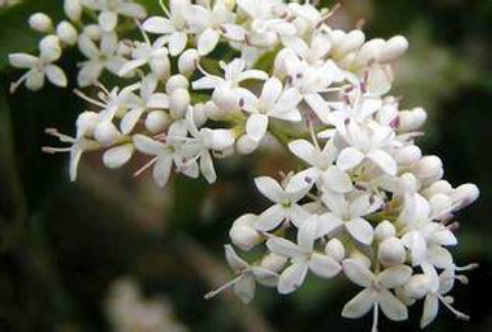
The above is an introduction to growing the night-blooming jasmine. I hope it is helpful to you! Thank you for reading!
Propagation methods of the night-blooming jasmine. The effects and uses of the night-blooming jasmine
The night-blooming jasmine is also known as night-fragrant flower, night orchid fragrance, night clove, thousand-mile fragrance, etc. Today I will share with you the propagation methods of the night-blooming jasmine and its effects and uses.
Propagation methods of the night-blooming jasmine:
1. Division propagation. The night-blooming jasmine has relatively strong sprouting ability. Divide the plant from the roots into several plants or a number of plants for propagation. This method propagates quickly, but it is also subject to limitations.
2. Cutting propagation. Take cuttings in spring and autumn. The night-blooming jasmine has strong propagation ability and readily produces adventitious roots, so a piece of the mother plant can be taken and inserted into the soil for cutting propagation. Propagation is fastest at a temperature of around 20 degrees, and slightly acidic soil is favorable for cutting propagation.
3. Air layering propagation. The branches of the night-blooming jasmine are hard and not suitable for bending and training. During the growing period, use a knife to score away the bark at the fork of the current year's or the previous year's branch tip, apply soil to the wound, wrap it well with plastic film, and after roots form, cut off the branch and plant it.
Effects and uses of the night-blooming jasmine:
1. Ornamental value of the night-blooming jasmine
The night-blooming jasmine has a rich fragrance and opens in the evening, giving off waves of subtle fragrance while you eat dinner. The night-blooming jasmine blooms in summer and autumn, with slender branches and leaves. In southern regions, it is planted in courtyards, in front of windows, beside ponds and pavilions, and other places. When taking a walk after dinner, you can smell the fragrance given off by the night-blooming jasmine, which has a special charm.
2. Medicinal value of the night-blooming jasmine
The night-blooming jasmine can be used as medicine. It has the effect of clearing the liver and brightening the eyes, and can treat red and swollen eyes, measles affecting the eyes, corneal opacity, and so on.
3. Edible value of the night-blooming jasmine
The night-blooming jasmine can be eaten. Its fresh flowers and flower buds can be eaten, and it is a semi-wild vegetable.
4. Mosquito-repelling effect of the night-blooming jasmine
The night-blooming jasmine has a relatively strong fragrance and is somewhat toxic. Mosquitoes dislike this smell, so the night-blooming jasmine has a very good mosquito-repelling effect. It is usually planted outdoors so it can be enjoyed ornamentally and also repel mosquitoes.
Propagation methods of the night-blooming jasmine
The night-blooming jasmine is commonly propagated by cuttings. Below we will look in turn at how to propagate the night-blooming jasmine by cuttings:1. Selecting cuttings: Choose branches that are robust or free of pests and diseases. On the same plant, choose current-year branches from the middle and upper parts that face the sun. The branches should have relatively short internodes, thick and strong branches and leaves, and plump buds. Do not use branches that are about to bloom or excessively vigorous shoots.
2. Selecting the substrate: Use peat soil, leaf mold and sand mixed at a ratio of 3:3:4 respectively. Bed soil prepared in this way has the characteristics of raising bed temperature, retaining water, allowing aeration, being fertile and being slightly acidic, and is suitable for branches to take root and sprout.
3. Treating the cuttings: Before cutting, treat the cuttings with agents such as ABT rooting powder, which has the effect of promoting rooting. Cut the cuttings into sections 8 cm to 12 cm long, with 2 to 3 buds on them. The lower cut of the cutting should preferably be 0.5 cm below a node. The cut should be smooth. Remove the lower leaves and keep only 2 to 3 leaves at the top. The insertion depth is generally about 3 cm.
4. Conditions for rooting: The suitable rooting temperature is 20°C to 24°C. Generally, soil temperature being 3°C to 5°C higher than air temperature is favorable for rooting. The relative air humidity of the cutting bed is 80% to 90%, which is favorable for rooting, and about 30% light is required. Moisture should be appropriate. In the early stage of cutting, moisture should be slightly greater, and later slightly drier. The suitable period for open-field cuttings locally is from early May to mid-June. At this time the climate is relatively good and can better meet the temperature and humidity conditions needed for the cuttings to root.
5. Strengthening post-cutting management: After cutting, water thoroughly, cover with plastic film, and place in a relatively shaded place, or scatter weeds on the film to prevent direct sunlight, and increase light at night to help the cuttings survive. Ventilate 1 to 2 times a day to supplement the needed oxygen and prevent disease. Spray water frequently to keep the cutting bed moderately moist, but do not spray too much, otherwise the cutting bed will be too wet, which often affects the healing and rooting of the cuttings. When the new roots of the cuttings grow to 2 cm to 3 cm, they can be transplanted into pots at the appropriate time. After flowering, in winter in the Nanjing area, they should be moved indoors for care.