A Detailed Guide to Night-blooming Jasmine Planting Techniques and Care Methods
What points should be noted and what are the key technical points for planting night-blooming jasmine? Let's take a look together.
1. Soil selection
Night-blooming jasmine likes slightly acidic soil, and loose, fertile soil rich in organic matter is preferable. If the soil is too alkaline, ferrous sulfate or fermented rice-washing water can be mixed in for acidification treatment.
2. Light
Night-blooming jasmine loves light, and conditions with sufficient light are more suitable for its growth. However, the afternoon sun in summer is too intense, so appropriate shading should be provided to prevent scorching.
3. Propagation
Night-blooming jasmine can be propagated by cuttings or sowing. Cuttings in spring have a very high survival rate, and results can be seen by summer. Alternatively, collect seeds after the flowering period in summer, sow them the following year; the germination rate is extremely high and they are easy to establish.
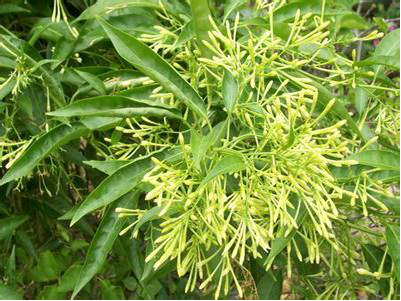
Night-blooming jasmine is extremely easy to grow, and because of its ornamental and mosquito-repelling value, it is deeply loved by flower enthusiasts. To learn more about flowers, follow us!
Introduction to Night-blooming Jasmine Planting Techniques_Night-blooming Jasmine Flower Picture Appreciation
Night-blooming jasmine is also known as night orchid fragrance, night clove, and night fragrant flower. It is a perennial vine-like twining herbaceous plant. Its twigs are very delicate, covered with soft hairs, and contain milky sap. The flowers of night-blooming jasmine are generally yellow-green, and they open more abundantly at night. It is often grown by people as a potted ornamental plant. When the flowers of night-blooming jasmine open, they release a strong floral fragrance that can make people feel short of breath, so it is not suitable for indoor cultivation. Below let us learn about the introduction to night-blooming jasmine planting techniques, as well as night-blooming jasmine flower picture appreciation.
[Night-blooming Jasmine Flower Picture Appreciation—Characteristics]
Night-blooming jasmine is a vine-like herbaceous plant. Its petals have stomata, and generally when air humidity is relatively high, the stomata open. After the stomata open wide, they evaporate aromatic floral oil, and this process generally only occurs at night when they open wide, and the fragrance is also more intense. Night-blooming jasmine originated in the southern South America region, and is now distributed in China's Yunnan, Guangdong, Guangxi, Taiwan, China, and other regions. It is known as a very fresh flower or a semi-wild vegetable plant whose flower buds are eaten. It not only has very good ornamental value, but its flowers can also be used for both culinary and medicinal purposes, with effects such as clearing the liver and improving eyesight, dispelling wind and dampness, removing corneal opacity, measles affecting the eyes, red swollen painful eyes, and strengthening tendons and bones. The flowers generally open in summer or autumn, and yellow-green bell-shaped flowers bloom in the leaf axils, releasing a strong fragrance. It has a mosquito-repelling effect.
[Night-blooming Jasmine Flower Picture Appreciation—Growth Habits]
Night-blooming jasmine generally grows in woodlands or shrub thickets, and likes to grow in environments with sufficient sunlight, good ventilation, loose and fertile soil, and moisture. It is relatively drought-tolerant and barren-tolerant, but not cold-tolerant or waterlogging-tolerant. Generally, when the leaves wither and fall in the cold winter, it stops growing, and in the warmer spring season it sends out new branches. Each node grows axillary buds or flower buds. As the growing season continually changes, it grows side branches or produces inflorescences. The flowering period is generally from May to October, and when the flowers are in full bloom they release a fragrant scent, and at night the floral fragrance is more intense. The fruiting period is generally in winter. Night-blooming jasmine has very strong growth adaptability, and its vitality is very vigorous, with a relatively developed root system. The suitable temperature for its growth is around 20 degrees Celsius. It is a plant that likes to grow in fertile environments, and during the growing period more fertilization should be carried out. Its water requirements are also relatively high; water in summer, and in winter simply keep the soil moist. It is a plant that tolerates pruning relatively well.
[Introduction to Night-blooming Jasmine Planting Techniques]
The propagation methods of night-blooming jasmine mainly include cutting propagation, division propagation, layering propagation, seed seedling propagation, and so on. The most common is the cutting propagation method, generally carried out in spring, autumn, and summer, maintaining a warm and moist growing environment, and cultivating in relatively fertile sandy soil is best. Night-blooming jasmine has very strong vitality and is very easy to plant.
1. Soil: Night-blooming jasmine likes to grow in fertile, loose, well-drained, organic-rich, slightly acidic soil. For potted plants, peat soil, leaf mold, coarse river mud, farmyard manure, and so on are generally chosen and mixed together for cultivation. At the very bottom of the pot soil, some granular crushed brick pieces can be placed, which is more conducive to drainage.
2. Environment: Night-blooming jasmine likes to grow in an environment with relatively good ventilation. Generally from May to September it is suitable to place it on a balcony with sufficient sunlight for cultivation, and in summer direct strong light should be avoided.
3. Watering: Night-blooming jasmine grows most vigorously in summer, and the moisture of the pot soil must be maintained, watering once a day. During the seedling stage of night-blooming jasmine, spray water on the leaves 1-2 times.
4. Fertilizing: During the growth process of night-blooming jasmine, apply liquid fertilizer once every half month, and from late April apply a thin liquid fertilizer once every half month, so that in May the flowers will bloom more abundantly. You can also apply some relatively efficient humic acid liquid fertilizers such as Chunquan 883 and Huimanfeng; the results will be better.
5. Temperature: In October, night-blooming jasmine should be placed in a shed for cultivation. The suitable temperature is 8-12 degrees Celsius. If the temperature is lower than 5 degrees Celsius, the leaves will become relatively withered and yellow, and leaf drop or plant death may occur.
6. Repotting: Repotting of night-blooming jasmine is generally carried out before April in spring. When repotting, the old soil needs to be replaced, and then newly prepared soil should be added. It is also good to prune, thereby promoting the development of new branches. After repotting is completed, the moisture of the pot soil should be maintained, and water accumulation in the pot must not occur. If after repotting relatively tender leaves are found drooping, watering should be carried out promptly.
7. Pest and disease prevention: The pests and diseases that night-blooming jasmine often suffers from include sooty mold, ring rot, and so on, which can be controlled by spraying thiophanate-methyl. The insect pests that appear include aphids, whiteflies, scale insects, and so on, which can be controlled with fenitrothion emulsifiable concentrate, Tianshanxing, KuaiShaling, cypermethrin, and so on; the effect will be better this way.
[Night-blooming Jasmine Flower Picture Appreciation—Precautions]
When planting night-blooming jasmine, it is best to place it outdoors for cultivation, as a very good ornamental plant. Because at night when the flowers open they release a relatively strong fragrance, which can cause symptoms such as dizziness, depression and discomfort, difficulty breathing, and chest tightness in patients with high blood pressure and heart disease. Especially when kept indoors for a long time, it can cause dizziness, coughing, asthma, insomnia, and so on. It must not be kept indoors for cultivation.
More related recommendations: Types of chrysanthemums Dandelion benefits and effects Dendrobium nobile The legend of the lycoris flower Apricot tree pruning
Night-blooming Jasmine (Night-fragrant Tree) Planting Methods, Night-blooming Jasmine Cultivation Techniques
Night-blooming jasmine, also known as the night-fragrant tree, is native to tropical America. Its leaves are heart-shaped, with soft hairs along the edges. Every summer and autumn, clusters of yellow-green bell-shaped small flowers bloom in the leaf axils. When the moon rises above the treetops, it sends out waves of delicate fragrance, yet this fragrance frightens mosquitoes, making it an excellent mosquito repellent.
Growth Habits
It likes a warm, humid, and sunny environment, is slightly shade-tolerant, and is not tolerant of severe frost; it is best to overwinter above 5 degrees Celsius. It is not particular about soil. Propagated by cuttings, easy to establish.
Cutting Propagation
Selecting Cuttings
Choose branches that grow robustly and are free of pests and diseases. On the same plant, choose sunny middle-to-upper branches of the current year's growth, requiring shorter internodes, thick branches and leaves, and plump bud tips. Branches about to flower and leggy branches should not be selected.
Selecting Substrate
Use peat soil, leaf mold, and sand mixed respectively at 3:3:4. Bed soil prepared this way has the characteristics of raising bed temperature, retaining water, aerating, being fertile, and being slightly acidic, suitable for branch rooting and sprouting.
Treating Cuttings
Before cutting, treat the cuttings with agents such as ABT rooting powder, which has the effect of promoting rooting. Cut the cuttings into segments of 8 cm to 12 cm, with 2 to 3 buds on them. The lower cut of the cutting should preferably be 0.5 cm below a node, and the cut should be smooth. Remove the lower leaves, keeping only 2 to 3 leaves at the top. The insertion depth is generally about 3 cm.
Rooting Conditions
The suitable rooting temperature is 20 degrees Celsius to 24 degrees Celsius. Generally, soil temperature being 3 degrees Celsius to 5 degrees Celsius higher than air temperature is favorable for rooting.
The relative air humidity of the cutting bed is 80% to 90%, which is favorable for rooting, and light of about 30% is required. Moisture should be appropriate: slightly more water in the early cutting stage, and slightly drier later. The suitable period for open-field cuttings locally is from early May to mid-June. At this time the climate is relatively good and can better satisfy the temperature and humidity conditions needed for cutting rooting.
Strengthen post-cutting management. After cutting, water thoroughly, cover with plastic film, and place in a relatively shaded spot, or scatter loose grass on the film to prevent direct sunlight, and increase light at night to help the cuttings survive. Ventilate 1 to 2 times a day to replenish the needed oxygen and prevent disease. Spray water frequently to keep the cutting bed moderately moist, but do not spray too much water, otherwise the cutting bed will be too wet and often affect the healing and rooting of the cuttings. When the new roots of the cuttings grow to 2 cm to 3 cm, they can be transplanted into pots at the appropriate time.
Field Management
(1) Cultivation and weeding. During the seedling stage, cultivate and weed 1--2 times. After field planting, because the row spacing is relatively large, pay attention early to cultivation and weeding or appropriately intercrop with short-season vegetables. After the plants grow, weeds are not easy to grow, and generally cultivation and weeding are done 2--3 times each year.
(2) Topdressing. During the seedling stage, apply thin human feces and urine 1--2 times in combination with cultivation and weeding. For field cultivation, after planting, in combination with cultivation and weeding, apply compound fertilizer or decomposed human and livestock feces and urine 2--3 times each year. If there is no rain 1--2 d after fertilizing, water can be applied. For potted plants, fertilize according to the plant's growth vigor, applying a small amount of urea about every 3 months.
(3) Water management. Night-blooming jasmine is afraid of water accumulation; it is advisable to water only when the soil is dry, and in rainy days pay attention to draining accumulated water. For balcony potted plants, in dry and windy seasons, water thoroughly once a day. If conditions permit, frequently spray water on the leaves to increase humidity so that the plants grow vigorously.
(4) Trellising. Field cultivation requires building a horizontal trellis 1.8 m high so that the branches and vines can grow evenly. Courtyard cultivation can be adapted to conditions.
(5) Pests and diseases. Night-blooming jasmine has no observed diseases, but on old branches grown for many years, cottony cushion scale is commonly found. Rosin mixture can be applied to kill the insects. In severe cases, the infested parts can be cut off to allow it to sprout and grow again.
Harvesting and Utilization
1. Vegetable. The leaves, flowers, and fruits of night-blooming jasmine can all be used as vegetables. In folk practice, when grown in pots or planted around courtyards as hedges, they can be harvested at any time. They are generally paired with eggs to make soup, which is smooth, delicious, fragrant, and tasty, and clears the liver and improves eyesight.
2. Medicinal use. The leaves, flowers, and fruits of night-blooming jasmine can all be used medicinally, while in traditional Chinese medicine the flowers are used as medicine. Harvest the flowers during the full flowering period, and either sun-dry or oven-dry them. The flowers or leaves are taken 3--6 g per day, or 1 fruit is cut open and decocted in water for oral administration, to remove corneal opacity, draw out toxins and promote tissue regeneration, and treat conjunctivitis.
Through the detailed introduction in this article, we hope everyone can gain something! Thank you everyone for your support and attention to Duorou Huapu!