What are the key points to note when growing oxalis?
1. Soil
Oxalis likes fertile, moist soil, but it is also afraid of waterlogging, so the soil must have good drainage.
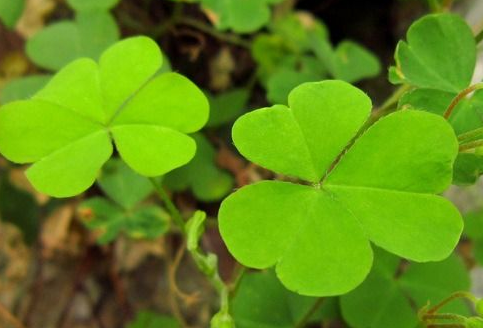
2. Temperature
Oxalis grows best in warm conditions at 16-22°C and is fairly cold-tolerant; it can stay lush green in winter even at minus five degrees, but if the temperature drops below minus five degrees the leaves will wither, and in summer temperatures above 35°C will cause the leaves to curl and the plant to enter dormancy.
3. Sunlight
Oxalis needs plenty of light to grow, especially during the vigorous growth periods in spring and autumn, when it should receive light all day long; otherwise, a lack of light will make the leaves lose their gloss and leave the plant weak and spindly. But in summer, be careful to provide shade to prevent the leaves from being scorched.
4. Water
Oxalis likes a moist environment and needs the soil kept moist; when the soil dries out, water it thoroughly. Keep it moist during the summer dormancy period too, while in winter the soil can be kept slightly on the dry side.
That is all about the benefits and effects of oxalis. Friends who like oxalis can try growing a pot of it; oxalis is sure to bring you a lot of pleasure.
Key points to note when growing purple shamrock (purple-leaf oxalis)
1. Pruning
When the plant grows too vigorously, remove the denser leaves to improve ventilation and light penetration. Also promptly remove dead leaves and the like in normal care to keep the plant's shape looking neat.
2. Repotting
Purple shamrock grows quickly, so it should be repotted once every spring, promptly replacing the soil with fresh, fertile, suitable soil.
3. Fertilizing
When potting up purple shamrock, apply plenty of base fertilizer. During the growing season, apply a nitrogen-phosphorus-potassium compound fertilizer once a month. The fertilizer concentration should not be too high, and do not apply a single-nutrient fertilizer, or it will affect the plant's growth.
The above is the purple shamrock growing method we have brought you, and we hope it helps you grow beautiful purple shamrock.
How to grow red-flowered oxalis: the difference between red-flowered oxalis and oxalis
Red-flowered oxalis has a spherical rhizome underground that is white and translucent, and both its flowers and leaves are sensitive to sunlight. So how do you grow red-flowered oxalis? What is the difference between red-flowered oxalis and oxalis? Next, let's look at how to grow red-flowered oxalis and the difference between red-flowered oxalis and oxalis.
I. How to grow red-flowered oxalis
1. Sowing: Red-flowered oxalis can grow in ordinary soil, but it grows fastest in fertile, loose, well-drained sandy soil. When planting, do not set it too deep. Apply organic fertilizer once a month during the growing season and water promptly. During the growing season, pay attention to watering to keep the soil moist, and fertilize 2-3 times to keep the flowers abundant and the leaves lush. In hot seasons it grows slowly and is basically in a dormant state, so stop fertilizing and watering, place it in a shaded spot, and protect it through the summer. In winter and spring, during the vigorous growth period, strengthen fertilizer and water management.
2. Lifting the seedlings: Use a shovel to dig up the entire aged seedling, gently pat off the soil around the roots, and pile them together. When digging up the seedlings, keep a little distance from the plant to avoid accidentally damaging the bulbs, and make sure to dig the shovel straight down rather than at an angle, so as not to injure the bulbs.
3. Division: Remove dead and damaged leaves from the dug-up red-flowered oxalis, and pick off about 1/2 of the old leaves to reduce transpiration water loss after planting. Use a sharp knife to cut off the lower old bulbs, preferably with the cut just below the first or second new bulb from the top, so that after planting, the seedling retaining 1 to 2 new bulbs can both have its lower old bulbs removed for renewal and rejuvenation, and be guaranteed to store enough nutrients to sprout and bloom quickly. Finally, dip the cut wound on the new bulbs in fresh plant ash to prevent the wound from rotting.
4. Fertilizing: In the flower bed where the aged seedlings have been dug out, add more organic fertilizer, dig the soil over deeply once, and rake out dead and damaged leaves and weeds. Generally apply 0.5 to 0.8 kg of decomposed cake fertilizer per sq m, and appropriately add more phosphorus and potassium fertilizer to ensure the flowering needs of red-flowered oxalis.
5. Planting: Red-flowered oxalis grows quickly, and each plant can propagate 3 to 9 small seedlings in a single year. When planting, the pinwheel-style hole planting method is generally used, with a plant and row spacing of 25x35 cm. Use a small trowel to dig holes 8 to 10 cm deep; depending on bulb size, place 4 to 6 plants per hole, then cover with 3 to 4 cm of soil, being careful to leave the leaves above the soil surface. Of course, the furrow planting method can also be used, with a plant and row spacing generally of 15 to 30 cm; water 2 to 3 days after planting to prevent the bulbs from rotting.
6. Pest and disease control: Red-flowered oxalis is easily harmed by red spider mites, and if not controlled in time, this can cause the leaves to turn yellow and dry up and the flowers to be few, affecting its ornamental value. Therefore, during the plant's growth, you can spray 40% omethoate at 1000 to 1500 times dilution, 0.2 to 0.3 degree lime sulfur mixture, as well as acaricides and the like.
II. The difference between red-flowered oxalis and oxalis
Oxalis is the collective name for plants in the Oxalidaceae family. However, nowadays we generally use it to refer to yellow-flowered oxalis. The differences between yellow-flowered oxalis and red-flowered oxalis, besides the different flower colors as the names suggest, are most obviously that
1. The former can form seeds, while the latter reproduces by tubers and does not form seeds.
2. The former has stems that branch at multiple levels and can mostly grow creeping, while the latter does not branch, sending out several leaf stalks from one tuber, with each leaf stalk bearing one leaf. In addition, there are also some differences in leaf color, form, and texture. However, these are not as obvious as the two points mentioned above.
The above ishow to grow red-flowered oxalisandthe difference between red-flowered oxalis and oxalisthat we have introduced, and we hope it is helpful to everyone.