How to grow night-blooming jasmine? Detailed guide to growing methods and precautions
Temperature
The greenhouse temperature for growing night-blooming jasmine must be kept at 8-12°C at all times. If the greenhouse is below 5°C, the leaves of night-blooming jasmine will turn yellow and drop, and in severe cases it may even threaten its survival. The best time to move it into the greenhouse is mid to late October.
Light
Night-blooming jasmine loves light and needs good ventilation. From May to September, it can be placed on a balcony, but be careful not to expose it to scorching sun.
Watering
The peak growing season for night-blooming jasmine is summer, so the potting soil must be kept moist, with watering increased as needed. If it is a seedling, spray water on the leaves once or twice a day.
Fertilizing
During the growth of night-blooming jasmine, liquid fertilizer should be applied about once every half month. After late April, apply a dilute liquid fertilizer once every half month.
Soil
Choose fertile, loose, well-draining, slightly acidic soil. For the potting soil of night-blooming jasmine, you can use peat soil or leaf mold plus coarse river mud in a 3:2 ratio, mixed with a small amount of fertilizer. Fill the bottom about 1/5 deep of the pot with granular crushed soil or crushed brick pieces to aid drainage.
Repotting
It is best to repot in early April. When repotting, remove some of the old soil and old roots, then replace the growing medium with fresh soil, and prune heavily to encourage new shoots. After repotting, keep the potting soil moist, and be sure not to let water accumulate. If the tender leaves are found to droop slightly after repotting, water promptly.
How to grow night-blooming jasmine Precautions for growing night-blooming jasmine
Many homeowners keep night-blooming jasmine as a potted plant for ornamental purposes, but in modern life, many people grow potted plants themselves, which feels more rewarding. Today, let's follow the editor to take a look at how to grow night-blooming jasmine and the precautions for growing it.
Growing methods for night-blooming jasmine
1. Soil: Night-blooming jasmine prefers loose, well-draining, organic-rich, slightly acidic soil. Use peat soil, leaf mold and sand mixed in a 3:3:4 ratio respectively. The bed soil prepared this way has the characteristics of raising bed temperature, retaining water, allowing aeration, being fertile and slightly acidic, and is suitable for cuttings to root and sprout.
2. Watering: Summer is the peak growing season. In addition to applying sufficient fertilizer, the potting soil must be kept regularly moist, and if necessary, water twice a day. If it is a seedling, spray water on the leaves once or twice a day.
3. Temperature: Every year in mid to late October, it should be moved into a greenhouse, and the greenhouse temperature should be kept at 8°C to 12°C. If the temperature is below 5°C, the leaves will turn yellow and drop until the plant dies.
4. Fertilizing: During growth, apply a dilute, fully rotted liquid fertilizer once every 10-15 days. From mid-May onward, this can ensure continuous blooming of fragrant flowers, improving its ornamental value. If a compound fertilizer of nitrogen, phosphorus and potassium can be applied, the effect is even better.
5. Pests and diseases: Sooty mold and ring spot disease commonly occur, and can be sprayed with a 500-fold dilution of 50% thiophanate-methyl wettable powder.
6. Pruning: The branches of night-blooming jasmine grow quickly. If allowed to grow naturally, it can grow about 1 m in a year, so it needs to be pruned every year to sprout more side branches and bloom more. Pruning is generally carried out in autumn, keeping each side branch 10-12 cm long. After the flowers fade, the dry branches and overly dense branches should be cut off.
Precautions for growing night-blooming jasmine
Night-blooming jasmine is best placed outdoors. As an ornamental plant, its fragrance can make patients with high blood pressure and heart disease feel dizzy, depressed and uncomfortable, causing symptoms such as chest tightness and difficulty breathing. Therefore, night-blooming jasmine is not suitable for indoor placement. If it is kept indoors for a long time, it can cause dizziness, coughing, and even asthma and insomnia, so homeowners growing night-blooming jasmine should still prioritize safety.
The role of growing methods for night-blooming jasmine
1. Ornamental. Night-blooming jasmine has slender branches and blooms in summer and autumn. Its yellow-green flowers open in the evening, giving off bursts of strong, refreshing fragrance. In the south, it is often used to decorate courtyards, windowsides, pond edges and pavilion sides, and has a certain ornamental value.
2. Medicinal. Night-blooming jasmine can be used as medicine, with the effect of clearing the liver and improving eyesight. It can treat red, swollen and painful eyes, measles affecting the eyes, corneal opacities, and so on.
3. Edible. Night-blooming jasmine can be eaten, mainly using its fresh flowers and flower buds. It is a semi-wild vegetable.
4. Mosquito repellent. Night-blooming jasmine has a rather strong fragrance and a certain toxicity, so it can drive away mosquitoes, which is also a convenience in life. Usually, gauze screens are put over windows and the plant is grown outdoors.
The above is the relevant introduction in this article. I believe that after reading it, you also have a simple understanding of it. If needed, you can continue to follow No. 1 Home Network to learn more information.
Growing methods for night-blooming jasmine The latest detailed guide to growing night-blooming jasmine indoors
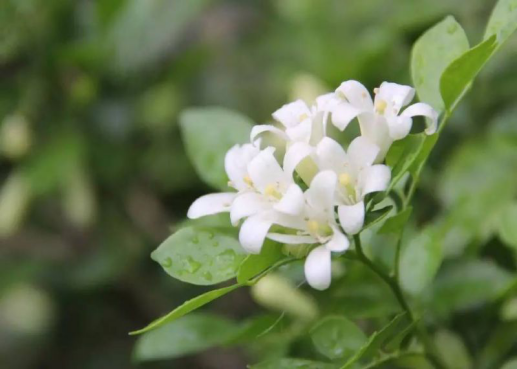
Introduction: Night-blooming jasmine, as its name suggests, has a fresh fragrance, especially at night, when it is even more fragrant. It is a vine-like shrub with weak branchlets, opposite leaves, broadly ovate, heart-shaped to oblong-ovate, umbel-like cymes axillary, with as many as 30 flowers; corolla lobes 5, oblong, yellow-green. Below let us learn about the methods for growing night-blooming jasmine indoors.
It prefers a warm, humid, sunny, well-ventilated environment with loose, fertile soil. It is drought-tolerant and barren-tolerant, not waterlogging-tolerant, and not cold-tolerant. Therefore, growing night-blooming jasmine requires well-ventilated environmental conditions. From early May to the end of September, it is suitable to place it in a sunny spot in the yard or on a balcony for care. Although it likes plenty of sunlight, exposure to scorching sun should be avoided at noon in summer.
Summer is the peak growing season. In addition to applying sufficient fertilizer, the potting soil must be kept regularly moist, and if necessary, water twice a day. If it is a seedling, spray water on the leaves once or twice a day. Every year in mid to late October, it should be moved into a greenhouse, and the greenhouse temperature should be kept at 8°C to 12°C. If the temperature is below 5°C, the leaves will turn yellow and drop until the plant dies.
This truly deserves the name night-blooming jasmine. It can give off a sweet scent, and it is mysterious because it blooms at midnight, and few people can see it in full bloom. Placing plants such as night-blooming jasmine that can give off a fresh fragrance in the bedroom can create a quiet and comfortable atmosphere for the bedroom, letting people fall asleep peacefully in the natural fragrance.
Everything has two sides, good and bad. If used improperly, it can also lead to bad consequences. Although night-blooming jasmine gives off a fresh fragrance at night, letting people sleep with the scent, not everyone can tolerate it. In the rooms of patients with high blood pressure and heart disease, it is not suitable to plant night-blooming jasmine flowers.