What ornamental value does a hawthorn bonsai have?
A well-trained hawthorn bonsai has very high ornamental value; its form resembles various lifelike animals, some like a rock-climbing monkey, some like a mighty lion, some like an amusing squirrel, and it is very interesting, while some also closely resemble a welcoming pine. The tough, powerful branches and trunk also look like a strong warrior, giving people a feeling of wanting to strive in life. Used for ornament, it will surely add to the joy of life.
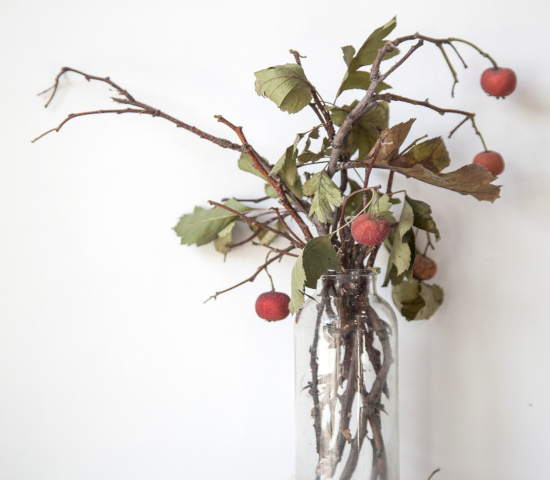
Now that the introduction to growing hawthorn is finished, are you tempted? Do you want to plant a hawthorn tree of your own? Then hurry up and take action, and plant a beautiful hawthorn tree for yourself. Be a person who loves and cares for plants.
Classification of bonsai
Classification of bonsai
In the long course of its development, Chinese bonsai naturally formed many artistic schools. Each school has its own unique style and processing techniques. In addition, our country has a vast territory, and the materials for making bonsai are extremely rich. Therefore, the types and forms of Chinese bonsai are also extremely numerous. According to historical records, as far back as the Song Dynasty, two forms had already appeared: tree bonsai and landscape bonsai. It can be seen that at that time tree bonsai and landscape bonsai were already distinguished from each other. This was also a classification method in ancient China. With the development of the social economy, bonsai art has continued to advance and innovate, and the types of bonsai have become more and more numerous. Therefore, studying the classification of bonsai today is of great significance. At present, China has not yet formed a unified standard for classifying bonsai. Based on the views of most people, and according to factors such as form of expression, purpose of appreciation, and materials selected, bonsai are now divided into three categories: tree bonsai, landscape bonsai, and other types of bonsai. As things stand at present, this should be said to reflect the actual situation of current bonsai art fairly comprehensively.
I. Tree bonsai
Tree bonsai takes woody plants as the main body and, through artistic and horticultural treatment, concentrates on expressing the beautifully shaped woody plants of nature. In the vast majority of cases, it focuses on reflecting thousand-year-old trees, thousand-year giant trees, and thousand-year bizarre trees, and there are also a few that express mature and young trees. Tree bonsai also comes from nature, and through refinement, generalization, and elevation, it becomes a three-dimensional "tree painting" within a Chinese landscape painting. Therefore, bonsai is different from ordinary potted plants. Bonsai is a work of art - a three-dimensional painting; potted cultivation is merely a kind of horticultural growing. It does not require artistic treatment. Japanese bonsai borrowed the two Chinese characters "bonsai", which if translated into Chinese should be "penjing". As for the Chinese meanings of the two characters "plant" and "grow", there is not much difference. Tree bonsai is further classified into the following types:
1. According to differences in the selected woody plant materials, it can be divided into the following two types:
(1) Stump scenery: a kind of tree bonsai made from tree root stumps dug from mountains and fields, which after being grown out and processed into shape is called "stump scenery", also called tree-stump bonsai. Tree stumps are also called stump heads.
(2) Tree scenery: tree bonsai made from 1-3 year old small trees or slightly older small trees is called "tree scenery". Both Yangzhou-school and Sichuan-school bonsai have the traditional technique of "cultivating from youth", requiring shaping to begin from small trees. Bonsai made from young trees is abbreviated as "tree scenery". At present, most small bonsai for export are made from small trees. Tree-stump bonsai (stump scenery) is one part of tree bonsai, and tree bonsai are not necessarily all made from tree stumps, so it is not appropriate to call tree bonsai tree-stump bonsai. On the contrary, both stump scenery and tree scenery can be called tree bonsai.
2. According to differences in appreciation purpose, it can be divided into the following four types
(1) Foliage-appreciation type: besides appreciating the artistic shaping of its roots, stems, trunk, and branches, this type of tree bonsai highlights the ornamental value of the leaves. Most tree bonsai have foliage-appreciation characteristics.
(2) Flower-appreciation type: this type of bonsai takes flower appreciation as its main purpose, and its requirements for branch and trunk shaping and for the ornamental value of leaves come second. Such as crape myrtle, plum blossom, peach blossom, orange jasmine, and so on.
(3) Fruit-appreciation type: this type of bonsai takes fruit appreciation as its main purpose. For example, tree bonsai made with apple, peach, hawthorn, and so on; among ornamental plants, firethorn, fruiting pomegranate, Elaeagnus, goji, Buddha's hand, kumquat, and so on can also be made into fruit-appreciation bonsai.
(4) Comprehensive type: this type of bonsai usually contains two or more ornamental characteristics. For example, tiger thorn, creeping centipede, holly graciliflora, and ginkgo have the two characteristics of foliage appreciation and fruit appreciation; flowering pomegranate has the two characteristics of foliage appreciation and flower appreciation; black pine has the characteristics of foliage appreciation and stem appreciation.
II. Landscape bonsai
This type of bonsai is a three-dimensional Chinese landscape painting created mainly with stone materials and plants. It includes within its materials all the charming landscape scenery of nature, such as lake and mountain scenery, misty peaks and shadowy mountains, strange peaks and secluded hollows, high gorges and flying cascades, sheer cliffs and giant rocks, emerald ridges and jade-green ravines, crane shallows and duck islets, and so on. Landscape bonsai expresses the author's thoughts and feelings through the reproduction of natural scenery, and displays the author's special talent in painting art. Since landscape bonsai reflects the beautiful landscape scenery of nature, once the stone materials used are arranged in the pot, their nature undergoes a qualitative change. Before entering the pot, they are clearly "stones" or "mountain rocks" and the like; after entering the pot, they become "peaks and ridges", "cliffs and ravines", "slopes and foothills", "shore rocks", and so on. Therefore, it is also not appropriate to call landscape bonsai "water-and-stone bonsai", because this does not match the way Chinese landscape painting is referred to. "Water-and-stone bonsai" can at most be understood as bonsai composed of water and stone, and definitely cannot represent a three-dimensional Chinese landscape painting composed of water and mountains, nor can it represent landscape bonsai. According to differences in form of expression and materials, landscape bonsai can usually be further divided into the following three forms.
1. Water-basin style
Usually called water-basin-style landscape bonsai. This type of bonsai is mainly based on stone materials, arranged in a shallow basin with water, and mainly expresses scenery such as layered mountains and great rivers. The water surface is relatively open, usually accounting for about 1/2 of the basin surface, or a little more. In water-basin-style landscape bonsai, although the plant materials used are small and few, they should still be regarded as the main content in the picture. Because it gives the bonsai life, there absolutely must be plants; if there are no plants, it only expresses lifeless barren mountains and wild ridges, and the picture makes people feel dull and cannot become beautiful scenery.
2. Dry-basin style
Usually called dry-basin-style landscape bonsai. There is no water surface treatment in the basin; it is all land. In the basin, soil is mainly laid out, mountains are set up and stones are erected, or trees, flowers, and grasses are planted; the soil surface is dotted with moss, and supplementary scenery is arranged, forming a picture without large-area water surface treatment. Dry-basin-style landscape bonsai can express scenery of strange peaks and unusual ravines, sheer cliffs and precipices, and other layered mountains and ridges; it can also, like water-and-dry bonsai, express scenery within a relatively small range, with trees and plants appearing relatively tall. Its creation is also carried out according to the composition rules of Chinese landscape painting. What should be noted here is that in dry-basin-style landscape bonsai, although there is no water surface treatment, it does not mean that water does not exist in the picture, because where there are mountains there is water, and high mountains have fine water; the mountain streams and ravines, large and small, although they cannot be directly expressed in the picture, can exist in people's imagination.
3. Water-and-dry-basin style
Usually called water-and-dry bonsai, it expresses landscape scenery within a relatively small range and can be regarded as a "close-up" shot of a certain scenic spot within landscape bonsai, such as scenery of streams and ravines, watersides, small rivers, small creeks, and the like. Therefore, the land and water surface expressed are both relatively small. Compared with the water-basin style, the trees appear relatively tall, and the water surface is much smaller than the land. In most cases, the land portion is mainly laid with soil, with the surface then covered with green moss; at the junction of water and land, stones are used to build embankments to form the waterline. On it are planted shaped trees; usually a natural-style shape gives a good effect. There are also water-and-dry bonsai mainly featuring flowers or landscape, and the composition must be carried out according to the painting principles of Chinese landscape painting. Before the bonsai creation is completed, relatively large supplementary scenery can be added, such as bridges, pagodas, pavilions, houses, halls, as well as figures, animals, and so on. Supplementary scenery should be determined according to the needs of the theme; no matter the size of the selected accessories, they are not the main subject, and sometimes they are the "main point". Water-and-dry bonsai often have even more poetic and pictorial charm.
III. Other types of bonsai
These types of bonsai have different forms, are diverse and varied, and have a unique style, but in terms of their creative content and form, they are still based on tree bonsai and landscape bonsai. There are usually the following types.
1. Miniature bonsai: the volume of this type of bonsai should be reduced as much as possible; generally both height and length must be below 10 cm, and some are only a few cm, able to rest on the palm of the hand, with the smallest even able to be placed on a fingertip, so some people call them "palm bonsai" or "finger bonsai". Those mainly based on trees are called miniature tree bonsai; those mainly based on landscape are called miniature landscape bonsai; those of flowers and grasses are miniature flower-and-grass bonsai. Because miniature bonsai are relatively small in volume, the composition should strive for conciseness, and the processing and shaping should strive for smooth lines, exquisiteness, and fineness.
2. Wall-hanging bonsai: bonsai created by fitting the pot vessel with a hanging device, which can be hung on a wall, is called wall-hanging bonsai. The creation of this type of bonsai has absorbed the strengths of craft techniques such as shell carving and hanging screens. In terms of the selected scenery materials, wall-hanging bonsai also includes types such as tree, landscape, and flower-and-grass, which will not be described in detail here. As far as the selected pot vessel is concerned, it can usually be further divided into the following three types.
(1) Half-pot style: the flower pot form is half of an ordinary flower pot, specially fired for the purpose. It is as if the flower pot were split in two from the center and the cut surface sealed, forming half a flower pot. The forms of the flower pot are diverse. There are round, square, rectangular, and other geometric shapes. Plants are planted inside, the cut surface is attached to the wall, and it is hung on the wall.
(2) Shallow-pot style: a shallow-mouthed pot made of white marble (marble) in rectangular, square, round, or other geometric forms, like the shallow pots used for making landscape bonsai, only differing in geometric shape and size. The shallow pot is hung on the wall, and the composition is also carried out according to the rules of Chinese landscape painting. Landscape and plants are arranged, just like a landscape painting hung on the wall. The shape and size of the shallow pot should be determined according to the environment in which it is displayed.
(3) Other forms: refers to the use of different pot vessels, mostly determined according to the creative theme, to express the artistic conception. This form is rich in innovation and has a unique style.
3. Screen style: its form is like a screen; the large ones stand on the ground, and the small ones stand on a table. Its composition rules and material selection are similar to wall-hanging bonsai, except that this type of bonsai has no hanging device and is only fitted with several stands so that it can stand, and it is also a kind of bonsai art similar to handicrafts.
4. Wall style bonsai: this type of bonsai is similar to wall-hanging bonsai, except that the outer shape and size of the pot are different from the wall-hanging type, and the pot is embedded in the wall, with landscape, plants, and so on arranged within. This is a combination of bonsai and interior decoration, and also an innovation in bonsai art, a new application; the composition must be carried out according to the overall needs of the interior decoration.
5. Flower-and-grass bonsai: a decorative bonsai with flowers and grasses as the main body. It differs from tree bonsai in that it mainly expresses the ornamental characteristics of famous flowers and fragrant grasses. It is also different from potted flowers: it must undergo artistic treatment and can be combined with bonsai materials such as trees and landscape stones to form a picture with a certain artistic value, rich in poetic and pictorial charm and expressing the author's thoughts and feelings. Common herbaceous flowers include orchid, chrysanthemum, narcissus, lotus, acorus, and so on.
6. Special-shaped bonsai: this type of bonsai mainly highlights containers of different shapes. For example, ceramic craft vessels specially made in the forms of vases, teapots, brush holders, and so on, with trees, flowers, grasses, and so on planted inside, make bonsai especially full of interest, with forms not confined to one pattern. Special-shaped bonsai can be hung on a wall or stand on a table. When making them, follow nature and there is no fixed formula; the emphasis is on giving people a sense of novelty.
7. Elegant stones (viewing stones): since ancient times in China, stones with strange shapes and colors and a certain ornamental value have been fitted with stands as pure offerings, so they are called elegant stones, or stone offerings, or stone playthings. They are usually included in the category of bonsai.
8. Pictographic bonsai: using plants processed into animals such as dragons, phoenixes, lions, and elephants. It also belongs to the types of bonsai.
Can Surinam cherry be eaten_Medicinal value, Surinam cherry bonsai pictures
Surinam cherry likes warmth and sunlight, is not tolerant of drought or cold, and is not very strict about soil requirements, but it is best to use permeable and fertile sandy soil. Spring and summer are its vigorous growth periods, so watering must be sufficient, fertilizing once every 2-3 months, with ample sunlight. In the central and northern parts of Taiwan, China, some may show leaf drop in winter. Surinam cherry can be pruned all year round and can be styled into various shapes. The suitable temperature for growth is 23-30°C.
Can Surinam cherry be eaten
Surinam cherry is native to Brazil and can reach up to 5 m tall. From young shoots to mature leaves, the leaf color changes from red to green, with mottled colors and luxuriant branches and leaves. After pruning, it can be shaped into a spherical crown; the upper leaves are glossy, while the lower leaves are lighter in color, with transparent glandular dots. Surinam cherry flowers are white and have a slight fragrance. The berry is spherical, 1-3 cm in diameter, and when ripe is dark red, sweet in taste and nutritious, and can be used as food.
Surinam cherry is also called pitanga, Brazilian red fruit, and Eugenia uniflora. Its trunk is smooth, its petals are white, it can bloom multiple times a year, and its berry is oblate and drooping, resembling a small pumpkin and a small lantern.
On one tree there are both flowers, unripe green fruits, yellow fruits about to ripen, and already ripe red fruits. The fruit can be eaten, and it is a popular flowering and fruiting plant for both ornament and use. But many people mistake it for hawthorn. In fact, Surinam cherry and hawthorn are two completely different plants, so everyone must pay attention to distinguishing the appearance of their fruits.
In tropical regions, Surinam cherry can be used as a landscaping tree species, while in northern regions it is mostly grown as a potted ornamental. Its branches and trunk are vigorous and twisting and tolerate pruning, and it can also be used to make bonsai. It is especially widely used in the Lingnan region and is an important fruit-appreciation tree species in Lingnan-school bonsai. In addition, regarding the medicinal value of Surinam cherry, there is temporarily no unified statement on this aspect, so the editor will leave it for next time to explain to everyone.
Potted Surinam cherry can be placed outdoors in a sunny place with good air circulation for care. In summer high temperatures, appropriate shading is needed. During the growth period, water frequently, and you can often spray water around the plant to increase air humidity. Surinam cherry is not suited to concentrated fertilizer; appropriately adding thin fertilizer is enough.
For young trees and during the branch-sprouting period, mainly use nitrogen fertilizer; in other periods, compound fertilizer can be used. In winter, control watering, and if the temperature is maintained above 5°C, it can safely overwinter.
During the growth period, pruning can be carried out according to different tree shapes, cutting away useless branches and buds as well as aging branches. During flower bud differentiation, increase phosphorus and potassium fertilizer. When planting outdoors in the south, pay attention to water prevention. Because the flowering period of potted Surinam cherry is in winter and it will not naturally pollinate, artificial pollination can be used to increase fruit set.
Surinam cherry bonsai pictures and outdoor planting pictures
Surinam cherry has the habit of blooming while bearing fruit. You can keep the same batch of fruits and cut off the remaining flower buds, remove overly dense small fruits and weak fruits, and after stabilizing, increase the amount of phosphorus and potassium fertilizer. The fruits mature in February to March. If the temperature is too low, the flowering period of Surinam cherry will be postponed to February to March of the following year, and the fruiting period will not mature until May to June.
The branches, leaves, and fruits of Surinam cherry are elegant and lovely, with bright and glossy color. It is one of the important fruit-appreciation plants, is very popular in South China, and can also be used as an ornamental roadside plant on campus.
Editor's summary
Closing words: the fruit of Surinam cherry is edible. Please mainly distinguish it from hawthorn. If careful gardening friends look closely, they can find that the appearance of hawthorn fruit and Surinam cherry fruit is different, so their effects and medicinal properties will not be exactly the same either.