What are the precautions for planting dwarf flowering almond?
During the growth of dwarf flowering almond, it is often troubled by diseases, especially in September each year, which is the peak period for dwarf flowering almond diseases. So what should we do at this time? Don't worry, let me offer a tip: treating it with carbendazim will do the trick! Another point is that dwarf flowering almond likes to grow in an environment with plenty of sunlight, and moist, loose soil is the best choice for planting it, but remember, never water it too much, as this will make the soil too sticky or even waterlogged, which is very unfavorable for the growth of dwarf flowering almond!
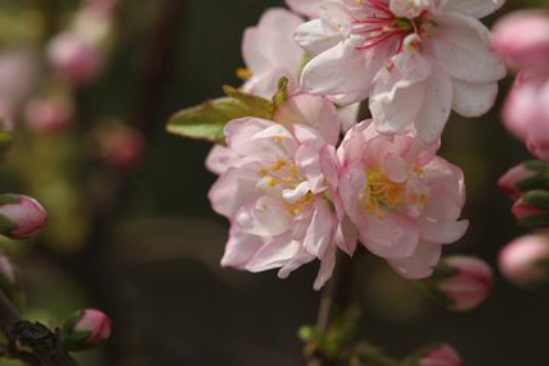
By observing the leaves, flowers and fruits of dwarf flowering cherry and dwarf flowering almond, you can easily tell the two apart, and never again worry about mismatching captions on social media! I wonder if what I have explained has been helpful to you?
How to grow and care for the pink double-flowered dwarf flowering almond
Chinese scientific name: pink double-flowered dwarf flowering almondKingdom: PlantaePhylum: AngiospermsFamily: RosaceaeGenus: PrunusThe pink double-flowered dwarf flowering almond likes light, is relatively cold-tolerant, highly adaptable, drought-tolerant, and also relatively tolerant of wet conditions; its root system is well developed. It can overwinter outdoors south of Shenyang. It is not strict about soil requirements, and fertile, loose, slightly acidic soil is best.1. Basic information
Latin name: Prunus glandulosa Thunb. f. sinensis koehneFamily name: Rosaceae
Ecological classification: woody plant, deciduous shrub
Ornamental classification: flowering plants
2. Origin and distribution
Native to China from North China to the Yangtze River basin; this species is a cultivated species.3. Morphological characteristics
Deciduous shrub, 1.5-2 m tall. Leaves ovate-oblong to elliptic-lanceolate, 5-8 cm long, widest at the middle or near the lower middle; flowers pink, double-petaled. In autumn the leaves turn purple-red and red. Branchlets grayish brown or brown, hairless or with short pubescence on young branches. Leaves oblong-lanceolate or elliptic-lanceolate, apex acuminate, base cuneate, margins with fine obtuse double serrations, green above, light green below, hairless on both sides; stipules linear. Flowers double, opening at the same time as the leaves or nearly so; calyx tube campanulate; petals pink, obovate. Drupe red or purplish red, nearly spherical. Flowering period March-April, fruiting period May-August.4. Propagation and cultivation
Propagated by cuttings; semi-mature branch cuttings in summer are the easiest to root.5. Landscape uses
Very beautiful; commonly cultivated for ornament in gardens in various places, suitable for group planting on lawns, roadsides, beside rockeries and at forest edges, and can also be used for foundation planting, pot culture, or as material for forcing and cut flowers. It blooms before the leaves emerge in spring, covering the tree in splendor and looking very beautiful, and in autumn the leaves turn red again, making it an excellent garden ornamental tree.
How to plant dwarf flowering almond in the courtyard
How to plant dwarf flowering almond in the courtyard
Before planting dwarf flowering almond, first disinfect the soil, which can be sprayed with a potassium permanganate aqueous solution. Then insert the prepared cuttings directly into the soil, press the soil firmly around them by hand after insertion, cover with plastic wrap, and cover the edges of the plastic wrap with soil to avoid exposed areas. The plastic wrap can help retain moisture and heat. Before planting the cuttings, water the soil thoroughly, but do not overwater.
Build a frame above the soil for shade; a frame height of 2 m is enough, and it can block 50% of the sunlight, so as to prevent the cuttings from being injured by scorching sun and damaging their growth.
Late June is the best time to select cuttings; choose healthy branches free of pests and diseases. Late June to early July is the best time to plant the cuttings.
If transplanting, be sure to move it together with the soil. During the seedling recovery period, watering once a week or a little more often is enough; during its growth period, be careful to remove weeds promptly and to turn and loosen the soil.
After dwarf flowering almond enters its growth period, it prefers sunlight, and it also has strong adaptability and tolerance to cold climates. It is both drought-tolerant and moisture-tolerant, but waterlogging must not occur, so pay attention to drainage in daily care, especially during the plum rain season. Dwarf flowering almond relatively prefers loose soil with good air permeability.
Pests and diseases of dwarf flowering almond generally occur during the growth period. They can be controlled by spraying insecticides and fungicides.
If you want a more perfect tree shape for dwarf flowering almond, pruning is necessary; an oval shape is most suitable for the tree form of dwarf flowering almond.