How to propagate Calycanthus chinensis? A detailed guide to the propagation methods of Calycanthus chinensis
I. Sowing method
Every year in October-November, when the outer shell of the Calycanthus chinensis achene turns from green to yellow and the inner seed is brown-black, it can be harvested. Remove the seeds, dry them in the shade and store them. During storage, care must be taken to maintain the seed moisture. Both spring and autumn are suitable seasons for sowing.
Before sowing, the seeds need to be sprouted for 24 hours, that is, soaked in warm water, in order to ensure a relatively high germination rate. In addition, using well-drained moist soil as the seedbed can also effectively improve the survival rate of seedlings. Calycanthus chinensis seedlings need shade during the seedling stage and should be covered for frost protection in winter. After the seedlings are established, Calycanthus chinensis is suitable for planting in an environment without strong light and relatively dry conditions.
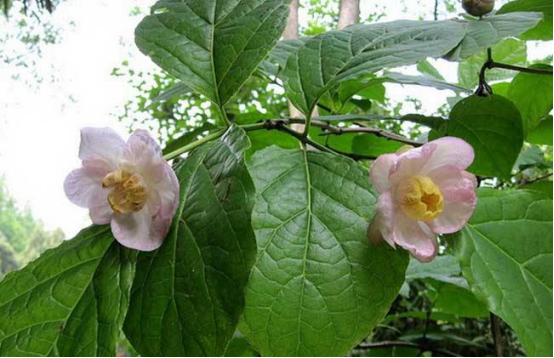
II. Layering method
Every year between February and March, select robust 1-2 year old branches, use a knife to cut and wound the part that will be buried in the soil, sprinkle a little ATP rooting powder on the wounded part, then bury it in soil with rice husk ash as the medium, and keep the soil moist regularly. In about 2 months it will take root and can be transplanted, and it can bloom in the same year.
Cultivation methods and precautions for Calycanthus chinensis
Cultivation methods for Calycanthus chinensis
Temperature and light
Calycanthus chinensis can overwinter and pass the summer normally in areas such as Jiangnan, and can withstand a brief high temperature of 40°C and a severe low temperature of -15°C. It prefers a warm, humid growing environment with not strong sunlight. Under full sunlight, the leaves turn yellow and growth is poor, so direct sunlight should be avoided and it should not be placed in sunlight for long periods; a moderate amount of light is sufficient.
Watering
Calycanthus chinensis is drought-tolerant and afraid of waterlogging, so the soil only needs to be kept semi-moist. Drain promptly during the rainy season. However, it must not lack water in summer, otherwise the leaves will form dry, whitish patches, affecting flower bud formation. During the flowering period of Calycanthus chinensis, the amount of watering must be reasonable. If there is too little water, the flowers will not open evenly; if there is too much water, it is easy for flowers and buds to drop.
Soil
It is suitable for growing in fertile, loose, well-drained sandy loam. Potting soil can be prepared by mixing equal amounts of sand and coniferous humus soil.
Fertilizing
It likes fertilizer. Timely fertilization can promote flower bud differentiation and produce more flowers. In spring, apply leaf-developing fertilizer 2 times. From the end of June to before the start of the dog days, apply a compound fertilizer about once every half month to promote flower bud formation. Fertilization should be based mainly on phosphorus and potassium fertilizers, with an appropriate amount of nitrogen fertilizer. After the weather turns cool in autumn, apply cake fertilizer once to plump up the flower buds. After flowering until leaf fall, apply 2-3 topdressings. Before winter, apply one more dilute horse hoof water to supply the nutrients needed for flowering.
Precautions for cultivating Calycanthus chinensis
Pay attention to pest and disease control
The main problems are damage from scale insects and aphids, as well as black spot and anthracnose diseases. Management needs to be strengthened especially in high-temperature seasons.
Pay attention to wind protection
Calycanthus chinensis is afraid of wind, so when cultivating in the open field, choose a sheltered spot. If wind protection is not done properly, the leaves will develop rust spots from rubbing against each other. If exposed to wind during the flowering period, the buds are not easy to open, and the petals may appear unexpanded.
Prune at the right time
Calycanthus chinensis has strong branching ability. Timely pruning helps promote the sprouting of more flowering branches and more blooms. Pruning is suitable after flowers fade and before leaves emerge, generally from March to June, and stops after July. Cut off diseased and insect-damaged branches, dead branches, crossing branches, and overly dense branches. For one-year-old branches, keep 2-3 pairs of buds at the base and cut off the upper branches to promote branching. Afterward, once the new branches grow two or three pairs of leaves, pinch the tips once.
Propagation methods of Calycanthus chinensis and cultivation techniques for Calycanthus chinensis
Calycanthus chinensis, also known as peony wood and yellow loquat, is a deciduous ornamental flowering shrub of the genus Calycanthus in the family Calycanthaceae. It mostly grows on mountain slopes or stream valleys at an altitude of 600-1100 m. Its flowers are large and beautiful and have great ornamental value. It is a rare wild flower unique to China, listed as a national second-class protected plant, and a Tertiary relict species. Now let us take a look at the cultivation techniques for Calycanthus chinensis.
Growing environment of Calycanthus chinensis
Calycanthus chinensis prefers a warm and humid environment and has strong adaptability. It can overwinter and pass the summer normally in Jiangnan and between the Yangtze and Huai Rivers. In summer it can withstand a brief high temperature of 40°C, and in winter it can resist severe cold of -15°C. It dislikes waterlogging and grows vigorously in well-drained moist sandy loam with dark green leaves and can set seed. Under full sunlight, the leaves turn yellow and growth is poor. It has strong sprouting ability.
Propagation methods of Calycanthus chinensis
1. Seed propagation: The seeds of Calycanthus chinensis mature in mid-to-late October. When the urn-shaped fruit capsule turns from green to yellow-brown and the achene is purple-brown, it can be picked. After picking, extract the seeds and set them aside. The seeds should not be stored too dry. Before sowing in early spring, soak the seeds in cold water for 24-28 hours so that the seed coat swells by absorbing water, which can promote earlier germination. When sowing, cover with grass to keep moist. Generally, they emerge in about half a month, and basically all have emerged in two months. After the seedlings have all emerged, remove the covering grass, then build a shade frame to prevent the seedlings from being scorched by strong sunlight. Generally, first-year seedlings can reach 30 cm in height, with roots 20-25 cm long and 2-3 branches on the aboveground part. After staying in the bed for one year, they can be transplanted and planted out. Seedlings from sowing generally take 4-5 years to form buds and bloom.
2. Division propagation: Calycanthus chinensis can also be propagated by division using root suckers. When dividing, dig out the plant with a shovel, shake off the soil on the roots, and use a sharp knife or branch shears to divide the suckers into several small plants. Each small plant needs 1-2 main branches. Then cut the main stem of the division at 10 cm and plant it. Division is suitable from after leaf fall in autumn to before bud break in spring.
Cultivation techniques for Calycanthus chinensis
1. Planting method: For open-field cultivation, choose a moist environment with not strong light. When transplanting, large seedlings should be moved with a soil ball, and the planting depth should be the same as in the original place. When planting in low-lying areas, fill with soil and raise the level to prevent water accumulation. If the soil is too alkaline, use imported soil or improve it to neutral soil. Before planting, apply decomposed organic fertilizer as a base fertilizer, and after planting water thoroughly.
2. Prune at the right time: Calycanthus chinensis has strong branching ability. Pruning can make it sprout more robust flowering branches and bloom more. Generally, pruning should be done after flowers fade and before leaves emerge. Cut off dead branches, overly dense branches, crossing branches, and diseased and insect-damaged branches. For one-year-old branches, keep two or three pairs of buds at the base and cut off the upper branches to promote branching. Afterward, once the new branches grow two or three pairs of leaves, pinch the tips once to promote the sprouting of short, sturdy flowering branches and make the plant shape well-balanced and beautiful. Pruning is mostly carried out from March to June and stops after July. If pruning is not done at the right time, many vigorous water sprouts are likely to grow, consuming nutrients, causing poor flower bud differentiation and affecting flowering.
3. Fertilize at the right time: Calycanthus chinensis likes fertilizer. Timely fertilization can promote flower bud differentiation and more flowering. For field planting, apply a light fertilizer in trenches once a month. Do not apply heavy fertilizer, to avoid excessive growth after autumn and affecting flowering. For pot cultivation, use loose, fertile culture soil. In spring, apply leaf-developing fertilizer twice. From the end of June to before the start of the dog days, apply a compound fertilizer once every 10-15 days to promote flower bud formation. The dog days are the period of flower bud differentiation and also the period of vigorous new root growth, so apply phosphorus and potassium fertilizer once or twice more, but fertilization at this time should be light, otherwise it is easy to cause root rot and yellowing and falling leaves. After the weather turns cool in autumn, apply cake fertilizer once to plump up the flower buds. Before winter, apply one more dilute horse hoof water to supply the nutrients needed for flowering. Fertilization of Calycanthus chinensis should be based mainly on phosphorus and potassium fertilizers, with an appropriate amount of nitrogen fertilizer. The approximate ratio of phosphorus, potassium and nitrogen is 4:2:1.
4. Water appropriately: Calycanthus chinensis is drought-tolerant and afraid of waterlogging. Flower growers have a saying that "Calycanthus chinensis cannot be killed by drought," but it must not lack water in summer, otherwise the leaves will form dry, whitish patches, affecting flower bud formation. It is best to keep the soil in a semi-moist state. If watered too much, the plant grows poorly and flower bud differentiation is affected. For open-field cultivation, choose a sunny and high, dry place, and drain promptly in the rainy season. During the flowering period, be sure to control the amount of watering well. Too much water easily causes flowers and buds to drop, while too little water makes the flowers open unevenly.
5. Pay attention to wind protection: Calycanthus chinensis is afraid of wind. If wind protection is neglected, the leaves will develop rust spots from rubbing against each other. If exposed to wind during the flowering period, the petals will appear unexpanded, the buds are not easy to open, or after blooming the petals are blown scorched and wilted. For open-field cultivation, choose a sheltered, sunny spot.
6. Pest and disease control
① Scale insects: Generally, when planted in dark, damp places and during rainy summers, due to high temperature and stuffiness, Calycanthus chinensis is prone to scale insects, which can be controlled manually.
② Aphids: At the turn of spring and summer, tender buds are prone to aphids. Spraying with 50% pirimicarb 3000-fold solution can eliminate this pest.
③ Black spot: It occurs in high-temperature seasons and can be treated by spraying with 65% zineb 500-fold solution or 0.3 Baume lime-sulfur mixture.
④ Anthracnose: It occurs in high-temperature seasons and can be treated by spraying with thiophanate 800-fold solution.