What are the propagation methods for Euphorbia splendens? A guide to easy propagation
For propagating Euphorbia splendens, the best method is cuttings. Between May and June, cut 8 cm to 10 cm long cuttings from the tip of the mother plant's branches, wipe off the white sap that oozes from the cut, dip it in plant ash, and leave for 3 to 4 days until the wound has dried, then insert the Euphorbia splendens cutting into clean soil. After planting, be sure to water sparingly to keep the potting soil semi-dry; in about 1 month or so the Euphorbia splendens will take root. In the autumn of the following year, transplant the Euphorbia splendens into flower pots, and as usual water sparingly, watering only after the soil looks dry, otherwise the Euphorbia splendens will suffer root rot. Keep the room temperature at around 10°C.
Take special note: when caring for Euphorbia splendens, you must follow the principle of "do not water if not dry, and when you water, water thoroughly"; in summer and autumn, also guard against prolonged rainy days. Standing water in the pot and potting soil that stays too wet for too long will both cause root rot or rot of the modified stems in Euphorbia splendens.
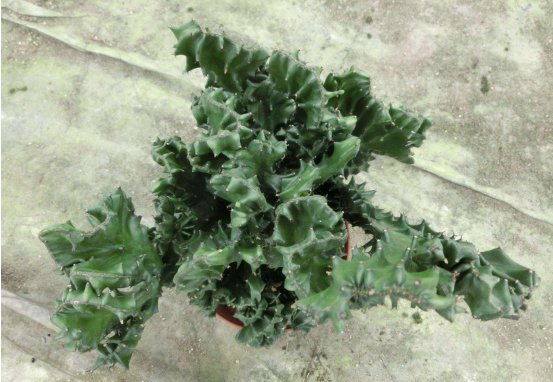
Now that you have seen the tips for making Euphorbia splendens propagation more successful, do you know when the flowering season of Euphorbia splendens is?
Next, let us show you when the flowering season of Euphorbia splendens is!
How to grow Euphorbia splendens
Euphorbia splendens, also known as jingangzuan, tiehaitang, bawangbian and so on, is a deciduous shrub in the genus Euphorbia of the family Euphorbiaceae. It is native to cold regions, and in China it is cultivated outdoors in provinces such as Guangdong, Guangxi and Yunnan, while in North China and East China it is mostly grown as a potted plant for enjoyment.The stems of Euphorbia splendens are densely covered with brown hard spines. The leaves are alternate, broadly lanceolate, and very few in number, all growing on new branches. The flower stalks are long and upright, arranged in pairs, the flowers are small and have no petals; the kidney-shaped, bright red part is the bract, and because of its bright red color it is often mistaken for petals by people looking at pictures of potted flowers and plants. The flowering period is very long, lasting from March all the way to December, but it blooms best in autumn. Because its flower shape resembles plum blossoms and its stems bear hard spines, it is also called "hucimei" (tiger thorn plum).
Euphorbia splendens likes mild conditions and sunlight, is drought-tolerant, and is best propagated by cuttings. Between May and June, cut 8 cm to 10 cm long cuttings from the tip of the mother plant's branches, wipe off the white sap that oozes from the cut, dip it in plant ash, and leave for 3 to 4 days until the wound has dried, then insert it into clean sandy soil. After planting, water sparingly to keep the potting soil semi-dry; it will take root in about 1 month or so. In the autumn of the following year, transplant it into flower pots, and as usual water sparingly, watering only after the soil looks dry, otherwise it will suffer root rot.
In summer, keep the room temperature at around 10°C and it can overwinter safely. Euphorbia splendens grows slowly, and new branches can only produce 10 cm to 15 cm of new growth each year. It has a long lifespan and can live for decades as a potted plant. Because of its slow growth, it can be trained into bonsai of various shapes. Its flowers, when struck by sunlight, are dazzlingly bright, making it an excellent potted flower for indoor decoration.
How to grow Euphorbia splendens:
1. Moderate watering
When growing Euphorbia splendens, do not water excessively, because Euphorbia splendens likes neutral soil and water, and because it belongs to the cactus group and is drought-tolerant, so too much watering is not good for growing Euphorbia splendens. You must also make sure the flower pot drains well. There must be no standing water, otherwise the roots of Euphorbia splendens will slowly rot. Generally speaking, watering once every two days is enough. And do not water until it is thoroughly soaked.
2. Plenty of light
Euphorbia splendens likes light and needs plenty of sunlight; it can tolerate partial shade and also tolerates drought. But plenty of light helps promote the growth of Euphorbia splendens. If there is not enough light, it easily causes the stems to become deformed.
3. Moderate fertilization
Compared with others, Euphorbia splendens is better suited to neutral fertilizers, such as potassium nitrate. During the growing period in May and June, you can apply a little more fertilizer as appropriate. But do not use raw fertilizer or concentrated fertilizer.
4. Soil
The best soil for growing Euphorbia splendens is a mix of plenty of river mud and a small amount of coal cinders; this mixed soil is more beneficial to the growth of Euphorbia splendens.
Now that you have seen these tips for growing Euphorbia splendens, let us next look at what points need attention during the growing process!