How to grow dahlias? A complete guide to cultivation methods
1. Soil
For cultivating dahlias, it is best to use a loose, breathable, well-draining sandy soil, which can be prepared from leaf mold, sand, and garden soil.
2. Light
Dahlias prefer sunlight and need ample light, and can receive more than 6 hours of light, so the flowers grow more brilliantly colored.
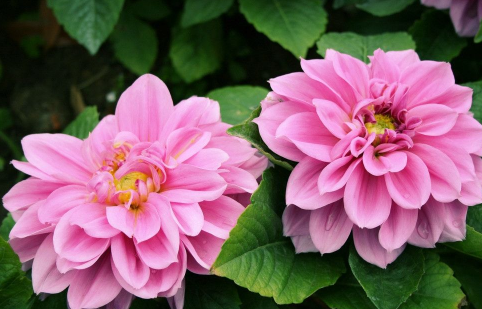
3. Water
Dahlias need a large amount of water during the growing season. In summer, water once a day. It should not be too wet or too dry, and water should also be sprayed around them to maintain air humidity.
4. Temperature
Dahlias prefer a cool climate and are not demanding about temperature. They can grow at 8-35°C, though 15-25°C is more suitable for their growth.
How to grow dahlias
Before discussing how to grow dahlias, it must first be said to flower lovers that potted dahlias are more difficult than those planted in the ground and are relatively harder to care for, so if you have potted dahlias, you need to muster all your energy to learn the care methods for dahlias.
To make it easier for flower lovers to understand how to grow dahlias, this article will explain dahlia cultivation according to different steps, so that flower lovers can grasp as much knowledge as possible about growing dahlias.
1. Care environment
Whether potted or planted in the ground, they need to be cared for in a sunny environment and sheltered from the wind, because the stems of dahlias are relatively weak and break easily, unable to withstand strong winds. When the summer sun is particularly harsh, they should be slightly shaded. If they are cared for long-term in an environment with insufficient light, the root system will weaken, the leaves will be thin and the stems slender, the flowers small and pale, and they may even fail to bloom.
2. Choice of soil
Because dahlias like moisture but fear waterlogging, and like fertilizer but fear excess, the soil should be chosen as fertile, loose, and breathable (in fact, most flowers and plants require fertile, loose, and breathable soil).
3. Planting
Dahlias are tuberous plants with huge tuberous roots. What flower lovers generally buy are tuberous roots. Planting is actually very simple. What needs to be said to flower lovers here is soil covering. Generally, covering with about 3 cm of soil is enough. Water less at first, keep it on the drier side, and gradually water more once sprouts appear.
4. Watering
Although dahlias like moisture, they fear waterlogging and also fear drought. Too much watering easily causes root rot, but their leaves are large and they grow lushly, so they also need more water. If they wilt from lack of water and cannot be replenished in time, after exposure to sunlight, in mild cases the leaf edges scorch, and in severe cases the basal leaves fall off. Therefore, the water permeability of the soil is very important, and watering also needs to be flexible according to soil moisture.
5. Fertilizing
Once dahlias bloom, they will keep blooming continuously, with the flowers getting smaller and smaller. In the later stage, they need a large amount of phosphorus and potassium fertilizer, but dahlias also fear fertilizer that is too concentrated, so fertilizing should follow the principle of light fertilizer applied frequently, applying a light fertilizer once every week.
6. Winter care measures for dahlias
(1) Stop watering: Immediately stop watering after the dahlias finish blooming, forcing the stems to wither and turn yellow and enter dormancy.
(2) Thorough pruning: When the dahlia stems have completely withered and turned yellow, cut off all stems more than 6 cm above the ground. Prepare to store them indoors.
(3) Storage conditions: The temperature of the storage room must be kept at 15°C. The storage room must also be kept dry, and absolutely no watering during storage.
(4) Storage for overwintering: Also note that when digging up the tuberous roots, try not to damage them. If potted, it is best not to remove them from the pot. Wait until the potting soil is very dry and the outdoor temperature drops to 3°C, then move them indoors and stack them for overwintering.
If the winter temperature in your city is not suitable for dahlia growth, cut off water, and after the leaves wither, dig up the tuberous roots and plant them again the following spring.
How to grow dahlias: dahlia cultivation methods and tips
As one of the most widely cultivated ornamental flowers in the world, the dahlia has become a world-famous flower. Native to Mexico, the dahlia was introduced into China and, after long-term domestication and breeding, now has extremely many varieties, with both flower colors and petal shapes becoming more diverse. With widespread planting, the dahlia is now also extremely popular in China. Dahlias can not only be planted in flower beds and flower borders, but can also be grown as potted plants at home. Today let us learn together how to grow dahlias.
How to grow dahlias
1. Temperature and light: Dahlias prefer a cool, mild climate and like sunlight. Dahlias like light and cannot tolerate shade. If placed in a shaded place for a long time, they will grow poorly, with a weakened root system, thin leaves and slender stems, small and pale flowers, and some may even fail to bloom. They have strong adaptability and can also grow well under high summer temperatures.
2. Soil: Avoid heavy clay soil; a loose, fertile sandy loam is preferable. For the growing medium, a fertile sandy loam is best, and both drainage and sunlight need to be good. Dahlias are suitable for growing in loose, humus-rich, well-draining sandy loam. In daily management, loosen the soil in time and remove accumulated water in the pot, because the fleshy tuberous roots of dahlias rot when the soil contains too much water and air circulation is poor.
3. Watering: Potted plants should avoid water accumulation, otherwise the tubers rot easily. During the growing period, water and fertilize reasonably, and at the same time provide sufficient light so they grow robustly with abundant flowers and lush leaves. In summer, water once a day; in winter, water once every 3-5 days. Dahlias like water but hate water accumulation, fearing both waterlogging and drought. This is because dahlias have fleshy tuberous roots, and too much watering easily causes root rot. Also note that water shortage is likely at noon or in the evening, so watering should be appropriately increased.
4. Fertilizing: Dahlia is a flower that likes fertilizer. Starting from the seedling stage, generally apply a dilute liquid fertilizer once every 10-15 days. After budding, apply once every 7-10 days. Once the flower buds show color, stop applying fertilizer solution. Fertilizing is also not suitable when the temperature is high. The amount of fertilizer applied should be determined according to the plant's growth condition.
Dahlia cultivation methods and tips
1. Dahlias like a moist environment. When drought occurs, the leaves easily shrink and turn yellow. Watering should be moderate; the soil only needs to be slightly moist. Too much moisture easily causes leggy growth, and water accumulation easily causes root rot. Therefore, when planting, it is advisable to place a layer of crushed hard plastic foam blocks at the bottom of the pot to enhance breathability and drainage and prevent root rot.
2. Dahlias are sun-loving flowers. They need at least 4 to 5 hours of direct light each day to have lush leaves and abundant flowers. It is best to place them on a rooftop garden or a south- or west-facing balcony. When placed on a balcony, rotate them 180° about every 10 days to prevent uneven crown growth.
3. Dahlias can adapt between 10°C and 32°C, with 15°C to 25°C being most suitable. Above 32°C, growth stalls, and at this time they can be placed on a cool east- or north-facing balcony.
4. In hot and rainy summers, dahlias placed on a rooftop garden should be shaded and protected from rain to prevent root rot.
5. Dahlias are not cold-tolerant. Once frosted, the underground stems wither.