What are the precautions for growing Pachystachys lutea?
Pachystachys lutea is a sun-loving plant, so when growing it you should let it bask in sunlight as much as possible. If grown indoors, it is best placed on a balcony so it can carry out photosynthesis better; if grown in a courtyard, try not to grow it in shady spots. Pachystachys lutea is a plant that is not cold-tolerant, so special attention is needed in winter, especially in high-latitude winters where protection is even more important. The temperature for growing Pachystachys lutea must not be lower than 5°C, otherwise Pachystachys lutea may struggle to survive. Pachystachys lutea is susceptible to red spider mites and aphids when in full bloom, so growers should control them promptly during the flowering period.
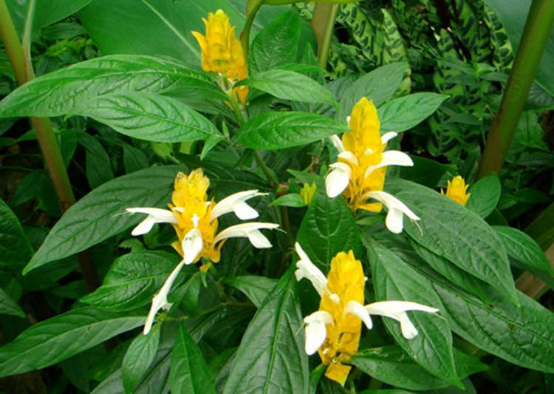
Science has proven that Pachystachys lutea is non-toxic, so all you growers can cultivate it with peace of mind. If you want to learn more detailed information about Pachystachys lutea, then follow and share our Four Seasons Plants website!
Is Pachystachys lutea toxic? Precautions for growing Pachystachys lutea
Pachystachys lutea is an excellent potted flower variety, suitable for decorating conference venues, halls, living rooms and balconies. So is Pachystachys lutea toxic? Is it suitable for growing indoors? What should be noted during the growing process of Pachystachys lutea? Let's find out together.
I. Is Pachystachys lutea toxic?
Pachystachys lutea has a long flowering period and beautiful flowers, and is a household plant loved by many people. However, many flower lovers worry about whether Pachystachys lutea is toxic when grown indoors. In fact, there is no need to worry about this at all, because Pachystachys lutea is non-toxic, so it can be grown indoors.
II. Precautions for growing Pachystachys lutea
Pachystachys lutea prefers fertilizer. During the growing period, apply diluted organic fertilizer once every half month, and 0.2% monopotassium phosphate is also very suitable for it. Remember that nitrogen fertilizer must not be excessive, otherwise it easily causes thin and long flower stems and reduced flower quantity. During the flowering period, apply phosphorus and potassium fertilizer twice to meet the nutritional needs of bud formation and flowering. If during the care process the fertilizer is insufficient, the plant's growth will slow down, the leaf color will become dull, and the inflorescences will be few and small. In addition, adding 0.1% ferrous sulfate powder irregularly can keep the leaves emerald green and glossy, and can also prevent leaf yellowing. Pachystachys lutea is suitable for growing in an environment with a temperature of 16-28°C. In winter, it must be kept above 5°C to overwinter safely.
Pachystachys lutea is susceptible to damage from whiteflies, red spider mites and aphids, and should be controlled promptly. During the flowering period and in winter greenhouses, Pachystachys lutea often develops small black mold spots on the flowers due to poor ventilation. This is mainly the excrement of whiteflies. The nymphs and adults of whiteflies gather at the base of the bracts and in the leaf axils; when adult density is high, dense black spots appear, causing poor flowering and gradual mold rot. In addition, red wax scale and aphids may also occur, both directly affecting growth and ornamental value. Once discovered, spray continuously with a 1500-fold dilution of 40% omethoate.
The above shows that Pachystachys lutea is non-toxic, so everyone can grow it with peace of mind. During the growing process, everyone should pay more attention to a few things so that Pachystachys lutea can bloom more luxuriantly.
Growing methods and precautions for Pachystachys lutea
Growing methods for Pachystachys lutea
Temperature and light
The suitable temperature for Pachystachys lutea growth is between 15-25°C, and the safe overwintering temperature needs to be kept above 10°C, otherwise the plant will stop growing.
Pachystachys lutea likes a warm, humid growing environment with sufficient light, but care should be taken that the light is appropriate; by all means avoid direct strong sunlight in summer, do the shading work well, and it is best to place it in a semi-shaded spot for care while also ensuring ventilation. In spring, autumn and winter, keep the plant in full light, which is beneficial to healthy plant growth and reduces disease. If the plant is kept in an overly shady environment for a long time, it will become leggy, and the flowering period will be delayed with fewer flowers.
Watering
During the growing period of Pachystachys lutea, the potting soil needs to be kept moist, and at the same time the surrounding environment should maintain relatively high air humidity, but by all means there must be no waterlogging, otherwise root rot easily occurs. Generally, water once a day in spring and autumn. In summer or during drought periods, always pay attention to raising the air humidity around the flowerpot. In summer, water 2-3 times a day, and at the same time use a sprayer more often to mist the leaf surface. In winter, watering needs to be controlled, and it is enough to keep the potting soil slightly moist. However, if the daytime temperature in winter is above 25°C and it can also stay around 15°C at night, the plant can still bloom, and normal water and fertilizer management can be carried out at this time.
Soil
The cultivation soil for Pachystachys lutea requires fertile, loose acidic soil with good drainage and aeration, and heavy clay soil should be avoided. For mixing potting soil, leaf mold, garden soil, river sand and decomposed organic fertilizer can be mixed evenly in a 5:3:1:1 ratio.
Fertilizing
Pachystachys lutea likes fertilizer. During the growing period, apply a thin, decomposed liquid fertilizer once every 1 to 2 weeks to promote vigorous plant growth and more flowers. During the flowering period, apply phosphorus and potassium fertilizer twice more to ensure the nutritional supply for bud formation and flowering.
Precautions for growing Pachystachys lutea
Pest control
The main pests and diseases of Pachystachys lutea include red spider mites, aphids, scale insects, etc. A mixed solution of 1000-fold Lorsban and 800-fold thiophanate-methyl must be sprayed on the leaf surface once a month for control.
Disease control
Common diseases of Pachystachys lutea include powdery mildew, sooty mold, etc. When the plant is affected, for the former you can spray 70% thiophanate wettable granules at 800-1000-fold dilution or 25% triadimefon wettable granules at 800-1000-fold dilution to control the condition. For the latter, generally spraying 40% omethoate at 800-fold dilution or amobam at 500-800-fold dilution is sufficient.