Cultivation methods and precautions for Chinese milk vetch
1. Soil
The minimum requirement for soil used to plant Chinese milk vetch is that it be healthy, loose and well-draining, and the soil must not contain pathogens or insect eggs. A pH between 5.5 and 7.5 is most suitable, and of course fertile soil will be even more favorable for the growth of Chinese milk vetch.
2. Light
Chinese milk vetch prefers ample light, so when planting it you must avoid an environment that lacks light. If growing it indoors, be sure not to place it in a dim corner or room, otherwise the leaves will become weak and thin and it will be unable to bloom.
3. Watering
Earlier we mentioned that it likes a moist environment, so when it comes to watering, how should Chinese milk vetch be grown? The answer is to water according to the moisture condition of the soil, keeping the soil slightly moist. Do not overwater to the point of water accumulating in the soil, and you may mist the leaves appropriately.
4. Fertilizing
Chinese milk vetch grows rather quickly. If the soil conditions used are ordinary, then fertilizing becomes relatively important. Fertilizing is generally based mainly on phosphorus and potassium fertilizers, and the fertilizers applied differ at different stages. For example, in late autumn, calcium phosphate is applied to promote early root nodule formation and early seedling development. Before the onset of winter, phosphorus fertilizer can be added to increase cold resistance.
The above is an introduction to the question of how to grow Chinese milk vetch. What follows is what to pay attention to during the cultivation of Chinese milk vetch!
Introduction to Chinese milk vetch Cultivation methods for Chinese milk vetch
Chinese milk vetch is distributed in the Yangtze River region of China, growing at altitudes from 400 m to 3000 m, mostly by streams, on hillsides and in moist places. At present, the planting of Chinese milk vetch is being vigorously promoted in many regions across the country. Let us now take a look at the relevant knowledge about Chinese milk vetch.
I. Introduction to Chinese milk vetch
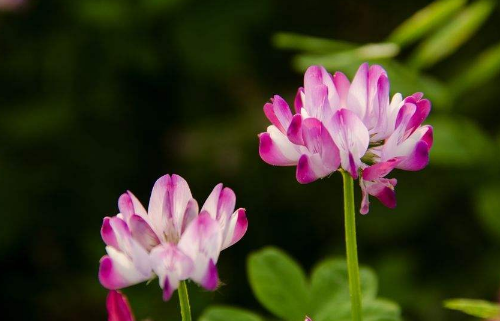
Chinese milk vetch, also known as qiaoyao, red flower grass and caozi, is native to China. Chinese milk vetch likes warm and moist conditions and has a certain degree of cold tolerance. It requires sufficient water throughout its entire growth period. Chinese milk vetch is not strict about soil requirements, and sandy and clay loam are relatively suitable. It has poor salt tolerance and belongs to the Fabaceae family, genus Astragalus. Chinese milk vetch is a biennial herbaceous plant. The main root is relatively thick and fleshy, and the lateral roots penetrate the soil relatively shallowly. The stem is cylindrical, hollow, tender and juicy, and has sparse downy hairs. The leaves are mostly odd-pinnately compound leaves; the flowers are umbel inflorescences, generally axillary and rarely terminal; the pods are in two rows, united into a triangle; the seeds are kidney-shaped with a smooth seed coat. The roots, the whole plant and the seeds can be used as medicine, and have the effects of dispelling wind and improving eyesight, strengthening the spleen and replenishing qi, and detoxifying and relieving pain. Chinese milk vetch is a plant of the genus Astragalus in the Fabaceae family, mainly used for fertilizing farmland and for ornamental flowers. It is currently distributed in central and western Asia and is mostly planted as green manure for rice fields. As early as the Ming and Qing dynasties, China had already planted it on a large scale in the middle and lower reaches of the Yangtze River, widely distributed in areas between 24 and 35 degrees north latitude, and it is one of China's main nectar source plants.
II. Cultivation methods for Chinese milk vetch
Care points
1. Sow at the right time
Chinese milk vetch likes a cool climate and can be sown at the full heading stage of late-season rice, that is, about 25 days before harvest, at a sowing rate of 1.5 kg per mu. Before sowing, the rice field should be well drained to prevent water accumulation; dry fields should be irrigated once with a quick run-through of water. The seeds must be treated by sunning, rubbing (hulling) and soaking. Sunning the seeds can promote the activity of enzymes within the seeds and increase the germination rate, and generally half a day of sunning is enough; rubbing (hulling) the seeds can rub (hull) off the waxy layer on the seed surface, making it easier for the seeds to absorb water. Coarse sand can be mixed with the seeds, and the seeds and sand rubbed against each other by grasping and rubbing with the hands, or a rice milling machine can be used to lightly mill until the seed coat is smooth; soaking the seeds can accelerate the softening of the seed coat, promote seed germination, and make the seedlings emerge quickly and uniformly. Soaking in water for 12-24 hours, then scooping them out and drying them before germination can be done. Note that dry fields should not have their seeds soaked, to prevent the sprouts from drying up due to lack of water after sowing.
2. Mix with rhizobia
After the seeds are germinated and show white, mix with rhizobia. Use cold thin rice porridge soup mixed with the bacterial inoculant and then mix with the seeds. 0.5 kg of Chinese milk vetch rhizobia inoculant can be mixed with 7.5 kg of Chinese milk vetch seeds, for sowing 5 mu.
3. Fertilize at the right time
Apply mainly phosphorus and potassium fertilizers, with an appropriate accompanying amount of nitrogen fertilizer. After the late rice is harvested, apply 10-15 kg of superphosphate and 1000 kg of manure water per mu to promote early root nodule formation and early seedling development. Around "Winter Solstice", apply 3-4 kg of potassium fertilizer or 50 kg of plant ash per mu to improve the cold resistance of the seedlings. After "Start of Spring", apply 3-5 kg of urea per mu to accelerate the vigorous growth of branches and leaves after the warmth of spring and increase the yield of fresh seedlings.
4. Strengthen field management
After the late rice is harvested, promptly open the surrounding field ditch, the bed ditch and the cross drainage ditch. Keep the field moist in the early stage and prevent water accumulation (especially in the later stage); the main disease is powdery mildew, which can be prevented by spraying 0.05% tuzet (or carbendazim); the pests include aphids and thrips, which can be controlled with dimethoate. For armyworms, use 100 g of 90% trichlorfon plus 150 ml of rice vinegar and 5 g of saccharin per mu, mixed with 75 kg of water for control. In seed-producing fields, pay attention during the full flowering stage to prevent damage by thrips in order to increase the pod-setting rate. At the same time, avoid damage by livestock.
5. Turn under at the right time
Generally, turning under is carried out at the full flowering stage, 15-20 days before transplanting the early-season rice. When turning under, apply 25-40 kg of lime per mu to promote the rotting and decomposition of Chinese milk vetch, and at the same time it can neutralize acidity.
Cultivation methods and precautions for Chinese milk vetch
Cultivation methods for Chinese milk vetch
Fertilize at the right time
Fertilizing Chinese milk vetch is based mainly on phosphorus and potassium fertilizers, and nitrogen fertilizer can be added appropriately. Apply different fertilizers at different periods. Generally, in late autumn, apply calcium phosphate and manure water to promote early root nodule formation and early seedling development; around the Winter Solstice, apply potassium fertilizer or plant ash to enhance cold tolerance; after the Start of Spring, apply urea to promote the growth of branches and leaves.
Turn under at the right time
Chinese milk vetch is generally turned under during the flowering stage, when there are just over ten days until the rice transplanting period. For large-scale cultivation, evenly apply an appropriate amount of lime per mu to promote the rotting of the plants and neutralize acidity.
Water at the right time
Chinese milk vetch likes warm and moist environments, and especially needs sufficient water during the growth period, but you must also be careful to avoid water accumulation, so controlling the amount of watering is crucial. In addition, you also need to spray water frequently to keep the environment moist.
Precautions for the care of Chinese milk vetch
Sow at the right time and in the right amount
Because Chinese milk vetch likes cool conditions, sowing can be carried out more than twenty days after the late rice is harvested in late autumn. When sowing, note that the seeds must be treated by soaking, drying in the sun and germination, so that the germination rate can be increased.
Mix with rhizobia
When the Chinese milk vetch seeds have germinated and show white, mix with rhizobia, that is, use cold thin rice porridge soup mixed with the bacterial inoculant and then mix with the seeds.
Strengthen care and management
For large-scale commercial cultivation of Chinese milk vetch, after the late rice is harvested, ditches must be opened well, including the surrounding field ditch, the bed ditch and the cross drainage ditch, to keep the soil moist while avoiding water accumulation. In addition, attention must be paid to the prevention and control of pests and diseases. For powdery mildew, use carbendazim or tuzet; for aphids and the like, use dimethoate; for armyworms, use trichlorfon or rice vinegar and saccharin. In addition, attention must also be paid to avoiding harm from livestock.