What are the precautions for propagating Jerusalem cherry?
1. Propagation methods.
Jerusalem cherry is generally propagated by sowing or cuttings. In spring, either sowing or cuttings can be used, while in autumn, cuttings are the most suitable method.
2. Pests and diseases.
In summer, Jerusalem cherry is prone to anthracnose, which affects the growth of stems and leaves. When the disease occurs, the affected leaves can be cut off and a liquid medicine sprayed for treatment. The main pest of Jerusalem cherry is aphids, which can be controlled by spraying insecticide.
Precautions for pruning Jerusalem cherry
The Jerusalem cherry itself already has a very elegant and beautiful tree shape, and when planted outdoors it has high ornamental value even without pruning. However, for potted Jerusalem cherry, pruning is necessary considering the environment and the size of the pot.
But note that if the Jerusalem cherry was just planted or propagated by cuttings in the current year, do not prune it, because a Jerusalem cherry plant grown in the current year is still relatively weak, and pruning can easily affect its healthy growth. Generally, pruning of Jerusalem cherry only begins in the second year.
Introduction to the propagation methods and precautions for Jerusalem cherry
Jerusalem cherry
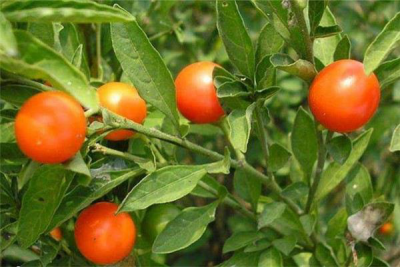
A new favorite for balconies, Jerusalem cherry is also known as Jiqing fruit, four-season fruit, coral bean, etc. Apart from color, its fruit looks very similar to a cherry, and apart from shape, it also closely resembles a small tomato. As a short plant, it can fill entire branches with fruit in the harvest season. It is suitable for pot cultivation, and its propagation methods are also very simple. Below we explain in detail the propagation methods and precautions for Jerusalem cherry.
I. Growth habits of Jerusalem cherry
It is especially commonly seen at field edges, roadsides, in thickets or beside ditches. It is commonly found in areas at an altitude of 1350-2800 m, and is also distributed in areas at 600 m.
Jerusalem cherry likes sunlight, warmth, and tolerates high temperatures, with no sunscald occurring above 35°C. It is not tolerant of shade, nor of cold, and is not drought-resistant. In hot summers it fears rain and waterlogging. It is not strict about soil requirements, but grows vigorously in fertile, loose, well-drained slightly acidic or neutral soil. It has strong sprouting ability. It is not cold-tolerant, and potted plants in the north need to be moved into a greenhouse to overwinter.
II. What propagation methods does Jerusalem cherry have?
Jerusalem cherry is usually propagated by cuttings or by sowing. Cutting propagation is suitable in spring and autumn, and the sowing time is March-April in spring.
1. Sowing method
Collect mature seeds in winter, rinse them, and dry them in the sun. Sow before Qingming the following year. For small-scale propagation, it can be done in a flowerpot: spread the seeds evenly on top, cover with a thin layer of soil, then soak up water in a water basin. To keep it moist, cover the mouth of the flowerpot with glass or plastic film, so that germination can occur in about a week, and when new leaves grow, the seedlings can be divided and transplanted. If raising a large number of seedlings, sow in a seedbed, then spray thoroughly with a fine-holed watering can, and afterward spray again when the soil looks dry, keeping it moist. After transplanting, apply a thin fertilizer once and place it in a spot with ample light.
2. Cutting method
When taking cuttings, cut (or thin out) growing branches about 8~10 cm long with terminal buds (remove any flower buds), and take cuttings in the usual way. Keep the seedbed or pot soil moist, and regularly spray a water mist on the terminal buds and terminal leaves of the cuttings. At a temperature between 18~28°C, they can take root in about 10 days. If the cutting seedlings have well-developed roots and the plants are short, they are suitable for cultivating into small ornamental-fruit potted flowers. After cutting propagation in autumn, you can enjoy abundant bright red fruits in winter.
Jerusalem cherry
III. Disease control as a propagation precaution for Jerusalem cherry
Potted Jerusalem cherry is prone to anthracnose during high summer temperatures, mainly harming leaves and also stems. There are two types of symptoms: one occurs on the leaves. In the early stage of the disease, round lesions appear on the leaves, changing from round reddish-brown to grayish-white, then to dark brown, and producing black dots arranged in concentric rings, namely the pathogen's acervuli. This disease occurs at leaf margins and leaf tips, and in severe cases the leaves wither, blacken, and die. The pathogen is a fungal disease, and the fungus overwinters as mycelium in parasitic remains or in the soil. Old leaves begin to develop the disease from late April to early May, with faster development from June to July, and more severe development in the rainy season. New leaves begin to develop the disease from August. When potted flowers are placed too densely and leaves cross each other, the disease is easily transmitted, but resistance differs among varieties.
IV. Control methods
1. Select excellent disease-resistant varieties.
1. In the early stage of the disease, cut off diseased leaves and burn them promptly to prevent the pathogen from spreading, avoid placing plants too densely and avoid overhead watering, and always maintain ventilation and light.
4. In the early stage of the disease, spray 50% carbendazim wettable powder at 700-800 times dilution or 75% chlorothalonil at 500 times dilution.
5. Pest control: The main pest of Jerusalem cherry is aphids, which are small, green or black, and often gather in groups on the tender branches and leaves of many flowers to suck nutrients.
6. Control method: Spray with 40% omethoate emulsifiable concentrate at 2000 times dilution or 50% dichlorvos emulsifiable concentrate at 1500-2000 times dilution.
The reason disease control for Jerusalem cherry is placed under propagation precautions is mainly that if there is no healthy, good plant, how can excellent Jerusalem cherry be propagated? Therefore, whether sowing or cuttings are used, an excellent substrate should be selected.