How to grow the powderpuff plant? A detailed guide to care precautions
Soil
The powderpuff plant (Calliandra) is an introduced species that prefers a warm, humid environment with plenty of sunlight. It is not cold-tolerant and is not demanding about soil; as long as the soil layer is deep and well-draining, the powderpuff plant will grow well.
Water and fertilizer
The powderpuff plant has a relatively high demand for water and fertilizer. Normally, water when the top 1 cm of the potting soil surface is dry; in winter, water when half the potting soil is dry. Apply a compound fertilizer once a month from spring to autumn. In the tropical and subtropical regions of southern China, the powderpuff plant can be planted in the ground or grown in pots; in northern regions, it should be grown in pots and managed in a greenhouse.
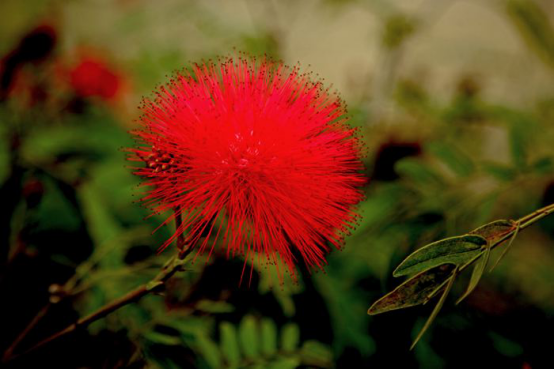
Planting a powderpuff plant in the courtyard not only allows you to enjoy it fully, but also gives us profound inspiration, reminding us to face all kinds of difficulties in life with the same positivity, enthusiasm, optimism and generosity as its flowers. Moreover, when you feel that your individual strength is especially small, you might as well gather together like the petals of the powderpuff flower and bloom into miraculous beauty.
How does the powderpuff plant propagate?
Propagation methods of the powderpuff plant
Propagation by seed
The flowering period of the powderpuff plant is in August and September each summer, and the best seed collection period is in October. Select plump, intact, healthy seeds and store them in a dry, ventilated environment. Wait until the following spring to sow.
Before sowing, the seeds need to be soaked in clean water at 60 degrees, changing the water once a day for three consecutive days, then removed. Keep them moist to promote germination. Sow the seeds in moist soil, and they will germinate in about one week.
Propagation by cuttings
The seed propagation method for the powderpuff plant was introduced above, but in the cultivation of the powderpuff plant, cutting propagation is generally still chosen.
In spring, cut healthy branches about 20 cm long, remove dead leaves, and insert them into a moist sandy soil medium. It is best to maintain the temperature between 15 and 30 degrees, and simply provide shade and keep them moist.
Key care points for the powderpuff plant
Water and fertilizer
The powderpuff plant has a relatively high water demand, and watering should be increased during the growing season. When watering, the soil should be thoroughly soaked. Because potted powderpuff plants have limited space, they are prone to water shortage and drought, so special attention should be paid to watering.
The powderpuff plant likes fertilizer and can be given a light fertilizer monthly; either organic fertilizer or compound fertilizer is fine. During the flowering period, additional phosphorus fertilizer and potassium fertilizer are needed.
Pruning
The powderpuff plant is generally relatively tall and grows quickly, so its branches need to be trimmed promptly to promote growth and maintain an attractive appearance. When pruning, keep the branches well-arranged and do not cut off all the branches at the bottom; cultivate side branches in appropriate amounts. At the same time, promptly clean up dead branches and fallen leaves.
Related knowledge and care management of rhododendrons
Rhododendron, scientific name: Rhododendron simsii & R.spp.Aliases: Yingshanhong, mountain pomegranate, mountain zhizhu, red zhizhu, mountain azalea, etc.
Family and genus: Ericaceae, Rhododendron genus Rhododendron is one of China's top ten famous flowers.
Among all ornamental flowering trees and shrubs, the one that can be called beautiful in both flower and leaf, suitable for both ground planting and pot cultivation, and the most widely used, is the rhododendron. Bai Juyi praised it saying: "Casually break two branches and hold them in hand, looking closely they seem not to exist in the human world; among flowers this is Xi Shi, and hibiscus and peony are all Mo Mu." In the natural distribution of rhododendrons in the world, no place can match China in the number of species and the huge quantity; China is the treasure house of the world's rhododendron resources! Today Jiangxi, Anhui and Guizhou use rhododendron as their provincial flower, and as many as seven or eight cities have designated it as their city flower, which fully shows people's deep affection for rhododendrons. Rhododendron is a large genus, with about 900 species worldwide, distributed in Europe, Asia and North America, with the most in Asia, 850 species, of which China has more than 530 species, accounting for 59% of the world's species, especially concentrated in the Hengduan Mountains area of the three provinces and regions of Yunnan, Tibet and Sichuan. It is the origin and distribution center of the world's rhododendrons. In the Himalayas of Bhutan, Sikkim, Nepal, Myanmar and northern India, there are also relatively many species. Japan, Korea, Soviet Siberia and the Caucasus have only a few species. In addition, the New Guinea——Malaysia region has about 280 species, which is the secondary distribution center of rhododendrons. Among them, New Guinea has more than 160 species, Indonesia more than 100 species, and the Philippines, Vietnam and the Malay Peninsula have 10-20 species. Because this region is a tropical island mountain area with a humid climate, almost all the rhododendrons produced there are epiphytic shrub types, and their seeds have strange filamentous long-tailed appendages, forming a special type of tropical alpine plants. North America has only 24 species, distributed along both the Atlantic and Pacific coasts of the United States, as well as in Canada, Alaska and Greenland. Europe has even fewer, only 9 species, with individual species distributed around the Arctic. Oceania has only 1 species, distributed in northern Queensland, Australia, also of the tropical alpine type.
Distribution of rhododendrons in China
Through the investigation and research of modern botanists, it is basically clear that there are more species south of the Yangtze River and very few north of it; Yunnan has the most, followed by Tibet, then Sichuan, and the farther from this center, the fewer the species. ** and Ningxia belong to arid desert zones and have no natural distribution. The approximate number of rhododendron species in each province (region) is as follows: Yunnan 257 species, Tibet 174 species, Sichuan 152 species, Guangxi 75 species, Guangdong 35 species, Guizhou 43 species, Hunan 37 species, Fujian 35 species, Taiwan, China 30 species, Jiangxi 27 species, Hubei 27 species, Zhejiang 18 species, Gansu 15 species, Shaanxi 13 species, Qinghai 13 species, Anhui 9 species, Jilin 5 species, Jiangsu 4 species, Liaoning 4 species, Heilongjiang 4 species, Inner Mongolia 3 species, Shandong 2 species, Henan, Hebei and Shanxi 1 species each. In vertical distribution, they can reach an altitude of 4500-5000 m.
In different natural environments, rhododendrons form different morphological characteristics, with extremely huge differences: there are evergreen large trees, small trees, evergreen shrubs, deciduous shrubs; some have thick, large trunks, reaching over 20 m in height, while some are prostrate, cushion-like or epiphytic types, only 10-20 cm tall. The basic form is: the trunk is upright, single or clustered; branches are alternate or falsely whorled. Branches and leaves may or may not have hairs; branches, leaves and pedicels may or may not have scales; leaves are varied in shape but not linear, entire, very rarely finely serrate, leathery or papery, evergreen, semi-evergreen or deciduous, aromatic or not; flowers are terminal, lateral or axillary, solitary, few-flowered, or more than 20 in racemose umbels, blooming before the leaves or after them; the corolla is prominent, funnel-shaped, bell-shaped, rotate salverform bell-shaped, dish-shaped to bowl-shaped or tubular, 4-5 lobed, sometimes 6-10 lobed; flower colors are rich and varied; the throat has dark spots or light-colored halos; the base may or may not have nectary pouches; aromatic or odorless; the calyx is cup-shaped, 4-5 lobed, persistent; stamens 5-10, rarely 10-25, unequal in length, filaments hairy or not, dorsifixed anthers, dehiscing by apical pores, ovary superior, 5-10 locular, style and ovary hairy or not, with glands or not; capsules dehisce into 5-10 valves, seeds numerous, mostly powdery or chaff-like. In original species classification, the entire genus is divided into 5 subgenera and 8 sections, of which 3 sections are further divided into 58 subsections, and below the sections are species. Namely:
I. Subgenus Evergreen Azaleas without scales 1. Section Evergreen Azaleas without scales, divided below into 24 subsections.
II. Subgenus Evergreen Azaleas with scales 1. Section Evergreen Azaleas with scales, divided below into 27 subsections. 2. Section Beard Rhododendrons 3. Section Bilberry Rhododendrons, divided below into 7 subsections.
III. Subgenus Sheep Azaleas China has only 1 species.
IV. Subgenus Yingshanhong 1. Section Short-calyx 2. Section Yingshanhong
V. Subgenus Horse Silver Flower 1. Section Horse Silver Flower 2. Section Long-stamen Rhododendron
The above three subgenera I, II and V are customarily called evergreen rhododendrons, while subgenera III and IV are called deciduous rhododendrons.
Several evergreen rhododendrons are introduced below:
Rhododendron delavayi: aliases Maying flower, horse-nose tassel, ox-blood flower, dog-blood flower, red camellia, dense-barrel flower. Evergreen shrub to tree, tree height 2-15 m, DBH up to 40 cm, bark grayish brown, thick, peeling in irregular flakes. Leaves leathery, oblong-lanceolate oblong-lanceolate, densely covered on the underside with grayish white to light brown spongy thin tomentum. Flowering period February-May, terminal spherical umbels, with 10-20 flowers, corolla bell-shaped, 3.5-5 cm long, fleshy, deep rose red, stamens 10, ovary 10-locular. Fruit ripens October-November. Produced in Yunnan, Guizhou, Guangxi and other provinces and regions; also distributed in Myanmar.
Rhododendron fortunei: aliases Tianmu rhododendron, Yunjin flower. Evergreen shrub, 2-4 m tall, branchlets stout, light green. Leaves thick leathery, oblong to oblong-elliptic or obovate, leaf surface dark green, underside pale green, hairless. Flowering period May, terminal racemose umbels, with 6-12 flowers, fragrant, corolla funnel-shaped bell-shaped, 4-5 cm long, 7-9 cm in diameter, pale pink, lobes 7, rounded, stamens 14, ovary 10-locular; pedicels, calyx, base of corolla, ovary and style all have glands. Fruit ripens October-November. Seeds numerous, chaff-like. Produced in Zhejiang, Anhui, Jiangxi, Fujian, Guangdong, Guangxi, Hunan, Sichuan and other places in mountain forests at an altitude of 600-2000 m; in recent years, Hangzhou, Wuxi, Shanghai and other places have successfully introduced it for garden planting.
Rhododendron protistum var. giganteum: also known as big mountain dog flower. Evergreen large tree, up to 25 m tall, DBH 60-100 cm, maximum basal diameter up to 3 m. Bark light dark brown, peeling in flakes; branchlets stout, covered with light gray felt-like hairs. Leaves leathery, oblong to oblanceolate, 24-34 cm long, apex obtuse, base broadly cuneate, surface dark green, underside pale green. In February-March, terminal racemose umbels are produced, with 24 flowers, corolla bell-shaped, 5.5-8 cm long, 6-8 cm in diameter, pinkish red, lobes 8, rounded, base with 8 nectary pouches, stamens 16, ovary 16-locular, densely covered with tomentum. Fruiting period October-November. Produced in the mountain evergreen broad-leaved monsoon forest at an altitude of 2400-**** m in Gaoligong Mountain, Tengchong County, Yunnan. In 1915, the British person G. Forrest first collected it at Hetou, Tengchong, and sawed off a wood disc with a circumference of 2.6 m and 280 annual rings, now kept in the British Museum in London. It was published as a new species in 1926, and for a long time it was not found in China, until 1983 when Professor Feng Guomei and others rediscovered it in Tengchong, and the following year found a large tree with a basal diameter of 3.07 m. This is the tallest rhododendron tree in the world, known as the "King of Rhododendrons."
Rhododendron ovatum: aliases oval-leaf rhododendron, Qingming flower. Evergreen shrub, 2-4 m tall. Leaves leathery, broadly ovate, 3-3.5 cm long, apex acute to obtuse, with a mucronate tip, base rounded. Flowering period March-May, flowers solitary in leaf axils, pink, rose red, light purple or purplish white, 5-lobed, 3 cm in diameter, throat pubescent, stamens 5, ovary 5-locular. Fruiting period August-October. Produced in Jiangsu, Zhejiang, Anhui, Jiangxi, Hubei, Hunan, Fujian, Guangdong, Guangxi, Sichuan, Guizhou and other provinces and regions at an altitude of 500-1200 m on shaded slopes under sparse forests or in gully thickets. Garden varieties: At present, about two to three hundred garden varieties are widely cultivated in China. Because their main bloodline is Yingshanhong, although they do not shed leaves in winter, they are still classified as deciduous rhododendrons. According to morphology, traits, parents and origin, they are now divided into 4 types: East Azalea, Hairy Azalea, West Azalea and Summer Azalea.
East Azalea: namely Oriental azalea, because it comes from Japan. Also called Shiyan, cinnabar rhododendron, spring azalea small-flower type, etc. This category includes Shiyan rhododendron and its varieties, with very many cultivars. Its main features: small stature, 1-2 m tall, scattered branching, thin pale leaves, few hairs and somewhat glossy, blooms in April, with dense flowers, the smallest flowers, generally 2-4 cm in diameter, at most 6 cm, single-petaled or hose-in-hose petals transformed from the calyx, rarely double, with many flower colors. Traditional varieties include Xintiandi, Xueyue, Bizhi, Riyichu, and Sijizhiyu, which can bloom twice in spring and autumn, etc.
Hairy Azalea: commonly known as hairy-leaf rhododendron, large-leaf rhododendron, spring azalea large-leaf type, etc. This category includes Rhododendron pulchrum, Rhododendron mucronatum and their varieties and hybrids. It is tall, reaching 2-3 m, grows vigorously, has strong adaptability, can be planted in the open ground, and is an excellent rootstock for grafting West Azaleas. Young branches are densely covered with brown bristles. Leaves reach 10 cm long, rough and hairy. Flowers large, single, broadly funnel-shaped, rarely double, with colors including red, purple, pink, white and mixed colors, etc. There are more than 10 varieties, the most commonly cultivated being Yuhudie, Zihudie, Liuqiu Hong, Yuling, etc.
West Azalea: first bred in the Netherlands and Belgium in Western Europe, so it is called Western azalea, abbreviated as West Azalea. It was formed through complex hybridization of Rhododendron indicum, Yingshanhong and Rhododendron mucronatum, etc., and is the type with the most and most beautiful flower colors and flower forms. Its main features are a short and sturdy body, compact crown, delicate habits, fearing sun and frost. Leaves thick, dark green, few hairs, leaf shapes divided into glossy leaf, pointed leaf, twisted leaf, long leaf and broad leaf. Flowering period April-May, flower colors diverse, including solid color, flying white, bordered, dotted red, bright spots, sand-sprayed, sprinkled brocade, etc.; most are double or semi-double, rarely single; petals include narrow and long, round and broad, flat, reflexed, wavy, flying, ruffled, rolled, etc., 6-8 cm in diameter, and the largest can exceed 10 cm. Traditional varieties include Huangguan, Jinpao, Tiannü Wu, Sihai Bo, etc.; in recent years, a large number of new hybrid varieties have appeared.
Summer Azalea: native to India and Japan, called Rhododendron indicum in Japan. It sends out branches first and blooms latest, generally from late May to June, hence the name. Its main features are slender branches and leaves, dense branching, full and neat crown, about 1 m tall. Leaves small and narrow, closely arranged. Flowers broadly funnel-shaped, 6-8 cm in diameter; flower colors and petals are as rich and varied as those of West Azaleas; flowers may be single, semi-double or double, and it is a good material for making bonsai. Traditional varieties include Changhua, Dahongpao, Chenjia Yinhong, Wubao Luzhu, Zichen Dian, etc. Among them, Wubao Luzhu has a small flower inside the flower, in a terrace-like form, and is the most double-flowered type among rhododendrons.
The main producing areas of rhododendrons in China are the Hengduan Mountains in the three provinces and regions of Yunnan, Tibet and Sichuan. Their intricate topography and terrain create a special climate, with extremely uneven rainfall distribution, dry winters and springs, rainy summers and autumns, and obvious vertical distribution.
In the low flat valley at 1000-2000 m, there are pointed-leaf rhododendron, big tree rhododendron, etc. At 2000-2800 m, the climate is cool, with bright-haired rhododendron, thick-stalked rhododendron, Yunnan rhododendron, axillary-flowered rhododendron, etc.
At 2800-**** m in sunny slopes of gullies, there are mixed forests of evergreen broad-leaved and deciduous broad-leaved trees. At their forest edges or grassy slopes, yellow-cup rhododendron, white-snow rhododendron, pompom rhododendron, hairy-throat rhododendron, grassland rhododendron, etc. form impenetrable rhododendron forests or thickets. Here there are the most rhododendron species, with a flowering period from April to July, in five colors and six hues, brilliant as brocade, sometimes covering an entire mountain top for one or two dozen square kilometers. In the 4000-**** m zone, there are few trees and shrubs; multi-branched rhododendron, flat-lying rhododendron, golden rhododendron, etc., 10-20 cm tall, become cushion plants, multiplying on gravelly tomb land or scree slopes.
Above 4500 m there is no rhododendron distribution. Alpine evergreen rhododendrons have long grown in humid, cold, high-altitude mountain areas, and introduction must create similar environmental conditions, such as no water accumulation on the ground, soil pH 5-6, good permeability, rich organic matter, and equipment for shading, misting and cooling.
Yingshanhong is the representative of deciduous rhododendrons and has the widest distribution, north to Henan and Shandong, south to the Pearl River basin, east to Fujian and Taiwan, China, and west to Sichuan, Yunnan and Guizhou. It can be found in high mountains, low hills, shady and sunny slopes, stream valleys and rocks, forests and forest edges, and grassy thickets. In Jiangnan it blooms in March-April, a scene of brilliant red. Mountain villagers use it as firewood, and it keeps sprouting after repeated cutting, which shows its strong adaptability and vitality. In the past, transplantation was difficult to keep alive, which was related to not pruning heavily. Although garden varieties have been improved by humans, they still reflect the basic habits of the original species: cold-tolerant and heat-fearing, and they require fertile acidic, loose and permeable soil. Some rhododendrons live very long; for example, Yunnan has large tree rhododendrons over 500 years old, and Wuxi has Rhododendron pulchrum planted in the open ground for more than 50 years.
Cultivation methods of rhododendrons
Sowing
Rhododendrons set seed heavily, have many seeds and a high germination rate. Seed collection can obtain large numbers of offspring, and seedlings have strong plasticity and vitality, making this an important means of introduction and breeding.
(1) Seed collection: In autumn, when the capsules turn greenish brown or yellowish brown, they can be harvested, placed indoors to dry, and after they split, shake out the seeds, store them in a dry indoor place. Sow the following spring.
(2) Sowing: Use a shallow pot, wooden box or ground bed, with well-drained coarse-grained soil spread on the bottom, and the surface 2 cm with orchid mud or leaf mold (both must be sterilized). After the seeds are evenly scattered, cover thinly with a layer of fine soil. Or spread 0.5-1 cm of chopped sphagnum on top of the orchid mud, sow the seeds directly into the sphagnum without covering. Then water to moisten the potting soil, cover with plastic film or a glass plate, and place in a shaded place.
(3) Management: Before emergence, keep the potting soil moist. Generally at 15-20 degrees C, seedlings emerge in about 20 days, with a germination rate of 75-85%. After that, the covering can be removed, paying attention to ventilation to improve seedling resistance. When dry, spray with a fine nozzle to moisten, but do not wash down the seedlings.
(4) Seedling separation: Deciduous rhododendrons grow relatively fast; when 2-3 true leaves have grown, they can be transplanted for the first time, with a plant spacing of 2-3 cm. After autumn, when they grow to 2-3 cm tall, dig them up again and transplant them into 3-inch small pots, 3 plants per pot. The following year, divide and plant again according to growth conditions; generally they can bloom in 3-4 years. Evergreen rhododendrons are transplanted for the first time after autumn, and transplanted again the next autumn. During the seedling stage, avoid strong light, heavy rain and strong wind; the soil should not be too wet, and watering should still be done by misting.
Cuttings: This is the most widely used method, with the advantages of simple operation, high survival rate, fast growth and stable traits.
(1) Cuttings: Take current-year tender branches that have just become woody, break them off with a heel, trim the rough end flat, cut off the lower leaves, and keep 4-5 leaves at the top. If the branch is too long, the tip can be cut off. If they cannot be inserted immediately after collection, wrap the base with a wet cloth or moss, cover with plastic film, and place in a shaded place, where they can be stored for several days.
(2) Time: In Jiangnan, cuttings are taken before the plum rain season, when the survival rate is highest. West Azaleas from late May to early June, Hairy Azaleas from early to mid-June, East Azaleas and Summer Azaleas from mid to late June. At this time the cuttings are moderately tender, and the weather is warm and humid, with a survival rate of over 90%.
(3) Method: For a small number, pot cuttings can be used; for a large number, bed cuttings can be used. The medium can be orchid mud, Huangshan soil, river sand, hard stone, perlite, etc., requiring few pathogens, no weeds, and no fertilizer mixed in. Insert the cuttings 1/3 to 1/2 deep. After inserting, spray with a fine-hole pot and place under a shade frame. The bottom of the pot needs to be raised one brick; the cutting bed is 20 cm deep, and the bottom of the bed is filled with a 7-8 cm thick drainage layer to facilitate drainage.
(4) Management: Within one month after cutting, the focus is on shading and spraying water so that the cuttings remain fresh throughout. During heavy rain, avoid rainwater impact; during consecutive rainy days, pay attention to drainage, and spray 1/1000 thiophanate to control black spot disease. In high-temperature seasons, increase water spraying on the ground and leaves, and pay attention to ventilation and cooling. Hairy Azaleas, East Azaleas and Summer Azaleas root quickly, about 1 month; West Azaleas need 60-70 days. After rooting, the top shoots sprout; if flower buds form, they should be removed. After September, reduce shading so that the seedlings gradually become sturdy, and in October a light fertilizer can be applied. In late October they can be potted. If an electronic leaf automatic misting device is installed on the cutting bed and the medium is vermiculite or perlite, then shading is not needed. Under full sun, they root in more than 20 days, with a survival rate of over 95%, and can be transplanted in 2 months.
Grafting: This is used more often in cultivating West Azaleas. Its advantages are: the scion needs only a section of young shoot; young shoots can be grafted at any time, without restriction; several varieties can be grafted onto the same plant; and it grows faster and has a higher survival rate than cuttings. There are many grafting methods, the most commonly used being cleft grafting at the top of young branches, best in May-June, with a survival rate of 90%.
(1) Rootstock: Choose 2-year-old single-trunk Hairy Azalea, requiring the new shoot to be similar in thickness to the scion. Among Hairy Azalea varieties, Yuhudie and Zihudie are best; generally the original species Rhododendron mucronatum is not used.
(2) Scion: From the mother plant of West Azalea, cut 3-4 cm long young shoots, remove the lower leaves, keep 3-4 small leaves at the top, and cut the base into a wedge shape, with the cut surface 0.5-1 cm long.
(3) Method: Cut off the current-year new shoot of the Hairy Azalea at 2-3 cm, remove the leaves of that section, make a vertical cut 1 cm long, insert the scion, align the cambium, tie with plastic film tape, and put the joint together with the scion into a plastic film bag, tying the bag tightly.
(4) Management: Place under a shade frame, avoiding direct sunlight. Check whether there are water droplets in the bag; if not, open it and spray the scion moist, then tie it tightly again. If the scion does not wilt for 7 days, there is a good chance of success; after 2 months remove the bag, and the following spring untie the binding.
Site: Cultivating West Azaleas requires both indoor and outdoor environments: indoors is for winter cold protection, with the lowest temperature not below -2-3 degrees C. Outdoors is for passing the hot summer; in Jiangnan, from mid-April to early November they are all kept outdoors, requiring natural shade from deciduous trees, or artificially built shade frames, creating a semi-shaded and cool growing environment. The ground should have a drainage slope, and flower pots should be placed on boards.
Pot selection: In production, all use clay pots with good permeability and low price. Rhododendrons have shallow roots and slow expansion, so cultivation should use small pots as much as possible to avoid uncontrolled watering, which is unfavorable for growth. Regarding plant age and pot mouth size, refer to the following table: 1-2 years old: use 3-inch pots; 3-4 years old: use 4-inch pots; 5-7 years old: use 5-inch pots; 8-10 years old: use 6-inch pots; 11-15 years old: use 7-8-inch pots; 16-20 years old: use 9-inch pots; over 20 years old: use 10-inch pots.
Soil: Commonly used is black mountain soil (orchid mud), preferably black in color and light in texture. When using, spread it out in the sun for several days, pick out debris, sieve out coarse and fine grades, and fill the pot in layers to ensure smooth drainage. In addition, peat soil, Huangshan soil, leaf mold, pine needle soil, and even mixed soil prepared with coal cinder, sawdust, etc., are all acceptable as long as the pH is between 5.5-7, it is permeable and well-draining, and rich in humus.
Potting: Generally carried out in spring when taken out of the house or in autumn when brought in. Fill the bottom of the pot with a drainage layer of coarse-grained soil. After potting, place in a shaded place to recover for several days, then move to an appropriate position. During the seedling stage, repotting is more frequent, once every 2-3 years. After 10 years, it can be changed once every 3-5 years. Old plants, as long as there are no problems, can go many years without repotting.
Watering: This should be flexibly controlled according to weather conditions, plant size, potting soil dryness and wetness, and growth and development needs. The water quality should not contain alkalinity and should be clean and hygienic. If tap water is used to water flowers, it is best to store it in a vat for 1-2 days, and the water temperature should be close to the potting soil temperature. After November, the temperature drops, growth slows, and water demand is low. When the room is not heated, not watering for 3-5 days is not a problem; in late February growth gradually rises, and the water amount should be appropriately increased; from March to June, flowering and shoot growth require a large amount of water, once a day on sunny days, and in case of shortage, supplementary water should be given in the evening; in the plum rain season, with consecutive rainy days, promptly tilt the pot to pour out water. In the high-temperature season of July-August, water as soon as it dries, and at noon and evening spray water on the ground and leaves to cool and increase humidity. In September-October the weather is still hot, so watering cannot be neglected.
Fertilizing: West Azaleas require light fertilizer applied frequently. Commonly used fertilizers are grass juice water, fishy water and rapeseed cake. Grass juice water is made by composting tender grass and leaves; it is the weakest nitrogen fertilizer and can be used as water. Fishy water is made from fish offal, heads and tails, and spoiled fish and shrimp, etc., adding 10 times water, stored in a vat, sealed and fermented for more than half a year. When using, take the original liquid and add water, applying at a concentration of 3-5%. This fertilizer is rich in phosphorus, can make leaves bright and flowers vivid, but the next day it should be rinsed once with clean water. Rapeseed cake is a comprehensive fertilizer and also needs to be crushed, composted for several months, and applied diluted with water.
Shading: West Azaleas need shading from May to November. The frame height is about 2 m, and reed curtains have a light transmittance of 20-30%. Curtains should also be hung on the west side for shading. The daily shading time can refer to the following table: May 9:00-15:00, June 8:30-16:30, July-August 8:30-17:00 with curtains hung at the southeast corner in the morning and the southwest corner in the afternoon, September 8:00-16:00, October 9:00-15:30, November appropriately cover with curtains at noon, and after mid-to-late November do not cover with curtains. From December to April, if the flowering period needs to be delayed, then cover with curtains. In this way, West Azaleas can bloom as late as late April, reaching full bloom on "May Day."
Pruning: Within 2-4 years, in order to accelerate the formation of the framework, seedlings often have flower buds removed, or are pinched when new shoots grow to 4-5 cm, to promote the sprouting of side branches. Some varieties have short and numerous new shoots, so pinching is not suitable; instead, branches should be appropriately thinned. Plants 5-10 years old should not bloom too much, and some flower buds should also be removed. After growing into large plants, the main task is to cut off diseased branches, weak branches and branches that disrupt the tree shape, all mainly by thinning cuts.
Flowering period management: When West Azaleas bloom, place them indoors, free from sun and rain, and they can last 1 month. If indoor ventilation is poor, they should not be kept for long; they should be changed after one or two weeks. West Azaleas form buds in July-August, and when brought indoors after autumn, maintaining 20 degrees C, they can bloom after half a month. Accordingly, they can be made to bloom on New Year's Day or Spring Festival. If kept continuously in a low-temperature cold room at 3-4 degrees C, then taken out in mid-September, they will bloom on National Day. After flowering, promptly remove the residual flowers, and add pruning, and take good care of them.
Pest and disease control: The most common insect pests are red spiders and lace bugs. Red spiders are seriously harmful in high temperature and dry conditions from June to August, often turning leaves yellow and causing them to fall; they can be killed by spraying 1/1000 dicofol, once a week for 3 consecutive times. From May to October there is damage by lace bugs, which spreads faster in dry climates, and can be killed by spraying 1/1500 dimethoate or dichlorvos. Brown spot disease is the most common disease, mainly occurring in the plum rain season, with brown patches appearing on the leaves, cyclical infection, and great harm; it is the main cause of leaf fall. The control method is: spray 1/800 thiophanate or Bordeaux mixture of equal amounts before and after flowering, pay attention to improving light conditions, strengthening ventilation, and burning diseased leaves at any time. Artificial pollination and hybridization is a conventional breeding method. Varieties with well-developed pistils and high fruit-setting rates should be selected as the female parent, and pollen should be collected from varieties with special ornamental value in flower color and flower type. Pollen can be refrigerated in an ice bottle for long-distance transport. Pollination should be carried out when the stigma secretes mucus. To increase the success rate, pollination should be repeated 2-3 times. Because self-pollination seed set is very low, emasculation in advance is unnecessary, and in cold climates without insect interference, bagging is also unnecessary.
After seeds are sown, deciduous rhododendrons bloom after 3 years, and selection must be carried out; after another 2-3 years of cultivation, traits stabilize, and selection is carried out again; only a few percent meet the ideal. Hybridization, selection and cultivation are long-term work. Domestically, in terms of garden varieties, new species obtained by hybridization already number in the hundreds, and flower colors and flower types are very rich. But the growth and development process of evergreen rhododendrons is longer, and hybridization and breeding work has just begun. Garden varieties themselves are complexes of multiple genes, and various variations often appear in flower color and flower type. New varieties can also be obtained by utilizing the bud mutation phenomenon of branches. Among West Azaleas, Qingnü, Xinhong, Fengbei, Qiushuibo, etc. were all obtained by bud mutation selection. Rhododendrons are excellent bonsai material. They have the advantages of slender branches and leaves, evergreen in all four seasons, tolerance to pruning, strong sprouting ability, peculiar roots, few pests and diseases, abundant flowers and bright colors, and long life. If techniques such as bending branches, braiding and tying, pruning and raising roots are used, artistic forms such as straight trunk, curved trunk, double trunk, multi-trunk, forest, connected roots, cliff, raised roots, and stone attachment can be made into tree-stump bonsai beautiful in form, branches and leaves, and flowers.
In addition to potted ornamental use, Hairy Azaleas, East Azaleas and Summer Azaleas can all be used for courtyard decoration, from as small as a courtyard or wall corner, embellished with one or several plants, to as large as forest edges on hillsides, stream sides and roadsides, and beside lawns and rocks, planted in clumps or patches, all of which can form beautiful landscapes. Rhododendrons can also be used to form flower tubes, green barriers and ground cover plants; in late spring they are full of flowers like brocade, in summer dense and green, and in autumn and winter they also have colored leaves, so they can be enjoyed in all four seasons.
In addition, rhododendrons also have edible and medicinal value. The flowers of Yingshanhong taste sour and are non-toxic, and can be eaten raw; the flowers of Rhododendron decorum and thick-stalked rhododendron are still excellent vegetables for the people of central Yunnan; soaking and composting the branches, leaves and flowers of sheep azalea can be used as an insecticidal pesticide; Rhododendron dauricum, etc., can be used to make medicine. The bark and leaves of some species contain rich tannins, from which tannin extract can be obtained; the wood and root burls of rhododendrons are fine and tough in texture, and can be made into bowls, chopsticks, basins, alms bowls, tobacco pipes, roots and other daily-use crafts and artworks.
Care techniques
There are many particulars in growing rhododendrons. Rhododendrons like slightly acidic soil and water, fear alkaline soil and water, and fear waterlogging; they like warm and cool conditions, fear dry heat, like a humid environment, and fear dry air; they like semi-shade and fear blazing sun; they like light fertilizer and fear concentrated fertilizer. What soil to use? Larch humus soil has suitable acidity, is loose, fertile, and has good water permeability, and is suitable for rhododendron growth. What water to use? For rhododendrons, water with a pH below 7 is suitable. In areas where water quality tends to be alkaline, besides storing rainwater and snow water, acidified water can be used, that is, 100 jin of water plus 0.1% ferrous sulfate for year-round watering. If the acidity is insufficient, a little vinegar can be added as a supplement. How to water: (1) Use "aged water," that is, let the water and the rhododendron stand and be exposed to the sun at the same temperature. Water from fish tanks, rainwater, and river water can also be used. (2) Do not water if the soil is not dry; when dry, do not let it become too dry, because if too dry the leaves will wilt. (3) When watering, water thoroughly. (4) Winter and summer are different. In winter, the leaves are good; in summer, being a bit wet is no problem. During the flowering period, do not water too much; too much easily causes bud drop and early withering. In spring and autumn, when it is windy and the air is dry, sufficient water must be guaranteed. Pay attention to spraying the leaf surface and ground to maintain a certain humidity. Fertilizing: Rhododendrons use less fertilizer than other flowers. The general rule is: fertilize during the growing season, do not fertilize during dormancy; fertilize when vigorous, do not fertilize diseased plants; fertilize when leaf buds are active, and do not fertilize when they are inactive. What fertilizer is good? Acidic and low-alkaline fertilizers are best, requiring mild fertility, long-lasting fertilizer effect, and also relatively high content of the three elements nitrogen, phosphorus and potassium. For example, bean cake, soybean, sesame paste residue, rice washing water, horse hoof slices, meat washing water, egg products, milk water, sheep manure, etc. all contain various components of nitrogen, phosphorus and potassium.
The legend of the cuckoo crying blood: The cuckoo bird is commonly known as the cuckoo, also called zigui, zijuan. In spring and summer, the cuckoo cries all night without stopping, with a crisp and short call, arousing many kinds of emotions in people. If you look closely, the cuckoo's oral epithelium and tongue are both red. The ancients mistakenly thought it cried until its mouth was full of blood. As it happens, when the cuckoo sings loudly, it is exactly when rhododendrons are in full bloom. Seeing how bright red the rhododendrons were, people said this color was the blood from the cuckoo's cry. Just as the Tang dynasty poet Cheng Yanxiong wrote, "The rhododendron flower and the bird, how far apart are resentment and beauty; it is suspected to be blood from the mouth, dripping into flowers on the branch."
Effective control of rhododendron chlorosis
Rhododendron chlorosis is a physiological disease, and careful observation must be carried out to determine the condition and prescribe the right remedy.
I. Iron deficiency 1. Soil iron deficiency: The phenomenon of chlorosis caused by soil iron deficiency often occurs. Ferrous sulfate powder can be evenly sprinkled on the surface of the potting soil; for a pot with a diameter of 30 cm, 1.5 g can be used, then water heavily so that it dissolves in the water. It can also be dissolved in water for irrigation at a concentration of 0.1%, or zinc sulfate, borax, etc. can be added, until recovery. 2. If the soil or water is slightly alkaline, seriously affecting the root system's absorption of nitrogen and iron, and the leaves gradually yellow and fall from bottom to top, first use vinegar to neutralize the alkalinity of the water, so that the pH value drops to between 5 and 6, and then irrigate.
II. Choose good cultivation soil It is advisable to use loose, well-drained, humus-rich acidic sandy loam. You can choose 7 parts leaf mold, 1 part garden soil, 2 parts sandy soil, mix evenly, and add a small amount (about 50 g per pot) of sesame paste residue, bone meal, etc. as cultivation soil; during cultivation and management, it should be dry but not cracked, moist but not wet, so as to promote the sprouting of new roots.
III. Pay attention to preventing fertilizer damage Rhododendron roots are as fine as silk and extremely sensitive to fertilizer concentration. If too concentrated, yellowing, falling off, and even death will occur. Especially once chlorosis occurs, fertilization should be stopped immediately; fertilization can only be carried out after the new green branches have become woody, otherwise yellowing may occur again.
4. Be willing to remove flower buds For plants suffering from chlorosis, even if the buds mature, they will not bloom well. However, flowering consumes a large amount of nutrients and affects the recovery of the diseased plant, so all buds, regardless of size, should be removed as early as possible.
5. Light must be appropriate In summer and autumn, during the season of strong light and high temperatures, shade must be provided. In late autumn, winter and spring, light should be appropriately increased.
In short, once a rhododendron develops chlorosis, you should patiently improve the care conditions and tend it carefully, so that the diseased plant can regain its vitality.
How to make rhododendrons bloom during the Spring Festival
In the severe winter season from December to February, put the potted rhododendron, together with the bottom of the pot, into a non-toxic plastic bag and tie it tightly. Let it sun for four hours every day (on cloudy days, electric light can be used instead), and the temperature inside the bag can be 5-7°C higher than the indoor temperature. In this way, as long as there are four hours of sunlight every day and the nighttime temperature is not lower than 9°C, after about fifty days in the plastic bag, the branches will be full of flowers. The following points must also be noted:
Varieties Choose early-flowering varieties: such as Han Mudan, Bai Mudan, Wangguan, Fengmingjin, Danding, Shaoyao, Spring Friendship, Xiyingchun, etc.
Heating Early-flowering varieties do not all have the same flowering period. First keep the plants at a temperature below 10°C. If you want them to bloom during the Spring Festival, you need to put on the plastic bag forty days in advance for heating. Among them, Han Mudan, Bai Mudan, Fengmingjin, etc. generally need only a little over thirty days in advance.
Watering Use the pot-soaking method. The water temperature must not be lower than room temperature. Usually, it is enough to keep the potting soil slightly moist. Note that the temperature inside the bag must not be too high. If it is too high, open the bag mouth to let some heat escape, then tie it tightly again. Flowering When you see the rhododendron in the plastic bag with buds ready to open, you can remove the plastic bag, stop heating, and maintain a temperature of around 10°C. Spray the leaves once or twice a day with water at the same temperature as the room, and the flowering period can last thirty to forty days.
In this way, rhododendrons treated as above can bloom in full glory during the Spring Festival, when snow falls and the weather is freezing. Blooming against the snow, in brilliant colors, they add to the festive atmosphere.
Management of rhododendrons before and after the flowering period
Before rhododendrons bloom, thin out some side buds and flower buds. Especially beside the flower buds of Western rhododendrons, if side buds appear, remove them all; otherwise, the side buds will grow too vigorously and affect the development of the flower buds. Second, before flowering, thin the buds appropriately (definitely do not keep buds on overly weak branches). Bud thinning needs to be based on whether the plant's growth is vigorous or weak. By thinning buds and removing side buds, nutrients are concentrated, and the flowers are large and colorful.
During the viewing period, the room should be ventilated and the potting soil moist; avoid excessive dryness. During the flower-viewing period, never keep the plant in a stuffy, unventilated room from the time the flowers open until they fall. Indoor smoke or gas pollution, etc. is harmful to rhododendrons. It is best to move the potted flowers outdoors at night. If conditions permit, let them receive 1 to 2 hours of morning sun in the morning. This can prolong the viewing period and benefit the plant's development after flowering. Rhododendrons bloom heavily during the flowering period, so prevent excessive dryness or wetness. Excessive dryness causes slow flowering, wilted corollas, and a shortened viewing period; excessive wetness suffocates the roots, and afterward the plant recovers slowly. You can judge dryness and wetness by touching the potting soil with your hand. When the potting soil is dry, its hardness increases, which indicates a lack of water, and it should be watered in time; if it feels soft when pressed by hand, there is no need to water for the time being. The length of the viewing time should be determined according to the tree's vigor. If the tree's vigor is poor, it should be allowed to bloom less, and the viewing period will therefore be shorter; otherwise, too many nutrients are consumed, and it will be difficult for the plant to recover after flowering, which will inevitably affect the plant's growth and flowering the following year, or even cause death. If the tree's vigor is strong, blooming too much in the current year and having too long a viewing period will also affect the formation of flower buds next year.
Post-flowering pruning, repotting, and fertilizing After flowering, remove the faded flowers, flower stalks, and overly weak branches. Where branches are too dense, combine shaping with pruning away some dense branches to increase light penetration and ventilation. Rhododendron roots are fine and distributed shallowly, and nutrients are lacking, so after flowering and before entering vegetative growth, the pot must be changed in time. The potting soil should be loose, fertile, airy, and well-draining. (Mountain soil can be mixed with 1/4 of chaff ash, add a small amount of water and mix, so that the potting soil is moist, and it is ready for use.) If changing from a small pot to a large pot, when repotting, water the plant's roots thoroughly, turn out the entire root ball with soil, protect the root system, place it into a new, slightly larger flowerpot, fill the gaps with soil, and after planting press it firm with your fingers, but do not press the roots too tightly, then water thoroughly. If changing to new soil, after turning out the entire root ball with soil, scrape off the net-like roots along the pot edge and some soil, then place the trimmed roots into the pot, fill with new soil, and place it in a windless, cool place. It is best not to water for two days. If the air is dry, spray water to keep the leaves alive, and water again after two days. This can prevent infection of damaged roots, promote healing of wounds, and when the plant recovers quickly, after about two weeks of care, normal management can begin. After flowering, rhododendrons grow rapidly, so nutrients need to keep up, mainly nitrogen fertilizer. The first topdressing should be done two weeks after repotting, and then once every other week, to timely replenish the nutrients consumed by the plant during flowering, and also to encourage more branches and leaves, laying the foundation for the formation of flower buds the following year. Apply decomposed fertilizer as topdressing (the fertilizer can be made by soaking soybeans until swollen and cooking them, putting them into a wide-mouthed bottle, and after fermentation, when they have a slight sour smell, they can be diluted with water for fertilizing). Note: do not apply concentrated fertilizer; the vast majority of rhododendrons are not tolerant of heavy fertilizer. Rhododendrons are commonly called "thin rhododendrons," and during the growing season, fertilizer should not be applied excessively or too frequently, otherwise it will cause fertilizer damage. A small amount of decomposed soybean fertilizer can also be evenly buried in the pot. After topdressing, place the pot in a cool, ventilated environment. Rhododendrons need only scattered light and oblique sunlight for growth, and are afraid of strong direct sunlight.