Caring for Doublefile Viburnum: Precautions and Maintenance Methods
When propagating by seed, we must carefully choose the growing medium; the factors to consider are whether it is fertile and whether its drainage performance is good. We should also carry this out in a semi-shaded environment, taking care not to expose the plants to overly strong light. It is best to propagate in early spring, as this gives a higher survival rate. Apply fertilizer and water promptly.
Has everyone learned the propagation methods for Doublefile Viburnum? We hope this article has been helpful to you!
What kind of flower is Doublefile Viburnum? Growing methods and precautions for Doublefile Viburnum
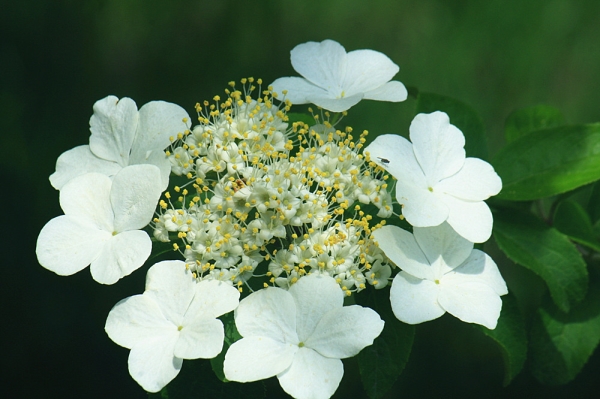
Doublefile Viburnum, also known as "Eight Immortals Gathered" and woody snowball, is a semi-evergreen shrub in the genus Viburnum, family Caprifoliaceae. Its large flowers resemble jade basins, with eight large five-petaled flowers forming a ring around the small white pearl-like flower in the center, clustered around a mass of butterfly-like stamens. Stirred by a gentle breeze, they seem like butterflies playing with a pearl, or like the Eight Immortals dancing, with graceful and alluring elegance that captivates the eye. Now let us take a look at the growing methods and precautions for Doublefile Viburnum!
Growth Habits of Doublefile Viburnum
Doublefile Viburnum likes light and tolerates slight shade, prefers a warm and humid climate, is relatively cold-hardy, and grows best in fertile, moist, well-drained soil. It is relatively cold-hardy, can adapt to ordinary soil, and thrives in moist, fertile spots. It grows vigorously, with strong sprouting and suckering ability, and its seeds have the habit of germinating in alternate years. It is found in southern Jiangsu, western Anhui, Zhejiang, northwestern Jiangxi, western Hubei and southern Hunan. It grows in hills, under forest on mountain slopes or in thickets. It is also often cultivated in gardens.
Propagation Methods for Doublefile Viburnum
1. Sowing: Doublefile Viburnum is commonly propagated by seed. Collect seeds in November, pile them for after-ripening, wash the seeds clean, stratify them at low temperature until sowing the following spring, cover with soil slightly thickly, and then cover with straw on top. In June of that year, some will germinate and emerge; at this point the straw can be removed for shading, and after staying in the bed for 2 years they can be transplanted to a different bed for division, and after 4 to 5 years they can be transplanted for garden landscaping.
2. Grafting: Graft Doublefile Viburnum in early March (before the buds break). Take a branch from a mother tree that can flower, cut off a section about 5 cm long as the scion, and one that retains the terminal bud is ideal; the high-grafting method is generally used. After grafting, place it in a shaded spot, and once the scion's buds produce leaves, put it directly in sunlight; after surviving, it can bloom in the first year.
Growing Methods for Doublefile Viburnum
1. Soil: Doublefile Viburnum has strong adaptability; sandy soil, clay soil and ordinary soil can all be used for cultivation, and seedlings grown in sandy soil have well-developed root systems.
2. Transplanting: Doublefile Viburnum transplants easily and survives well; carry it out in early spring before the buds break, with a semi-shaded environment being best, and pay attention to fertilizer and water management after it survives.
3. Fertilizing: Fertilize Doublefile Viburnum with light applications applied frequently; if the leaves turn yellow, spray the leaves with a 1/1000 ferrous sulfate solution, and apply fertilizer once after flowering.
4. Pruning: The main branches of Doublefile Viburnum easily produce leggy shoots that disrupt the tree shape; prune appropriately after flowering, and in summer cut off the tips of leggy shoots to tidy the overall shape.
5. Pests and diseases: The leaves of Doublefile Viburnum have abundant hairs, so it is generally not easily harmed by pests and diseases, but during the plum rain season it usually needs some Bordeaux mixture sprayed for prevention and control.
Precautions for Doublefile Viburnum
1. Doublefile Viburnum has strong adaptability; during the growing period, supplement nitrogen, phosphorus and potassium fertilizer according to the principle of light applications applied frequently.
2. For household potted Doublefile Viburnum, you can choose the sowing method, or choose small seedlings to plant directly.
3. Doublefile Viburnum is generally planted in spring or late autumn with a soil ball, which can improve the survival rate.
Growing Methods and Precautions for Doublefile Viburnum
Sowing Methods for Doublefile Viburnum
The sowing time for Doublefile Viburnum is generally around Qingming Festival. Take out the seeds collected the previous year, remove the hard outer shell, soak them in warm water for 24 hours, and sow once the shell has softened. Note that untreated seeds are very difficult to sprout after sowing.
After sowing the seeds, they generally emerge in about 1 month. Once the seedlings grow their first leaf, they can be appropriately shaded; it is best not to let them receive light at noon, so as to avoid water evaporating too quickly and causing the seedlings to wilt.
If you often notice the leaves curling but recovering after evening, it means the weather is dry and water is insufficient; sprinkle water frequently during the day to increase air humidity.
Pruning Methods for Doublefile Viburnum
Pruning is the most important step in the process of growing Doublefile Viburnum.
Each year after the remaining flowers fade, new flower buds differentiate. In March of the following year, flower buds begin to form. Therefore, after the flowers fade, carry out a heading-back pruning once, cutting short the branches that grow too fast, to avoid the lower branches becoming bare as the Doublefile Viburnum grows.
As Doublefile Viburnum keeps growing, the branches gradually age, so carry out heavy pruning at the right time. Keep sturdy branches at 50 cm, and cut off all the remaining crown branches to promote the sprouting of new branches.
Pest and Disease Control for Doublefile Viburnum
During cultivation, Doublefile Viburnum often shows yellowing leaves; be careful to supplement phosphorus and potassium fertilizer in time, and spray a ferrous sulfate solution once a week.
The leaves of Doublefile Viburnum are covered with hairs, so they are generally not attacked by pests. However, bacteria can attach to the leaves, especially in rainy seasons. Therefore, spray Bordeaux mixture once a month and ventilate frequently.
Precautions for Growing Doublefile Viburnum
Doublefile Viburnum has a well-developed root system and strong adaptability; during the growing period, supplement nitrogen, phosphorus and potassium fertilizer according to the principle of light applications applied frequently.
For household potted Doublefile Viburnum, you can choose the sowing method, or choose small seedlings to plant directly. It is generally planted in the season of spring or late autumn with a soil ball, which can improve the survival rate.