Detailed Guide to the Cultivation Methods and Precautions for the Guelder Rose (Viburnum macrocephalum)
The suitable growing temperature for the guelder rose is between 15 and 30°C. It is a plant that is relatively shade-loving and shade-tolerant, and has strong cold resistance, so in summer it should be sprayed with water to cool it down, and it is best to plant it in slightly acidic and neutral soil.
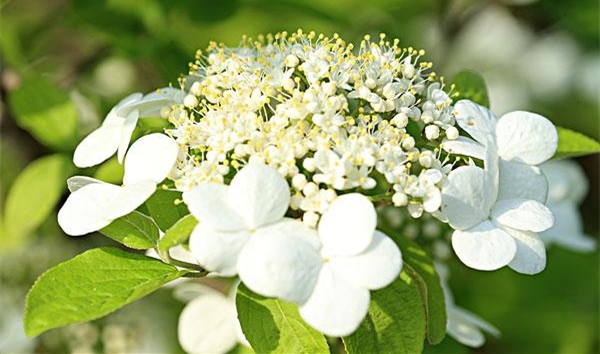
Cultivation Methods for the Guelder Rose
Soil
The guelder rose likes to grow in slightly acidic and neutral soil, and must never be cultivated in alkaline soil. Its root system is relatively well developed, and it is easy to survive when transplanted.
Light
The guelder rose is a plant that is relatively shade-loving and shade-tolerant, and has strong cold resistance. If it encounters high temperatures and muggy heat in summer, getting through the summer becomes especially difficult, so in summer we must never expose it to the blazing sun, and should provide timely shading and cooling.
Temperature
The suitable growing temperature for the Tianmu guelder rose (Viburnum sargentii) is between 15 and 30°C. When planting, it can be kept indoors for a period of time, then moved to a shaded spot outdoors for a period of time, and by alternating it back and forth this way it will grow and develop very well.
Fertilizing and Pruning
After the leaves fall each autumn, dig a trench around the guelder rose and apply 2 spadefuls of compost, then cover with soil and water, and it will bloom more the following year. Carry out 1 appropriate thinning pruning each autumn, cutting out water sprouts and weak branches and shortening long branches, and in early spring cut out remaining fruit clusters and dead branches.
Have you all learned the cultivation methods for the guelder rose? Do you know what effects and functions the guelder rose has?
Cultivation Methods for the Guelder Rose
Cultivation Management
The de-shelled seeds generally sprout after about 1 month. When the seedlings have just produced their first pair of leaves, they should be appropriately shaded; especially at noon, do not let sunlight shine directly on the seedlings, so as to avoid too-rapid transpiration that would cause the young leaves to wilt. If the leaves are found to curl inward and then immediately recover in the evening, this indicates that the transpiration of the leaves exceeds the absorption of the root system, which is a common phenomenon under hot or dry conditions. Guelder roses sown and sprouted in the same year do not grow quickly. From the second year they begin to grow noticeably faster. When they reach more than 10 cm, the terminal buds can be pinched off according to the size of the pot, to promote the rapid growth of lateral buds and prepare for potted shaping and grafting.
Pest and Disease Control
The guelder rose has strong adaptability, and sandy soil, clay soil and ordinary soil can all be used for cultivation; seedlings cultivated in sandy soil have well-developed root systems. During the peak growing season, attention should be paid to applying light fertilizer frequently. If the leaves are found to turn yellow, a 1/1000 ferrous sulfate solution can be sprayed on the leaves. The leaves of the guelder rose have many hairs, so they are generally not easily affected by pests. However, the degree of cutinization of the lower epidermis is relatively low, and the secretions of some fungal spores during germination can dissolve this part of the cuticle layer, so in the plum rain season it is usually necessary to spray some Bordeaux mixture for prevention and control. In addition, because the refractive property of the cuticle layer of the guelder rose is medium, it should not be directly exposed to the blazing sun in hot weather.