How to grow ostrich fern? Master these cultivation methods
Loosening soil and weeding
After a long period of planting, the soil in the pot generally becomes compacted, aeration deteriorates, weeds grow wildly, and the nutrients in the pot have been exhausted. Therefore, regularly loosen the soil and remove weeds for ostrich fern. After weeding, it is best to cover the pot soil with a layer of straw or sawdust, which can both keep the soil moist and prevent weeds from growing wildly. In addition, to avoid other wild grasses being mixed into ostrich fern, you can remove obvious grass seeds from the culture soil when planting, and then sterilize and disinfect the culture soil.
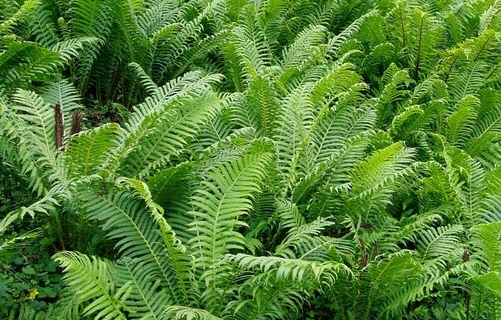
Fertilizing
Ostrich fern is a fern, and this kind of plant has strong vitality and good adaptability, but ostrich fern still needs fertilizing. Generally, it needs to be fertilized once about every half a month. The fertilizer should generally be diluted before being applied to the plant; otherwise, too much or too concentrated fertilizer will burn the plant, and in more serious cases cause plant death. But if too little fertilizer is applied, it will also be very unfavorable to plant growth. Also note that in winter, when the plant grows slowly, fertilizing once every 1-2 months is enough.
Watering
Ostrich fern likes warm, humid environments and tolerates high temperatures. In summer, because the temperature is too high and the light is too strong, the plant should be placed in a cool, shaded place for care. Water every day, 2-3 times is enough. Also pay attention to the watering time. It is generally best to water in the morning and evening, when the temperature drops and the light is not so intense, which is very favorable to plant growth. In winter, when the temperature drops and the plant grows slowly, reduce the amount of watering, but still keep the soil moist.
The above is an introduction to the question of how to grow ostrich fern. I hope it can give some help to flower lovers who want to grow ostrich fern.
Ostrich fern Matteuccia struthiopteris illustrated guide: how to grow ostrich fern / how to propagate ostrich fern
Ostrich fern profileOstrich fern Matteuccia struthiopteris
Cultivation methods and precautions for ostrich fern: introduction to ostrich fern
Ostrich fern, also known as cucumber fragrant and Guangdong vegetable, is a perennial herbaceous plant in the family Onocleaceae. It is distributed in various counties of the Changbai Mountains. The plant is about 1 m tall, with an upright rhizome and clustered leaves, and has two types of fronds: sterile fronds and fertile fronds.
Its roots and rhizomes contain ponasterone A, ecdysterone, ecdysone, and filicin, and can be used as "Guanzhong" in medicine, with effects of clearing heat and detoxifying, cooling blood and stopping bleeding, and expelling parasites; its curled, unexpanded tender leaves can be eaten as a spring wild vegetable, called "Guangdong vegetable," and because eating it has the fresh fragrance of cucumber, it is named cucumber fragrant.
Also known by the aliases Guangdong vegetable and ostrich fern. It belongs to the family Onocleaceae. It likes to grow under mixed coniferous and broad-leaved forests, in shrub thickets, and on moist ground along shallow mountain streams.
Cucumber fragrant plants are 90 cm tall. The rhizome is upright, and together with the base of the leaf stalk it is densely covered with lanceolate scales. The leaves are clustered and dimorphic, with stalks; the sterile fronds are oblong-obovate and bipinnately parted. The lower several pairs of pinnae gradually shorten downward into small ear-like forms. The fertile fronds are shorter, upright, once pinnate, papery, and curl downward to enclose the sori. The sori are round.
This product has the fresh fragrance of cucumber and is rich in protein, fat, carbohydrates, and various vitamins. It is a famous wild mountain vegetable. Its medicinal value is the same as that of bracken.
Its roots and rhizomes contain ponasterone A, ecdysterone, ecdysone, and filicin, and can be used as "Guanzhong" in medicine, with effects of clearing heat and detoxifying, cooling blood and stopping bleeding, and expelling parasites; its curled, unexpanded tender leaves can be eaten as a spring wild vegetable, called "Guangdong vegetable," and because eating it has the fresh fragrance of cucumber, it is named cucumber fragrant.
Morphological characteristics of ostrich fern
Perennial herb, 50-90 cm tall. Rhizome short and stout, upright, covered with brown lanceolate scales, membranous. Leaves clustered, dimorphic; sterile fronds herbaceous, smooth and hairless, only along the rachis, pinna midribs, and main veins covered with soft hairs; petiole 10-18 cm long, with 1 deep longitudinal groove on the upper side, base tapered, densely covered with scales, gradually sparser upward; blade oblong-obovate, oblong-lanceolate, or lanceolate, 40-70 cm long, 17-22 cm wide; the lower 10 or more pairs of pinnae gradually reduced into ear-like forms, bipinnately parted; pinnae 40-60 pairs, alternate, 1-2 cm apart, lanceolate or triangular-lanceolate; middle pinnae largest, 7-10 cm long, 12-16 mm wide, apex acuminate, pinnae deeply parted to the costa; segments oblong, apex rounded, margin entire or with shallow wavy rounded teeth; veins pinnate, free, extending to the leaf margin; fertile fronds shorter, emerging in summer, initially green, later becoming dark brown, upright, with a thick, hard, and relatively long stalk; blade narrowly obovate-lanceolate, 15-25 cm long, 5-7 cm wide, once pinnate; pinnae linear, alternate, nearly sessile, curling backward on both sides into pod-like forms, enclosing the sori; sori round, borne on raised receptacles on the back of the veins; indusia membranous, white, rupturing and disappearing after maturity.
This product is round spindle-shaped or slightly elliptical, 10-15 cm long, 6.5-8 cm in diameter, densely covered with leaf stalk bases, with yellow-brown membranous scales visible at the apex. The leaf stalk base is flatly triangular, broad above and narrow below, curving inward; surface dark brown, slightly glossy, with 5-6 longitudinal ridges on the back, the middle 1 ridge obviously raised, and some upper ends show 1-2 flying-bird-shaped wrinkles, and the ventral side also has longitudinal ridges; texture hard, cross-section with black outer bark, light brown inner surface, and 2 linear vascular bundles arranged in a splayed shape. The basal rhizome is exposed. Taste slightly astringent.
Ecological habits of ostrich fern
It has strong adaptability to temperature and is distributed between 22o-52o north latitude. It is not sensitive to day length, but has relatively high requirements for soil moisture and air humidity. Therefore, it is mostly distributed under forests, on both sides of mountain streams, and in moist valleys, with no ostrich fern distribution in arid areas. Light intensity and soil have a relatively large impact on the growth and development of ostrich fern. Through investigation, it has been found that coverage is highly correlated with the growth and development of sterile fronds and fertile fronds. Within a certain range, as coverage increases, the number of sterile fronds and fertile fronds decreases, and the ratio of sterile fronds to fertile fronds increases. Under the condition of dark brown soil as the substrate, growth is better and biomass accumulation is greater. In short, it likes moisture, tolerates shade, tolerates cold, likes warmth, and likes neutral soil rich in humus and with relatively high water content.
Cultivation techniques for ostrich fern
Ostrich fern has strong adaptability, tolerates cold and drought, and in the north can be cultivated both in the open field and as a potted ornamental.
Choose cultivation under a forest canopy with shade. First clear away trees, branches, and stones in the forest, deeply plow the soil, sift the soil with a sieve, remove gravel, take fertile loam or leaf mold and mix it evenly, apply farmyard manure, deeply plow 20-25 cm, break it up finely and level it, and make beds. For field cultivation, choose a plot with level land, good water and fertilizer conditions, fertile soil, and good permeability for planting. Ostrich fern likes shade; sudden or continuous high temperatures will cause ferns to lose water and suffer heat damage. In summer, set up a shade shed to maintain a moist environment.
When potting, use 3 parts loam mixed with 1-2 parts leaf mold, and some coarse sand can be mixed in to facilitate drainage and aeration. The pot soil should not be too wet; generally watering once every 2-3 days is enough, but attention should be paid to spraying water on the leaf surface. Spring and early summer are the peak growth seasons, so fertilizer and water management should be strengthened. If moved into a greenhouse in winter and kept above 8-10°C, it can remain evergreen. Field planting has low soil requirements, management can be extensive, and it is suitable for planting under sparse forests.
Water is very important for fern cultivation. To meet the requirements of ferns for soil water and air humidity, the principle is to water less, water according to seedling condition and temperature, and not water when the soil is not dry. Frequently spray water on the leaf surface, clean dust from the leaf surface, and maintain cleanliness and humidity of the leaf surface. Frequently hoe weeds and cultivate, and carry out normal production management.
1. Loosening soil and weeding: After seedlings grow, loosen the soil and weed in time to make the soil loose. It is best to spread a layer of sawdust on the soil surface, which both preserves moisture and reduces grass growth.
2. Topdressing: In early May, apply nitrogen fertilizer once, then water after application; after the seedlings wither in autumn, broadcast barnyard manure or compost, which can help preserve seedlings through winter and lay the foundation for growth the following year.
3. Watering: Ferns like shade and moisture. Always keep the soil moist, and seedlings will grow vigorously, which is favorable for natural division and propagation of rhizomes. It is best to install small sprinkler irrigation, which can also increase air humidity at the same time.
4. Harvesting and processing: Ostrich fern uses the rhizome as medicine. After the leaves wither in autumn or before sprouting in spring, dig out the rhizome, cut off the leaf stalks and fibrous roots, wash off the soil, and dry in the sun.
Care points
It has strong adaptability to temperature and is distributed between 22o-52o north latitude. It is not sensitive to day length, but has relatively high requirements for soil moisture and air humidity. Therefore, it is mostly distributed under forests, on both sides of mountain streams, and in moist valleys, with no ostrich fern distribution in arid areas. Light intensity and soil have a relatively large impact on the growth and development of ostrich fern. Through investigation, it has been found that coverage is highly correlated with the growth and development of sterile fronds and fertile fronds. Within a certain range, as coverage increases, the number of sterile fronds and fertile fronds decreases, and the ratio of sterile fronds to fertile fronds increases. Under the condition of dark brown soil as the substrate, growth is better and biomass accumulation is greater. In short, it likes moisture, tolerates shade, tolerates cold, likes warmth, and likes neutral soil rich in humus and with relatively high water content.
Propagation methods of ostrich fern: spore propagation
A. Spore collection: In mid-to-late September, when the fertile fronds of ostrich fern change from dark green to yellow-brown, select robustly growing plants, collect fertile fronds, dry them in the shade, crush them, sift out the sporangia, and store them in a refrigerator at 0-5°C. Before sowing, rinse thoroughly with sterile water, spread on sterile paper, and after the sporangia dry, they will split open by themselves and release mature spores.
B. Culture medium preparation: Mix peat soil, dark brown soil, and river sand in a ratio of 5 parts:3 parts:2 parts, stir evenly, and sift to make mixed soil. Steam-sterilize the washed coarse river sand, stones, sowing container, and mixed soil separately for half an hour.
C. Sowing: First cover the bottom hole of the sowing container with a tile, put in small stones, with coarse river sand accounting for about 1/3 of the container, then add mixed soil, scrape level with a wooden board, compact, and cover with a glass plate for later use. Before sowing, soak the container filled with mixed soil in water so that the culture soil is fully moistened, take it out, evenly scatter the spores on the culture soil, then soak it in shallow water after sowing, take it out the next day, move the sowing container to a warm greenhouse with air humidity above 80%, with light for more than 4 hours per day, and temperature controlled at about 20°C. The spores begin to germinate in 3 days, form prothalli 10 days after sowing, and form sporophytes in 71 days. When the sporophyte has 3-4 true leaves, carry out the first transplanting into pots. When the spore seedlings have more than 4 leaves and the plant is 4 cm-5 cm tall, carry out the second transplanting. Transplant the spore seedlings with soil around the roots into the nursery field, cover with a plastic shed after transplanting, and water regularly.
Vegetative propagation
Vegetative propagation, also called division propagation, means that around the mother plant, more seedlings grow from the rhizome. Division is usually carried out in spring and autumn. In autumn in September, and in spring in early to mid-April when the leaf clusters begin to grow, select plants with well-developed rhizomes and robust growth, dig up the fern seedlings with roots and soil, keep the rhizomes intact, or dig out the mother plant at the same time, and cut it vertically into several pieces according to the size of the mother plant's rhizome, but they must have roots and leaves to survive easily, and plant as soon as the seedlings are lifted. On the prepared bed surface, dig holes at 40 cm between rows and plants, plant 1 plant per hole, compact after covering with soil to increase contact between the rhizome and soil, then water. The seedlings will become established after 3-5 days of recovery.
Distribution area of ostrich fern
Produced in Northeast China, North China, and Shaanxi, Sichuan, Tibet
Dietary or medicinal value of ostrich fern
The medical information and health dietary information on Huhua.com are for reference only and cannot be used as a basis for diagnosis or medical treatment. Any health issues should be consulted with professional medical personnel, and treatment of any disease should follow a doctor's advice.
Ultimate flower-protecting mission: love yourself, start from reality, and strictly follow a doctor's advice. Toward illness, do not be careless, do not delay, do not give up hope, face it bravely, use love to warm the silent world, and use heart to care for the flower field within.
Medicinal value
Li Shizhen of the Ming Dynasty, in Compendium of Materia Medica: "Bracken grows in mountains everywhere. In the second and third months it produces buds, curled like a child's fist. When its stem is tender, it is collected, boiled in ash water to remove the slippery sap, dried in the sun as a vegetable; its taste is sweet and slippery, and it can also be eaten with vinegar." Cucumber fragrant is one of the wild mountain vegetables deeply loved by people at home and abroad. It has the characteristics of being fragrant and palatable and rich in nutrition, and is known as the "treasure of the forest sea." Cucumber fragrant contains a large amount of dietary fiber, various amino acids, ascorbic acid, vitamins, etc., and also contains 5 major elements and 7 trace elements essential to the human body. Cucumber fragrant not only has high nutritional value, but also has dietary therapeutic effects, with functions such as clearing heat, lubricating the intestines, lowering qi, dispelling wind, tonifying qi and calming the mind, and resolving phlegm. Cucumber fragrant pork stuffing dumplings have a light cucumber fragrance and taste.
Chemical composition
The whole plant gives a flavonoid glycoside reaction and contains inorganic elements such as nitrogen, phosphorus, potassium, sodium, calcium, iron, and copper.
The rhizome contains ponasterone A, ecdysterone, ecdysone, ecdysone, hydroxyecdysone, beta-sitosterol, and a small amount of filicin. The leaves contain vitamins, amino acids, proteins, sugars, hemicellulose; various olefinic acid compounds, etc. Among the vitamins are vitamin P (650 mg/100 g), vitamin B1, vitamin B2, vitamin C, nicotinic acid, etc.; nitrogen content is 3%-7%, mainly lysine, leucine, etc.; sugar content is 13%.
[Thin-layer chromatography]: Take 5 g of sample coarse powder, reflux-extract with chloroform in a Soxhlet extractor for 3 hours, recover chloroform to 20 ml for sample application. Use beta-ecdysone as the reference substance. Coat plates with silica gel G (Shanghai Fluorescent Chemical Factory), activate at 105°C for 1 h. Develop with chloroform-methanol (9:1), development distance 15 cm. Spray with 5% phosphomolybdic acid ethanol solution. In the chromatogram of the test sample, blue spots appear at positions corresponding to the reference substance.
Pharmacological effects
The rhizome decoction is effective against pig roundworms in vitro. It has a significant inhibitory effect on influenza virus in chicken embryo tests, and is also effective in mouse nasal drop tests. Tissue culture of primary monolayer cells from human embryonic kidney confirmed a strong inhibitory effect on viruses such as adenovirus, poliomyelitis, Japanese encephalitis, and herpes simplex. It has an inhibitory effect on Haemophilus influenzae, Neisseria meningitidis, and Shigella. It also has a certain inhibitory effect on dermatophytes. Its rhizome and leaves have sedative, antispasmodic, and antiepileptic effects.
Medicinal material identification
[Macroscopic identification]: This product is obovate or oblong, with the upper part bluntly rounded and the lower part slightly pointed, slightly curved, 10-16 cm long, 4-7 cm in diameter; brown; the whole body densely covered with leaf stalk remnants, fibrous roots, and a small amount of scales. The upper part of the leaf stalk remnant is flat, gradually narrowing downward, with a raised back and 1 longitudinal ridge in the center; near the upper end, "V" or "M" shaped protruding wrinkles may be seen; texture hard and brittle, easy to break, fracture slightly flat, with 2 yellow-white small dots (meristeles) arranged in a "" shape. The base of the leaf stalk bears 1-3 fibrous roots, mostly branched, sometimes with brown fuzz. Odor slight and characteristic, taste astringent.
[Microscopic identification]: Cross-section of rhizome (1.3 cm in diameter): epidermis often shed, outermost layer consists of several to more than 10 layers of thick-walled cells, with more than 10 meristeles arranged in a broken ring. Endodermis obvious. Xylem composed of polygonal tracheids; surrounded by phloem; large fissures in the parenchyma tissue, cells filled with fine starch grains.
Functions and indications
Cross-section of leaf stalk base: 2 meristeles arranged in a splayed shape; endodermis obvious; both ends of the xylem folded in a hook shape; surrounded by phloem. Brown secretory cells visible around the vascular bundles.
Traditional Chinese medicine: bitter in taste, cool in nature. Clears heat and detoxifies, cools blood and stops bleeding, kills parasites.
Mongolian medicine: slightly sweet and bitter in taste, cool, blunt, and heavy in nature. Clears heat, detoxifies, and heals wounds.
[Indications]
Traditional Chinese medicine treats wind-heat common cold, warm-heat macules, mumps, hematemesis, epistaxis, intestinal wind and bloody stool, uterine bleeding, ascariasis, enterobiasis, and taeniasis; prevents epidemic Japanese encephalitis and measles.
Mongolian medicine treats toxic heat, meat poisoning, and decreased vision. Stomach distension, vomiting, mental fatigue, dizziness, rabies, influenza, and heat injury.
[Usage and dosage]
Traditional Chinese medicine 6-15 g, decocted in water, or made into pills and powders; for external use, an appropriate amount, ground into powder and applied to the affected area.
Mongolian medicine is mostly made into pills and powders.
Edible value
The young leaves are edible and rich in vitamins. They are the finest among wild mountain vegetables. Wild mountain vegetables are "sanitary vegetables" not affected by environmental pollution and are receiving increasing attention. The young leaves of ostrich fern can be salted and quick-frozen for preservation. The Northeast region has exported them to neighboring countries for decades, earning a large amount of foreign exchange for China. Cucumber fragrant can also be used to stir-fry meat, and the taste is very good.
Medicinal value
Ostrich fern is one of the five main Guanzhong species in China. Its rhizome contains various medicinal ingredients. It is bitter in taste, cool in nature, and slightly toxic, with effects of clearing heat, detoxifying, and stopping bleeding.
Pharmacological effects
(1) Antibacterial: Guanzhong infusion and decoction have inhibitory effects on Haemophilus influenzae, Neisseria meningitidis, and Shigella dysenteriae and Shigella flexneri. (2) Fresh Guanzhong has a relatively good inhibitory effect on miscellaneous bacteria. (3) It has anthelmintic and insecticidal effects.
Cultural background and historical verification of ostrich fern
This product is one of the Guanzhong varieties. In the Illustrated Classic of Materia Medica, under the Guanzhong entry, it is noted: "Now it is mostly found in the prefectures and commanderies of Shaanxi and Hedong and between Jing and Xiang, and few have flowers. In spring it produces red seedlings, with leaves as large as bracken, stems triangular, leaves green like young chicken feathers... the root is purple-black, shaped like a large melon, with black fibrous hairs below, and also resembling an old owl." A Zizhou Guanzhong illustration is also attached. According to the distribution, morphological description, and attached illustration, its original plant matches ostrich fern. But some also believe it is an Athyrium or Dryopteris plant. Ostrich fern Guanzhong is one of the commercial Guanzhong types. It is mainly produced in the three northeastern provinces, Hebei, Sichuan, Shaanxi, and Tibet. In some areas of Beijing, Shaanxi, Hebei, and Henan, commercial Guanzhong is mainly this species. It is recorded in the Hebei Manual of Chinese Herbal Medicine and the Shaanxi Manual of Chinese Herbal Medicine.
Ostrich fern pictures
Effects of ostrich fern
1. Dietary therapeutic effects
Ostrich fern is rich in carotene, vitamins, various trace elements, and minerals, has high nutritional value, is the finest among wild mountain vegetables, and is also the first choice for dietary therapy. The environment in which ostrich fern grows is basically free of any pollution. This pure natural wild mountain vegetable is very beneficial to the body.
2. Pharmacological effects
There are also many medicinal ingredients in the rhizome of ostrich fern. Common effects include clearing heat and detoxifying, tonifying qi and calming the mind, dispelling wind and resolving phlegm, and also stopping bleeding and lubricating the intestines. Moreover, fresh ostrich fern also has the effect of inhibiting miscellaneous bacteria, and placing it at home can also drive away mosquitoes and insects.
3. Ornamental effect
Ostrich fern is not only edible and medicinal, but also has a certain ornamental value, and is called "dynamic beauty in dynamics." The leaf veins of ostrich fern are graceful and beautiful in posture, and the leaf color will gradually turn yellow, changing from emerald green to dark green, and finally to brown-yellow. It is a very interesting foliage plant.
The above is an introduction to the effects of ostrich fern. Take a look. As long as you grow it, you will not lose out.