The reasons for yellowing elm leaves are roughly as follows:
1. Insufficient light
2. Overwatering causing root suffocation and root rot
3. Fungal disease on the leaf surface
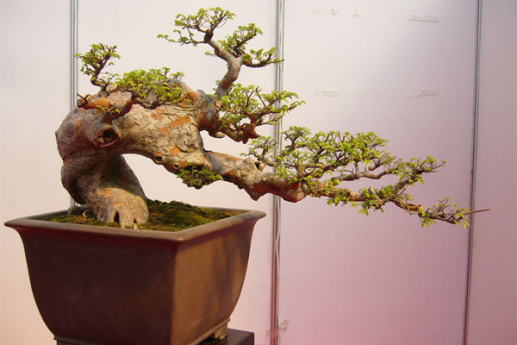
So, if you want the elm bonsai to become lush and lovely again, what should you do? You just need to pay attention to the following three care points and there will be no problem!
How to Grow Elm Bonsai: Care of Elm Bonsai
How to Grow Elm Bonsai: Care of Elm Bonsai
Elm, especially old elm stumps growing in the wild, has endured years of human chopping and carving, or wind stripping and rain erosion, animal gnawing and so on, gradually forming many different and strange postures. Some have gnarled roots, vigorous and ancient-looking; some turn decay into something magical, with dead roots and new leaves, opening up a world of their own, making them excellent material for making bonsai. Here we offer our humble opinions on the making and care management of elm bonsai, for reference only.
First, the selection of stumps must be strict. Try to choose small and medium-sized stumps to facilitate balcony cultivation; the stump material must be fresh, and those that are withered, rotten, or without fibrous roots should not be used. Newly dug old elm stumps should be planted in plain sandy soil or placed in clay pots to "nurse the stump," generally best done from late autumn to early spring (the survival rate is highest in the two or three months before budding). Before planting, the root system and branches must first be pruned as necessary; sticky sap often flows from the cut surfaces (sap bleeding), and if too much liquid seeps out, it will seriously affect the survival rate. The biggest shortcoming of all elm species is that they easily bleed sap; if the stump material cannot effectively overcome this shortcoming before and after planting, then it is very difficult to ensure the survival of the stump. For this, you can use paint or wax to seal the cuts, or apply a layer of erythromycin ointment or sulfa ointment, and then sprinkle on fine sandy soil. After the cuts are properly treated, do not pot them immediately; place them in a cool place to air-dry for a few hours, letting the wounds naturally lose water and form a protective film, which can greatly reduce the occurrence of sap bleeding after the stump is potted. Elm likes dryness and fears moisture; after planting, firm the soil and it is not necessary to water, only spray clean water on the branches 1 to 2 times a day, and after 3 to 4 days water once thoroughly. After that, do not water until dry, and absolutely no waterlogging should be allowed.
Second, when styling an elm bonsai, based on the basic form of the old stump, use techniques such as wiring and pruning to create different forms of bonsai, such as the formal upright style, curved trunk style, slanting style, semi-cascade style, cascade style, wind-swept style, forest style, and root-over-rock style. Styling can be done either during the dormant period after leaf fall or during the growing season, but the budding period must be avoided.
After the elm bonsai has taken shape, plant it in a purple clay pot before spring growth begins, and be sure to choose loose, breathable, well-drained sandy soil rich in humus. It is best to use a ratio of yellow sand : pine needle soil : loess = 4:3:3; this soil is both breathable and water-retentive, and will not become waterlogged. Usually place it in a well-ventilated spot with sufficient light for care, and keep the pot soil on the drier side. In summer, when it is hot and dry, you can sprinkle water on the ground around the plant, but it is not advisable to spray water directly on the leaves, lest the leaves become larger and lose their beauty. After a new stump survives, do not rush to fertilize; this is an important reason why many people fail at nursing stumps. Fertilizing should be done after autumn, and applying fully decomposed dilute liquid fertilizer is best.
Elm has very strong sprouting ability and grows quickly, so during the growing season it should be pruned frequently, cutting away overly long and messy branches to maintain the beauty of the tree shape. The best viewing period for an elm bonsai is when the new leaves have just emerged. If all the leaves are removed in early to mid-August and fertilizer and water management is then strengthened, new leaves will grow again by late September, increasing its ornamental value. In winter, move it to a bright, cool indoor room, or bury the whole pot in soil outdoors in a wind-sheltered, sunny spot, reduce watering, and let the plant go into full dormancy. During care, repot every 2 to 3 years to keep the bonsai growing vigorously and full of vitality.
Chinese Elm
The Chinese elm has a graceful tree shape and an elegant posture, with mottled bark and fine, dense branches and leaves. It is very suitable for solitary planting or group planting in courtyards, or for combining with pavilions and rockery. It can also be selected as a greening tree species for factory and mining areas. The Chinese elm wood is hard and can be used for industrial timber; the stem bark fiber is strong and tough and can be used for ropes and artificial fibers; the roots, bark, and young leaves used as medicine have the effects of reducing swelling, relieving pain, detoxifying, and treating heat, and external application treats scalds and burns from water and fire; the leaves can be made into a crude pesticide that can kill red spider mites.
Morphological Characteristics
Deciduous tree, or in winter the leaves turn yellow or red and persist until after the new leaves open the following year before falling, reaching up to 25 m tall, with trunk diameter up to 1 m; crown broadly rounded, trunk base sometimes with buttress roots, bark gray or grayish brown, splitting into irregular scaly thin flakes that peel off, revealing reddish-brown inner bark, nearly smooth, slightly uneven; current-year branchlets densely covered with short soft hairs, dark brown; winter buds ovoid, reddish-brown, hairless. Leaves thick in texture, lanceolate-ovate or narrowly elliptic, rarely ovate or obovate, the two sides of the midrib unequal in length and width, 1.7-8 (often 2.5-5) cm long, 0.8-3 (often 1-2) cm wide, apex acute or obtuse, base oblique, wedge-shaped or rounded on one side, leaf surface dark green, glossy, except for sparse soft hairs in the sunken midrib area, elsewhere hairless, lateral veins sunken, leaf underside lighter in color, when young covered with short soft hairs, later becoming hairless or with sparse hairs along the veins, or with tufted hairs in the vein axils, margin from base to apex with blunt and neat simple serrations, rarely double serrations (as in the leaves of sprouting branches), lateral veins 10-15 on each side, fine veins obvious on both surfaces, petiole 2-6 mm long, hairy only on the upper side. Flowers open in autumn, in 3-6 fascicles in the leaf axils or arranged in fascicled cymes, perianth cup-shaped in the upper part and tubular in the lower part, perianth segments 4, deeply divided to the base or nearly the base of the cup-shaped perianth, pedicel very short, sparsely hairy. Samara elliptic or ovate-elliptic, 10-13 mm long, 6-8 mm wide, hairless except for hairs on the stigma surface at the apical notch, fruit wing slightly thick, stipe at the base about 2 mm long, the wings on both sides narrower than the nutlet portion, the nutlet portion located in the middle-upper part of the samara, the upper end close to the notch, perianth segments deciduous or remaining, fruit stalk shorter than the tubular perianth, 1-3 mm long, with sparse short hairs. Flowering and fruiting period August to October.
Growth Habits
Grows in plains, hills, mountain slopes, and valleys. Light-loving, drought-tolerant, able to grow in acidic, neutral, and alkaline soils, but the most suitable habitat is a warm climate with fertile, well-drained neutral soil.
Geographical Distribution
Distributed in Hebei, Shandong, Jiangsu, Anhui, Zhejiang, Fujian, Taiwan, Jiangxi, Guangdong, Guangxi, Hunan, Hubei, Guizhou, Sichuan, Shaanxi, Henan and other provinces and regions. Also distributed in Japan and Korea.
Cultivation Management
Bonsai Making
(1) Material Selection and Propagation Measures
Artificial propagation: Chinese elm is usually propagated by sowing. Seeds mature in October to November, and when the fruit wings turn yellowish-brown they should be collected in time, spread out to dry in the sun, the debris winnowed away, and stored dry in bags. Sow in March of the following spring, either by broadcasting or drilling. For drilling, the row spacing is 25 cm; choose a windless sunny day for sowing, cover with fine soil just until the seeds are no longer visible, then cover with rice straw. They will germinate and emerge in about 30 days; uncover the straw in time and thin the seedlings appropriately. During the growing period, water and fertilizer management should be done well, and weeds removed and soil loosened; the current-year seedlings can reach 30-40 cm tall. Young saplings have thin trunks, sparse branches, and relatively large leaves, and are generally not suitable for making bonsai; it is better to cultivate them for several years, prune and shape them, and then pot them. In addition, Chinese elm can also be propagated by root cuttings to cultivate stump material, with faster results, and this is widely used in South China.
Collection in the wild: Chinese elm grows in many places in the hills and by the waters of Jiangnan, and is even more common in limestone mountain areas. You can select old stumps that have sprouted repeatedly after many years of cutting, especially elm stumps growing on barren slopes, poor land, by ditches, or in rock crevices in the wild; those that grow slowly, are long-lived, have been shaped by natural wind and waves, with exposed roots and thick trunks, vigorous and crooked, with slanting branches and small leaves, and an ancient and unadorned posture, are best. Dig them before spring budding, cut off unnecessary roots and branches, protect the secondary roots and fibrous roots, coat them with mud slurry, and wrap them in wet moss. After digging them back, choose a ventilated, light-transmitting place with loose, moist soil for deep burying and cultivation, called "nursing the embryo"; wait until the root system develops and the new branches and leaves are luxuriant, then pot and style them. Using old stumps as bonsai material can shorten the bonsai processing time, and the form is naturally ancient and unadorned, different from ordinary pieces, and easy to keep alive.
Chinese elm collected from the wild as old stumps for cultivation generally takes at least 2 to 3 years to take shape. Here is a rapid cultivation method, especially suitable for bonsai growth. In early spring, plant the dug-up Chinese elm stumps first in clay pots for cultivation; after they survive, promptly remove unwanted buds, begin shaping from late April to early May, and when the branches grow to 15-18 cm long, use fine metal wire for wiring and styling, and pay attention to care management. When new shoots grow 4-6 leaves, pruning can be carried out, generally leaving only two leaves on each small branch, and then immediately apply a nitrogen fertilizer to promote new buds on the new branches, repeating this pruning and fertilizing many times to make the leaves grow dense as quickly as possible. As the branches continue to thicken, the metal wire must be removed in time to prevent "wire bite." For branches that have not yet been shaped, they can be wired again to fix their form. In this way, by September a Chinese elm stump bonsai can initially be formed.
The key to this rapid shaping method is mainly to carry out wiring before the xylem of the branches has hardened, so great care must be taken in making it, and the thickness of the metal wire must also be chosen appropriately; when wrapping, it need not be pressed too tightly, to prevent bruising the tender young branches. In addition, the work of "nursing the embryo" must also be done well, in order to achieve the goal of potting and making a bonsai just one year after digging up the stump.
(2) Potting Process
Pot selection: Chinese elm stump bonsai generally should use glazed ceramic pots, and purple clay pots can also be used. Pot shapes are diverse and determined by the tree shape, with rectangular pots being the most common. Plain and elegant colors are best.
Soil: It is not strict about soil and has strong adaptability. For pot cultivation, loose and fertile garden soil or leaf mold is suitable; good breathability and water permeability are beneficial to root development and growth and help maintain the luxuriance of the old stump's branches.
Planting: Usually plant before budding in February to March in spring, and it can also be done in autumn. When planting, prune the roots appropriately, cut off overly long roots, and you can also raise it appropriately. Chinese elm has a well-developed root system and is suitable for root-over-rock bonsai. Root-over-rock planting is relatively difficult; generally you should choose stone material with relatively deep crevices (porous stone material can be artificially carved to make stone crevices), trim and arrange the tree roots, embed them in the stone crevices, and use palm fiber to tie and secure the main thick roots. When establishing the roots, be careful not to bruise the root system as much as possible, and use green moss as padding. After the roots are established, smear wet river soil on the outside of the stone, then wrap it with moss, and then plant the tree roots together with the attached stone into the pot soil, and carefully care for it for 3 to 4 years; when the root system embedded in the stone crevices has fully grown and filled the stone crevices, the binding can be removed, and at this time the root system and the stone have formed one body, and a Chinese elm root-over-rock bonsai is basically completed.
(3) Styling Techniques
Processing: Chinese elm can be styled by pruning, or combined with wiring for processing. For wiring, palm fiber can be used, or metal wire. Because Chinese elm branches grow quickly, the wiring material should be removed in time to avoid causing "wire bite" and affecting the appearance. For old stumps collected in the wild, overly thick main trunks can be carved and cut to reduce their volume and match the side branches, and at the same time increase their antique charm. The styling of Chinese elm is best done before spring budding or during the plum rain season.
Tree forms: Chinese elm has very strong plasticity and is suitable for processing into many kinds of tree forms. Common ones include formal upright style, slanting style, lying trunk style, cascade style, root-over-rock style, and combined planting style. The branches and leaves can be wired into pads or pruned into a natural-shaped crown. Especially when creating a root-over-rock Chinese elm bonsai, when conceiving the design you can select a corner of the natural world and allow a certain degree of exaggeration; in order to heighten the charm of a certain part, you can place the tree above the rockery, with the tree as the main subject and the stone as secondary, and not be limited by "a zhang of mountain, a chi of tree." In Chinese bonsai, the Lingnan school, Su school, and Yang school often use Chinese elm as the main tree species.
Care Management
Placement location: Chinese elm should be placed in a place with sufficient sunlight and air circulation. In summer no shading is needed, and in winter it can be placed outdoors; to prevent the pot soil from freezing dry, the whole pot can be buried in soil. Watering: Chinese elm likes moisture, and watering should be sufficient; in summer with high temperatures and strong light, water once in the morning and once in the evening, but do not let water accumulate in the pot. In autumn, watering can be reduced, and in winter, if the pot is buried in soil, watering is not necessary.
Fertilizing: In winter, apply manure or cake fertilizer once as a base fertilizer; from April to October (except during the plum rain season), apply dilute organic fertilizer once every half month to maintain the nutrients needed for normal growth. Fertilizer should be mainly nitrogen and potassium.
Pruning: Chinese elm branches and leaves grow quickly; to maintain the bonsai shape, pruning should be carried out frequently. Generally, when new shoots extend to 5-6 cm, keep only 2-3 leaves and cut off the rest. To control growth, buds and shoot tips can also be removed at any time.
Repotting: Carry it out once every 2 to 3 years, best before spring budding, and it can also be done in autumn. When repotting, remove about 1B2 of the old soil, cut off part of the old roots, and fill in fertile, loose cultivation soil.
Pest control: Chinese elm has many pests, commonly including elm leaf beetles, scale insects, longhorn beetles, nettle moths, and bagworms. Spray 80% dichlorvos at 1500 times dilution for control; when longhorn beetles damage the trunk, lime sulfur mixture can be used to plug the insect holes.
Common Bonsai Disease Control
In making bonsai from elm stumps, there are roughly two common and relatively harmful diseases: root rot and twig witches' broom disease. When root rot is severe, it directly causes the stump to die; witches' broom disease seriously affects the normal growth of the stump, making it difficult for the branches to transition and take shape for many years, and when severe it causes the stump to shrink, the branches to lose their form, and they have to be discarded. Root rot: The symptoms of root rot in elm stumps are mainly yellowing and falling leaves during the growing period, branches gradually dying, and buds remaining dormant for a long time or stopping growth midway. When collecting wild elm stumps, great attention must be paid to making the root cuts neat and not leaving wounds, to prevent pathogens from invading. The bark layer of elm stumps is relatively thick and contains a lot of water; before nursing the stump and temporary planting, the root cuts must be properly dried, and a disinfectant solution can be applied to prevent root infection. When temporary planting, do not choose unclean soil containing humus or unfermented materials. The soil should be sterilized, and during the stump-nursing period water should be strictly controlled; do not let the roots be in an excessively moist or long-soaked state, as this easily promotes the growth of root rot fungi. When repotting, if black-brown rotting matter is found on the root bark, immediately scrape it clean with a sharp tool until fresh tissue is visible, and apply to the affected area 25% wettable powder and carbendazim at a concentration of 1000 times dilution; after the solution air-dries, pot it, and at the same time the necrotic roots should be cut off and burned, and care should be taken not to mix the scraped residue into the pot soil, to prevent reinfection. Only after the wounds heal and new roots form can fertilizer be applied, to enhance disease resistance. Witches' broom disease: Elm stump witches' broom disease mainly harms new shoots and leaves, showing symptoms such as clustered new shoots growing upright, diseased branches unfolding leaves early and small, and dense branching. The pathogen of witches' broom disease overwinters as mycelium on the damaged branch tips, and invades and causes damage when new shoots emerge the following year. In winter, when pruning the elm stump, cut off the clustered branch tips and burn them centrally; before buds sprout in early spring, spray 5 degrees Be lime sulfur mixture, with remarkable effect. Spraying can be done once a week during the growing season, and over five rounds it can eradicate witches' broom disease. During this period, in addition to avoiding rain, do not spray water on the branches and leaves, and keep the leaf surface dry.
Landscape Value
The Chinese elm trunk is slightly curved, the bark is mottled and elegant, the small branches droop gracefully, and the leaf color turns red in autumn. It is a good ornamental tree and a greening tree species for factories and roadside greening, often planted alone to form a scene, suitable for planting beside ponds and near pavilions, and can also be placed among rockery, except that it has relatively many pests and diseases. It has strong sprouting ability and is a good material for making bonsai.
The tree shape is graceful, the posture is elegant, the bark is mottled, and the branches and leaves are fine and dense, giving it relatively high ornamental value. Solitary planting, group planting in courtyards, or combining with pavilions are all very suitable, and it has good ornamental effects as a shade tree, street tree, or bonsai. Because of its strong resistance, it can also be selected as a greening tree species for factory and mining areas.
Elm
Scientific name: Ulmus pumia Linn.
Family and genus: Ulmaceae, Ulmus.
Deciduous tree, native to the north, the tree can reach several meters tall; bark color is dark, often with scaly peeling, leaves elliptical, with serrated margins, dark green, leathery, and glossy. In March and April it bears small flowers, the fruit is flat and round with a membranous wing, called elm seed, and can be eaten.
Elm has three types: large-leaf, medium-leaf, and small-leaf. Among them, the large-leaf type is not welcomed by bonsai creators because its leaves are large and thin, and the leaf color is not as good as that of the medium-leaf and small-leaf types, so it has been eliminated. The medium-leaf type grows faster than the small-leaf type, and the ornamental value of the small-leaf type is higher than that of the medium-leaf type, so both can coexist, with one chosen by those who need it.
Elm is the most ideal tree species for creating Lingnan bonsai and is one of the five famous trees of Lingnan bonsai (orange jasmine, Japanese bush cherry, Fujian tea, elm, and skyflower). It mainly has the following advantages.
① Fast growth speed (the fastest among the five famous trees). Whether in the growth speed of the embryo material or in using the technique of trunk chopping and branch training for cultivation, this tree has a relatively fast speed.
② The leaves are small and fine, the leaf shape is beautiful, and the leaf color is dark green and lovely, meeting the requirements for making bonsai.
③ It has good callus formation and great plasticity; relatively large wounds can also heal. Using this characteristic, the tree embryo stump can be transformed. If it needs to be reduced, cutting off a part will also allow it to heal naturally; if it needs to be enlarged, the "striking" method and the "bark lifting" method can be used, using its callus proliferation tissue to become rugged and knotted, which not only has a vigorous beauty but can also give the broad trunk portion a feeling of enlargement.
④ The branches are soft and not easily broken, which is favorable for shaping and wiring.
⑤ The root base is well developed, and using the callus principle it can be transformed at will to meet the requirements of various tree forms; it is also ideal for creating the root-over-rock style.
⑥ High sprouting rate. Elm is the species with the highest sprouting rate among all tree species, with latent buds all over the body. During the budding period before the Beginning of Spring, buds will sprout on any trunk that has wounds. This is very convenient for selecting and deciding the positions of bonsai branches. If you need a branch to grow at a certain position, make a hole there until the xylem is visible, and later buds will sprout there. After it grows into a branch, the wound will heal naturally, and no obvious trace will remain.
2. Habits and Care
Elm likes sunlight and is cold-tolerant; it needs both moist soil and good drainage, and especially when transplanting, waterlogging that causes root rot must be prevented.
Elm has a very strong sprouting ability; at the suitable season (during the Beginning of Spring period), buds will sprout at any position with a wound. During an unsuitable season, the whole plant must be without leaves (all leaves removed) for sprouting to achieve the ideal result. If during an unsuitable season a single branch is cut (while other branches still retain leaves), it will cause failure to sprout. Therefore, when styling, when a certain branch has reached the required size, most often the method of early inhibition is used (tying and binding the branches and leaves to limit photosynthesis) to restrict the growth of that branch. Only when all the branches of the whole plant are in proportion are they all cut together, so that all the branches of the whole plant sprout together, and in this way each branch can grow in a balanced way.
When a certain branch suffers from disease and shrinks, you can also remove all the leaves of the whole tree, which can promote the diseased branch to sprout together with all the branches, solving the disease problem of a single diseased branch.
Digging and transplanting elm should be carried out each year during the period from Minor Cold to Major Cold. Digging during this period, even if the root system of the elm suffers relatively great damage, the elm can still survive. The farther away from Major Cold, the lower the survival rate of transplanting and regeneration.
3. Propagation Methods
Elm has become a cultivated species in the south. There are two propagation methods. One is the air layering method (commonly known as ring-barking). This method can be carried out throughout the year except during the dormant period. Air layering propagation can obtain very good shaping trunks, but the stump and root system are not as beautiful as stumps propagated from root cuttings, and they are mostly used as commercial bonsai. The second propagation method is root cutting. Take the root pieces cut off during the annual digging of elm stumps from Minor Cold to Major Cold
(regardless of size); cut them into sections or each about 10 cm long, and plant them immediately in fully drained and breathable soil; after watering thoroughly to settle the roots (cover them in rainy weather), in about one month they will sprout and grow. With routine management, transplant and intercrop the following year. For elm propagated from root cuttings, after several years the stump becomes sturdy and rugged, with deep fissures, and the roots are gnarled and intertwined, allowing the creation of works with individual artistic character.
4. Pest and Disease Control
Common pests of elm include red spider mites, elm oystershell scales, and cottony cushion scales. The damage of red spider mites to elm appears as dull, dry leaf color, and under transmitted sunlight the leaves can be seen to have been eaten into a net-like pattern (the bodies are too small to be seen with the naked eye). This makes the damaged tree unable to sprout and grow for a long time. The damage of elm oystershell scale appears as white filamentous matter covering the elm branches; the damaged branches become thin and dry, and if untreated over time, the whole branch will wither (for control methods, refer to the pest control section). Next is sunscald; under strong sunlight exposure, the bark of elm is easily scorched, and measures should be taken to protect the exposed bark and overcome this disease.
The biggest disease of elm bonsai is branch dieback. This disease mostly occurs after the elm has become a bonsai. A perfectly good bonsai, watching its branches wither one by one until it no longer looks like a scene, if not overcome in time, causes great losses.
① The main causes of branch dieback in elm (the same as for Formosan ash) are: elm is a tree, grows quickly in the ground, and has a very well-developed root system. After it is transplanted into a pot (especially a shallow bonsai pot after becoming a bonsai), the pot contains little soil, and the root system quickly fills the entire pot and becomes intertwined into a "root nest." This "root nest" is dense, water can hardly penetrate inside, and the water poured merely overflows at the soil surface, resulting in water deficiency and fertilizer deficiency, making the tree's vigor gradually weaken. At the same time, after the work has taken shape, the branching is dense, nutrient consumption is high, and ventilation is poor, causing the branches to become thin and weak, with weak disease resistance, and easily attracting pests. These adverse factors are the causes of elm branch dieback. This disease first shows as delayed sprouting (normal growth should maintain buds in a tender green sprouting state), followed by yellow leaves and leaf drop, symptoms of water and fertilizer deficiency. The branches on the inside (with poor ventilation) age and shrink first, gradually developing into disease of the whole plant. ② The way to solve branch dieback in elm (the same as for Formosan ash) is: pay close attention to the plant's growth state. If the above conditions are found, use a pick to probe the soil; once it is confirmed that water and fertilizer deficiency is caused by the dense "root nest," measures must be taken immediately, using a pick to loosen the soil deep into the "root nest" so that water and fertilizer can effectively seep into the interior of the soil, and at the same time use foliar fertilization methods and spray more water on the leaves
to alleviate the symptoms; when entering the dormant period, immediately repot, cut away as much of the excess root system as possible, replace with new soil, and the disease will naturally improve. Experience has proven that elm bonsai should be repotted, root-pruned, and soil-changed once every year (during the period from Minor Cold to Major Cold) to ensure normal growth.
Method for planting raw elm stumps: * Apply glue to the cut surfaces, press firmly with plain yellow mud, do not water. Place in a dark place. Water after 10 days. Shade. Mine has been planted for a full month and is growing luxuriant branches and leaves.
Sap outflow must be prevented; the cuts must not come into contact with water within one week.
* Cut all branches and leaves clean and trim them all at once, plant in pure sand (semi-moist), do not water for the time being, place indoors in a cool place, spray water mist on the branches several times a day, and wait until buds sprout on the branches and only water if the pot is short of water, gradually moving from indoors to a shaded outdoor place, then gradually to normal sunlight (avoiding midday), and after about one month or so, normal management can begin depending on the situation.
Elm is distributed throughout China, and is generally transplanted during the dormant period in winter and spring, with the highest survival rate in February and March before budding. Before making it, first plant it in sandy soil to "nurse the stump." Before planting, the branches and root system must be pruned; sticky sap often flows from the wounds, and if too much of this sap seeps out, it will seriously affect the survival rate. Wax, paint, or the like can be applied to the cuts, or a layer of erythromycin ointment can be applied, then fine sandy soil sprinkled on, to prevent the sap from flowing out, but it must absolutely not be soaked in water, otherwise it will aggravate the loss of sap, causing the roots to rot and the plant to die. After planting, firm the soil, but do not water; you can spray clean water on the trunk 1 to 2 times a day, and after 2 to 3 days water once thoroughly. After that, place the plant in a ventilated, light-transmitting place for care, and water only when dry, watering thoroughly each time; waterlogging of the soil is strictly prohibited. The styling of elm bonsai can be done during the growing season or during the dormant period, but the budding period should be avoided, so as not to lose too much sap and affect plant growth. Its form can be processed according to the basic shape of the stump into various different forms of bonsai, such as formal upright style, curved trunk style, slanting style, deadwood style, semi-cascade style, cascade style, and forest style. The crown can use either the elegant, sparse natural type, or the large round-topped tree shape, and can also be processed into a neat round-pad shape. The styling method is a combination of wiring and pruning; first use metal wire to wire out the basic form, then prune carefully.
Apply erythromycin or seal with wax to the cut surfaces of the wounds, spray water on the leaf surface, and it is not too late to water after waiting a few more days. Otherwise, if the sap bleeds, it is very difficult to keep it alive. Add plant ash to the cut roots; this can stop the sap. After planting, water after one week. Add soil. Then seal the soil with plastic sheeting. Leave it alone. It will sprout around March 20 next spring. (Transplanting causes injury, so immunity is somewhat weaker. Just put a plastic bag over the top. Remove it when the buds have grown 2-3 leaves. The approximate time is mid-April, and before that it must not be watered.)
The Complete Guide to Growing the Peace Tree: How to Grow the Peace Tree
The Complete Guide to Growing the Peace Tree: How to Grow the Peace Tree
Aliases: Lanyu cinnamon, Hongtouyu cinnamon, Hongtoushan cinnamon, Fanglanshan cinnamon, large-leaf cinnamon, Taiwan cinnamon, etc.
The peace tree mostly originates from Lanyu Island. It is a bright green and auspicious Lanyu cinnamon (cinnamon, peace tree, peace wood). In recent years it has begun to enter households and is loved by flower enthusiasts. It is produced in southern Taiwan, China (Lanyu).
Latin scientific name: Cinnamomum kotoense
The peace tree symbolizes beautiful wishes such as praying for peace, family happiness, and everything going smoothly
Growth Habits of the Peace Tree
The peace tree likes a warm, humid, sunny environment,
It likes light and is also shade-tolerant; it likes warm, hot places without frost or snow and with much fog and high temperatures,
It is not tolerant of drought, waterlogging, severe cold, or dry air.
For cultivation, loose, fertile, well-drained acidic sandy loam rich in organic matter should be used.
In its native environment, Phalaenopsis orchids abound,
so under artificial cultivation conditions, it is best to create a warm, hot, and humid environment for it.
Fruiting period from August to September.
Morphological Characteristics of the Peace Tree
Evergreen small tree, plant height can reach 10 to 15 m.
Leaves opposite or nearly opposite, ovate or ovate-oblong,
Fruit ovoid, about 1.4 cm long, 1 cm in diameter.
Fruit stalk about 1 cm long, hairless.
It is both a beautiful potted foliage plant and a very pretty landscape tree.
Peace Tree Care Guide
Cultivation Medium for the Peace Tree
For cultivation, loose, fertile, well-drained acidic sandy loam rich in organic matter should be used.
Watering
Water to keep the pot soil moist, but do not let it become waterlogged. In the high-temperature summer season or when the air is relatively dry in autumn, including during the period when it is placed indoors in winter, water should frequently be sprayed on the leaf surface and the surrounding environment to create a relatively humid local micro-environment for it and promote its robust growth. After the beginning of autumn, watering should be controlled, and in winter more misting and less watering should be done.
Fertilizing
The plant is full, the leaves are large, and growth is relatively vigorous, so its fertilizer requirement is also relatively large. In addition to requiring fertile cultivation soil, potted peace trees can be top-dressed once a month from mid-spring to early autumn with dilute cake fertilizer water or alum fertilizer water, etc. After the beginning of autumn, apply phosphorus and potassium fertilizer 2 times in succession so that it can safely pass the winter. In winter, all forms of top-dressing should be stopped to prevent fertilizer damage to the roots, which would cause leaves to yellow or scorch and fall off, after which it is very difficult to restore the plant's original appearance
Sunlight
It needs relatively good light, but is also relatively shade-tolerant. After potted plants enter summer, they can be moved under tree shade or under a sunshade canopy, where growth is relatively ideal. In late spring and early summer, when encountering weather with bright sun after a long period of rain, shading work should also be done in time, otherwise it will likewise cause leaf scorch, and it will be very difficult to restore the spirit of lush green leaves in a short time. In winter, it should be placed in a place with sufficient light.
Common Problems of the Peace Tree
What to Do When the Peace Tree's Leaves Turn Yellow
The reasons for yellowing leaves in the peace tree are generally due to incorrect cultivation practices; at this time, adjustments can be made to the peace tree's temperature, moisture conditions, and fertilizing.
Peace Tree Leaves Drooping
Generally, the main reason for drooping leaves in the peace tree is the acid-base problem of the soil. The peace tree likes slightly acidic soil, so you only need to appropriately add a little ferrous sulfate and edible vinegar when watering to change the soil's acidity and alkalinity, and at the same time check whether the soil's drainage and breathability are unobstructed. At the same time, let the peace tree receive more sunlight for photosynthesis.
What to Do When the Peace Tree Drops Leaves
Generally, the main reasons for leaf drop are:
1. It has been moved to a new environment and has not adapted
2. The temperature is too low, and the peace tree enters a dormant state.
3. Overwatering or no watering.
4. Overfertilizing or no fertilizing.
Leaves Turning Yellow and Falling Off
The main reasons for yellowing or falling leaves in the peace tree are as follows:
One: Due to accidents or special circumstances, the plant's root system is seriously damaged, causing the leaves to turn yellow.
Two: The indoor temperature is below 5°C, and cold damage causes the peace tree to yellow and drop leaves.
Three: Overwatering, which causes root rot at the base and leads to yellowing leaves and leaf drop.
Four: The water is too alkaline, causing leaves to yellow slowly. This situation is fairly common in the north, especially in places like **.
Five: Improper fertilizing. Too much or too strong fertilizer causes the fine feeding roots to lose water, shrivel and die.
Six: Long exposure to blazing sun, which causes the leaves to dry out and turn yellow.
The way to solve yellowing leaves on the Peace Tree is: when you notice the leaves turning yellow, immediately check whether the root system of the Peace Tree is growing normally. If you find that its roots have rotted, immediately remove the rotted parts, cut off the yellow or dead leaves, and replant it once.
Note: When replanting, you can spread some moist fine sand around the cut parts of the roots. The purpose of this is to help the Peace Tree sprout new roots. At this time, reduce watering appropriately and spray more water mist. Once the Peace Tree puts out new leaves, do the fertilizing work and increase light. This will quickly promote the growth of the Peace Tree.
Origin of the plant
A moving legend
The origin of the Peace Tree has a beautiful and moving legend: it is said that long ago, a heavenly dragon was injured and fell within the territory of today's Mangka Manchu Township in Jiutai City, unable to move. Because of the sun's heat and drought with little rain, the heavenly dragon was at its last gasp. After hearing the news, the local people came of their own accord to build a shade awning for this dragon to keep off the sun, and took turns watering the dragon every day. After seven times seven, forty-nine days, the dragon healed from its injuries and rose up, riding the clouds and mist. To thank these kind-hearted common people for saving its life and to bless them with happiness and peace, it threw one of its dragon pearls onto today's Husong Ridge in Hujia, Jiutai City. Before long, this dragon pearl turned into an elm tree. The tree grew in a form like a coiling dragon and crouching tiger. During the hottest days of summer it would shed tears, and those were the heavenly dragon's tears of gratitude. Whoever drank the tears of gratitude would have everything they wished for. In winter the tree stayed green, and that was the heavenly dragon's blessing. Whoever saw it would have all things go their way.
The meaning of peace
Later, people named the place where the heavenly dragon healed its injuries Longpeng (today's Mangka Longpeng Village), and the tree transformed from the dragon pearl was called the Peace Tree. For several hundred years, on the first and fifteenth day of every lunar month, people from all over the country have come to pay homage and pray for peace, family happiness, and that all things go their way.
The Peace Tree symbolizes beautiful wishes such as praying for peace, family happiness, and that all things go their way.
Pest and disease control
Anthracnose
It mainly harms the leaves of seedlings and mature plants. When leaves are infected, it mostly occurs on the leaf surface, leaf tip, and leaf margin, appearing brown and irregular in shape, later often expanding or merging into large grayish-brown spots with brown, wavy edges. On the spots many small black grains are produced, which are its acervuli. The conidia spread through wind and rain. When humidity is high, the spores germinate and invade the leaves or seedlings to cause damage. It is prone to occur during continuous cloudy and rainy weather, insufficient sunlight, heavy clay soil, or when moisture stagnates in greenhouses. It is most prevalent from February to April.
Control method: If a small number of diseased leaves are found, remove and destroy them promptly; during the growing season, apply more phosphorus and potassium fertilizer to improve plant resistance; in the early stage of the disease, alternately spray with 25% carbendazim wettable powder at 500 times dilution, or 60% carbendazim wettable powder at 700 times dilution, or 75% thiophanate-methyl wettable powder at 600 times dilution, once every 10 to 15 days, for 3 to 4 times in a row.
Brown spot disease
It occurs on the new leaves of the plant between April and May. At first, oval yellowish-brown spots appear on the leaf surface, then continuously expand, and more small black grains appear within the spots on the upper side of the leaf. The underside of the spots is purple, so that the whole leaf yellows and wilts, causing the plant to drop a large number of leaves.
Control method: 1% Bordeaux mixture can be used for prevention; if a small number of diseased leaves appear, remove and burn them promptly; in the early stage of the disease, use 50% carbendazim wettable powder at 500 times dilution, or 50% benomyl wettable powder at 1000 times dilution, or 50% Shajunwang aqueous solution at 1000 times dilution, alternately spraying once every 10 days, for 3 to 4 times in a row.
Brown root rot
The leaves of diseased trees gradually turn yellow and droop. In severe cases they turn brown and dry up, the stems lose water and shrink, and the root system turns brown and rots. The diseased plants die within a short time. Diseased roots, diseased soil, and remaining diseased plant debris are the primary infection sources of this disease. It is transmitted by wind and rain or by contact, and generally occurs in single plants.
Control method: For severely diseased plants and plants that have died from the disease, pull them out by the roots and burn them, and disinfect with 50% carbendazim wettable powder at 600 times dilution; in the early stage of the disease, spray 50% thiophanate-methyl? sulfur suspension at 800 times dilution, or 50% root rot ling wettable powder at 800 times dilution, for control.
Pests
1) Leaf roller
It mostly occurs in summer and autumn. It rolls several new leaves into a nest, and the larvae hide inside and feed on the leaves. It can be sprayed and killed with 90% trichlorfon crystals at 800 times dilution, or 40% dimethoate emulsifiable concentrate at 1000 times dilution.
2) Aphids
Aphids are prone to occur on the young leaves and new buds of Lanyu cinnamon, piercing and sucking to cause damage, causing the leaves to be covered with greasy matter and then inducing sooty mold, affecting the plant's growth and its display and ornamental value. Control method: sprinkle plant ash on the plant, then rinse it clean with clear water; spray chinaberry leaf juice, which can effectively kill the insects; spray with 10% imidacloprid wettable powder at 2000 times dilution.