Detailed explanation of fig planting methods and cultivation techniques
1. Container.
The root system of figs is relatively well developed, so if they are not planted directly in the ground, a relatively large container should be chosen for cultivation. The best option is a large clay jar, and the space needed for their growth should also be somewhat spacious, preferably an open balcony of a building or a small courtyard.
2. Soil.
Figs do not have very high soil requirements, but for the first planting it is still best to choose soil with high fertility and good air permeability. When planting or repotting, some decomposed livestock manure rich in phosphorus and potassium can be added, which can help figs survive, grow lush branches and leaves, and bear fruit earlier.
3. Watering.
Watering figs should be determined according to the growth of the branches and leaves. In spring, when the branches and leaves of figs sprout and grow, watering should be less, and the potting soil should be kept only slightly moist. As the temperature rises and the branches and leaves grow larger, figs also enter the fruiting period in summer. At this time, the amount of watering should be increased, watering once in the morning and once in the evening each day to prevent water shortage. In autumn, after the fruit matures and is picked, watering should be reduced at this time, and in rainy weather, water accumulation should also be prevented.
4. Pruning.
Figs grow very quickly. If they grow too fast and too tall, it will affect their appearance. At this time, attention should be paid to pruning and shaping, which is also beneficial for routine care. Generally, when the trunk grows to about 20 cm, the tip should be cut off to promote the trunk to send out side branches.
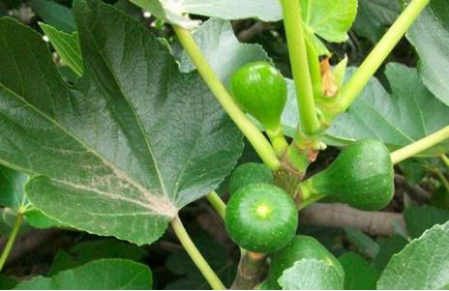
How to grow potted figs, and the planting methods for potted figs
Potted figs have elegant branches and leaves and a beautiful tree shape, making them beautiful potted plants that can be enjoyed both for their foliage and their fruit. Many people do not know how to grow potted figs. This article introduces the planting methods for potted figs.
Planting methods for potted figs
1. Figs have a relatively well-developed root system and need a larger container for cultivation. Generally, a large clay jar is often used for planting, and a relatively large growing environment is needed. Open balconies, terraces, courtyards, and similar places are all quite suitable for their growth.
2. Figs do not have strict soil requirements, but if grown in pots, it is best to use fertile soil with good air permeability. When planting or repotting, decomposed cake fertilizer, chicken manure fertilizer, and other organic fertilizers rich in carbon, phosphorus, and potassium should be added to the potting soil. This can make fig branches and leaves luxuriant and help them bear fruit early.
3. The watering of potted figs can basically be determined according to the progress of branch and leaf growth. When the branches and leaves sprout in spring, the amount of watering should be relatively small, and the potting soil only needs to maintain a certain degree of moisture. As the branches and leaves gradually grow and the temperature gradually rises, figs also enter the fruit-bearing period. At this time, the amount of watering should be increased, watering once in the morning and once in the evening to keep the potting soil moist. If watering is not timely, phenomena such as wilting branches and leaves and fruit drop are very likely to occur. After entering the fruit ripening period in autumn, the amount of watering should be reduced, because too much water will cause the fruit to crack. In rainy weather, in addition to controlling watering, attention should also be paid to preventing water accumulation in the pot to avoid waterlogging damage.
4. The new shoots of figs grow relatively quickly, so attention should usually be paid to pruning and shaping. This is especially true for potted figs. A trunk that is too tall not only affects the appearance but is also more troublesome to care for in daily maintenance. Therefore, potted figs must have the trunk limited to a certain height and must not be allowed to grow freely. The specific method is that when the trunk of the young seedling grows to about 20 cm, the top shoot should be cut off to promote the sprouting of branches. According to your own preferences, prune it into a certain shape to improve its ornamental value.
5. Figs are not cold-resistant. Potted figs maintained outdoors should be moved indoors promptly around the time of frost descent in late autumn. Those maintained indoors should be placed in sunny, well-ventilated places such as balconies and living rooms. In winter, figs enter the dormant period, and growth tends to stagnate. At this time, watering can be adjusted flexibly according to the indoor temperature. If the room temperature is relatively high, a little more water can be given, while if they are placed in a room with a room temperature of about 5°C, water should be controlled, and the potting soil should be kept as dry as possible so that they can safely pass through winter.
Figs originated along the Mediterranean coast of Europe and in the Central Asian region and were introduced to China during the Western Han Dynasty. **Fig cultivation in the Tarim Basin has a long history, and the figs there are sweet and nutritious, enjoying the reputation of the "Queen of Fruits." The introduction to the planting methods for potted figs ends here. We hope it can help everyone better understand how to grow potted figs.
How are potted figs planted? Planting methods for potted figs
Figs taste richly sweet, promote salivation and quench thirst, and have a unique fresh fragrance. They are suitable for all ages and are deeply loved. At the same time, fig trees have luxuriant branches and leaves and an elegant posture, with good ornamental value, making them one of the very good potted fruit trees. So, how are potted figs planted? Below is an introduction to the planting methods for potted figs. Let's take a look.
Image: Potted figs
I. Variety selection
At present, there are more than ten main cultivated fig varieties in China. According to fruit color, they can be divided into green-fruited, red-fruited, purple-fruited, and yellow-fruited varieties. According to fruit ripening period, they can be divided into summer-fruit-specific varieties, autumn-fruit-specific varieties, and summer-autumn dual-purpose varieties. For potted figs, varieties with bright fruit color, relatively large fruit size, and fruiting in both summer and autumn should be selected. For red-purple varieties, options include: Japanese Purple Fig, Bojihong, Masui Dauphine, and Brown Turkey. For yellow-fruited varieties, options include: Tanigawa, Golden Orphan, b1011, a42, and Blanche de Deux Saisons.
II. Container
The size and quality of the selected container determine the volume and growth potential of the root system in pot cultivation. Figs are shallow-rooted fruit trees. The vertical distribution range of the root system is within the 15-60 cm soil layer, and the horizontal extension range is relatively large. For pot cultivation, a clay pottery pot with a diameter of 40-50 cm and a depth of 25-30 cm is usually selected.
III. Timely potting
Figs do not have strict requirements for soil conditions. They grow best in deep, fertile, loose, well-aerated neutral to slightly alkaline soil. Therefore, the soil for filling the pot can be prepared by mixing 2 parts sandy loam soil, 1 part vermiculite, and 1 part barnyard manure, or by mixing 2 parts garden soil, 2 parts peat, and 1-2 kg compound mixed fertilizer. Before filling with soil, place a tile over the drainage hole at the bottom of the pot. Potting is generally done in mid-to-late March. For potted seedlings, choose 1-year-old cuttings or 2-year-old roots with a 1-year-old trunk. When planting, use pruning shears to shorten the seedling root system, especially cutting off damaged roots and broken roots to prevent root rot after planting and to stimulate the growth of new roots. During planting, ensure that the root system is spread out and closely integrated with the soil, and water thoroughly after planting.
Image: Potted figs
IV. Fertilizer and water management
In early June, apply a topdressing of diammonium phosphate or potassium dihydrogen phosphate, with an amount of about 0.3 kg. After dissolving in water, pour the fertilizer liquid evenly into the pot. In late August, a topdressing of compound fertilizer containing nitrogen, phosphorus, potassium, and trace elements can be applied, with an amount of about 0.5-1 kg. In early June, paclobutrazol (pp333) can be sprayed on the leaves. The method is to dilute paclobutrazol to a 300-500 times solution and spray once every 15 days, for 2-3 consecutive sprays. This can inhibit new shoot growth, shorten internode spacing, make branches sturdy, and promote flower bud differentiation and fruit development. Fig trees are drought-resistant and waterlogging-tolerant, so water management can be somewhat extensive. Watering should not be excessive, especially during the fruit ripening period, because too much water will aggravate fruit cracking.
V. Shaping and pruning
Fig trees have strong sprouting ability and branching ability. New shoots grow quickly and the growth amount is large, so special attention should be paid to shaping and pruning for potted figs. First, the trunk should be set low. After potting, cut back at 15-20 cm on the seedling trunk to set the trunk. Second, vegetative growth should be controlled, and a compact tree shape with dense branches and short branches should be cultivated. Fig branches are divided into long branches, medium branches, and short branches, all of which can bear fruit. Flower buds differentiate from the leaf axils at the base of the petiole and develop into fruit. Long branches are more than 60 cm long, with 20-30 nodes, and large internode spacing of 3.5-5 cm. Medium branches are 30-60 cm long, generally with 10-20 nodes, and internode spacing of 2.5-3.5 cm. Short branches are less than 30 cm long, with fewer than 10 nodes, and internode spacing of 2.0-3.0 cm. Usually, the terminal bud and upper lateral buds develop into long branches, while the lower lateral buds develop into medium and short branches. In May and June, during the peak growth season of the fruit tree, pruning methods such as pinching, bud removal, and branch bending are used to control vigorous branch growth and cultivate medium and short branch groups with short internodes and sturdiness. Third, according to your own preferences, shape it into a certain form to improve the artistic value of the potted plant.
Image: Potted figs
VI. Light and ventilation conditions
Potted figs should be placed in a location with good light and ventilation to ensure the normal progress of photosynthesis and transpiration of the thick leaves. It is best to place them where light can shine directly, such as a sunny balcony or a sunny spot in a courtyard. If potted figs are grown on a closed balcony, windows should be opened frequently to maintain ventilation. If potted figs are grown in a courtyard, the pots should be moved indoors in winter to prevent cold damage.
[Editor's concluding remarks]Potted figs like a warm and humid climate and are not cold-resistant or waterlogging-tolerant, so special attention must be paid during care. The above has introduced the planting methods for potted figs, and we hope it can help everyone!