Cultivation methods and precautions for the African tulip tree
I. Soil
The African tulip tree prefers fertile soil with a deep soil layer, ideally neutral or slightly acidic soil with good drainage. Although the African tulip tree is native to the tropics and has strong tolerance to poor soil, we still need to apply a certain amount of base fertilizer when planting it.
II. Light and temperature
The African tulip tree likes light and prefers a warm growing environment. The African tulip tree is heat-tolerant but not cold-tolerant; the suitable growing temperature is between 23°C-30°C, and in winter it can withstand temperatures of around 0°C. However, the African tulip tree must not be kept in a low-temperature state for a long time, otherwise the plant will suffer frost damage. The African tulip tree likes a growing environment with plenty of sunlight and will only grow well with sufficient light, so the African tulip tree should be taken out to bask in the sun more often.
III. Water and fertilizer
The African tulip tree has low demands for water and fertilizer. During the growing period, attention should be paid to replenishing water in time, especially during high temperature and drought. Fertilization should be carried out according to the fertility of the soil. During the growing period of the African tulip tree, fertilizer needs to be supplemented appropriately, mainly by applying thin fertilizer frequently, 3 to 5 times a year. When fertilizing, attention should be paid to the proportions of various fertilizers, and in autumn, more phosphorus and potassium fertilizer should be applied.
Now that you understand the cultivation methods for the African tulip tree, let's learn about how to deal with the pests and diseases that occur when cultivating the African tulip tree!
Cultivation methods for the African tulip tree
The African tulip tree often grows in dry-hot river valleys and relatively humid river valley lowlands and low mountain jungles at altitudes of 150-1900 m.
The African tulip tree is native to tropical and subtropical regions. It likes high temperature, high humidity and a sunny environment, but it can tolerate dry heat and semi-shade. It is not cold-tolerant and avoids frost. The suitable growing temperature is 23 to 30°C, and it can withstand temperatures of around 0°C, but if it is kept at a low temperature of 5 to 6°C for a long time, its branches will suffer frost damage.
In South China it can be cultivated in the open ground, while in other regions it can only be grown as a dwarfed potted plant and moved indoors in winter. It likes neutral to slightly acidic soil with a deep soil layer, medium fertility and good drainage, and is not tolerant of saline-alkali soil. It grows slowly on dry and poor soil.
The African tulip tree likes light and is heat-tolerant, drought-tolerant, waterlogging-tolerant and poor-soil-tolerant, but for cultivation, loam or sandy loam with good drainage is preferable; it is not wind-tolerant, and branches are easily broken in strong wind; however, it is not cold-tolerant, and the suitable growing temperature is 23-30°C. Apply sufficient base fertilizer at planting time, and during high temperature and drought periods pay attention to replenishing water for young trees.
The African tulip tree has low fertilizer demands, but during growth and development it also needs appropriate fertilizer supplementation, mainly compound fertilizer and organic fertilizer. According to the soil fertility conditions, fertilize 3-5 times a year, and grasp the principle of frequent and thin applications. The African tulip tree needs relatively high temperatures to bloom. In the northern part of South China, due to the lower temperatures, it does not bloom or blooms less. When it blooms, the flowers open at the top layer of the crown, like a raging burning flame, with flowers as brilliant as fire, extremely eye-catching. It can be used for street trees and courtyard landscaping.
Propagation methods for the African tulip tree Cultivation methods and precautions for the African tulip tree
Flower Bonsai Network introduction: What Flower Bonsai Network editor is sharing with you today is an article about the propagation methods of the African tulip tree, and the cultivation methods and precautions for the African tulip tree. Let's take a look.
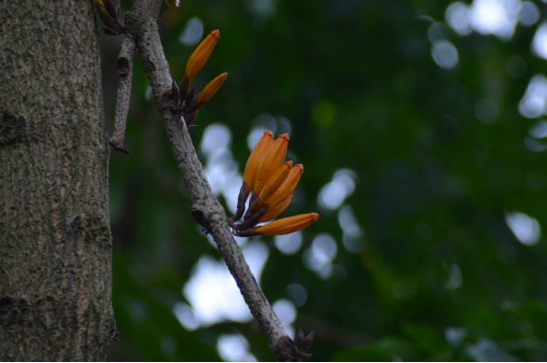
The African tulip tree is a small tree. The flowers of the African tulip tree are orange, very bright and vivid, and when blooming they look like burning flames, very vivid. Today let's learn about the propagation methods of the African tulip tree.
Seed propagation of the African tulip tree
Seed propagation is the main propagation method of the African tulip tree.
The African tulip tree can bloom in many seasons, so we can collect seeds in many seasons, so under normal circumstances we use seed propagation to propagate the African tulip tree. The method we use to collect the seeds of the African tulip tree is to pick the mature fruits of the African tulip tree, place them in a windless environment to dry, and after cracks appear from drying, gently knock the seeds of the African tulip tree down, and in this way we have collected the seeds of the African tulip tree. We can store the seeds of the African tulip tree over winter and sow the seeds when the suitable season comes.
We generally sow the seeds in the warmer spring, because the seeds of the African tulip tree are very small, so we generally broadcast them directly on the soil, then cover them with a thin layer of soil, maintain a temperature of about 25°C, and at the same time keep the soil moist. It takes about a week to germinate, and planting for three to five years is needed before it blooms.
Cutting propagation of the African tulip tree
The propagation of the African tulip tree generally does not use the cutting propagation method, because the survival rate of African tulip trees propagated this way is relatively low. In order to improve the survival rate of cutting propagation, we can use the vegetative propagation method; the air layering method can effectively improve the survival rate of cutting propagation of the African tulip tree. African tulip trees propagated by this propagation method are generally used for potted plants.
African tulip trees successfully propagated by this propagation method generally bloom in one or two years.
Cultivation methods and precautions for the African tulip tree
The African tulip tree is a woody plant. It is relatively robust by nature and relatively easy to cultivate. Using the African tulip tree as an ornamental tree species and enjoying its gorgeous flowers is also very artistic.
Cultivation methods for the African tulip tree
Soil
The African tulip tree likes soil with a deep soil layer and fertility, ideally neutral or slightly acidic soil with good drainage. It can tolerate poor soil, and a certain amount of base fertilizer needs to be applied at planting time.
Light and temperature
The African tulip tree likes light and prefers a warm growing environment. The African tulip tree is heat-tolerant but not cold-tolerant. The suitable growing temperature is between 23°C-30°C. In winter it can withstand high temperatures of around 0°C, but it must not be kept in a low-temperature state for a long time, as this will cause frost damage to the plant. Generally, when cultivating the African tulip tree in China, South China can carry out open-ground planting, while other regions need potted cultivation in winter and moving indoors for care. The African tulip tree likes a growing environment with plenty of sunlight and will only grow well with sufficient light, but it can also tolerate semi-shade.
Watering and fertilizing
The African tulip tree has low demands for water and fertilizer. During the growing period, attention should be paid to replenishing water in time, especially during high temperature and drought. Fertilization needs to be carried out according to the fertility of the soil. During the growing period, fertilizer needs to be supplemented appropriately, mainly by applying thin fertilizer frequently, 3-5 times a year. More nitrogen fertilizer can be applied, and in autumn, more phosphorus and potassium fertilizer should be applied.
Precautions for cultivating the African tulip tree
Propagation methods
The commonly used methods for propagating the African tulip tree are cutting, sowing or layering, all of which can be carried out in spring.
Common pests and diseases
The common disease of the African tulip tree is damping-off, which mainly occurs in rainy spring and causes relatively great damage. The pests are mainly aphids, Xestia c-nigrum, yellow noctuid moths, geometrid moths, large and small cutworms, and scarab beetles, etc. These pests will more or less cause harm to the African tulip tree and need to be controlled in time.
Pruning
The African tulip tree is a relatively pruning-tolerant plant and can be pruned frequently to maintain the plant shape of the African tulip tree.