How do you care for a Chinese elm bonsai? Keep these care tips in mind
1. The Chinese elm tolerates slight shade but very much loves light, so water it more in summer and autumn, and avoid harsh sun exposure.
2. The Chinese elm can be pruned year-round, but remember that to prevent excessive sap flow and dead branches, you must not prune the Chinese elm on rainy days.
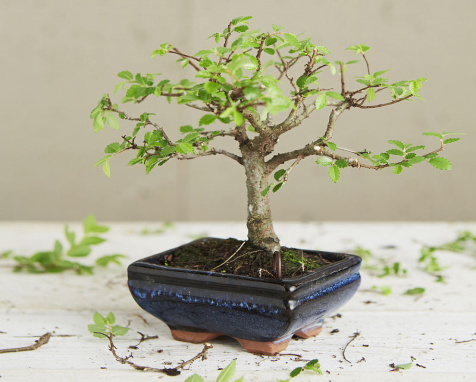
3. The Chinese elm likes humus mixed soil (pH 5.5-6).
4. During the growing season (April-October), apply a dilute cake fertilizer solution or organic fertilizer once every half month. In winter, about ten days before bringing it indoors, we need to water once with cake fertilizer solution or organic fertilizer (mainly phosphorus and potassium fertilizer). After bringing it indoors, apply cake fertilizer crumbs once more.
5. The growing season is very suitable for pruning the Chinese elm, and we can at this time regularly cut off crossing branches and fine, dense branches. And 2 days after pruning, spray urea on the leaves.
6. What should we do when we encounter pests and diseases such as longhorn beetles, scale insects and leaf beetles? The editor suggests using 80% dichlorvos at 1500 times dilution or Fengleiji at 2000 times dilution for spraying to kill them.
That is all about the methods for making a Chinese elm bonsai and the care points to note. Have you learned it? Are you eager to try and want to have a vigorous, quaint Chinese elm bonsai right away? Get moving!
Chinese elm bonsai care points, how to make and care for a Chinese elm bonsai
❤`•.¸¸.•´´¯`•Related recommendations:
❤ Lucky Bamboo
❤ Money Tree
❤ Rockery bonsai
❤ Pine bonsai
❤`•.¸¸.•´´¯`• Decorate your little home, enjoy every minute of life! This article comes from [Decoration Information]
The Chinese elm has a free and upright tree posture, and its bark is rough with many vertical fissures in dark gray, but its small branches are soft and suitable for interweaving and climbing. Old Chinese elm stumps are even more graceful in bearing; although they seem long decayed by the years, their branches and leaves still grow normally, giving people the sense of an old tree greeting spring. The Chinese elm bonsai made from them sometimes has gnarled roots and twisted branches, and some even turn decay into something magical, with a unique charm.
Making a Chinese elm bonsai:
1、Prepare a clay pot filled with plain sandy soil for planting the newly dug old Chinese elm stump, also called "growing the stump." Growing the stump is generally done from late autumn to spring, and the survival rate is highest about three months before the Chinese elm buds.
2、When transplanting a large stump, it must be moved with native soil, and this must be done before the leaves sprout in winter and spring. After planting, wrap the trunk with straw mixed with yellow mud water, and water frequently to keep the soil and straw moist.
3、Before planting, prune the root system and branches and trunk. Sticky sap often flows from the cut, and at this time you need to note: the sticky sap must not seep out too much, otherwise it will seriously affect the survival rate. To prevent this from happening, we can seal the cut with wax, then sprinkle fine sandy soil on it, and this can effectively avoid it.
4、After planting, press the soil firm. At this time there is no need to water, then spray clean water on the branches and trunk 1-2 times a day, and later water once more after 3-4 days. Finally, as long as it is not dry, do not water, and absolutely do not let the soil become waterlogged.
5、Based on the basic form of the old stump, shape the Chinese elm bonsai, making different forms of bonsai through wiring, pruning and other methods. There is no particular period to note for shaping time; it can be during the dormant period after leaf fall, or during the growing season, but you must absolutely not do shaping during the budding period.
Caring for a Chinese elm bonsai:
1. Light:Strengthen the light for the Chinese elm bonsai. The Chinese elm bonsai likes sunlight and has poor shade tolerance, so the finished bonsai should be placed in a place with ample sunlight. With insufficient sunlight, it will only grow branches and the leaf color will be very unattractive, and it is also prone to pest problems.
2. Watering:Although the Chinese elm likes to grow in moist places, it is also afraid of waterlogging. So water thoroughly each time, and in midsummer water once in the morning and once in the evening. Be sure to keep the potting soil moist but not waterlogged.
3. Fertilizing:The Chinese elm bonsai does not need too much fertilizer; applying it once each in early spring and early autumn every year is enough.
4. Pruning:Because the Chinese elm has extremely strong growth vigor, we need to prune it diligently to maintain the ornamental value of the Chinese elm bonsai. Branch pruning and shaping can be done in autumn, cutting off useless branches and diseased branches, then carrying out branch training.
5. Pests and diseases:The Chinese elm bonsai is often harmed by aphids, scale insects and so on. We can dilute omethoate with 1000 times water and spray to kill them.
Conclusion:The Chinese elm stump is not only used for bonsai viewing, but can also serve as an accent tree in courtyards; a single tree forms a scene with excellent effect. In the Jiangnan region it has even become the saying "where there is a village, there must be a Chinese elm." That is the editor's introduction above. After reading it, do you know how to make a Chinese elm bonsai? How much do you know about its care? Friends who like bonsai should get started and plant one right away!
▣ Desert rose cultivation ▣ The flower language of the blue enchantress ▣ Gardenia leaves turning yellow ▣ Rose planting techniques▣ How to care for Cuban oregano ▣ The flower language of narcissus ▣ Rose planting techniques ▣ How to grow kalanchoe ▣ How to grow hibiscus
Chinese elm bonsai pictures. Chinese elm bonsai care points, how to make and care for a Chinese elm bonsai
?`?.??.?′′ˉ`?Related recommendations:
? Lucky Bamboo
? Money Tree
? Rockery bonsai
? Pine bonsai
?`?.??.?′′ˉ`? Decorate your little home, enjoy every minute of life! This article comes from [Decoration Information]
The Chinese elm has a free and upright tree posture, and its bark is rough with many vertical fissures in dark gray, but its small branches are soft and suitable for interweaving and climbing. Old Chinese elm stumps are even more graceful in bearing; although they seem long decayed by the years, their branches and leaves still grow normally, giving people the sense of an old tree greeting spring. The Chinese elm bonsai made from them sometimes has gnarled roots and twisted branches, and some even turn decay into something magical, with a unique charm.
Making a Chinese elm bonsai:
1、Prepare a clay pot filled with plain sandy soil for planting the newly dug old Chinese elm stump, also called "growing the stump." Growing the stump is generally done from late autumn to spring, and the survival rate is highest about three months before the Chinese elm buds.
2、When transplanting a large stump, it must be moved with native soil, and this must be done before the leaves sprout in winter and spring. After planting, wrap the trunk with straw mixed with yellow mud water, and water frequently to keep the soil and straw moist.
3、Before planting, prune the root system and branches and trunk. Sticky sap often flows from the cut, and at this time you need to note: the sticky sap must not seep out too much, otherwise it will seriously affect the survival rate. To prevent this from happening, we can seal the cut with wax, then sprinkle fine sandy soil on it, and this can effectively avoid it.
4、After planting, press the soil firm. At this time there is no need to water, then spray clean water on the branches and trunk 1-2 times a day, and later water once more after 3-4 days. Finally, as long as it is not dry, do not water, and absolutely do not let the soil become waterlogged.
5、Based on the basic form of the old stump, shape the Chinese elm bonsai, making different forms of bonsai through wiring, pruning and other methods. There is no particular period to note for shaping time; it can be during the dormant period after leaf fall, or during the growing season, but you must absolutely not do shaping during the budding period.
Caring for a Chinese elm bonsai:
1. Light:Strengthen the light for the Chinese elm bonsai. The Chinese elm bonsai likes sunlight and has poor shade tolerance, so the finished bonsai should be placed in a place with ample sunlight. With insufficient sunlight, it will only grow branches and the leaf color will be very unattractive, and it is also prone to pest problems.
2. Watering:Although the Chinese elm likes to grow in moist places, it is also afraid of waterlogging. So water thoroughly each time, and in midsummer water once in the morning and once in the evening. Be sure to keep the potting soil moist but not waterlogged.
3. Fertilizing:The Chinese elm bonsai does not need too much fertilizer; applying it once each in early spring and early autumn every year is enough.
4. Pruning:Because the Chinese elm has extremely strong growth vigor, we need to prune it diligently to maintain the ornamental value of the Chinese elm bonsai. Branch pruning and shaping can be done in autumn, cutting off useless branches and diseased branches, then carrying out branch training.
5. Pests and diseases:The Chinese elm bonsai is often harmed by aphids, scale insects and so on. We can dilute omethoate with 1000 times water and spray to kill them.
Conclusion:The Chinese elm stump is not only used for bonsai viewing, but can also serve as a courtyard accent tree; a single tree forms a scene with excellent effect. In the Jiangnan region it has even become the saying "where there is a village, there must be a Chinese elm." That is the editor's introduction above. After reading it, do you know how to make a Chinese elm bonsai? How much do you know about its care? Friends who like bonsai should get started and plant one right away!
▓ Recommended reading
? Is Cuban oregano toxic? ? Desert rose cultivation ? The flower language of the blue enchantress ? Gardenia leaves turning yellow ? Rose planting techniques
? How to care for Cuban oregano ? The flower language of narcissus ? Rose planting techniques ? How to grow kalanchoe ? How to grow hibiscus