What are the key points to note when growing flowering almond (Prunus triloba)
During the growth of flowering almond, it needs frequent pruning, and it is a very pruning-tolerant plant. Pruning and thinning out the branches can reduce water evaporation, which in turn relieves pressure on the roots.
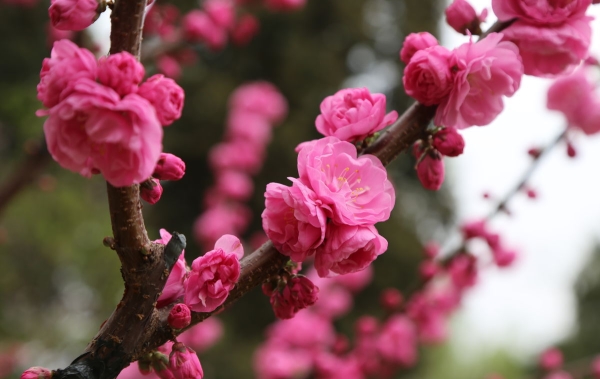
Have you all learned the pruning methods for ornamental peach and flowering almond? I hope reading this article has been helpful to you!
How to grow flowering almond: growing methods and key points to note
The flowering almond gets its name because its leaves resemble elm leaves and its flowers closely resemble plum blossoms. Flowering almond is very popular and is cultivated all over the country; it is an excellent ornamental plant. It looks even better when paired with forsythia, pines and cypresses. So how do you grow flowering almond? Next, Xiao Qi shares the growing methods and key points to note for flowering almond.
I. Growing methods for flowering almond
1. Soil: It is not demanding about soil, but it does not tolerate waterlogging; it prefers neutral to slightly alkaline, fertile, loose sandy loam.
2. Watering: It dislikes waterlogging. When planted in spring, if the weather is dry, water 2-3 times; normally no watering is needed. At the same time, pay attention to drainage during the rainy season.
3. Sunlight: In autumn, winter and spring, it can be given plenty of sunlight. When grown indoors, place it in a spot with bright light as much as possible, such as a well-lit living room, bedroom, study and similar places.
4. Temperature: It likes a warm climate, but the high temperature and stuffy heat of summer are not good for its growth; it has strict requirements for winter temperature. When the ambient temperature is below 10°C, it stops growing, and it cannot overwinter safely under frost.
5. Pests: The main diseases and pests of flowering almond include brown spot disease, white root rot, aphids, slug moths, red spider mites, leaf-rolling moths and so on. They generally occur in summer and autumn, and control agents should be selected and sprayed promptly.
6. Pruning: During growth, pay attention to pruning the branches. After the flowers fade, the flowering branches should be shortened moderately, leaving 3-5 buds on each vigorous branch. After the start of the dog days, prune once more and pinch out the growing tips so that nutrients are concentrated and flower bud formation is encouraged.
II. Key points to note when growing flowering almond
In the young stage, after the flowers fade each time, the flowering branches should be shortened appropriately to encourage axillary buds to sprout and form more side branches. Once the plant reaches middle age, the clump has already grown quite dense, so shortening should stop at this point, and part of the overly dense branches within the clump should be thinned out. After the flowers fade, remove the young fruit promptly to avoid consuming nutrients and affecting next year's flowering. It can also be pruned after planting into a small tree form. Because the side branches on the trunk of this small tree form are moderately dense and nutrients are distributed more rationally, it is no longer necessary to remove the young fruit, letting strings of fruit hang all over the branches, bright red and beautiful, still retaining a certain ornamental value. After flowering, topdressing is needed to help flower bud differentiation, so that next year the flowers are larger and more abundant.
The above isthe growing methods and key points to note for flowering almondintroduced. When flowering almond blooms in spring and autumn, both the flower shape and flower color are extremely beautiful; it is a rare landscaping plant and home beautification plant.
Growing methods and key points to note for flowering almond
Growing methods for flowering almond
Soil
Flowering almond generally grows at low to medium altitudes on slopes or beside gullies, under tree or shrub forests or at forest edges.
It is not strict about soil requirements, but it grows best in neutral to slightly alkaline, fertile, loose soil.
Watering
The root system of flowering almond is relatively well developed and its drought tolerance is very strong, but it does not tolerate waterlogging, so it is best not to plant it in low-lying areas, beside ponds or ditches.
When planted in spring, if the weather is dry, water 2-3 times; normally no watering is needed. At the same time, pay attention to drainage during the rainy season.
Light
Flowering almond is robust by nature and likes sunlight, so it should be planted in a place with sufficient light. If planted in a place with insufficient light, the plant will be thin and small, with few flowers or even no flowers at all.
Fertilizing
Flowering almond likes fertile soil, so during care, pay attention to the frequency and amount of fertilizing. When planting, a few shovelfuls of decomposed cow or horse manure can be applied as a base fertilizer.
From the second year onward, once it enters normal management, fertilizer can be applied once each spring after the flowers fade, once during the summer flower bud differentiation period, and once before winter.
Key points to note when growing flowering almond
Pay attention to the growing environment
Flowering almond grows best in well-drained sandy loam, and it can also grow normally in plain sandy soil, but it mostly grows poorly in clay soil, showing small and yellow leaves, no branch growth, and small or no flowers.
Regular topdressing
From May to June, topdressing can be applied 1-2 times to encourage the plant to differentiate flower buds.
Control the soil pH
Flowering almond has a certain tolerance to salinity and alkalinity. In saline-alkaline soil with a pH of 8.8 and a salt content of 0.3%, it can grow normally with no adverse effects observed.