What are the advantages of using elm to make bonsai?
Besides explaining how to care for elm bonsai, the editor also wants to explain why elm bonsai are loved by so many people. The reason many people choose elm bonsai is that the elm is a very ordinary tree species and is relatively easy to collect in the mountains. Moreover, the branches, leaves, and trunk of the elm all have ornamental value. The leaves of the elm are relatively small and dense; in addition, they are rather thick and hard, the new leaves are tender and fresh, and the bark is irregular, like fish scales. Although the trunk of the elm has a kind of dry, decayed, and eroded appearance, and some look as though they are full of holes, they still remain strong and upright, enduring through age without dying. Elms can be seen everywhere in the forest. In spring and winter, people can go into the mountains to dig up elm stumps to use as bonsai.
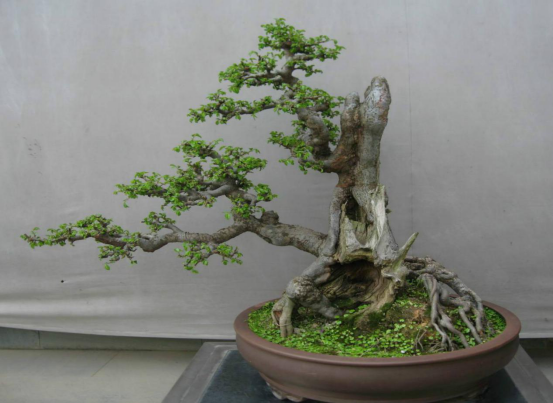
How to grow elm bonsai: care for elm bonsai
How to grow elm bonsai: care for elm bonsai
Elm, especially old elm stumps growing in the wild, has gone through many years of human chopping and hacking, or wind stripping and rain erosion, animal gnawing, and so on, gradually forming many different strange postures. Some have gnarled roots and ancient, simple strength; some turn decay into something marvelous, with withered roots and new leaves, opening up a world of their own. They are excellent material for making bonsai. Here we offer our humble views on the production and care management of elm bonsai, for reference only.
First, the selection of stumps must be strict. Try to choose small and medium-sized stumps to facilitate cultivation on a balcony; the stump material must be fresh, and those that are decayed or have no fibrous roots should not be used. Newly dug old elm stumps should be planted in plain sandy soil or planted in clay pots to "nurse the stump," generally best done from late autumn to early spring (the survival rate is highest in the two or three months before budding). Before planting, the root system and branches and trunk must first be pruned as necessary. A sticky sap often flows out from the cut (sap bleeding), and if too much liquid seeps out, it will seriously affect the survival rate. The biggest shortcoming of all elm species is that they bleed sap easily. If the stump material cannot effectively overcome this shortcoming before and after planting, then it is very difficult to guarantee the survival of the stump material. For this, you can use paint or wax to seal the cut, or apply a layer of erythromycin ointment or sulfonamide ointment, then sprinkle on fine sandy soil. After the cut is properly treated, do not pot it immediately; place it in a shady place to dry in the shade for a few hours, letting the wound naturally lose water and form a protective film. This can greatly reduce the occurrence of sap bleeding after the stump material is potted. Elm likes dryness and fears wetness. After planting, press the soil firm; it is not necessary to water. Just spray clean water on the branches and trunk 1 to 2 times a day, and after 3 to 4 days water once thoroughly. After that, do not water unless dry; absolutely do not allow waterlogging.
Second, when styling elm bonsai, according to the basic form of the old stump, use wiring, pruning, and other means to make different forms of bonsai, such as formal upright style, curved trunk style, slanting style, waterside style, cascade style, wind-swept style, forest style, and root-over-rock style. The styling time can be either the dormant period after leaf fall or the growing period, but the budding period must be avoided.
After the elm bonsai has taken shape, plant it in a purple clay pot before spring growth begins. Be careful to choose loose, breathable, well-drained sandy soil rich in humus. It is best to mix it in the ratio of yellow sand : pine needle soil : loess = 4:3:3. This kind of soil is both breathable and water-retentive, and will not become waterlogged. Usually place it in a well-ventilated, sunny place for care, and it is best to keep the pot soil on the drier side. In summer, when it is hot and dry, you can sprinkle water on the ground around the plant, but it is not advisable to spray water directly on the leaves, so as to avoid the leaves becoming larger and losing their beauty. After a new stump survives, do not rush to fertilize; this is an important reason why many people fail at nursing stump material. Fertilizer should be applied after autumn, and fully decomposed dilute liquid fertilizer is best.
Elm has very strong sprouting ability and grows relatively fast. During the growing season, it should be pruned frequently, cutting off overly long and messy branches to maintain the beauty of the tree shape. The best ornamental period for elm bonsai is when the new leaves have just emerged. If all the leaves are removed in early to mid-August, and fertilizer and water management is then strengthened, new leaves will grow again by late September, increasing the ornamental value. In winter, move it to a bright, cool indoor room, or you can bury the whole pot in soil outdoors in a wind-sheltered, sunny place, reduce watering, and let the plant enter full dormancy. During care, repot once every 2 to 3 years so that the bonsai grows vigorously and full of life.
Chinese elm
The Chinese elm has a beautiful tree shape, an elegant posture, mottled bark, and fine, dense branches and leaves. It is very suitable for solitary planting or grouped planting in courtyards, or for arrangement with pavilions and rockery. It can also be selected as a greening tree species for factory and mining areas. The wood of the Chinese elm is hard and can be used for industrial timber; the stem bark fiber is strong and tough and can be used for ropes and artificial fibers; the roots, bark, and tender leaves used as medicine have the effects of reducing swelling, relieving pain, detoxifying, and treating heat, and external application treats scalds and burns; the leaves can be made into a crude pesticide that can kill red spider mites.
Morphological characteristics
Deciduous tree, or in winter the leaves turn yellow or red and persist until they fall after the new leaves open the following year, up to 25 m tall, DBH up to 1 m; crown broadly rounded, trunk base sometimes with buttress roots, bark gray or gray-brown, splitting into irregular scaly thin flakes that peel off, exposing red-brown inner bark, nearly smooth, slightly uneven; current-year branches densely covered with short soft hairs, dark brown; winter buds ovoid, red-brown, hairless. Leaves thick in texture, lanceolate-ovate or narrowly elliptic, rarely ovate or obovate, unequal in length and width on both sides of the midvein, 1.7-8 (often 2.5-5) cm long, 0.8-3 (often 1-2) cm wide, apex acute or obtuse, base oblique, cuneate or rounded on one side, leaf surface dark green, glossy, except for sparse soft hairs in the sunken midvein area, the rest hairless, lateral veins sunken, leaf underside lighter in color, sparsely covered with short soft hairs when young, later becoming hairless or with sparse hairs along the veins, or with tufted hairs in the vein axils, margin from base to apex with blunt and regular simple serrations, rarely double serrations (such as on leaves of sprouting branches), lateral veins 10-15 on each side, veinlets obvious on both surfaces, petiole 2-6 mm long, hairy only on the upper side. Flowers open in autumn, 3-6 in clusters in the leaf axils or arranged in clustered cymes, perianth cup-shaped above and tubular below, perianth segments 4, deeply cleft to the base or nearly the base of the cup-shaped perianth, pedicel extremely short, sparsely hairy. Samara elliptic or ovate-elliptic, 10-13 mm long, 6-8 mm wide, except for hairs on the stigmatic surface at the apical notch, the rest hairless, samara wing slightly thick, stalk at the base about 2 mm long, wings on both sides narrower than the nutlet portion, nutlet portion located in the upper-middle part of the samara, upper end close to the notch, perianth segments deciduous or remaining, fruit stalk shorter than the tubular perianth, 1-3 mm long, with sparsely scattered short hairs. Flowering and fruiting period August to October.
Growth habits
Grows on plains, hills, mountain slopes, and valleys. Sun-loving, drought-tolerant, able to grow in acidic, neutral, and alkaline soils, but the most suitable habitat is a warm climate with fertile, well-drained neutral soil.
Geographical distribution
Distributed in Hebei, Shandong, Jiangsu, Anhui, Zhejiang, Fujian, Taiwan, Jiangxi, Guangdong, Guangxi, Hunan, Hubei, Guizhou, Sichuan, Shaanxi, Henan, and other provinces and regions. Also distributed in Japan and Korea.
Cultivation management
Bonsai production
(1) Material collection and propagation measures
Artificial propagation: Chinese elm is usually propagated by sowing. The seeds mature from October to November, and the samara wings are yellow-brown. They should be collected in time, spread out to dry in the sun, the debris winnowed away, and stored dry in bags. Sow in March of the following spring, either by broadcasting or drilling. For drilling, the row spacing is 25 cm. Choose a windless, sunny day for sowing, cover with fine soil just until the seeds are no longer visible, then cover with rice straw. In about 30 days they will germinate and emerge. Remove the straw in time and thin the seedlings appropriately. During the growing period, manage water and fertilizer well, weed and loosen the soil, and the current-year seedlings can reach 30-40 cm tall. Young saplings have thin trunks and sparse branches, and the leaf shape is relatively large, so they are generally not suitable for making bonsai. It is better to cultivate them for several years, prune and shape them, and then pot them. In addition, Chinese elm can also be propagated by root cuttings to cultivate stump scenery material, with faster results, and this is widely used in South China.
Collection from mountains and wilds: Chinese elm grows in many places by watersides in the mountains and wilds of Jiangnan, and is even more common in limestone mountainous areas. You can select old stumps that have sprouted repeatedly after many years of cutting, especially elm stumps growing on barren slopes, poor land, beside ditches, or in rock crevices in the mountains and wilds. Those that grow slowly, are long-lived, have been processed by natural wind and waves, with exposed roots and thick trunks, vigorous and twisted, with slanting branches and small leaves, and an old, ancient, and unadorned posture are the best. Dig them before spring budding, cut off unnecessary roots and branches, protect the secondary roots and fibrous roots, coat them with mud slurry, and wrap them in wet moss. After digging them back, choose a ventilated, light-transmitting place with loose, moist soil for deep burying and cultivation, called "nursing the embryo." Wait until the root system develops and the new branches and leaves are luxuriant, then pot them and shape them. Using old stumps as bonsai material can shorten the bonsai production time, and the form is natural and antique, different from ordinary works, and easy to keep alive.
When Chinese elm wild old stumps are collected for cultivation, they generally take at least 2 to 3 years to take shape. Here is a rapid cultivation method, especially suitable for the growth of bonsai. The Chinese elm stumps dug back in early spring are first planted in clay pots for cultivation. After they survive, pay attention to removing unwanted buds at any time. Begin shaping from late April to early May. When the branches grow to 15-18 cm long, use fine metal wire for wiring and shaping, and pay attention to care management. When new branches sprout and grow 4-6 leaves, pruning can be carried out. Generally, only two leaves are kept on each small branch, and then a nitrogen fertilizer is applied immediately to promote new buds to sprout again on the new branches. Repeat this pruning and fertilizing many times so that the leaves grow dense as quickly as possible. As the branches continue to thicken, the metal wire must be removed in time to prevent "wire bite." For branches that have not yet been fixed in shape, they can be wired again to fix their form. In this way, by September a pot of Chinese elm stump scenery can initially be formed.
The key to this rapid shaping method is mainly to carry out wiring while the xylem of the branches has not yet hardened, so production must be done with special care, and the thickness of the metal wire must also be chosen appropriately. When winding, it does not need to be pressed too tightly, to prevent bruising the tender branches. In addition, the work of "nursing the embryo" must also be done well in order to achieve the goal of potting and making bonsai one year after digging the stump.
(2) Potting process
Pot selection: Chinese elm stump scenery generally should use glazed ceramic pots, and purple clay pots can also be used. Pot shapes are diverse and determined according to the tree shape, with rectangular pots being the most common. Plain and elegant colors are best.
Soil: It has no strict requirements for soil and has strong adaptability. For pot cultivation, loose and fertile garden soil or leaf mold is suitable, with good breathability and water permeability, which is beneficial to root development and growth and keeps the branches of the old stump luxuriant.
Planting: Usually plant before budding in February to March in spring, and it can also be done in autumn. When planting, prune the roots appropriately, cut off overly long roots, and the plant can be raised appropriately. The Chinese elm has a well-developed root system and is suitable for root-over-rock bonsai. Planting over rock is relatively difficult. Generally, choose stone material with relatively deep crevices (soft stone material can be artificially carved into stone crevices). After pruning and arranging the tree roots, insert them into the stone crevices, and use palm fiber to tie the main thick roots so that they are fixed. When rooting, be careful not to bruise the root system as much as possible, and use green moss for padding. After rooting, smear wet river soil on the outside of the stone, then wrap it with moss, then plant the tree roots together with the attached stone into the pot soil, and carefully maintain for 3 to 4 years. Wait until the root system embedded in the stone crevices grows fully and fills the stone crevices, then the binding can be removed. At this time the root system and the stone have formed one body, and a pot of Chinese elm root-over-rock bonsai is basically completed.
(3) Shaping techniques
Processing: Chinese elm can be shaped by pruning, and can also be processed in combination with wiring. Palm fiber or metal wire can be used for wiring. Because Chinese elm branches grow relatively fast, the wiring material should be removed in time to avoid "wire bite" and affect appearance. For old stumps collected from mountains and wilds, overly thick main trunks can be carved and reduced to decrease volume and match the side branches, while also adding ancient interest. The shaping of Chinese elm is generally best done before spring budding or during the plum rain season.
Tree shape: Chinese elm has strong plasticity and is suitable for processing into many kinds of tree shapes. Common ones include formal upright style, slanting style, horizontal trunk style, cascade style, root-over-rock style, and combined planting style. The branches and leaves can be wired into pads, or pruned into a natural-form crown. Especially when creating root-over-rock Chinese elm bonsai, when conceiving the idea you can take a corner of the natural world, and a certain degree of exaggeration is allowed. In order to heighten the charm of a certain part, the tree can be placed above the mountain stone, with the tree as the main subject and the stone as secondary, without being limited by "a mountain in zhang and a tree in chi." In Chinese bonsai, the Lingnan school, Su school, and Yang school often use Chinese elm as the main tree species.
Care management
Placement location: Chinese elm should be placed in a place with sufficient sunlight and air circulation. In summer, shade is not needed; in winter it can be placed outdoors. To prevent the pot soil from drying and freezing, the whole pot can be buried in soil. Watering: Chinese elm likes moisture, so watering should be sufficient. In summer, when the temperature is high and light is strong, water once in the morning and once in the evening, but do not let water accumulate in the pot. In autumn, watering can be reduced; in winter, if the pot is buried in soil, watering is not necessary.
Fertilizing: In winter, apply barnyard manure or cake fertilizer once as a base fertilizer. From April to October (except during the plum rain season), apply dilute organic fertilizer once every half month to maintain the nutrients needed for normal growth. Fertilizer should be mainly nitrogen and potassium fertilizer.
Pruning: Chinese elm branches and leaves grow quickly. To maintain the bonsai shape, pruning should be carried out frequently. Generally, when new bud branches extend to 5-6 cm, only keep 2-3 leaves and cut off the rest. To control growth, buds and shoot tips can also be removed at any time.
Repotting: Carry out once every 2 to 3 years, best before spring budding, and also possible in autumn. When repotting, remove about 1B2 of the old soil, cut off some old roots, and fill with fertile, loose cultivation soil.
Pest control: Chinese elm has many pests, commonly including elm leaf beetle, scale insects, longhorn beetles, stinging moths, and bagworms. Spray 80% dichlorvos 1500x solution for control; for longhorn beetles damaging the trunk, use lime-sulfur mixture to plug the insect holes.
Control of common bonsai diseases
In making bonsai from elm stumps, there are roughly two common and relatively harmful diseases: root rot and witches' broom disease of branches and shoots. When severe, root rot directly causes the death of the stump; witches' broom disease seriously affects the normal growth of the stump, making it difficult for branches to transition and take shape for many years, and in severe cases causes the stump body to shrink and the branches to lose form and be discarded. Root rot: The symptoms of elm stump root rot are mainly yellowing and falling leaves during the growing period, branches gradually dying, and buds remaining dormant for a long time or stopping growth midway. When collecting wild elm stumps, great care must be taken to make the root cross-sections neat and not leave wounds, to prevent pathogen invasion. The branch cortex of elm stumps is relatively thick and has more water, so before temporary planting to nurse the stump, the root cross-sections must be properly dried, and a disinfectant solution can be applied to prevent root infection. When temporary planting, do not choose unclean soil with humus and unfermented substances. The soil should be disinfected. During the stump-nursing period, strictly control water; do not let the roots be in an excessively moist and long-term soaked state, as this easily promotes the growth of root rot fungi. If, when repotting, black-brown decay is found on the root cortex, immediately scrape it clean with a sharp tool until fresh tissue is visible, and apply to the affected part 25% wettable powder and carbendazim at a concentration of 1000x solution. After the medicinal solution air-dries, pot it. At the same time, the necrotic roots should be cut off and burned, and care should be taken not to mix the scraped residue into the pot soil to prevent reinfection. Only after the wound heals and new roots are produced can fertilizer be applied, to enhance disease resistance. Witches' broom disease: Elm stump witches' broom disease mainly harms new shoots and leaves, showing symptoms such as clustered new shoots growing upright, diseased branches unfolding leaves early and small, and dense branching. The pathogen of witches' broom disease overwinters as mycelium on the damaged shoots, and invades and causes damage when new shoots sprout the following year. In winter, when pruning elm stumps, cut off the clustered shoots and burn them together. Before buds sprout in early spring, spray 5 degrees Be lime-sulfur mixture, with remarkable effect. Spraying can be done once a week during the growing period, and over five weeks it can eradicate witches' broom disease. During this period, besides avoiding rain, do not spray water on the branches and leaves, and keep the leaf surface dry.
Landscape value
The Chinese elm trunk is slightly curved, the bark is mottled and elegant, the small branches droop gracefully, and the leaf color turns red in autumn. It is a good ornamental tree and a greening tree species for factories, mines, and the four-side greening. It is often planted alone as a landscape and is suitable for planting beside ponds and near pavilions, and can also be arranged among rockery, but it has relatively many pests and diseases. It has strong sprouting ability and is a good material for making bonsai.
The tree shape is beautiful, the posture is elegant, the bark is mottled, and the branches and leaves are fine and dense, giving it relatively high ornamental value. In courtyards, solitary planting, grouped planting, or planting with pavilions are all very suitable, and as a shade tree, street tree, or bonsai it has good ornamental effects. Because of its strong resistance, it can also be selected as a greening tree species for factory and mining areas.
Elm
Scientific name: Ulmus pumia Linn.
Family and genus: Ulmaceae, Ulmus.
Deciduous tree, native to the north, the tree can reach several meters tall: the bark color is grayish, often with scaly peeling, leaves elliptical, with serrated edges, dark green, leathery, and glossy. In March and April it bears small flowers, the fruit is flat and round, with membranous wings, called elm seeds, and can be eaten.
Elm has three types: large-leaf, medium-leaf, and small-leaf. Among them, the large-leaf type is not welcomed by bonsai creators because its leaves are large and thin, and the leaf color is also not as good as that of the medium-leaf and small-leaf types, so it has been eliminated. The medium-leaf type grows faster than the small-leaf type, and the small-leaf type has higher ornamental value than the medium-leaf type, so both can coexist, with one chosen by those who need it.
Elm is the most ideal tree species for shaping Lingnan bonsai, and is one of the five famous trees in Lingnan bonsai, (orange jasmine, Sageretia thea, Fujian tea, elm, and Gypsophila). It mainly has the following advantages.
1. Fast growth speed (the fastest-growing among the five famous trees). Whether it is the growth speed of the embryo material or the use of the trunk-cutting and branch-cultivating technique for cultivation, this tree has a relatively fast speed.
2. Small leaves, beautiful leaf shape, and lovely dark green leaf color, meeting the requirements for making bonsai.
3. Good callus formation and great plasticity; relatively large wounds can also heal. This characteristic can be used to transform the tree embryo stump. If it needs to be reduced, cutting off a part will also allow it to heal naturally. If it needs to be enlarged, the "striking" method and "peeling" method can be used, making use of its callus proliferation tissue to become rugged and nodular, which has a vigorous beauty and can also give the broad trunk part a feeling of enlargement.
4. Branches are soft and not easy to break, which is beneficial for shaping and wiring.
5. The root base is well developed. Using the callus principle, it can be transformed at will to adapt to the requirements of various tree types, and it is also ideal for creating root-over-rock styles.
6. High budding rate. Elm is the species with the highest budding rate among tree species, with latent buds all over the body. During the budding period before the Start of Spring, buds will sprout on any trunk with wounds. This makes it very convenient to choose and decide the positions of bonsai branches. If a branch is needed at a certain position, make a hole there until the xylem is visible, and later buds will sprout there. After a branch grows, the wound will heal naturally, without leaving very obvious traces.
2. Habits and care
Elm likes sunlight and is cold-tolerant. It needs moist soil but also good drainage, especially when transplanting, to prevent waterlogging and root rot.
Elm has very strong sprouting ability. At the suitable season (during the Start of Spring period), buds will sprout at any wounded position. During unsuitable seasons, the whole plant must be without leaves (all leaves removed) for budding to reach the ideal result. If single-branch pruning is carried out during an unsuitable season (while other branches still grow with leaves), it will cause failure to sprout. Therefore, when shaping, when a certain branch has reached the required size, most often the method of early inhibition is used (binding branches and leaves, limiting photosynthesis) to limit the growth of this branch. Only when all branches of the whole plant are in proportion are they cut all together, so that all branches sprout together, and in this way each branch can grow in a balanced way.
When a certain branch suffers disease and shrinks, you can also remove all the leaves of the whole tree, which can promote the diseased branch and all branches to sprout together and solve the disease of a single diseased branch.
Digging and transplanting elm should be carried out every year during the period from Minor Cold to Major Cold. Digging during this period means that even if the elm root system is relatively greatly damaged, the elm can still survive. The farther away from the Major Cold season, the lower the survival rate of transplanting and regeneration.
3. Propagation methods
Elm has become a cultivated species in the south. There are two propagation methods. One is air layering (commonly called ring-barking). This method can be carried out throughout the year except during the dormant period. Air layering propagation can obtain very good-shaped trunk technique, but the stump and root system are not as beautiful as stumps propagated from root sections, and it is mostly used as commercial bonsai. The second propagation method is root cutting. Take from each year during the period from Minor Cold to Major Cold
the root sections cut off when digging elm stumps (regardless of size); cut them to about 10 cm each, and immediately plant them in fully drained and breathable mud: after watering enough to settle the roots (cover them in rainy weather), in about one month they will sprout and grow. With routine management, transplant and plant in rows the following year. Elm propagated by root sections, after several years, will have a thick and rugged stump, with deep cracks and gnarled, interlaced roots, and can create works with individual artistic character.
4. Pest and disease control
Common pests of elm include red spider mites, elm oystershell scale, and cottony cushion scale. The damage symptom of red spider mites on elm is that the leaf color becomes gray and dull and dry, and under transmitted sunlight the leaves can be seen to be eroded into a network pattern (the mites are so small that they cannot be seen with the naked eye). This causes the damaged tree to be unable to sprout and grow for a long time. The damage symptom of elm oystershell scale is that the elm branches are covered with white filamentous material, the damaged branches become thin and dry, and if not treated for a long time, the whole branch will wither (for control methods refer to the pest control section). Next is sunscald. Under strong sunlight exposure, elm bark is easily scorched. Measures should be taken to protect the sunburned bark and overcome this disease.
The biggest disease of elm bonsai is branch shrinkage. This disease mostly occurs after the elm has become a bonsai. A perfectly good pot of bonsai, watched as it shrinks branch by branch, no longer forming a landscape, and if not overcome in time, the loss is great.
1. The main cause of branch shrinkage in elm (the same as in Acacia confusa) is: elm is a tree, grows quickly in the ground, and has a very well-developed root system. After it is transplanted into a pot (especially a shallow landscape pot after becoming a bonsai), the pot contains little soil, and the root system quickly fills the entire pot and becomes intertwined into a "root nest." This "root nest" is tight and water can hardly penetrate into it. The water poured in only overflows at the soil surface, forming a phenomenon of water deficiency and fertilizer deficiency, causing the tree vigor to gradually weaken. At the same time, after the work has taken shape, the branching is dense, nutrient consumption is large, and ventilation conditions are poor, causing the branches to become thin and weak, with weak disease resistance, and easily attracting pests. These adverse factors are the causes of elm branch shrinkage. This disease first shows slow budding (normal growth should be buds maintaining a tender green budding state), then produces yellow leaves and defoliation due to water and fertilizer deficiency. The branches inside (with poor ventilation) first age and shrink, gradually developing into disease of the whole plant. 2. The way to solve elm (the same as Acacia confusa) branch shrinkage is: pay close attention to the growth state of the plant. If the above conditions are found, use a pick to probe the soil. If it is confirmed that water and fertilizer deficiency is caused by the tight "root nest," immediately take measures and use a pick to loosen the soil deep into the "root nest," so that water and fertilizer can effectively seep into the inner soil. At the same time, use foliar fertilization methods, and spray more water on the leaf surface
to reduce the symptoms. When entering the body II period, immediately repot, cut off as much of the excess root system as possible, replace with new mud, and the disease will naturally improve. Experience has shown that elm bonsai should be repotted, root-pruned, and soil-changed once every year (during the period from Minor Cold to Major Cold) to ensure normal growth.
Method for planting raw elm stumps: * Apply glue to the cut, press firm with plain yellow mud, do not water. Place in a dark place. Water after 10 days. Shade. Mine has been planted for a whole month and is growing luxuriant branches and leaves.
Sap outflow must be prevented; the cut must not come into contact with water within one week.
* Cut all branches and leaves clean, trim once and for all, plant in pure sand (semi-moist), do not water for the time being, place indoors in a cool place, spray water mist on the branches and trunk several times a day, and only water if the pot lacks water after buds sprout on the branches. Gradually move from indoors to a shaded outdoor place, then gradually move to normal sunlight (avoid midday), and after about one month or more, depending on the situation, normal management can begin.
Elm is distributed throughout China and is generally transplanted during the dormant period in winter and spring, with the highest survival rate in February and March before budding. Before production, it should first be planted in sandy soil to "nurse the stump." Before planting, the branches, trunk, and root system must be pruned. A sticky sap often flows from the wounds. If too much of this sap seeps out, it will seriously affect the survival rate. Wax, paint, or the like can be applied to the cuts, or a layer of erythromycin ointment can be applied, then fine sandy soil sprinkled on, to prevent the sap from flowing out. But never soak it in water, otherwise it will increase the loss of sap, causing the roots to rot and the plant to die. After planting, press the soil firm, but do not water. Spray clean water on the trunk 1 to 2 times a day, and after 2 to 3 days water once thoroughly. After that, place the plant in a ventilated, light-transmitting place for care. Water according to the principle of not watering unless dry, and watering thoroughly when watering. Strictly prohibit waterlogging in the soil. The styling of elm bonsai can be done in the growing period or the dormant period, but the budding period should be avoided to prevent excessive sap loss and affect plant growth. Its form can be processed according to the basic shape of the stump into various different forms of bonsai, such as formal upright style, curved trunk style, slanting style, deadwood style, waterside style, cascade style, and forest style. The crown can use the elegant and sparse natural type, the large tree shape with a rounded top, or can be processed into a regular round-pad shape. The shaping method uses both wiring and pruning. First use metal wire to wire out the basic form, then prune carefully.
Apply erythromycin or seal with wax to the wound cross-section, spray water on the page, and wait a few more days before watering; it is not too late. Otherwise, if sap bleeds, it will be very difficult to survive. Add plant ash to the cut roots. It can stop the sap. After planting, water after one week. Add mud. Then seal the soil with plastic sheet. Leave it alone. It will sprout around March 20 next spring. (After transplanting it is injured and its immunity is weaker. Just put a plastic bag over the top. Remove it when the buds have 2-3 leaves. The approximate time is mid-April. Do not water before that.)
A simple method for making bonsai quickly
A simple method for making bonsai quickly
Production and organization|@Bizarre and Unique Trees
The production of bonsai, generally speaking, takes at least several years, and at most decades or even hundreds of years. For ordinary hobbyists this may not matter, but when we hope to make bonsai an industry to sustain our lives, it may be a myth. More of us hope to both enjoy beauty and earn income when making bonsai, organically combining the two, so that we can enjoy both happiness and life.
The development of grafting technology presents us with a path. Using appropriate grafting techniques allows us to freely give play to our imagination and aesthetic taste, and produce bonsai with profound artistic conception and excellent beauty.
Bonsai production can be divided into the following steps:
First, choose suitable bonsai material.
Material is the most difficult to choose in ordinary bonsai production, but our choice is not difficult. As long as it has form, it can be any part of a tree. Whether there is one more small branch or a few fewer small branches, we can omit them, and the length can be cut at will according to personal preference.
Second, graft the root system.
Because the stump we choose has no roots, we need to graft the root system. The root system uses the inverted side-grafting method. Graft roots at the required positions; the number of roots is up to you, but do not graft too few just to save trouble. Grafting roots has already saved you a lot of trouble compared with ordinary bonsai making.
Third, graft branches.
Graft branches of suitable thickness at the positions where branches are needed. Grafting is suitable for small branches. The possibility of survival when grafting large branches is reduced, and our selected stumps are already not lacking large branches. If the small branch is a fruiting mother branch (a branch that first grows branches and then flowers), it can bear fruit in the same year or the next year after the stump survives.
Fourth, binding.
Wrap all scions and graft unions tightly with plastic strips. Except for the part buried in soil, the plastic strips at the bud eye parts of the scions must be a single layer, otherwise the buds will be suffocated. The plastic strips use thin food bags. This is key, otherwise it will certainly fail, because its toughness is low and strength is low, and the buds can naturally break through.
Fifth, root shaping.
Make the root system into the required shape as needed.
Sixth, planting and care.
Plant the prepared stump in a flower pot or in the ground. Note that the root-grafting parts should be buried with wet soil and then surrounded with plastic film. Before the scions sprout, when watering, do not let water soak the root-grafting parts. This is also key. If water passes over the graft unions, they will rot and the whole planting will fail. When the top scions are relatively strong, gradually remove the excess soil buried at the stump part. Finally remove all plastic binding, and the work is initially completed.
Processing and shaping of bonsai tree embryos:
For saplings cultivated from a young age, processing and shaping generally begin after 3 to 5 years; for stumps collected from mountains and wilds, processing and shaping can mostly be carried out after one year of embryo nursing. Before processing, the ground-planted tree embryo can be dug up and temporarily planted in a pot of basically suitable size, for ease of operation and shaping. Large tree embryos can also be processed and shaped on site. Processing and production must follow a series of artistic techniques of bonsai creation. First carefully observe and deliberate on the tree embryo material, and decide what theme to express and how to shape according to the characteristics of the material, that is, "treat according to the material." Arrange the skeleton of the tree embryo roots, trunk, and branches according to the rules of bonsai art, making it into a living bonsai art work with coordination and symmetry, beautiful lines, and profound artistic conception.
For example, if pine is chosen as material, it is suitable to express the vigor and uprightness of its main root, with branches and leaves spreading flat in cloud-like pads; cypress is suitable to express its ancient, simple, and peculiar main trunk, with branches and leaves in clusters; plum blossom styling is suitable for sparse branches slanting across; winter jasmine is suitable for drooping branches and arched curves; ... This is considered from the natural characteristics of the tree species.
In addition, it should also be considered from the inherent shape of the stump. For example, some stumps have straight main trunks, which can be followed naturally to make a formal upright style; some stumps have naturally curved main trunks, suitable for making a curved trunk style or cascade style; some stumps have withered and bald main trunks, suitable for making a dead-peak style... Treating according to the material can save labor in bonsai production and also give natural wild interest. If everything is left completely natural, then there is no talk of bonsai art, but if the traces of artificial work are too excessive, then natural beauty is lost. Therefore, for the shaping of stumps, never stick rigidly to conventions and apply fixed patterns.
The shaping and processing methods also have a certain sequence. Usually the main trunk is done first and then the branches, wiring, pruning, or carving from bottom to top, which can be determined according to the tree species and shaping needs. Different regions have different processing methods due to different customs.
Generally, for pines, cypresses, and tree species with weak sprouting ability, wiring is the main method. For tree species with strong sprouting ability, such as Chinese elm, Sageretia thea, Fujian tea, and trident maple, pruning can be the main method. Stumps processed by wiring can be shaped freely, with many twists and turns, and take shape relatively quickly; stumps processed by pruning are vigorous and natural, but take shape relatively slowly. In southern regions, the climate is warm and trees grow quickly, so pruning shaping is suitable; in northern regions, the climate is cold and trees grow relatively slowly, so wiring shaping is suitable.
Of course, these are all general situations. The styles and schools of bonsai in different places are different, and their shaping methods are quite distinct. For example, the Lingnan school uses the pruning shaping method of "cultivating branches and cutting the trunk"; the Yang school uses the wiring shaping method of "one cun, three bends"; the Su school uses the shaping method of "coarse wiring and fine pruning"; the Hui school uses the shaping method of "zigzag bending"; the Chuan school uses the "square bend" or "drooping bend" method for shaping, and so on. We should master the most basic methods of pruning and wiring, and apply them flexibly according to specific circumstances, and often ideal results can be produced.
(1) Wiring method: that is, through wiring materials such as palm fiber, hemp skin, or metal wire, bending tree branches and trunks into various shapes.
Metal wire wiring method: This method is simple and easy to carry out, and bends and extends freely, but removal is a little troublesome. It is best to use wire that has been heated over fire, but usually the more economical galvanized iron wire is used. Choose wire of appropriate thickness according to the thickness of the branch or trunk being wired. Metal wire generally uses sizes 12 to 24, used according to the matching number.
Wire thickness selection table
Wire: No. 12 No. 14 No. 16 No. 18 No. 20 No. 22 No. 24
Branch/trunk: 15 mm 10 mm 6 mm 4 mm 3 mm 2 mm 1.5 mm (all diameters)
When wiring, first fix one end of the metal wire at the base or crossing point of the branch or trunk, then slowly wind it tightly against the bark, making the metal wire form about a 45 degree angle with the branch or trunk. If the branch or trunk is to be twisted to the right and bent downward, the metal wire is wound in a clockwise direction; otherwise, it is wound in a counterclockwise direction. Note that twisting and bending at the same time is necessary so that the metal wire stays close to the bark, and at the same time the branch or trunk is less likely to break. Do not use too much force, to prevent damaging the bark or breaking the branch or trunk. For some tree species with thin bark that is easily damaged, such as pomegranate and red maple, first wrap the branch or trunk with hemp skin, then wire the metal wire. If there are repeated metal wire windings on one branch, pay attention to the consistency of the winding direction and try to avoid crossing.
Palm fiber wiring method: This is a traditional shaping method of Chinese bonsai.
Its advantages are: the palm fiber blends with the color of the branches and trunk, it can be appreciated immediately after processing, and it is not easy to damage the bark and is convenient to remove, but wiring is relatively difficult. Generally, first twist palm fiber into palm ropes of different thicknesses, bind the middle section of the palm rope to the lower end of the trunk to be bent (or tie a loop knot), twist the two ends against each other a few times, place them at the upper end of the branch or trunk to be bent, tie a slip knot, then slowly bend the branch or trunk to the required curvature, then tighten the palm rope and tie a dead knot, completing one bend. Generally, the bend should not be excessive, otherwise it easily loses the natural form. The key to palm fiber wiring lies in mastering the force point. According to the needs of shaping, choose the positions for applying the palm fiber and tying the knot.
The sequence of palm fiber wiring: at the beginning, first tie the main trunk, then tie the branches and leaves; when tying branches and leaves, first tie the top, then tie the lower part; when tying each part, first tie the large branches, then tie the small branches; when tying the main trunk, proceed from the base to the top. In long-term practice, old bonsai artists in various places have summarized many kinds of palm fiber wiring methods, called palm methods. These palm methods differ slightly by region or school, but the basic principles are the same, and the purpose is to use palm fiber to tie tree branches and trunks into the required form. The palm method is a means, not an end. After mastering the basic principles, it can be handled flexibly according to shaping needs. For bending relatively thick branches or trunks, first wrap with hemp skin, and place a strip of hemp fiber on the outer side of the part to be bent to enhance the toughness of the trunk. If the branch or trunk is too thick and difficult to bend, the "knife-opening method" can also be used, that is, use a sharp small knife to cut a 3-5 cm long deep opening at the bending point of the trunk, then wrap the cut surface with hemp skin as above. This makes bending easier and less likely to break. To facilitate wound healing, it is best to make the cut surface perpendicular to the plane of the bend. Whether metal wire or palm fiber wiring is used, it can generally be removed after one year to fix the shape. If not removed in time, as the branch thickens, the metal wire or palm fiber will sink into the cortex, affecting tree growth and appearance. But for slower-growing tree species and relatively thick branches or trunks, the time can be extended by half a year to a year.
Wiring time for various tree species: pay attention to wiring at the right time, then the branches are soft, bending is easy, and after wiring, development and growth are good. If wiring is not done at the right time, the branches are easy to break, and development and growth are also affected. Tree species wired in winter and spring include: Chinese juniper, magnolia, doublefile viburnum, butterfly tree, wintersweet, plum, peach, cherry, dwarf cherry, elm-leaved spirea, Midget crabapple, Hall crabapple, pomegranate, crape myrtle, Chinese elm, Chinese hackberry, yellow vitex, and so on. For the species from wintersweet onward, before they have taken shape, the newly lignified branches should also be wired once in summer. Tree species wired in summer and autumn include: Buddhist pine, Huashan pine, golden dewdrop, thorny elaeagnus, snow-in-summer, sweet osmanthus, and so on. Tree species wired in winter and autumn include: spectabilis chaenomeles, firethorn, Sageretia thea, boxwood, and so on. Some tree species, such as Hamilton's spindle tree, winter jasmine, Chinese wolfberry, and so on, can be wired at any time. Flower-viewing tree species such as camellia and rhododendron are all suitable for wiring before flowering.
(2) Pruning method: that is, through pruning of branches and trunk, removing excess parts, retaining the essence, so that the tree shape is beautiful. This is one of the main means of shaping tree bonsai. The effects of pruning include weakening, dwarfing, and changing the tree shape.
When pruning, adjust and cut off messy crossing branches, overlapping branches, parallel branches, opposite branches, and so on. For the remaining branches, nutrients are concentrated and they grow thick and strong. When the cultivated branch grows to a suitable thickness, carry out strong pruning to shorten it and produce the second section branch; when the second section branch grows to a suitable thickness, prune again, and do the same for the third and fourth section branches in turn. Generally, keep two small branches on each section branch, one long and one short. After many years of pruning, the branches and trunk become shortened, thick, and vigorous, gradually forming the required tree shape.
Pruning methods: there are measures such as pinching, cutting, thinning, and wounding.
Pinching means pinching the growing tip and removing leaves.Removing the tip of a new shoot during the growing period is called pinching. Pinching can promote axillary bud growth, produce more branches, inhibit height growth, and benefit the beauty of bonsai shaping. Removing leaves can promote the sprouting of new leaves. For example, removing old leaves from elm during the growing period will make the new leaves smaller and more delicate, benefiting appreciation; removing old leaves from maples and pomegranate makes the sprouting new leaves red, bright, and pleasing to the eye.
Cutting means shortening current-year branches.After shortening, medium and short branches increase, the mother China bonsai production technique branch thickens. The so-called sparse branches are cut, and cutting makes branches dense, which is beneficial to branch-pad shaping. Retrenchment is shortening perennial branches, the main technique of the Lingnan school's "cultivating branches and cutting the trunk," and is beneficial for renewing and rejuvenating old trees. When collecting wild stumps, during the embryo-nursing process, the method of retrenchment and trunk cutting is often used. It is both a dwarfing measure for the stump and a means of renewing and rejuvenating old stumps.
Thinning refers to thinning pruning.Cutting away part of the overly dense branches from the base is beneficial for improving ventilation and light transmission conditions and promoting vigorous growth of the remaining branches.
Wounding refers to measures such as scoring, girdling, twisting branches, twisting shoot tips, and bending branches on tree branches and trunks.Flower-viewing and fruit-viewing bonsai often adopt this method to promote flowering and fruiting. The pruning period should be timely and suited to the tree. Generally, deciduous tree species can be pruned in all four seasons, but pruning after leaf fall and before budding is suitable. Pines and cypresses are prone to resin flow after pruning, so winter pruning is suitable; fast-growing tree species with strong sprouting ability, such as tamarisk and elm, can be pruned several times a year; flower-viewing tree species, such as crabapple, apple, crape myrtle, and pomegranate, which flower on current-year new branches, are suitable for pruning before budding; tree species that flower on one-year-old branches, such as ornamental peach, plum, and winter jasmine, are suitable for pruning after flowering.
(3) Carving method:To display the age and antiquity of a tree, a chisel or sharp carving knife can sometimes be used to carve the trunk according to shaping techniques, creating natural hollows and protrusions. Part of the bark can also be stripped away, or the trunk can even be split in half (as in the split-trunk style for plum bonsai), giving the tree a naturally withered, aged appearance. However, when carving, no traces of artificial knife or axe work should be visible. This method is mostly used for pines, cypresses and relatively large old stumps.
(4) Root-raising method: Stump bonsai emphasizes exposed roots and claws, and gnarled, interlacing roots; this is also one of the important aspects of bonsai appreciation.
The root-raising technique usually involves planting the tree first in a deep pot, then removing the mounded soil on top year by year so that the thick roots are raised above the soil surface. At the same time, the roots can also be given artistic curving treatment, making them appear even more ancient, unusual, simple and rustic. However, when raising the roots, moderation must be exercised; too many roots must not be exposed all at once, lest it affect the growth of the stump or even cause death.
The root systems of tree species such as elm and Caragana sinica (pea tree) are slender and soft. When raising the roots, the long roots can be coiled into elegant antique shapes, but the coiling of the root system must be orderly and aesthetically pleasing; it must not be tangled and wrapped randomly, losing its naturalness and instead detracting from the effect.
Trees in nature have endlessly varying forms, and as a miniature representation of them, bonsai should of course also be diverse; therefore, it is very difficult to set down specific standards for tree shaping. However, it must conform to nature and be rich in painterly quality. Arbitrary fabrication will cause the tree to lose its natural form. But merely conforming to nature is not enough; artistic processing must also be carried out on the basis of nature. This is the same principle as in painting: to reach a certain artistic realm, one must usually observe various trees in nature more often and accumulate perceptual understanding, especially being adept at grasping the typical postures of trees commonly used in bonsai, such as the natural form characteristics of pines, cypresses, willows, plum blossoms and common miscellaneous trees. At the same time, one should observe more often how trees are painted in landscape painting and learn techniques from them.
In addition, one should improve one's artistic cultivation from many aspects such as aesthetics and literature.