How to grow olive flowers? Detailed explanation of cultivation precautions
Olive flowers are often attacked by viruses. The common disease is anthracnose, which we can treat by spraying a 600-fold copper oxychloride solution. Diseased branches should be pruned off promptly to prevent the spread of infection.
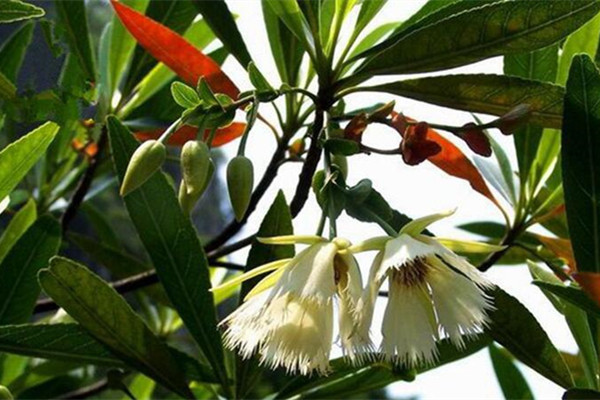
How to grow olive flowers? Precautions for growing olive flowers
The olive tree has a tall, upright and verdant crown, with delicate pure white flowers. Under sunlight, the silvery white and emerald green enhance each other's beauty. It is a symbol of wisdom, courage and victory. So, how do you grow olive flowers? Precautions for growing olive flowers.
1. Planting methods for olive flowers
A. Planting of large seedlings:
When planting, the roots should be in close contact with the soil. The trunk only needs to go 6 cm into the soil. Seal the top with yellow clay, and wrap the trunk with rice straw to prevent wind and sun exposure from causing water loss. The rice straw must be 10 cm above the ground and must not touch the soil, so as to avoid attracting termites. Water after planting. Note: (1) Great care must be taken when lifting seedlings and planting, do not break the root bark or damage the root tips; (2) Do not put base fertilizer in the hole, only use red-yellow loam topsoil that easily promotes rooting; (3) The soil must be pressed firm and compacted, which is the key to survival; (4) After planting, set up protective supports.
B. Planting of small seedlings:
Planting time: from Grain Rain to Start of Summer is preferable.
Olive tree planting method: Use burnt soil and leguminous green manure as base fertilizer in the hole, and scatter 1 jin of lime in each hole to prevent termite damage. When planting, mix surface fine soil with water in the hole to make mud slurry, place the seedling into the slurry so that the lateral roots spread out naturally, then cover with fine soil and press firm so that the roots and soil are fully in contact.
2. Fertilizer and water management for olive flowers
(1) Fertilizer: major elements, nitrogen, phosphorus, potassium, calcium, sulfur.
A. Fertilizing young trees:
Mainly nitrogen fertilizer, appropriately combined with other fertilizers, following the principle of frequent and light application, generally once every two months, or once before and after each shoot flush.
(2) Fertilizing fruiting trees:
Three times a year: namely pre-flowering fertilizer: around March, nitrogen. Or: pre-flowering fertilizer
Post-fruit fertilizer: around October, nitrogen and potassium. Flower-strengthening and fruit-strengthening fertilizer
Flower bud differentiation fertilizer: November-December, nitrogen, phosphorus, potassium. Post-fruit fertilizer
Fertilizing method: Under the drip line at the outer edge of the canopy, open a ring trench 20 cm deep, or two half-moon-shaped trenches, and apply the fertilizer into the trenches. If it is liquid fertilizer, cover with soil after it dries; if it is dry fertilizer, cover with soil immediately after application.
3. Shaping and pruning of olive flowers
(1) Shaping young trees:
After the seedlings are planted and survive, determine the trunk height when the seedlings reach 1-1.5 m. Generally cut at around 0.8 m. Select and keep 3-5 shoots as main branches in different directions. When the main branches are too long, cut them back at 60 cm. Keep 3 lateral branches on each main branch, and then handle them level by level thereafter, so that they form an early-bearing, high-yielding canopy as soon as possible.
(2) Pruning fruiting olive flowers:
For trees just entering production, light pruning is the main principle, mainly removing overly long branches to encourage lateral branches; for pruning during full production, the main aim is to regulate the ratio of vegetative growth to reproductive growth; for later-stage pruning, the main aim is to remove dead branches, shaded branches, and diseased and pest-damaged branches inside the canopy.
The cultivation method for olive flowers is actually fairly simple. For gardening enthusiasts growing them in pots, it is essential to know how to care for them. The above are the cultivation methods for olive flowers.
How to grow olive flowers? Cultivation methods and precautions for olive flowers
[Common question] How to grow olive flowers? What are the cultivation methods and precautions for olive flowers?
[Expert answer] The cultivation method for olive flowers is actually fairly simple. For gardening enthusiasts growing them in pots, it is essential to know how to care for them. Below is an introduction to the cultivation methods for olive flowers.
1. Planting methods
A. Planting of large seedlings:
When planting, the roots should be in close contact with the soil. The trunk only needs to go 6 cm into the soil. Seal the top with yellow clay, and wrap the trunk with rice straw to prevent wind and sun exposure from causing water loss. The rice straw must be 10 cm above the ground and must not touch the soil, so as to avoid attracting termites. Water after planting. Note: (1) Great care must be taken when lifting seedlings and planting, do not break the root bark or damage the root tips; (2) Do not put base fertilizer in the hole, only use red-yellow loam topsoil that easily promotes rooting; (3) The soil must be pressed firm and compacted, which is the key to survival; (4) After planting, set up protective supports.
B. Planting of small seedlings:
Planting time: from Grain Rain to Start of Summer is preferable.
Olive tree planting method: Use burnt soil and leguminous green manure as base fertilizer in the hole, and scatter 1 jin of lime in each hole to prevent termite damage. When planting, mix surface fine soil with water in the hole to make mud slurry, place the seedling into the slurry so that the lateral roots spread out naturally, then cover with fine soil and press firm so that the roots and soil are fully in contact.
2. Fertilizer and water management
(1) Fertilizer: major elements, nitrogen, phosphorus, potassium, calcium, sulfur.
A. Fertilizing young trees:
Mainly nitrogen fertilizer, appropriately combined with other fertilizers, following the principle of frequent and light application, generally once every two months, or once before and after each shoot flush.
(2) Fertilizing fruiting trees:
Three times a year: namely pre-flowering fertilizer: around March, nitrogen. Or: pre-flowering fertilizer
Post-fruit fertilizer: around October, nitrogen and potassium. Flower-strengthening and fruit-strengthening fertilizer
Flower bud differentiation fertilizer: November-December, nitrogen, phosphorus, potassium. Post-fruit fertilizer
Fertilizing method: Under the drip line at the outer edge of the canopy, open a ring trench 20 cm deep, or two half-moon-shaped trenches, and apply the fertilizer into the trenches. If it is liquid fertilizer, cover with soil after it dries; if it is dry fertilizer, cover with soil immediately after application.
3. Shaping and pruning
(1) Shaping young trees:
After the seedlings are planted and survive, determine the trunk height when the seedlings reach 1-1.5 m. Generally cut at around 0.8 m. Select and keep 3-5 shoots as main branches in different directions. When the main branches are too long, cut them back at 60 cm. Keep 3 lateral branches on each main branch, and then handle them level by level thereafter, so that they form an early-bearing, high-yielding canopy as soon as possible.
(2) Pruning fruiting trees:
For trees just entering production, light pruning is the main principle, mainly removing overly long branches to encourage lateral branches; for pruning during full production, the main aim is to regulate the ratio of vegetative growth to reproductive growth; for later-stage pruning, the main aim is to remove dead branches, shaded branches, and diseased and pest-damaged branches inside the canopy.
[Editor's comment] There are many varieties of olive, seven of which are found in China. Two of them are cultivated as fruit trees, while most of the others are used as ornamental plants. The olive flower is the national flower of Greece and is a symbol of “wisdom, courage and victory”. The editor of First Agricultural Economics above has introduced the planting and care methods for olive flowers, and hopes this article is helpful to you.