How to propagate potted holly by cuttings? I'll teach you the correct method
Holly is mainly propagated by cuttings. Cutting propagation is simple and easy to do, roots quickly, and has a high survival rate, so it is widely used in production.
Seedbed selection
The cutting seedbed should be chosen in a place with high terrain, deep soil, loose soil, and good drainage and irrigation.
Cutting selection
Holly cuttings can be done all year round, and the best times are late spring and early summer and late summer and early autumn. Choosing the finest branches makes rooting easiest!
Cutting
It is better to plant shallowly rather than deeply; the mother plant is best inserted 1 cm into the soil. The cutting should not have too many leaves, so as to avoid nutrient loss, but they should not all be cut off either.
Transplanting
Two to three months after cutting, when new roots have grown to 1 to 2 cm, they can be transplanted into nutrient bags. When the seedlings grow to 26 to 30 cm, they can be planted in the ground.
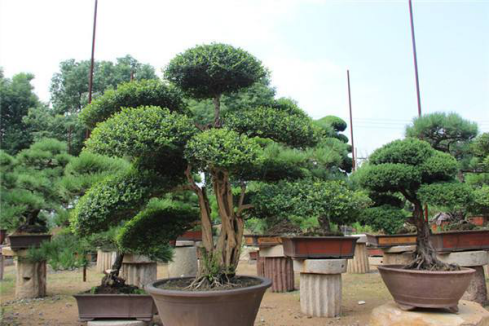
The above is an introduction to the care methods for potted holly. I hope it can help you, and thank you for reading.
Learn the cutting method for red-fruited holly
With social development, environmental pollution is also increasing, so planting more plants is very necessary, and learning the important method of red-fruited holly cuttings is also very important. It can not only improve your living environment, but also provide good medicinal materials for yourself and others, which not only makes your life more fulfilling, but also increases your income along the way, and can also train your abilities. Something that benefits so many sides is something everyone should do together. Below are some methods summarized by the editor for everyone.
Evergreen shrub or small tree. Bark grayish white, smooth and not cracked; branches spreading and densely grown. Leaves hard and leathery, four-sided, with 3 sharp hard spines, dark green and glossy on the surface, pale green on the back. Flowers small, yellow-green, clustered in the leaf axils of 2-year-old twigs. Flowering period April to May. Drupe spherical, bright red when ripe
Native to the provinces of the middle and lower reaches of the Yangtze River in China. Now widely cultivated in gardens in various places
Light-loving, also shade-tolerant. Relatively cold-tolerant; it can overwinter outdoors in the Yangtze River basin and can withstand a brief low temperature of -5'C. Drought-tolerant, prefers fertile slightly acidic loam. Slow-growing, strong in sprouting ability, tolerant of pruning, easy to shape. Relatively strong resistance to harmful gases
Mainly propagated by cuttings. Softwood cuttings carried out during the plum rain season have a relatively high survival rate. For specific methods, refer to (1-2-2). It can also be propagated by sowing. In autumn (October to November) when the fruit ripens, collect the seeds, remove the fruit peel, stratify them in sand at low temperature until March to April of the following spring, and sow then, which gives a relatively high germination rate
Transplant in March to April in spring or in November in autumn with a soil ball. During operation, special attention should be paid to preventing the soil ball from breaking apart, and some branches and leaves should also be pruned to reduce transpiration and help survival.
It is a good foliage and fruit-viewing tree species. It can be grown as a garden tree or hedge, and is also suitable for potted cultivation or making into bonsai. The leaves, fruit, and roots can all be used medicinally. The leaves can treat pulmonary tuberculosis fever and hemoptysis, the fruit is often used for excessive vaginal discharge and chronic diarrhea, and the root is often used for rheumatic pain and jaundice hepatitis. The seeds contain oil and can be made into soap. The bark can be used as dye. The leaves contain saponins, tannins, bitter substances, etc., and the bark contains alkaloids, etc.
Evergreen tree, up to 25 m tall. Leaves hard and leathery, deep green, glossy, with large wavy uneven spines along the margin; leaves on old trees are mostly entire. Flowers in May to June, small, nearly white, fragrant. Fruit red, about 0.9 cm in diameter, remaining on the tree from autumn ripening until March of the following year without falling.
Spiny holly bears abundant red fruit at the beginning of winter, and against the green leaves it looks even more brilliant and eye-catching, a feast for the eyes. It is an ornamental plant excellent for both fruit and foliage. In Europe and America, at Christmas people use spiny holly and American holly indoors as Christmas trees, or use red fruit and green leaves inserted at the door or to decorate the interior. Variegated-leaf types such as golden-edged holly are even more high-end plant materials for decorating Christmas.
In China, when spiny holly and American holly are unavailable, similar holly can be used as a substitute.
Rabbit friends, do you remember? Learning the red-fruited holly cutting method may not necessarily mean you can grow red-fruited holly very well. You need to treat it with a serious heart and care for it carefully as if it were your own child, so that it will grow well. The above is the red-fruited holly cutting method brought to you by the editor. I hope it can help rabbit friends and solve everyone's problems. If you want to learn more about red-fruited holly cutting methods, please continue to follow us. We will bring you the most real and reliable methods.
Notes on potted cultivation of winterberry _ winterberry price
Compared with ordinary holly, the biggest characteristic of winterberry is that it sheds its leaves in winter. After the leaves fall, dense, bright red fruit hangs all over the branches, very dazzling and festive, and it is an extremely beautiful landscape line in the gray-covered severe winter. Winterberry is also called Mantanghong and is a deciduous shrub of eastern North America, reaching up to 2.7 m at most. From late autumn to winter.
Winterberry has gradually become a highlight in the garden, with bright red fruit hanging on the branches like cherries. Especially after snow, it is extremely dazzling on the white snow. The red fruit period can last as long as half a year.
........
........
Notes on potted cultivation of winterberry
For potted winterberry seedlings, you can choose dwarf varieties or varieties dwarfed by growth hormones. In autumn and winter the fruit is red and bright, with many fruits and a long duration, and the ornamental effect is good. It is very suitable for home beautification and full of a festive and auspicious atmosphere. Cultivating a single small seedling usually takes 3 years. If 3 small seedlings are planted together, the ornamental effect can be achieved after 2 years.
The planting substrate requires loose soil rich in organic matter. After planting, retain the base of the plant and prune heavily at 15 cm to ensure at least 6 or more branches the following spring. To control height, spray paclobutrazol 2-3 times when the new shoots are 5 cm, and control the length of fruiting branches to about 30 cm. After leaf fall in early winter, prune the fruiting branches into a 20-25 cm ball shape. In the coming spring the plant sprouts, blooms, and fruits, and in winter it can be sold as a New Year flower.
........
........
In addition, winterberry can also be propagated by cuttings, sowing, and grafting. After the berries mature in November, the seeds can be collected. Soak the fruit in clean water for 8 to 12 hours, remove the pulp cleanly, wash the seeds clean, and dry them in a cool place. Because the seeds germinate after two years of dormancy, you can first store the seeds in sand for one year and sow them in winter of the second year.
........
........
Before sowing, plow the land deeply, remove weeds, straw, and other debris inside, and remove grass roots and grass seeds. After making the ridges level, scatter the seeds evenly, then cover with loose substrate. To maintain moisture, you can cover the seedbed with rice straw and water thoroughly. After the seeds germinate in April of the following year, remove the covering. When they grow to 10 cm, they can be transplanted into nutrient solution, or they can remain in the bed to continue growing. The transplanted seedlings should be properly shaded, and after they are fully established they can receive full sunlight.
........
........
Winterberry price
Because winterberry is not easy to cultivate and market demand for it is relatively low, its price is relatively cheap. The price of potted winterberry saplings within 3 years is generally within 100 yuan, and seeds are within 20 yuan. In addition, the price of adult trees is much more expensive. Depending on the height and diameter of the tree, the price is above 1000 yuan. There are also some garden plantations selling wholesale winterberry seedlings at prices ranging from several dozen to one hundred yuan, depending on the quantity you wholesale. Overall, the price of winterberry is not expensive; it is just somewhat difficult to cultivate.
........
........
Editor's summary
Closing words: It is often said that plum blossom is 'a branch of plum in the snow, blooming alone in the cold', but now it seems that winterberry is in no way inferior to the cold plum, one of the Four Gentlemen. Compared with the toughness and delicate fragrance of the red plum blossom, winterberry's red fruit is like fire, defying the severe winter. It is really hard to tell which is superior.