How to care for a peach blossom bonsai? Master these methods for more vigorous blooming
Although peach blossoms have low fertilizer requirements, during the young tree stage, care must be taken to control the amount of nitrogen fertilizer applied, otherwise the sapling will grow wildly. After reaching the full fruiting stage, nitrogen fertilizer should be applied in increased amounts, with the aim of strengthening tree vigor. In addition, peach trees are afraid of waterlogging, so drainage should be timely to prevent root rot from water accumulation. The peach orchard also needs frequent weeding to keep the soil loose.
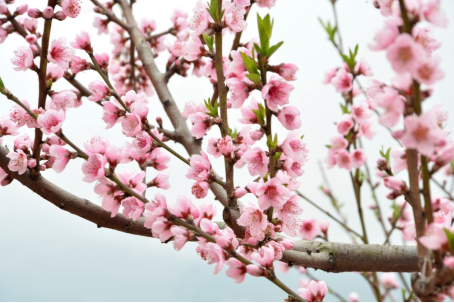
After reading this article, do you know how to make a peach blossom bonsai? Let's get hands-on together and create a beautiful bonsai! But be sure to care for it carefully.
Three key points for caring for peach blossom bonsai
Bonsai peach blossoms dislike shade
Peach blossoms are very sensitive to light. When there is sufficient light, the plant grows robustly, flower buds form easily, and blooming is early.
In environments with insufficient light and shade, the plant tends to grow leggy, the branch tips are thin and weak, the leaves are small, thin and pale in color, and drop easily. This causes the inner canopy to become bare, with poor nutrition, few and thin flower buds, early decline of tree vigor, and a short flowering period.
Therefore, when planting peach trees in rows, pay attention to spacing; when growing in pots, keep the pots at a certain distance. At the same time, pruning should be strengthened to dwarf the tree body, control the canopy, and improve light conditions.
Bonsai peach blossoms dislike moisture
Peach trees have a strong need for air and are afraid of waterlogging. If the soil is waterlogged, the roots easily suffocate and rot; in mild cases the plant develops gummosis and early leaf drop and decline, and in severe cases branches die and the tree dies.
Therefore, when planting peaches, choose a plot with high, dry terrain and a groundwater level below 1 m, and with sandy soil that has strong drainage and aeration. For heavy, compacted plots, improve the structure through deep plowing and applying organic fertilizer.
During the growing season, strengthen intertillage and loosening of the soil; water appropriately during dry periods, avoiding overwatering and excessive humidity; during the rainy season, strengthen trenching and drainage. Create a loose, well-aerated soil environment to prevent waterlogging, which causes oxygen deficiency and root rot.
Bonsai peach blossoms dislike alkalinity
Peach trees prefer acidic soil and dislike alkaline soil, have shallow roots and need air, so choose a loose, well-aerated acidic soil.
In alkaline, heavy and compacted soil, the plant grows poorly. In alkaline soil with a pH above 7.5, roots rot easily, iron deficiency chlorosis occurs, and flowering and fruiting are poor.
When cultivating, apply heavy amounts of organic fertilizer. Even more attention should be paid to the potting medium; if the soil becomes alkaline, apply ferrous sulfate to wash out salts, so as to adjust its pH, improve the soil's physical and chemical properties, and promote normal plant growth and development.
How to make a peach blossom bonsai
When making an ornamental peach blossom bonsai, first of all, in terms of styling, reasonable pruning should be carried out according to the plant's growth conditions to ensure the branches are distinctly twisted and varied, and messy branches should also be removed in time to maintain the bonsai's beauty. Shaping is also essential, and small accessories can be placed on the pot surface as needed to increase the bonsai's expressiveness.
After reading this article, do you understand better how to care for a peach blossom bonsai? Hurry up and learn to master it, and together let's carefully tend these beautiful little flowers!