How to make a peach blossom bonsai? A complete step-by-step guide
When making an ornamental peach blossom bonsai, the first thing is styling: prune rationally according to the plant's growth so the branches are distinct in their twists and turns, and promptly remove messy branches to keep the bonsai looking attractive. Shaping is also essential, and you can add small accessories on the pot surface as needed to increase the bonsai's expressiveness.
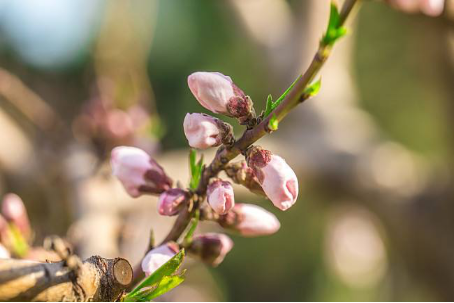
After reading this article, do you have a better understanding of how to care for a peach blossom bonsai? Learn and master it quickly, and let's carefully tend these beautiful little flowers together!
How do you make an ornamental peach blossom bonsai? An introduction to peach blossom bonsai making methods
The peach tree's trunk and branches are robust and aged-looking, strong and powerful, and when the peach blossoms open, pink covers the branches in splendid, varied beauty, making it an excellent material for ornamental bonsai and long one of the “Eighteen Scholars of Bonsai.” So how do you make an ornamental peach blossom bonsai? The peach blossom bonsai making methods are introduced below.
Image: peach blossom bonsai
I. Varieties
Bonsai peaches are grown mainly for ornamental purposes, so choose excellent late-maturing varieties that bear fruit early, flower easily, have large fruit and good quality, such as Zhonghua Shoutao, Yangtun Jutao, Xinchuan Zhongdao, Zhongtao No. 21, Ruipan No. 4 and so on.
II. Flower pot selection
Generally choose a clay pot 30 cm in diameter and 25 cm high, because clay pots are loose and porous in texture, making it easy for excess water in the pot to drain away and for air to circulate, which suits root development; they are also cheap, light and convenient to use.
III. Preparation of nutrient soil
The nutrient soil must not only be rich in nutrients but also have good air permeability. There are generally two mixing methods. One is 4 parts garden soil, 4 parts humus soil, and 2 parts cinder and sand; this nutrient soil suits newly transplanted seedlings. The other is 6 parts garden soil, 2 parts humus soil, and 2 parts cinder; this mix is mostly used for cultivating mature nursery stock.
Image: peach blossom bonsai
IV. Potting and planting
1. Planting time:Potting should be done in spring when buds sprout or in autumn after leaf fall. At this time the plant's growth is relatively slow and it stores more nutrients, so after potting it roots easily and survives easily.
2. Seedling selection:Choose seedlings with well-developed roots, many fibrous roots, appropriate trunk thickness and height, a beautiful tree shape, evenly distributed branches and vigorous growth.
3. Potting method:First check whether the bottom of the flower pot is clear, then cover the hole with a broken pot piece, convex side up, to prevent soil loss or blockage. When planting, spread the roots out and press them closely against the soil; the planting depth should be just enough to cover the seedling's original soil surface, the graft union should be exposed above the soil, and the pot soil should be filled to 80 percent to make watering easier. After potting, water thoroughly.
Image: peach blossom
V. Peach tree styling
The tree shape should be primarily unusual, novel, beautiful and dignified, with standards of exposed roots, dense branches and a compact plant form. There are generally three tree shapes:
1. Straight-trunk style:A single trunk, tall and upright, with clear layers and evenly distributed fruit, giving a sense of standing majestically.
2. Curved-trunk style:The trunk curves upward in a zigzag shape, usually in two layers, resembling a swimming dragon.
3. Slanting-trunk style:The trunk leans to one side, usually with a slight bend, and the crown leans to one side, tilting beyond the pot, with a distinctive charm.
[Editor's closing words]The making of peach blossom bonsai has a very long history, and it is an excellent bonsai for viewing flowers, fruit and form. The above has introduced peach blossom bonsai making methods for everyone, and I hope it can help you!
Peach blossom bonsai care
Although peach blossoms do not demand much fertilizer, during the young tree stage you need to watch the amount of nitrogen fertilizer applied, otherwise the sapling will grow wildly. After reaching full fruiting age, nitrogen fertilizer should be increased, with the aim of strengthening the tree's vigor. In addition, peach trees fear waterlogging, so drain promptly to prevent water accumulation and root rot; the peach orchard also needs frequent weeding to keep the soil loose.
After reading this article, do you know how to make a peach blossom bonsai? Let's get hands-on with the editor and create a beautiful bonsai! But be sure to care for it carefully.