What are the key points to note when growing Moluccella laevis?
Pinching
During the growth of Moluccella laevis, pinching is needed to encourage more branching and to shape the plant.
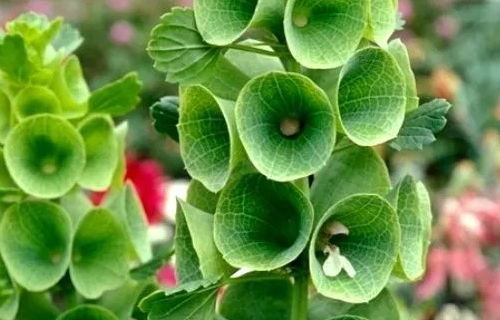
Pests and diseases
Moluccella laevis is fairly robust by nature and has relatively few pests and diseases, but sometimes it can be harmed by leaf miners, so you need to observe the plant's growth regularly, spot the problem in time, and take control measures.
How to grow Moluccella laevis and points to note
How to grow Moluccella laevis
Choosing the pot and soil
To grow Moluccella laevis, the size of the pot should be decided according to the condition of the plant; generally, when sowing, you can plant 10 to 15 seeds in a pot with a diameter of 15cm. The soil needs to be fertile, well-draining potting soil, and not too sticky, otherwise it will affect the plant's growth; garden soil with good drainage is fine.
Light and temperature
Moluccella laevis likes sunlight and prefers a warm living environment. During care, it needs plenty of light, but do not expose it to blazing sun in summer, to avoid scorching. The suitable temperature for growth is 15°C-30°C.
Watering and fertilising
For Moluccella laevis, water and fertiliser management needs to be done sensibly. During seed germination you can water often; once the seedlings have come up and survived, you can water and fertilise normally. Water according to how dry the Moluccella laevis is: if the soil is fairly moist, there is no need to water, and when you do water, water thoroughly; fertilise once or twice a month, and stop fertilising after flowering.
Propagation method
Moluccella laevis is mostly propagated by sowing, which can be done in spring, summer or autumn. With a suitable temperature, it germinates fairly quickly, and it can be transplanted once it has grown 6 leaves. When transplanting, it is best to move it with the soil around the roots; for a good ornamental effect, you can plant in batches.
Points to note when growing Moluccella laevis
Pinching
During the growth of Moluccella laevis, pinching is needed to encourage more branching and to shape the plant.
Pests and diseases
Moluccella laevis is fairly robust by nature and has relatively few pests and diseases, but sometimes it can be harmed by leaf miners, so you need to observe the plant's growth regularly, spot the problem in time, and take control measures.
How to grow Moluccella laevis and points to note
How to grow Moluccella laevis 1. Choosing the pot and potting soilThe size of the pot depends on the number of seeds; the seeds are triangular, and usually 10-15 seeds can be planted in a pot with a diameter of 15cm.
Moluccella laevis is best grown in fertile, easily draining, loose soil; avoid sticky soil, so as not to affect the plant's development and slow its growth. For the growing medium you can choose easily draining, nutrient-rich vegetable garden soil, water it well, and cover it with a thin layer of soil, keeping the moisture of the bed surface always within a suitable range.
2. Plenty of lightMoluccella laevis needs plenty of sunlight for the plant to grow; note that it must not be exposed to blazing sun in summer.
3. Plenty of water and fertiliserDuring the seed germination period of Moluccella laevis, you can water once a day to ensure the seeds take up water; at this time put the pot in a shady place, away from light. Once the seeds have germinated and sprouted, adjust the watering time according to the soil moisture: do not water unless it is dry, and when you water, water thoroughly.
After transplanting and survival, it needs more watering and fertilising, with fertiliser applied once every 15-30 days to promote growth, right up until the plant flowers.
4. Controlling the environmental temperatureWhen sowing Moluccella laevis, the temperature is best at 15-25°C, which helps germination; during the growing period a temperature of 20-30°C is suitable.
Points to note when growing Moluccella laevis 1. Avoid waterloggingIn summer, pay attention to ventilation around the plant and avoid water accumulating in the potting soil; this will largely prevent root rot from occurring.
2. PinchingDuring the growth of Moluccella laevis, pinching is needed to encourage more branching and to shape the plant.
3. Pest and disease controlMoluccella laevis is fairly robust by nature and has relatively few pests and diseases, but sometimes it can be harmed by leaf miners, so you need to observe the plant's growth regularly, spot the problem in time, and take control measures.