How to Grow the Dancing Grass? Detailed Planting Methods and Tips
I. Seed Treatment:
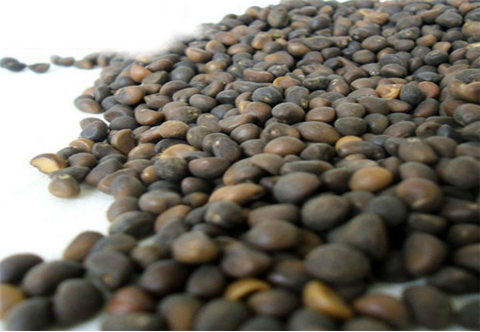
The seeds of the dancing grass cannot be sown right away. You need to first remove the waxy coating on the seed coat, and you can use dry fine sand for this step. After removing the wax, soak the seeds in warm water at around 38 degrees Celsius for more than a day, then take them out, wrap them in a dry cloth, and dry them in a cool place. Once the seeds have slightly swollen, they are ready to be sown!
II. Sowing:
The thickness of the flower seed growing medium is best kept at about 1 to 3 times the diameter of the flower seed; if it is too thick, it will increase the burden on the seed when sprouting. The suitable temperature for growing the dancing grass is 20 to 28 degrees Celsius, and it prefers shade over sun. Therefore, it should be placed in a cool, lightless spot, preferably covered with a layer of shading material to reduce water evaporation. Remember to open it for 15-20 minutes every day for ventilation.
III. Care After Sprouting:
Although the germination time is generally 8 to 10 days, do not worry if this time passes, since different factors such as temperature, moisture, and sunlight will all affect germination time. After sprouting, pay attention to promptly supplementing light, as sunlight can help it grow. But still try to avoid direct sunlight. When two pairs of leaves have grown, it means this dancing grass plant has basically been successfully grown!
IV. Repotting:
When the dancing grass seedlings grow to nearly one inch, it is time to prepare for repotting.
V. Fertilizing and Watering:
Fertilizing is also very important in the process of growing the dancing grass. The first fertilizing is about one month after sowing, and the second fertilizing is at about two to three months. During the growth period of the dancing grass, it is best to keep the soil moist at all times.
How to Grow the Dancing Grass: Planting Methods for the Dancing Grass
Under sunlight, the dancing grass (Codariocalyx motorius) will continuously sway up and down in response to hand and sound wave stimulation, like a butterfly lightly dancing its wings in flight, and also like a young girl on stage gently stretching her jade-like arms, and it is named for this. Many people grow this beautiful and interesting plant because of the dancing grass's peculiar characteristics. So do you know how to grow the dancing grass? What are the planting methods for the dancing grass? Let's take a look together below.
Introduction to the Dancing Grass
The dancing grass is an upright small shrub, reaching up to 1.5 m tall. The stem is single or branched, hairless. The leaves are trifoliolate compound leaves; the terminal leaflet is oblong or lanceolate, and the lateral leaflets are very small, oblong or linear, or sometimes absent. The panicle or raceme is terminal or axillary; the corolla is purplish red, the pistil is 10-12 mm long, and the ovary is covered with fine hairs. The pod is sickle-shaped or straight, with the ventral suture straight and the dorsal suture slightly constricted, dehiscing along the dorsal suture when mature, sparsely covered with hooked short hairs, with 5-9 pod segments; the seeds are 4-4.5 mm long and 2.5-3 mm wide. The flowering period of the dancing grass is July-September, and the fruiting period is October-November.
The dancing grass likes sunlight. Potted plants are about 70-100 cm tall, while those planted in the ground can reach 1.5-2 m. On each branch and leaf stalk there are 3 elegant leaflets. When the temperature reaches above 25 degrees C and under the stimulation of a 70 decibel sound, the leaves produce a large number of linear small leaflets on both sides, which are very sensitive to sound waves. When the temperature is not lower than 22 degrees C, especially in sunlight, they will continuously sway up and down in response to sound wave stimulation, like a butterfly lightly dancing its wings in flight, and also like a young girl on stage gently stretching her jade-like arms, and it is named for this. It grows in hilly open fields and shrub thickets. It likes sunlight and tolerates drought, and is mainly distributed in China, India, Nepal, Bhutan, and Sri Lanka.
I. Morphological Characteristics
Stem: The dancing grass is an upright small shrub plant, reaching up to 1.5 m tall. The stem is single or branched, cylindrical, slightly striped, and hairless.
Leaves: The leaves of the dancing grass are trifoliolate compound leaves, and the lateral leaflets are very small or absent, with only a single leaflet present; the stipules are narrowly triangular, 10-14 mm long, 1.7-2.3 mm wide at the base, usually skewed, hairless, with sparsely small pubescence along the edges; the petiole is 1.1-2 cm long, grooved on the upper side, sparsely covered with spreading pubescence; the terminal leaflet is oblong or lanceolate, 5.5-10 cm long and 1-2.5 cm wide, with a rounded or acute apex and a fine point, and a blunt or rounded base, hairless on the upper side, appressed short pubescence on the lower side, with 8-14 lateral veins on each side that do not reach the leaf margin; the lateral leaflets are very small, oblong or linear, or sometimes absent; the stipels are subulate, 3-5 mm long, hairless on both sides; the petiolule is about 2 mm long.
Flowers: The dancing grass has a panicle or raceme that is terminal or axillary, with the inflorescence axis bearing curved hooked hairs; the bracts are broadly ovate, about 6 mm long, densely arranged, and shed at flowering; the pedicel is 1-4 mm long at flowering and extends to 3-7 mm after flowering, covered with spreading hairs; the calyx is membranous, 2-2.5 mm long, hairy on the outside, with the calyx tube 1-1.5 mm long, the upper lobe apex 2-cleft, about 1 mm long, and the lower lobe about 1 mm long; the corolla is purplish red, the standard petal is 7.5-10 mm long and wide, the wings are 6.5-9.5 mm long and 4-5 mm wide, the keel is about 10 mm long and about 3 mm wide, with a long claw, and the stamens are 8-11 mm long; the pistil is 10-12 mm long, and the ovary is covered with fine hairs. The flowering period of the dancing grass is July-September.
Fruit: The pod of the dancing grass is sickle-shaped or straight, 2.5-4 cm long and about 5 mm wide, with the ventral suture straight and the dorsal suture slightly constricted, dehiscing along the dorsal suture when mature, sparsely covered with hooked short hairs, with 5-9 pod segments; the seeds are 4-4.5 mm long and 2.5-3 mm wide. The fruiting period of the dancing grass is October-November.
II. Ecological Habits
The dancing grass likes sunlight and a warm, humid environment. It tolerates drought and barren soil. It is a plant extremely responsive to sound waves of a certain frequency and intensity, and it is also related to temperature and sunlight. When the temperature is above 24 degrees C, on a sunny day with gentle wind, the leaflets will cross, rotate, kiss, and bounce on their own, and the rotation range of the two leaves can reach 180 degrees, then bounce back to their original position. When the temperature is 28-34 degrees C, or on a muggy sunny day or after rain clears, looking at the whole plant, dozens of pairs of leaves sometimes embrace like lovers entwined, and sometimes dance gracefully, making one dazzled and giving a fresh, wonderful, and mysterious feeling. When night falls, it again presses its leaves against the branches and stems, snuggling tightly, truly a rare flower.
III. Propagation Methods
The dancing grass can be propagated by sowing. Seedlings emerge about 5 days after sowing, grow slowly during the seedling stage, and should be transplanted with a soil ball.
The sowing propagation method is used. First prepare a seed bed. After sowing the seeds well, water them, and cover the surface with a thin layer of moist fine soil or fine sand. Generally, they can germinate in 5 days, and the seedlings can be complete in about 10 days. When the first true leaf appears, divide the seedlings, and when there are 5-6 leaves, they can be temporarily planted in nutrient pots or planted in place. Seedlings are generally planted in October-November and can bloom from January to early April of the following year. When planting in place, choose dry, loose, and fertile soil and apply sufficient organic fertilizer as a base fertilizer.
How to Grow the Dancing Grass
I. Planting Methods for the Dancing Grass
The growth of the dancing grass is closely related to various factors in the natural environment. Among factors such as temperature, light, water, and growing medium, because climates vary greatly from place to place, when you sow under natural conditions, please determine the sowing time according to the habits of the dancing grass after carefully studying the local climate conditions across the four seasons. If your indoor space uses an air conditioner or heater to regulate temperature, planting will not be affected by the seasons. The related planting techniques are briefly introduced as follows:
1. Seed Treatment
The seeds of the dancing grass are hard and have a shiny waxy coating on the outside, and under natural conditions they take several months to sprout. Therefore, in order to achieve rapid sprouting, before sowing, gently rub the waxy coating on the outside of the seeds with sun-heated or dry-fried fine sand to slightly break the seed coat, then soak the seeds in warm water at 38 degrees C for more than 24 h (the water can be changed several times during this period), then wrap the seeds in coarse cloth and place them in a warm, moisture-retaining place. Once the seeds swell and are slightly dried, they can be sown (any seeds that have not swollen should be picked out and rubbed again, then soaked until swollen).
2. When Planting
The suitable temperature for sowing the dancing grass is 20-28 degrees C. If various growing conditions are not suitable, do not open the seed packaging, and wait for the appropriate time to sow. The dancing grass can theoretically be stored for 2 years at 5-10 degrees C, but it is recommended to use it as early as possible if conditions are suitable.
3. Planting
When planting, pay special attention that at most only a thin layer of growing medium can cover the surface of the flower seeds, with a thickness of about 1-3 times the diameter of the flower seed, and be as accurate as possible. If the seeds are buried too deep, it will make seed sprouting difficult. Set the spray bottle to mist mode and spray an appropriate amount of water on them. Cover the mouth of the flower pot with a glass sheet or plastic film to reduce water evaporation. Place the flower pot in a dark place without light, and remember to open it for 15-20 minutes every day for ventilation. Flower seeds generally germinate in about 8-10 days. Be patient while waiting for germination; sometimes factors such as temperature changes will affect the seed germination time, so please wait patiently.
4. Sprouting
After the seeds germinate, wait until the first pair of leaves on the sprout unfolds symmetrically, then immediately remove the covering (glass sheet, plastic film) and place it in a sunny spot, avoiding direct sunlight, paying attention to temperature changes, and not watering excessively. When the first pair of cotyledons has fully unfolded and turned green, it is necessary to gradually increase the duration of direct sunlight. When the first pair of true leaves grows, it should be placed in all-day direct sunlight, and attention should be paid to the dryness of the growing medium, watering appropriately; when the second pair of true leaves grows, it indicates that the most difficult stage of planting has been passed. As long as temperature and moisture are well controlled, the dancing grass will grow vigorously.
5. Light
If the plant lacks light, yellow rust disease, a type of plant disease, often occurs. The symptoms are yellow streaks appearing on the leaves and stems, and the diseased plant's grains are not plump or it becomes leggy, making the plant slender, weak, and prone to falling over. The light duration should be increased. Turn the flower pot frequently as much as possible so that the branches and leaves of the plant receive sunlight from all angles and grow fully.
6. Care
When the seedlings grow to nearly one inch, keep the robust plants and repot the rest. When repotting, be very careful not to damage the fibrous roots. When moving the seedling out, dig a hole of appropriate width and depth in the center of the flower pot, let its root system spread fully, cover with growing medium, press lightly, and then water an appropriate amount.
7. Watering
During the sprouting period, the growing medium needs to be kept moist. After sprouting, it is better to keep it somewhat drier, so that the surface of the growing medium is dry while the inside remains moist; water as much as possible in the morning, avoiding sunlight. The water is best left to stand for 4-6 minutes first to dissipate the chlorine in the tap water. When watering, it is best to use a fine-holed pot, starting from a place far from the plant and gradually moving closer to the plant, watering more around the sides and less near the plant, and trying not to splash it on the leaves and stems.
8. Fertilizing
When the plant has grown for more than one month, carry out the first fertilizing, providing two packets of fertilizer for the first fertilizing. Flowering period of the plant: that is, when the plant has grown for two to three months, carry out the second fertilizing.
9. Common Factors Causing Planting Failure: (Self-check)
Environmental factors: whether temperature changes deviate greatly from the suitable temperature for the plant's germination and growth
Sowing factors: whether the seeds are buried too deep, whether the seeds and growing medium are not in full contact, and whether the growing medium is too dry during sowing and germination
Cultivation and management factors: forgetting to use a glass sheet or plastic cover, exposing the seedlings to the sun just after sprouting, watering too little or too much, not getting enough sunlight after one week of germination, and forgetting to fertilize.
A kind of dancing grass grows in India. This dancing grass can be enjoyed by people. Even when there is no wind, its two arc-shaped leaves will keep rotating like the hands of a clock. At night, the larger leaf stops moving, but the smaller leaf still dances gracefully, very lovely. After research, relevant scholars pointed out that this plant's dancing posture is actually a kind of self-defense behavior, used to drive away invading animals.
II. Cultivation Methods and Care Points for the Dancing Grass
1. Artificial pollination: The natural pollination rate of the dancing grass is only 2%-5%. If artificial pollination is carried out, the fruiting rate can be increased by more than 5 times. When pollinating, wash your hands clean, scrape off the outer layer of the left thumbnail, gently pinch the flower's 2 keel petals (the middle two petals) with the right thumb and index finger, press the top of the keel petals with the left thumbnail, and gently push backward (the keel petals will then spread open, while the pistil and stamens are in the middle of the keel petals). If the anthers are mature, they will spring outward, and the pollen will land on the left thumbnail. Wipe the pollen onto the stigma of the pistil to complete pollination. If the keel petals do not spread open during pollination, it means the anthers are not mature, and the pollination time must be postponed.
2. Year-round sowing: Conventional seedling raising of the dancing grass is generally done by sowing from May to August. Switching to year-round sowing can greatly speed up propagation. Those planted in the open field can be sown in spring, summer, and autumn, and can also be sown indoors in winter. Generally, plants sown before the end of May can bloom and bear fruit in the same year, with the flowering period from September to October and the fruiting period from September to November; those sown after the end of July can bloom and bear fruit in the first half of the following year, but compared with conventional sowing and seedling raising, seeds can be obtained one quarter earlier.
3. Seed germination: The seed surface of the dancing grass has a waxy layer, making it difficult for water to penetrate; the seed coat contains substances that inhibit its own germination, making it difficult to germinate after sowing. Seeds that have undergone germination treatment can greatly increase the germination rate. For germination treatment, soak the seeds in warm water at 40 degrees, change the water once a day, and rub the seeds repeatedly during soaking to remove the surface wax and the substances on the surface that inhibit germination. After several days of soaking, when the seeds split open and show white, they can be sown, with a germination rate of more than 95%.
4. Cutting propagation: Cutting propagation can be carried out in spring, summer, and autumn, and can also be carried out indoors or in a greenhouse in winter. Cut robust branches of the current year as cuttings, cut them into 5 cm sections (leave one leaf at the upper end and one node at the base), insert them into a fine sand pot, with the insertion depth at 2/3 of the cutting length, and water thoroughly after insertion. Place the cutting pot in a cool, ventilated place, cover it with a glass sheet, and spray water frequently to retain moisture. After 10 days they can take root, and after several more days, remove the cover, stop watering, and harden the seedlings for 3 days, then they can be potted and planted in place.
5. Light: If the dancing grass plant lacks light, leggy growth often occurs, making the plant slender, weak, and prone to falling over. The light duration should be increased. Turn the flower pot frequently as much as possible so that the branches and leaves of the plant receive sunlight from all angles and grow fully.
6. Temperature: The sweet william plant has strong cold resistance. Under the natural winter temperature conditions in Kunming, some varieties can overwinter in the open field. For most varieties, as long as the root system has fully grown before winter, even if all the leaves above ground die, its perennial roots will still sprout and bloom in the following spring. However, the flowering of sweet william is extremely sensitive to low temperatures. Only when the daytime temperature reaches above 20 degrees C and the nighttime temperature is not lower than 10 degrees C can the flowering branches grow and bloom; otherwise, even flowering branches that have already emerged cannot bloom under low temperatures or will bloom poorly, or even turn yellow and die. Sweet william that blooms in autumn and winter should be especially well protected against cold.
7. Watering: During the sprouting period, the growing medium needs to be kept moist. After sprouting, it is better to keep it somewhat drier, so that the surface of the growing medium is dry while the inside remains moist; water as much as possible in the morning, avoiding sunlight. The water is best left to stand for 4-6 minutes first to dissipate the chlorine in the tap water. When watering, it is best to use a fine-holed pot, starting from a place far from the plant and gradually moving closer to the plant, watering more around the sides and less near the plant, and trying not to splash it on the leaves and stems.
8. Fertilizing: When the plant has grown for more than one month, carry out the first fertilizing. Flowering period of the plant: that is, when the plant has grown for 2-3 months, carry out the second fertilizing.
III. Disease Control of the Dancing Grass
The dancing grass has few insect pests but many diseases, especially when planted in multiple cropping rotations such as after vegetables, when it is more serious. The main diseases are powdery mildew, anthracnose, leaf spot, root rot, and blight. When disease occurs, promptly prune and burn the diseased leaves. Spray 50% carbendazim wettable powder at 500 times dilution or thiophanate wettable powder at 500 times dilution once every 10-14 days, and 3-4 sprays can cure it; in addition, using Bordeaux mixture (1:1:100) or alternating Tuzet and Bordeaux mixture for 3-4 sprays has a better effect on leaf spot. Dithane zinc at 500 times dilution is better for controlling blight. Continuous cropping for many years is conducive to the spread of disease, so the crop should be rotated once every 4-5 years. The main insect pests include cutworms, mealybugs, thrips, mites, armyworms, etc., and corresponding pesticides can be selected for control.
Uses and Functions of the Dancing Grass
1. Ornamental Value
The leaves of the dancing grass have the characteristic of natural dancing and have been used in the horticultural ornamental industry. It is an excellent material for making bonsai, with high ornamental value, and can be cultivated. It is a famous fun ornamental plant.
2. Scientific Research Value
The dancing grass is the only plant in nature that can respond to sound. According to scientific research, the reason the dancing grass dances is mainly related to temperature, sunlight, and its response to sound waves under a certain rhythm, cadence, and intensity.
Under normal temperature, strong light, and no wind or rain, the 2 lateral leaflets of the dancing grass will keep swinging. Within half a minute, each leaflet can complete one elliptical movement, and after each leaf rotates 180 degrees, it bounces back to its original position, and then dances again.
Even in the "sleep" state at midnight, the leaflets of the dancing grass are still slowly rotating, just more slowly than during the day. Whenever night falls, the dancing grass enters a "sleep" state, with the petiole pressing upward against the branch and the terminal leaflet drooping, like a closed pocketknife. As dawn arrives, its leaf axil angle increases, and the terminal leaflet is pushed open.
If after the dancing grass enters "dreamland" you lift its terminal leaflet upward, you will find that it still maintains a certain state of tension when drooping. The angle of the leaf axil and the angle between the terminal leaflet and the petiole are difficult to change at will. Its petiole being raised and the terminal leaflet being pressed down are caused by a group of cells at the terminal leaflet and the petiole of the entire compound leaf increasing turgor pressure; under normal daytime conditions, the cells that increase turgor pressure are a group of cells at the petiole in exactly the opposite position.
Why does the dancing grass carry out this kind of "tension sleep"? We know that when plants carry out photosynthesis during the day, the leaves adopt a posture perpendicular to the direction of gravity, and a consistent drooping posture reduces energy consumption. This is also a way of adaptation formed by plants over a long process of evolution.
The dancing grass can dance along with music. The dancing grass "dances," but it is not the entire plant that moves. The so-called dance that arouses people's interest is the obvious rotation of its pair of lateral leaflets: either making a 360-degree large circular loop, or swinging up and down. Although the leaflets on the same plant move at different speeds, they are quite rhythmic. Sometimes the two leaflets close upward together, then slowly separate and flatten out, like a butterfly lightly dancing its wings; sometimes one goes up while the other goes down, like the graceful poses in rhythmic gymnastics; sometimes many leaflets dance at the same time, rising and falling one after another, a spectacular sight.
The stronger the light or the greater the sound wave vibration, the faster the movement speed will be, until at night when all leaves droop, close, and sleep. Whenever the sun sets and night falls, the light weakens, and there is a difference and change from the daytime light. The spongy tissue then contracts, and the leaves droop, closing tightly and pressing against the branches and stems.
The reason the lateral leaflets of the dancing grass keep dancing is the result of the spongy tissue at the base of the leaflets' stalks being sensitive to light. Whenever the sun shines and the temperature rises, the water in the plant evaporates faster, the spongy tissue expands, and the leaflets swing left and right. In addition, the dancing grass also has sound perception. When it is vibrated by a song at a volume of 35-40 decibels, the spongy tissue also contracts, driving the leaflets to dance gracefully.
Research shows that when the outside temperature reaches above 20 degrees C, the lateral leaflets of the dancing grass begin to rotate. When the temperature rises above 30 degrees C, its rotation is most active, and the speed also increases greatly.
The rotation of the lateral leaflets of the dancing grass is neither caused by external stimulation like that of the sensitive plant, nor does it have obvious phototropism like that of the sunflower. This movement phenomenon is indeed rare in the plant kingdom. So why does the dancing grass dance? It is still a mystery, and further research and exploration are still needed.
Cultivation Techniques for the Dancing Grass
Taking good care of the seeds is the first step in growing the dancing grass. The seeds of the dancing grass are very hard, and the outside is so shiny that it looks as if it has been coated with a layer of wax. Without external interference, it takes 2 months for seedlings to grow. Therefore, in order for the seedlings to grow faster, before sowing, rub the seed surface with sandpaper that has been heat-treated. After the seed coat is worn through and the outside is no longer shiny, soak the seeds in hot water at 40 degrees C for more than a day, then wrap the seeds in cotton cloth like a baby and place them in a warm, damp place. After the seeds have slightly enlarged and are about half-dried, they can be sown!
After reading this article, I believe you all know why the dancing grass likes to dance. I hope the editor's article has enlightened you!