How to grow a Money Tree? These care tips you need to know
1. Ventilation issue
When growing a Money Tree indoors, if ventilation is poor, its leaves will easily wilt. Although it will not die immediately, the leaves will drop one by one, and if not remedied in time, the end result is only death. Therefore, when growing a Money Tree indoors, you need to pay attention to timely ventilation.
2. Watering issue
Most Money Trees are grown in large pots, and the potting soil is plentiful and deep, so it often takes a long time to dry out after one watering. At this point, watering requires extra care: overwatering can easily cause root rot, ultimately leading to the death of the plant! So before watering, be sure to check whether the potting soil is dry or moist, and remember: do not water if the potting soil is not dry.
3. Temperature control
Beautiful plants are delicate, and the Money Tree is no exception. The most suitable temperature for Money Tree growth is 15-30°C, of which from April to October the temperature should be kept at 20-30°C as much as possible, and from October to April of the following year it is enough to keep it at 13-20°C. When the summer temperature exceeds 32°C, you need to cool it down and ventilate it promptly. In winter, the temperature must not be lower than 10°C; if the temperature can be kept above 20°C, the stems and leaves can still grow normally.
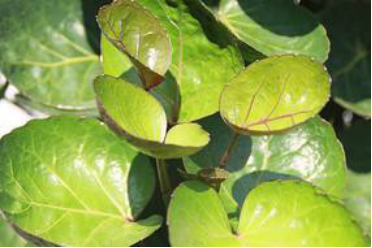
Money Tree growing methods and care tips
The Money Tree likes a warm, humid environment with plenty of sunlight. It tolerates partial shade, is not cold-hardy, and fears drought. At home, it can be kept indoors in bright light for a long time. It is easy to care for and very suitable as an indoor potted plant. Below is an introduction to Money Tree growing methods and daily care tips.
Money Tree growing methods. Money Tree growing: growth humidity requirementsDuring the Money Tree's growing period, keep the potting soil moist but not waterlogged. Regularly spray the plant with water at a temperature close to room temperature to increase air humidity and keep the leaf color fresh.
Money Tree growing: optimal growing temperatureThe growing temperature for the Money Tree is 15-30°C, of which from April to October it can be kept at 20-30°C, and from October to April of the following year at 13-20°C. Under normal circumstances, the room temperature in winter should also be maintained no lower than 10°C. When the summer temperature reaches above 32°C, you cannot just leave it be: for mass production, shade frames should be set up, and for home display it should be placed in a cool spot with water sprayed around to lower the temperature, creating a cool micro-environment close to its native conditions. In late autumn and early winter, when the temperature drops to 15°C, it should be moved indoors promptly to avoid cold damage to the plant. In winter, if the room temperature can be maintained above 20°C, its stems and leaves will continue to grow; if the temperature is not high, the plant stops growing and enters a semi-dormant state.
Money Tree growing: optimal growing lightTaking the round-leaf Money Tree as an example, it needs bright light. Insufficient light easily causes leggy stems and leaves, dull leaf color, and fading patterns, but at the same time it avoids strong direct sunlight, especially in early summer after a long rainy spell followed by clearing skies, when leaves must be protected from sunburn. For home potting, it can usually be placed in a well-ventilated spot; in summer it can be placed by a north- or east-facing window, and in winter it should be placed in a brighter spot indoors. For commercial cultivation, from mid-spring to mid-autumn it should be placed under a shade frame, with 40-60% shading depending on light intensity and duration. In short, in a semi-lit environment with bright scattered light, it grows most vigorously.
Money Tree growing: reasonable fertilizingWhen the Money Tree is in normal condition, a light fertilizer can be applied about once every two weeks. Stop fertilizing after September so that the new branches mature and become woody, which helps it overwinter. In winter, place it in a sunny spot indoors, reduce watering appropriately, and keep the temperature above 12°C; otherwise, excessively low temperatures will cause a large number of leaves to drop, or even kill the plant.
Money Tree growing: repottingRepot the Money Tree once every 2 to 3 years. The potting soil should be loose, fertile, rich in humus, and have good drainage and aeration. You can use leaf mold or peat soil plus 1/3 river sand, mixed with a small amount of decomposed chicken or cow manure as a base fertilizer.
Money Tree growing: key watering pointsa. Potted Money Trees prefer a relatively moist soil and air environment.
b. During the growing period, there must be a sufficient water supply. Water after the surface of the potting soil has dried; slightly dry soil is fine, but do not overwater, to avoid waterlogging and root rot.
c. In midsummer when temperatures are high, besides watering adequately, you also need to spray the leaves once a day, which both keeps the leaves clean and glossy and raises the air humidity around the plant.
d. In late autumn and early winter, when the temperature drops below 15°C, watering should be controlled.
e. In winter, reduce the amount of watering, or replace watering with spraying. Keep the potting soil slightly moist and a little dry, but when spraying the leaves, make sure the water temperature is basically the same as room temperature.
Daily care tips for the Money Tree1. In fact, the tips mentioned here apply not only to the Money Tree but also to other foliage potted plants. Here is a simple explanation for gardening friends. One is to pay attention to ventilation. Indoor care is different from outdoor growing. If indoor ventilation is poor, it very easily causes Money Tree leaves to wilt and slowly die.
2. Another is the issue of watering. As we said earlier, watering should take actual conditions into account. Especially when some gardening friends have a Money Tree in a large pot at home, the pot is very large and deep, and often after one watering it will not dry out for a long time. In this case, watering is not recommended, because overly wet potting soil will cause root problems and ultimately death. So when watering, try to water only when the potting soil is dry; at ordinary times, just spray.
3. When planting a Money Tree, choose a loose, fertile, well-drained growing medium; for large-scale commercial planting, shading can be used, but the light must not be too dim, otherwise the plant will show excessive growth; pay attention to loosening the soil regularly; if leaves turn yellow and drop, it may be due to overwatering, and it will recover after a few days of drying out; too strong summer sunlight may scorch tender leaves, so pay attention to shading.
How to grow Pennywort Growing tips and care notes for Pennywort
Pennywort looks like a mushroom, so it is also called mushroom grass. Pennywort grows by the water or in moist areas. Nowadays it is popular to grow hydroponic plants in offices or homes, and this grass, whose shape resembles ancient copper coins, can represent good luck or wealth. Below is an introduction to how to grow Pennywort.
How to grow PennywortPennywort is also called money grass, creeping Jenny, and in Sichuan it is also called a string of coins. Pennywort belongs to the angiosperms, order Apiales, and is a ground-cover type herbaceous plant. Pennywort, as the name suggests, has leaves shaped very much like the copper coins used in ancient China, with a rather short leaf diameter, generally 0.5 to 2.5 cm. If you rub it with your hands, it smells of celery. Because Pennywort is a ground-cover type plant, it reproduces very quickly and can be planted both on land and on the water surface, making it a convenient ornamental green plant to grow.
Pennywort — growing methodsPennywort has no requirements for the growing soil and can also be grown hydroponically. Pennywort likes a warm, humid environment, tolerates shade and moisture, and has strong adaptability. Its propagation methods include division and cuttings; division is generally used, and as long as the growing soil is kept moist, in about one to two weeks Pennywort will send out new shoots. It is best to place the potted Pennywort indoors, away from direct sunlight, and during the growing period a few drops of nutrient solution need to be added regularly.
Pennywort — care notesPennywort has strong adaptability and is very easy to grow, but the following points should also be noted during cultivation. First, Pennywort needs a highly humid environment; remember the principle of preferring wet over dry. Second, the leaves of Pennywort need frequent spraying to prevent dust from settling and affecting photosynthesis. Third, always pay attention to keeping the Pennywort's growing environment ventilated.