Detailed Guide to Gloxinia Cutting Propagation: Easily Propagate New Plants
Stem Cuttings
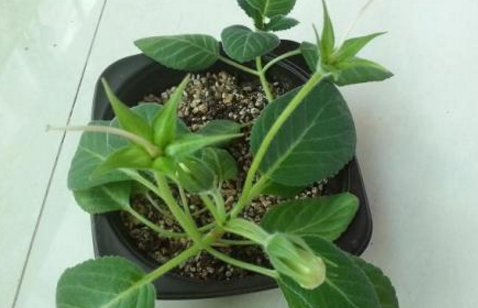
The growing medium can be fine sand or perlite. Choose a container with holes in the bottom, and keep the soil loose and airy. Select a shoot with 4 leaves, cut it off with scissors that have been flame-sterilized, place the shoot into a small hole, cover with soil, provide shade, and keep the temperature at 18°C-20°C; it will sprout in half a month.
Leaf Cuttings
After the plant finishes flowering, select relatively vigorous leaves and take them from the base together with the petiole. Cut off half of the leaf, then insert the petiole diagonally into a medium mixed with perlite and vermiculite, leaving two-thirds of the leaf above the soil surface. Cover with glass, place in a cool place, and keep warm and moist; seedlings will grow in about 20 days and can be transplanted into a pot.
Bud Cuttings
This is usually done when buds emerge in spring; select new shoots that have grown to 4-6 cm. Twist the new shoots off from the base, insert them into a sand bed, and maintain a certain level of humidity and temperature. After a long period of cultivation, they can bloom in June or July of the following year.
Gloxinia Cutting Propagation Methods
Best Time for Gloxinia Cutting Propagation
Gloxinia cutting propagation is best carried out in spring, summer and autumn.
Selection of Gloxinia Cuttings
Gloxinia can be propagated by whole-leaf cuttings, split-leaf cuttings and stem cuttings. Choose plump, vigorous leaves, or cut young stems from the tuber as cuttings.
Gloxinia Cutting Propagation Methods
For whole-leaf cuttings, you can cut the leaf horizontally into sections 1-2 cm long, place the strip-shaped leaf pieces containing the main vein in an insulated box with a moist medium, and keep it in a cool, ventilated place.
For stem cuttings, take a stem section with a terminal bud, remove some of the leaves, then insert it into a moist medium, place it in a semi-shaded place and be careful to keep it moist.
When the seedlings have regrown, they can be transplanted for growing on, and a slow-release fertilizer relatively high in phosphorus and potassium can be applied to promote tuber growth.
How to Grow Gloxinia
1. Soil
For growing gloxinia, it is best to choose loose, fertile soil rich in humus; the soil can be slightly acidic.
2. Temperature
Gloxinia prefers warmth, and the suitable growing temperature is 10-25°C. The suitable growing temperature also differs by season: from January to October it is best at 18-25°C, and from October to January of the following year it is 10-12°C. A suitable temperature is more conducive to the plant flowering.
3. Light
Gloxinia likes sunlight and also likes semi-shaded environments. It is best to receive diffused light, and it should be properly shaded at ordinary times; the gloxinia flowers will then be more brilliant in color.
4. Water
Gloxinia needs moderate watering; once there is too much water, it is very easy for the tuber to rot. In summer, when temperatures are high, watering can be appropriately increased, and water mist should be sprayed frequently.