How to grow the weeping crabapple? Detailed care methods and precautions
A beautiful flower naturally cannot do without careful care. Do you know how to grow a weeping crabapple well?
The weeping crabapple should be placed in an environment with good air circulation, sufficient light, and a temperature of 15-28°C. The bonsai can withstand low temperatures of -5°C. In summer, potted plants need shading, and spraying water increases humidity and lowers the ambient temperature. In winter, there is generally no need to move the bonsai indoors; simply bury the pot in the soil. During the growing season, there must be sufficient water, but not to the point of waterlogging, to prevent root rot. In spring and summer, water more; when temperatures are high in summer, water once in the morning and once in the evening. If there is a plum rain season or prolonged rainfall, drain promptly to prevent water accumulating in the pot and causing root rot. In autumn, reduce watering to inhibit the growth of the weeping crabapple and prepare it for winter.
During the growing season, potted weeping crabapple should be given a topdressing of dilute cake fertilizer water once a month. When flower buds appear, apply a fast-acting phosphorus fertilizer once. During flower bud differentiation, apply fast-acting phosphorus fertilizer 2-3 times in succession, such as a mixture of 0.2% monopotassium phosphate plus 0.1% urea, to promote the completion of flower bud differentiation. After leaf fall in autumn until bud break in spring, fertilization should be stopped. Pruning is best done during the dormant period or after flowering: shorten the branches to encourage side branches, increase the formation of flower buds, and promote a good plant shape. It is best to repot in early spring or late autumn, placing decomposed manure or cake fertilizer at the bottom of the pot as a base fertilizer.
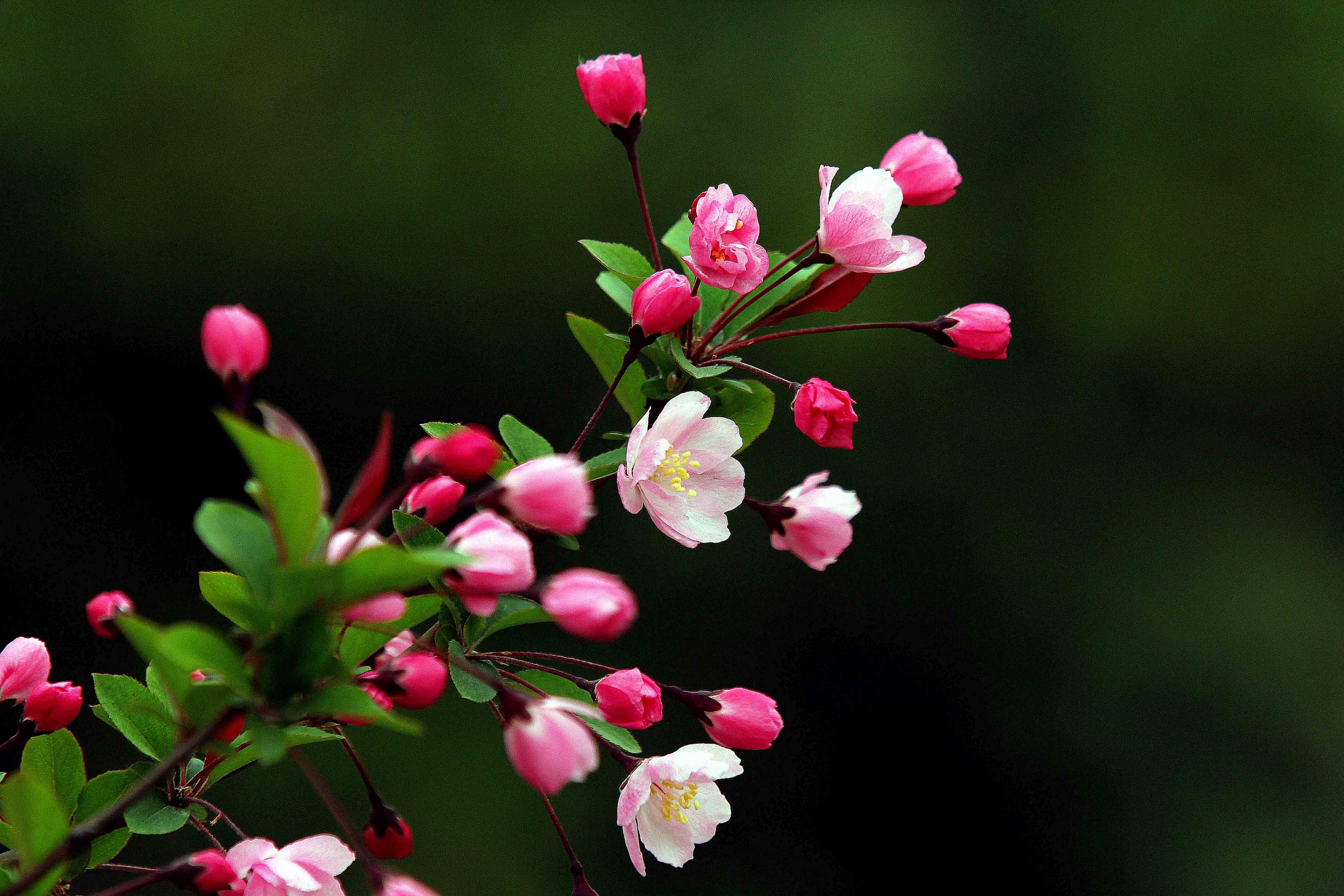
Such a beautiful weeping crabapple bears fruit after flowering that is sweet and sour and delicious, and the fruit can also be made into candied fruit. It is both ornamental and edible, so what reason do you have to refuse to grow one indoors?
Growing methods and precautions for the weeping crabapple
Growing methods for the weeping crabapple
Pot soil selection
When potting a weeping crabapple, you can choose a culture soil mixed in the ratio of 4 parts garden soil, 1 part river sand, 4 parts leaf mold, and 1 part organic fertilizer. For the flower pot, you can choose a more rustic one to create a beautiful weeping crabapple bonsai.
Light and temperature
The weeping crabapple is more suited to growing in a warm environment with sufficient light. The suitable growing temperature is between 15°C and 28°C. In winter, it can endure low temperatures of -5°C, so there is no need to bring the weeping crabapple indoors for warmth; instead, bury the flower pot in the soil. In summer, when temperatures are high and sunlight is strong, provide appropriate shading, and you can also lower the temperature by spraying water.
Water and fertilizer management
During the growing season, the weeping crabapple must have sufficient water, but the pot should not become waterlogged. In spring and summer, water more; in summer, during high temperatures, you can also water once in the morning and once in the evening every day. In rainy seasons, take care that no water accumulates in the pot, drain promptly to prevent root rot, and reduce watering in autumn. During the growing season, the weeping crabapple should be given dilute fertilizer water once a month. Before flowering, apply some phosphorus fertilizer to promote flowering. After leaf fall in autumn, stop fertilizing.
Precautions for growing the weeping crabapple
Pruning
Pruning the branches of the weeping crabapple can promote branching, control the plant shape, and make it bloom more. It is better to prune after flowering or during the dormant period.
Repotting
The weeping crabapple can be repotted or have its soil changed in early spring or late autumn, with root and branch trimming, and some base fertilizer should be applied when potting.
Pests and diseases
Common pests of the weeping crabapple include horned wax scale, apple aphid, longhorn beetle, and red spider mite, while the main disease is rust.
Propagation methods for the weeping crabapple
Propagation methods for the weeping crabapple
Cutting propagation method
The weeping crabapple generally uses the cutting propagation method, which can be divided into spring cuttings and summer cuttings. Spring cuttings are generally carried out around the Awakening of Insects.
Fill a flower pot with sandy soil, insert side branches cut from the main plant (generally 12-16 cm long) into the soil, with a depth of one half of the soil layer.
Press the soil slightly firm, water thoroughly, place in a cool and ventilated place, and just keep the pot soil moist.
Division propagation method
The division method is even simpler.
In March each spring, when the mother weeping crabapple sprouts, separate the small shoots emerging from the roots, protect the growing root hairs, and place them directly in new pot soil to grow.
Layering propagation method
When propagating the weeping crabapple by layering, it is best to choose the hottest days of summer.
Select several small branches near the base of the mother plant, bend them and bury them in the soil at a depth of about 15 cm, leaving most of the branch tips exposed above the ground. By the Qingming season of the following year, they can be potted separately.
Key care points for the weeping crabapple
Water
The weeping crabapple needs sufficient water during the growing period, and should be watered more in spring and summer. In autumn, watering should be controlled, and water thoroughly when the surface layer of the pot soil is dry.
Fertilizer
During the growing period, follow the principle of "light fertilizer, frequent application" and apply dilute fertilizer once a month. During the bud stage, phosphorus fertilizer can be increased, which can promote more flowers on the weeping crabapple. After leaf fall in autumn and entering the dormant period, fertilization should be stopped. Wait until germination in early spring of the following year before fertilizing and caring for it again.