How to propagate Magnolia sieboldii? Introduction to common propagation methods
Propagation by cuttings
For propagation by cuttings, we should first prepare fertile soil rich in leaf litter humus. When taking cuttings, choose the young shoots produced by the Magnolia sieboldii, remove all the leaves at the lower end, and cut half off the upper leaves. Insert 4 to 5 cm into the soil, then water thoroughly, keep the soil moist, and cover the surface with a layer of plastic film to ensure soil humidity. Afterwards, water moderately 2/3 times a day, and wait quietly for a month and a half and roots and shoots will form.
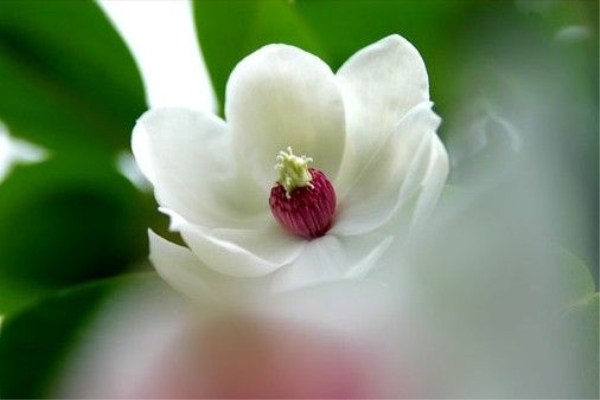
Propagation by seed
We generally choose spring for propagation by seed. This is because warm weather ensures a certain germination rate. Before sowing, the soil should be loosened and leveled. Then water thoroughly; after the water has been absorbed by the soil, bury the seeds at a depth of 1-2 cm. Plastic film should also be used as cover. When waiting for new seedlings to emerge, pay attention to shading to prevent sunburn.
Now that you understand the propagation methods of Magnolia sieboldii, do you know what its cultivation methods are?
Magnolia sieboldii Magno1ia sieholdjj Magnolia sieboldii illustrated guide: how to grow Magnolia sieboldii / how to propagate Magnolia sieboldii
Magnolia sieboldii profileMagnolia sieboldii Magno1ia sieholdjj
Cultivation methods and precautions for Magnolia sieboldii Introduction to Magnolia sieboldii
Magnolia sieboldii is a rare and precious flowering tree, a precious tree species that survived the Ice Age, and a key protected world rare plant in our country. Its leaves are like jade carvings and its flowers like polished jade. It likes fertile soil under mountain shade and forest, and is a broadleaf sub-tree whose height can reach ten meters. Its flowers and leaves are beautiful and it has a rich fragrance. It is an important landscaping tree species and a light industry raw material for extracting fragrance.
The center of the Magnolia sieboldii flower has purple-red stamens, and the petals are milky white. It is pure and noble, transcendent, beautiful and generous, with white flowers and red stamens, even more beautiful than magnolia. In autumn it has red fruit and green leaves, with a distinctive grace, and its fragrance is enchanting, with a lingering aftertaste. In early summer the buds fill the branches, and when in full bloom they look like a pure white fairy floating down from the sky. Planted in groups they are like snow waves and clouds, and potted they are upright and magnificent. It is an endangered plant and a national third-class key protected plant. Magnolia sieboldii is the provincial flower of Liaoning, and also the city flower of Benxi, Liaoning.
Morphological characteristics of Magnolia sieboldii
Magnolia sieboldii is a deciduous small tree. The leaves are broadly elliptical or obovate-oblong, 6 to 15 cm long, with white powder on the underside, and 6 to 8 pairs of lateral veins. The flowers are white, fragrant, and very beautiful, with 9 tepals; the outer whorl of 3 is pink, and the rest are white. They grow at the top of the branches, and the flower stalks are quite long. When in full bloom they flutter in the wind, with a fragrant scent, just like a heavenly maiden scattering flowers, hence the name Magnolia sieboldii. The flowering period of Magnolia sieboldii is in June and July, and the fruiting period is August and September. The petals are milky white, and the stamens are red with yellow, extremely cold and gorgeous. Together with the oily green thick leaves and smooth unpatterned branches, it presents the image of a naturally beautiful fairy, truly poetic and charming.
Magnolia sieboldii (Magnolia Sieboldii K. Koch), also known as Tiannvhua or small-flowered magnolia. Magnoliaceae, deciduous small tree. Plant height 3-6 m, up to 10 m. Branchlets light gray, buds about 1 cm, dark purple-brown, all covered with long soft hairs. Leaves alternate, petiole 1.5-6 cm long, leaf blade obovate or obovate-oblong, 7-25 cm long, 6-10 cm wide, base rounded or rounded-cuneate, apex shortly abruptly pointed, surface green, underside powdery white, covered with short soft hairs. Flower body diameter 8-10 cm, pedicel 4-5 cm long; flower buds slightly tinged with pale pink; tepals 9, white, obovate or obovate-oblong, 4-5.5 cm long, 2-3 cm wide; stamens numerous, purple-red, anthers opening inward, pistil group elliptical. Aggregate fruit ovoid, 4-6 cm long, 2 cm wide, red, apex pointed. Seeds orange-yellow, nearly round, about 6 mm in diameter. Flowering period June-July, fruiting period September-October. The flower color is beautiful, it can be used medicinally, and the leaves contain aromatic oil with an oil content as high as 0.2%.
Deciduous small tree, up to 10 m tall; current-year branchlets slender, about 3 mm in diameter, light gray-brown, initially covered with silver-gray appressed long soft hairs. Leaves membranous, obovate or broadly obovate, (6) 9-15 (25) cm long, 4-9 (12) cm wide, apex suddenly narrowly acute or short acuminate, base broadly cuneate, obtuse-rounded, truncate or nearly cordate, midvein and lateral veins on the upper surface covered with curved soft hairs, underside pale white, usually covered with brown and white multicellular hairs, with scattered golden-yellow small dots, midvein and lateral veins covered with white long silky hairs, lateral veins 6-8 on each side, petiole 1-4 (6.5) cm long, covered with brown and white appressed long hairs, stipule scar about 1/2 the length of the petiole. Flowers open at the same time as the leaves, white, fragrant, cup-shaped, dish-shaped when fully open, 7-10 cm in diameter; pedicel 3-7 cm long, densely covered with brown and gray-white appressed long soft hairs, bearing spreading or slightly drooping flowers; tepals 9, nearly equal in size, outer whorl of 3 oblong-obovate or obovate, 4-6 cm long, 2.5-3.5 cm wide, base covered with white hairs, apex broadly rounded or rounded, inner two whorls of 6, relatively narrow and small, base gradually narrowed into a short claw; stamens purple-red, 9-11 mm long, anthers about 6 mm long, the two anther cells adjacent, dehiscing longitudinally inward, apex slightly concave or connective flat, not extended, filaments 3-4 mm long; pistil group elliptical, green, about 1.5 cm long. Aggregate fruit red when ripe, obovate or oblong, 2-7 cm long; follicles narrowly elliptical, about 1 cm long, dehiscing completely into two valves along the dorsal suture. Apex with a beak about 2 mm long; seeds heart-shaped, outer seed coat red, inner seed coat brown, 6-7 mm long and wide, apical pore small with a pointed end.
Ecological habits of Magnolia sieboldii
It likes cool, humid environments and deep, fertile soil. It is suitable for shady slopes and humid valleys. It fears high temperatures, drought, and alkaline soil. It grows in shady slopes and valley forests above 1000 m elevation. It likes to grow in secondary broadleaf forests, on shady slopes or in humid valley sites.
Distribution area of Magnolia sieboldii
It is the northernmost-distributed deciduous small tree of the genus Magnolia in the Magnoliaceae family in our country, found in the adjacent mountains of Liaoning and Jilin provinces and in some mountainous areas of certain provinces in East China and South China. It is also distributed in Hebei, Anhui, Zhejiang, Jiangxi, Fujian, Guangxi and other provinces and regions, as well as in Korea and Japan. Within Liaoning Province, it is produced in the eastern mountains, from Fushun in the north to Dalian in the south, and there is also a large amount of cultivated stock.
Population status: Although Magnolia sieboldii is widely distributed, its populations are few and small in scale. Locally, especially in Liaoning, it should be protected.
Habitat and habits: It grows in shady slopes and valley forests above 1000 m elevation.
Conservation status
Vulnerable species. Small-flowered magnolia, also known as Tiannvhua, is discontinuously distributed in China in the adjacent mountains of Jilin and Liaoning provinces and in some mountainous areas of certain provinces in East China and South China. Due to deforestation, habitat destruction, and weak natural regeneration capacity, its distribution area is shrinking day by day, and the number of plants is decreasing. In addition, in northern China's Changbai Mountains, the second main peak of the Yanshan Mountains-Dushan, and Zushan within Qinhuangdao, it shows scattered distribution on shady slopes above 700 m elevation.
Endangerment level
China Species Red List assessment level: Vulnerable VU A2c
IUCN RL2003: Not listed
Geographical distribution
Magnolia sieboldii is naturally distributed south of the Yangtze River and north of the Great Wall, mostly produced in Liaoning, Anhui, Jiangxi, and the northern suburbs of Guangxi, and is also the only wild Magnolia genus plant in Northeast China. It is also distributed in Korea and Japan.
In recent years, natural forests of Magnolia sieboldii have also been discovered successively in Jilin and Hebei. The Magnolia sieboldii in Anhui, however, is distinctive. Besides Huangshan, it is widely distributed in Qingliangfeng in Shexian, Guniujiang at the border of Qimen and Shitai, and some mountainous areas of Yixian. It is also scattered in Qianshan, Yuexi and other places in the Dabie Mountains, with a vertical distribution elevation of 1600 m. Along the route from Songgu'an (650 m) to Shiziling (1600 m) in Huangshan, many grow, often mixed with Maoqianjinyu, Dengtaishu, oak and others. Especially in the Dabie Mountains, such as Tiantangzhai in Jinzhai County, Baimajian in Huoshan County, Yaoluoping in Yuexi County, and Tianzhushan in Qianshan County, Magnolia sieboldii is mostly distributed at higher elevations; for example, in Yaoluoping it is found in forest beside gullies at about 1500 m elevation; in Tianzhushan, it is found in mountain-edge scrub at 1400 m. The discovery of natural resources of Magnolia sieboldii in the Dabie Mountains has expanded its distribution range to the north bank of the Yangtze River and shortened the distance of its original discontinuous distribution, providing new materials for the study of paleobotany and plant geography.
In Sanhuawu in Huangshan, Anhui, every year from May to June, the Magnolia sieboldii growing in the crevices of cliffs blooms amid mist and clouds; in the breeze the flower branches sway and petals scatter, just like a fairy scattering flowers into the human world. Those pure white flowers, dignified and beautiful, with a fragrance that refreshes the heart, linger for a long time and are truly loved by all. The Magnolia sieboldii in Anhui is distinctive. Besides Huangshan, it is widely distributed in Qingliangfeng in Shexian, Guniujiang at the border of Qimen and Shitai, and some mountainous areas of Yixian. It is also scattered in Qianshan, Yuexi and other places in the Dabie Mountains, with a vertical distribution elevation of 1600 m. Along the route from Songgu'an (650 m) to Shiziling (1600 m) in Huangshan, many grow, often mixed with Maoqianjinyu, Dengtaishu, oak and others. Especially in the Dabie Mountains, such as Tiantangzhai in Jinzhai County, Baimajian in Huoshan County, Yaoluoping in Yuexi County, and Tianzhushan in Qianshan County, among which Tianzhushan in Qianshan County is the most famous.
Magnolia sieboldii is mostly distributed at higher elevations; for example, in Yaoluoping it is found in forest beside gullies at about 1500 m elevation; in Tianzhushan, it is found in mountain-edge scrub at 1400 m. And in Zushan of the Yanshan Mountains, every year from mid-June to early July, in the deep valleys with green mountains and clear waters, the magnolia blooms; the jade-like trees and exquisite flowers are richly fragrant and the scent assails the senses, making people relaxed and happy and reluctant to leave. Magnolia sieboldii is a special rare famous flower; its leaves, flowers, and fruit are all beautiful, and its form, color, and fragrance are all excellent, with extremely high ornamental value. Its leaves are bright in color, and its crown is spreading, full of vitality and vigor. This plant, Magnolia sieboldii, is not only cold-resistant but also long-lived.
The flower buds of Magnolia sieboldii are used medicinally, mainly to treat colds. The leaves contain aromatic oil and give off a delicate fragrance. Wild Magnolia sieboldii has very strict requirements for soil conditions, temperature, humidity and other environmental factors, and its reproductive capacity in the natural state is very low. Zushan, praised by the great poet Zang Kejia as a "painting realm and poetic heaven," is even more beautiful and transcendent because of Magnolia sieboldii! Because of its beautiful appearance, it is very suitable as an urban landscaping tree species. In recent years, seedling growers in the Xiuyan area have cultivated it, but the results are not very remarkable. Magnolia sieboldii is extremely selective about its growing environment and cannot survive and bloom below an elevation of 1000 m, and at present only Zushan has wild original Magnolia sieboldii blooming in patches.
Variety classification of Magnolia sieboldii
There are 90 species in the same genus, native to East Asia and North America, and more than 30 species in China, all of which are beautiful flowering trees. Commonly cultivated in various places are also:
Magnolia denudata is a famous ornamental plant in China. The flowers open before the leaves, upright, bell-shaped, and fragrant.
Magnolia biondii, also known as Wangchunhua, has flowers in 2 whorls, nearly spoon-shaped, white, with purplish-red at the base outside.
Magnolia coco, also known as Yehe. The pedicel bends downward, the flower is nearly spherical, yellow-white, and extremely fragrant at night.
Magnolia grandiflora, also known as Guangyulan. The flowers are large, white, and fragrant.
Magnolia liliiflora, also known as Xinyi. Flowers and leaves open together or slightly after the leaves; the outer whorl of tepals is greenish, and the inner 2 whorls of tepals are purplish-red.
Uses and purposes of Magnolia sieboldii
Magnolia sieboldii flower. It is one of the rare and precious tree species in the world. Its flowers, leaves, and stems can be used to extract high-grade spices, and it has extremely high ornamental and economic value. It is one of the country's rare plants and endangered plants, and is a national third-class protected plant.
It is abundant in the Caohezhang mountainous area of Benxi, Liaoning, and can be widely used in food, chemicals, medicine, cigarettes, candy, cosmetics, etc. It is the best raw material for fragrance-enhancing products, and the Ministry of Light Industry has listed it as one of the important raw materials for materials. Magnolia sieboldii is a member of the Magnolia genus plant family. Because its flowers resemble peonies, people in the Liaodong region call it mountain peony.
Magnolia sieboldii is a deciduous small tree, 5-10 m tall, with strong selectivity for its growing environment. Once the environment suffers severe damage, it grows poorly and even disappears. The flowers and leaves of Magnolia sieboldii can extract aromatic oil, and its seeds have an oil content of 23%; the oil can be used for soap and other purposes. The wood of Magnolia sieboldii is also very good and can be used for furniture, farm tools, and carving materials.
Economic value
Magnolia sieboldii is a woody ornamental flower worth introducing and expanding artificial cultivation. The flowers can be made into fragrant extract, and it is also an important aromatic plant resource. The leaves can also be steamed for aromatic oil, with an oil content of 1%; the seeds have a very high oil content, and the oil is an important daily chemical raw material. Analysis of the essential oil shows it contains 19 components; besides being used in spices, these components can also be used medicinally.
Woody plants of Magnolia sieboldii over 5 years old can be used as rootstock for grafting rare woody ornamental flowers, such as Magnolia denudata, Nanpu, etc. It is precisely because Magnolia sieboldii has a good ability to adapt to the environment that its grafting survival rate is quite high.
Economic use: The flowers are pure and noble, and the fragrance is rich and far-reaching. Its flowers, leaves, and stems can be used to extract high-grade spices, and it has extremely high ornamental and economic value. This natural spice can be widely used in food, chemicals, medicine, cigarettes, candy, cosmetics, etc. It is the best raw material for fragrance-enhancing products, and the Ministry of Light Industry has listed it as one of the important raw materials for materials.
Medicinal use: The flower color is beautiful and it can be used medicinally. The leaves contain aromatic oil, with an oil content as high as 0.2%.
Whitening effect
From the flowers and branches of Magnolia sieboldii, the whitening active ingredient magnolol is extracted, which achieves its whitening effect through the following pathways:
(1) By inhibiting 1L-1a (inflammatory factor) and reducing the production of NO (nitric oxide), it significantly inhibits melanin formation.
(2) It has an antioxidant effect and scavenges free radicals.
(3) It inhibits the transfer of melanosomes from melanocytes to keratinocytes.
Landscape uses of Magnolia sieboldii
Magnolia sieboldii has a beautiful plant shape, luxuriant branches and leaves, beautiful flower color, and long pedicels that flutter in the wind like a heavenly maiden scattering flowers. It is a famous garden ornamental tree species. Magnolia sieboldii is a woody ornamental flower worth introducing and expanding artificial cultivation. The flowers of Magnolia sieboldii are large and beautiful, making it a very good ornamental plant.
Besides its distinctive fragrance, the flower of Magnolia sieboldii is pure white and beautiful with a long flowering period, so it is also a precious ornamental tree species for greening and beautifying courtyards.
Propagation methods of Magnolia sieboldii
It can be propagated by sowing, cuttings, division, and grafting. Seedlings need shade.
Magnolia sieboldii can be propagated by cuttings, grafting, sowing, and other methods. If sowing and raising seedlings, it is generally done in August-September. Cuttings can be divided into two methods: spring hardwood cuttings and summer softwood cuttings. Choose loose, well-drained loam as the cutting bed, 1.1 m wide and 20 cm high; rake the soil fine and level it, and water thoroughly once. Cut one-year-old branches or semi-lignified new branches, 10-15 cm long, with 2-4 buds, leaving no leaves. Before inserting, the cut end can be dipped in a 500 ppm naphthalene acetic acid solution for 5-8 seconds, then inserted into the soil at a spacing of 5*10 cm to 1/2-2/3 of the length, then water thoroughly once, and set up a shade frame, keeping the bed surface moist. Roots form in about one month. Spring cuttings should be taken in early to mid-March; summer cuttings should be taken in mid-to-late June, and the survival rate can reach more than 90%. Cutting-propagated seedlings bloom in about 2 years.
Cultivation techniques of Magnolia sieboldii
Magnolia sieboldii is suitable for ground planting and can also be grown in pots. Whether planted in patches for landscaping or dotted here and there, it never loses its elegant temperament. Sandy loam is better for cultivation soil, and humus soil under deciduous broadleaf forest is best; a pH between 5.5-7.0 is acceptable. Fertilizer should be mild, not too concentrated. River water, rainwater, or pond water is best for irrigation. If cultivated in the open, it can be planted under sparse forest, preferably on shady slopes, and it can withstand a low temperature of minus 30°C.
1. Cuttings: Select current-year young shoots, 12 to 15 cm long, with plump buds. Cut half off the upper 2 to 3 leaves of the cutting, and remove the lower leaves. The cutting depth is 4 to 5 cm (that is, 1/3 of the cutting length). Water after inserting so that the cutting and substrate are closely combined. Cover the cutting bed with plastic film to maintain a certain humidity in the bed, water 2 to 3 times a day, and roots will form in 50 to 60 days.
2. Sowing 1. Seed treatment: The seeds are stored in sand in mid-November, and after mid-March of the following year, variable-temperature germination promotion begins; the temperature should be 10 to 25°C, germination begins in early to mid-April, and after mid-April the germination rate can reach 72%. 2. Sowing: Loosen and level the soil, level the seedbed surface, then irrigate; after the water drains, sow by the water method, with row spacing 25 cm, seed spacing 3 cm, covering soil thickness 1.5 cm, and cover with film after sowing to keep warm and moist and prevent damage to the seedlings. 3. Seedling management: In the early stage of emergence, to accelerate germination, prevent wind and frost, and prevent soil crusting. In mid-to-late May, the seedlings can reach 1 cm in height with one leaf; at this time begin shading to prevent sunscald. To prevent leaf spot disease and seedling yellowing, carbendazim can be sprayed, and fertilizer applied appropriately. In addition, weeding, loosening soil, and watering must be timely. Through comparison between shading and full light, it is proved that shaded seedlings have more spread-out and larger leaves and grow more robustly. Growth is slow throughout the summer. In early September, as sunlight weakens and the weather gradually cools, remove the shade. At this time the seedlings are 4 to 5 cm tall and have grown 4 to 5 leaves, and the seedlings are strong. In late October, the seedlings shed their leaves and stop growing; prevent cold in winter, and stop fertilizing and watering.
Cultivation techniques
1. Seed collection and treatment: The seed collection time is late September. Seeds can be collected directly by hand or picked up after falling to the ground. After collection, dry them in the sun to thresh, and store in a dry place. In late December, soak the seeds in warm water (about 28°C) for 24 h, rub off the red seed coat on an iron sand window with alkaline water (alkali:water=1:100), mix the seeds with sand (1:1), pile them outdoors and cover with snow or grass pieces, spread the seeds out in early April to promote germination, and sow as soon as the seeds crack open.
2. Sowing: Make the sowing bed into a flat bed, 1 m wide and 20 m long, with a walkway between beds 0.5 m wide. Sow seeds in drills, with row spacing 10 cm. The sowing rate should be large, 100 g of seeds per square meter, sowing depth 2 cm, cover with soil, and press firm.
3. Post-sowing management: After sowing and pressing, water thoroughly once, and water afterward as needed. If it does not rain, water thoroughly once a day. In addition, weed in time, achieving early weeding, small-scale weeding, and complete weeding; weed at least 12 times a year. In July, when the seedlings are 5 cm tall, thin and transfer the seedlings, separate the dense seedlings, and transplant them to another flat bed, with row spacing 10 cm and plant spacing 10 cm, ensuring 100 plants per square meter. The original sowing bed should also maintain a plant and row spacing of 10 cm, keeping 100 plants per square meter. After thinning and transferring, water thoroughly once, and afterward, if it does not rain, water thoroughly once a day.
4. Winter protection: In early winter (early November), cover the Magnolia sieboldii seedlings with soil for cold protection, that is, cover the seedlings with soil, and do not expose the seedling tips.
5. Bed retention cultivation: One-year-old Magnolia sieboldii seedlings are small, so they should remain in the bed for another year of cultivation in the second year. In mid-April of the second year, remove the winter protection soil (do not damage the seedlings). No watering is needed that month; after May 1, water according to weather conditions. If it does not rain, water once every two days, and weed in time. Weed more than 10 times a year.
6. Large-ridge transplant cultivation: In the second winter, winter protection is no longer needed. Around April 20 of the third year, when the seedlings just begin to sprout, lift and transplant the seedlings. The transplant specifications are ridge spacing 80 cm and plant spacing 50 cm. After planting, water thoroughly once, air-dry for two days, and close the ridge. Around May 10, use a horse plow to raise the ridge higher. Weed 6 times in the first year after planting, 5 times in the second year, and 3 times each year in the third year and thereafter.
7. Large-ridge field planting to cultivate shrub-type trees: Magnolia sieboldii can only leave the nursery after 5 years of transplant cultivation, serving landscaping as shrub-type trees, mainly planted in courtyards, as solitary plants or in clumps. When lifting seedlings for leaving the nursery, dig alternately, that is, the ridge spacing remains unchanged at only 8 cm, and in one ridge every other plant is removed, so that the plant spacing reaches 100 cm; the remaining seedlings are cultivated into large shrub-type trees. It is also possible not to remove them from the nursery, but instead transplant every other plant to another site, with ridge spacing 100 cm and plant spacing 100 cm for field planting, to cultivate shrub-type Magnolia sieboldii trees. The shrub-type trees leave the nursery when they reach a height of 2.5-3.0 m.
8. Concept for cultivating the tree-form of Magnolia sieboldii: The cultivation of the tree form of Magnolia sieboldii still requires further practice, because in the Changchun area Magnolia sieboldii suffers slight freezing damage within 5 years of age, and if only one independent trunk is kept, the tree formation rate is low. However, cultivating the tree form of Magnolia sieboldii is not a difficult problem, because in the Changchun area the freezing damage to Magnolia sieboldii is slight and not serious. After several generations of acclimation, Magnolia sieboldii can completely avoid freezing damage, and at that time the formation rate of tree-form Magnolia sieboldii can reach 100%. In addition, shrub-type Magnolia sieboldii over 5 years old can also be transformed into tree form, that is, heavily pruning shrub-type Magnolia sieboldii over 5 years old and keeping only one independent trunk. Both of the above concepts are scientific, but they require a period of serious work to realize; by then Magnolia sieboldii can also appear on streets as a high-grade street tree.
Disease control of Magnolia sieboldii
The main disease of Magnolia sieboldii is leaf spot disease. At the beginning of the disease, there are only small dark red spots on the leaf surface. If not treated in time, they will rapidly expand and merge into large patches, finally causing the leaves to wither and fall off, seriously affecting its ornamental value. Therefore, its leaf growth should be observed frequently, and once disease is found it should be treated in time. A 50% thiophanate-methyl 800-fold solution can be used for foliar spraying, once every 7-8 days, and it can be cured after 2-3 consecutive times.
The most common pest is scale insects, mostly soft scale. If scale insects are found, imidacloprid or an improved imidacloprid 2000-3000-fold solution can be used for spraying to kill the insects.
Origin of the name Magnolia sieboldii
Magnolia sieboldii is a plant of the Magnoliaceae family and Magnolia genus. It is a rare and precious woody ornamental flower that survived the Quaternary glacial period of the ancient era. Because its petals are pure white, stamens purple, fragrance enchanting, and its flowers and long stalks flutter in the wind, resembling a heavenly maiden, it is named Magnolia sieboldii.
Cultural background of Magnolia sieboldii City flower
Because Magnolia sieboldii not only has ornamental value but also very high economic value, the municipal government designated this flower as the city flower of Benxi. In 1999, the Magnolia sieboldii of Huanren was exhibited at the Kunming "World Expo" and came out on top. Domestic and foreign journalists competed to interview and report on it, and General Secretary Jiang Zemin once took photos in front of the flowers with heads of state from many countries as mementos.
Cultural characteristics: It is not only the northernmost-distributed species of the Magnolia genus in our country, but also has extremely high ornamental value. Benxi City has made Magnolia sieboldii its city flower. In addition, it is also the provincial flower of Liaoning.
Related information
Magnolia sieboldii, however, remained little known, growing deep in the mountains unrecognized. In 1985, the news that researchers first discovered this rare flower species in Huanren caused a sensation at home and abroad. Magnolia sieboldii, also known as Tiannvhua, is a deciduous small tree of the Magnoliaceae family and Magnolia genus. The tree is 4-7 m tall, and the tallest can reach 10 m. Magnolia sieboldii is mostly vertically distributed in shady slopes with moderate canopy closure in broadleaf mixed forests at 400-850 m. It has been found in Laotuding and Huaboshan in Huanren Manchu Autonomous County, and Caohezhang and Guanmenshan within Benxi Manchu Autonomous County, making Benxi the hometown of Magnolia sieboldii. Magnolia sieboldii is the city flower of Benxi, with broad emerald-green leaves, white flowers, pink centers, and a fragrant scent! It can be enjoyed both for its flowers and its leaves, and is the preferred flower and tree variety for greening communities and villas. Every year in June and July, it is the season when Magnolia sieboldii blooms. The gray trunk with white patterns extends gray fuzzy branches, and countless branches hold up countless green leaves. Those green leaves are elliptical, each crystal-clear, each thick, with raised veins, as if displaying the vitality of its life.
Supported by two or three leaves, a flower stalk 8 or 9 cm long shoots out, holding a beautiful flower high overhead. This flower does not disappoint expectations, using all its strength to display its graceful and varied posture. Look! Those nine huge and pure white petals overlap in three layers, embellished by red and yellow ringed petals, giving off a refreshing fragrance. It is so holy, so noble, so open-minded; truly even a stroke of divine genius would find it hard to describe its beauty! Magnolia sieboldii is by no means only blooming on high mountains for self-admiration; it is equally suitable for artificial planting. It generally blooms only once a year, but a Magnolia sieboldii planted by Zhong Jiayi, a farmer in Wolong Town, Mingshan District, unexpectedly bloomed twice a year, opening people's eyes. In the spring of 1988, Zhong Jiayi dug up a wild Magnolia sieboldii seedling from the mountain and planted it beside his own orchard. After careful cultivation, it produced a few small flowers in 1991. Beginning in 1992, this Magnolia sieboldii unexpectedly bloomed twice every year, the first period in late May and the second period in late July, each lasting about one month. The flower itself is a rare wonder, and the wonder flower blooming twice a year can be called a wonder among wonders. This is probably a special reward given to the owner in thanks for his careful care!
Legend
Legend says that beside the Queen Mother of the West there was a fairy who played the sheng. Tired of life in heaven, she loved the mountains and waters of the mortal world. One day she came to Zushan to play and found the mountains and waters good, but it lacked rare flowers and plants, so she transplanted the magnolia from the Jade Pool of heaven to Zushan. One day, when the Queen Mother was holding the peach banquet, she urgently summoned the sheng-playing maiden to play the sheng for entertainment. Unable to find her, she sent the giant spirit god to search. He searched all the three mountains and five sacred peaks, and finally found that Zushan was wrapped in clouds and mist. Parting the clouds and mist, he found the sheng-playing maiden transplanting magnolia, so he escorted her back to report. The Queen Mother punished the sheng-playing maiden by sending her to the Milky Way to wash gauze; until the gauze was gone and the water was level, she could not return to the Jade Pool. The sheng-playing maiden would rather be shattered jade than intact tile, and was willing to transform into a huge rock of Zushan. From this, Magnolia sieboldii got its name.
According to legend, in ancient times, two families came from the area of Lushan in Jiangxi. One family had a boy named Amu, and the other had a daughter named Alan. These two families worked the fields and wove cloth, hunted and fished, living harmonious and beautiful days. One day, the lord of the princely mansion in the city came out hunting and took a fancy to Alan's beauty, so he sent people to seize her into the mansion. When Amu learned of this, he stealthily slipped into the princely mansion and fled together with Alan, but unfortunately they were discovered by the mansion, which sent people in pursuit. Amu and Alan fled to Wangjiang Cliff on the bank of the Hunjiang River. Seeing pursuers behind and no way forward, with no choice, they both threw themselves into the river bottom. Their parents retrieved Amu and Alan from the river and buried them in the grove on Wangjiang Cliff. In the spring of the following year, strange woody flowering trees grew among the dense forest on Wangjiang Cliff, monoecious, with a refreshing fragrance that lingered for ten li. It is said that these were the incarnations of Amu and Alan. To commemorate this unyielding young couple, the local people named this flowering tree "Magnolia sieboldii."
According to legend, long ago, in a season when a hundred flowers bloomed, a heavenly maiden descended to the mortal world and met with disaster. She was rescued by a hardworking flower farmer, and they became husband and wife. When she was forced to leave, the heavenly maiden left behind a seed. After the flower farmer planted it, a magnolia grew with luxuriant branches and leaves and dignified, beautiful flowers. To commemorate the heavenly maiden, people called it "Magnolia sieboldii." Magnolia sieboldii symbolizes diligence and kindness.
Poem: Ancient Jiangnan Kingdom - Magnolia sieboldii Blooms
Lyrics: Yu Ji
Beauty, lamentable and laughable; the red dust, lamentable and desirable
The ancient kingdom Jiangnan, Hu Yu holds fast
Like water, Jiangnan; wind and rain, Jiangdong
Yi, lament its subtlety
Passing like smoke and clouds, the fleeting shadow of time
Yi, sorrow its distance
Broken wind and dawn moon, Magnolia sieboldii blooms
Melancholy dawn oriole, hanging curtain, fishing alone
Laughing greatly, golden swallow gains speech, the crowd laughs
Beauty laughs, waves wash the sand, a thousand absurdities
Heartbreaking tears, autumn water, moonlight, splendid youth
Rippling autumn waves, misty clouds and mountain streams
Alas, lamentable
Only
Love the butterfly, love the flower
Tingyao
In a snap of the fingers, again it is Forsythia
After a thousand years, only moonlight remains
Goodbye, Shao Xue Bridge
Magnolia sieboldii pictures
Propagation methods of Magnolia sieboldii
Whether planted in patches for landscaping or dotted in pots, Magnolia sieboldii has an elegant temperament.
Cutting propagation method of Magnolia sieboldii
Before taking cuttings, we must first prepare the soil. Sandy loam can generally be used for cultivation, and fertile soil rich in leaf litter humus is best.
When taking cuttings, we should choose young shoots produced in the current year, with a length of 12-15 cm. Remove all the lower leaves, and cut half off the upper leaves. Insert 4 to 5 cm into the soil.
After the cuttings are completed, water thoroughly, and cover the surface with a layer of plastic film to ensure soil humidity. Afterwards, water moderately 2/3 times a day, and after quietly waiting a month and a half, roots will form.
Seed propagation method of Magnolia sieboldii
The best season for sowing Magnolia sieboldii is after the temperature warms up in mid-March of spring. Warm weather can ensure a certain germination rate.
Before sowing, the soil should be loosened and leveled. Then water thoroughly; after the water has been absorbed by the soil, bury the seeds at a depth of 1-2 cm. Plastic film should also be used as cover.
While waiting for the new seedlings to grow, pay attention to providing shade to prevent sunburn.