How to grow anemones? Mastering these cultivation tips is key
Planting
Before planting anemones, soak the tubers in water for 1-2 days so the anemone seeds absorb water and swell. For the potting soil, use 3 parts garden soil, 1 part leaf mold and 1 part rice husk ash, add 1 handful of decomposed compost or chicken manure per pot; in a pot with a diameter of 20 cm you can plant 3-5 corms, and when planting, the pointed end of the tuber must face downward and must not be inverted. After planting, water thoroughly and place in a sunny spot; new leaves can grow in about 20 days.
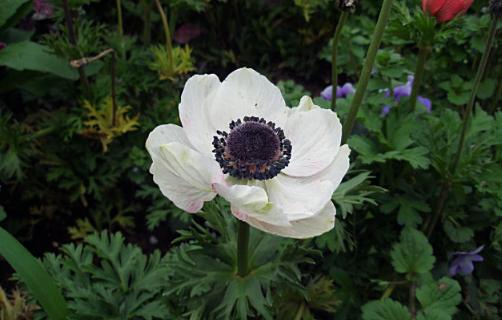
Fertilizer and water
Because winter temperatures are rather low, anemones consume less water, so watering must be controlled and the potting soil must not be kept too moist, to prevent the tubers from rotting. Depending on the humidity level, water about once every 3 days or so; if the temperature is low, water even less. Apply fertilizer once every half month with 10% cake fertilizer water.
Fertilizing during the flowering period
During the flowering period of anemones, apply 10% cake fertilizer water once a week, which can promote the continuous formation of flower buds, until temperatures rise in May, when it should be gradually stopped. In March-April, if there is damage from leaf miners, spray 1500 times omethoate, and spray again after 3-5 days.
After-flowering care
After anemones finish flowering, temperatures rise, the old leaves begin to turn yellow, and by June, when the leaves have basically all withered, the underground tubers can be dug up, but do not divide them immediately; be careful to protect them from rain. After they are fully air-dried in the shade, store them in a bamboo basket or similar container in a dry, ventilated place. For potted plants, the whole pot can be placed in a dry, rain-sheltered spot, stop watering, and repot only in September.
Overwintering care
In winter, anemones can continue to grow at above 5°C and can form flower buds and bloom early. When anemones are cultivated in the open field, they can overwinter safely as long as the temperature does not fall below -10°C. In early spring the following year, anemones begin to grow around mid-February, and if a dilute fertilizer is applied frequently, they can bloom in March.
The above is an introduction to the question of how to grow anemones. Next, let us learn what to pay attention to during the process of growing anemones.
How to grow anemones
Anemones can be planted in southern China from early September to mid-November, and the flowering period is from mid-November to late April. When cultivated in greenhouses, certain facilities for insulation, drip irrigation, shading and ventilation are required.Under natural conditions, anemones are usually planted in late September, when the temperature is below 20°C. Before planting, soak the tubers in water for 1-2 days so they absorb water and swell. For the potting soil, use 3 parts garden soil, 1 part leaf mold and 1 part rice husk ash, add 1 handful of decomposed compost or chicken manure per pot; in a pot with a diameter of 20 cm you can plant 3-5 corms, and when planting, the pointed end of the tuber must face downward and must not be inverted. After planting, water thoroughly and place in a sunny spot; new leaves can grow in about 20 days.
In winter, if kept in a greenhouse or plastic tunnel at above 5°C, they can continue to grow and can form flower buds and bloom early. But at this time, because temperatures are rather low and water consumption is small, watering must be controlled and the potting soil must not be kept too moist, to prevent the tubers from rotting. Depending on the humidity level, water about once every 3 days or so; if the temperature is low, water even less. Apply fertilizer once every half month with 10% cake fertilizer water.
For open-field cultivation, they can overwinter safely as long as the temperature does not fall below -10°C. In early spring the following year, they begin to grow around mid-February, and if a dilute fertilizer is applied frequently, they can bloom in March. During the flowering period, apply 10% cake fertilizer water once a week, which can promote the continuous formation of flower buds, until temperatures rise in May, when it should be gradually stopped. In March-April, if there is damage from leaf miners, spray 1500 times omethoate, and spray again after 3-5 days.
After flowering, temperatures rise, the old leaves begin to turn yellow, and by June, when the leaves have basically all withered, the underground tubers can be dug up, but do not divide them immediately; be careful to protect them from rain. After they are fully air-dried in the shade, store them in a bamboo basket or similar container in a dry, ventilated place. For potted plants, the whole pot can be placed in a dry, rain-sheltered spot, stop watering, and repot only in September.
The individual flowers of European anemones last about one week, and the seeds mature 7-10 days after flowering. At this time, the aggregate fruit changes from green to grayish yellow, and the fruit feels soft to the touch, so it must be harvested promptly, otherwise it may easily scatter in the wind. After harvesting, the seeds must be dried in the shade and stored in a rain-sheltered, ventilated place.
How to grow anemones and precautions
How to grow anemones
Potting soil selection
To grow anemones, you can choose a mixed potting soil, mixing garden soil, leaf mold and plant ash in a certain ratio and adding some base fertilizer; good drainage is required.
Light and temperature
Growing anemones requires meeting two conditions: coolness and sufficient light. Anemones are cold-tolerant but averse to high temperatures; the suitable growing temperature is between 15°C and 35°C. In winter, the temperature should not be lower than 10°C for them to overwinter safely; they can be placed indoors in a spot with plenty of sunlight, and if conditions allow, they can be kept in a greenhouse.
Watering and fertilizing
To grow anemones, the soil must be kept moist, but watering must be done with care, and the potting soil must not be too wet, to avoid root rot. In winter, water consumption is smaller, so watering can be reduced; in the rainy season, anemones need to be kept in a dry place, protected from rain, and watering must be stopped. Fertilizing is generally done once every half month with dilute fertilizer water; during the flowering period, to promote the formation of flower buds, it can be applied once a week.
Propagation methods
Anemones are mainly propagated by sowing and by dividing the corms; sowing is done in autumn, with seeds sown as soon as they are collected. Corm division propagation mainly means dividing and planting the anemone corms.
Precautions for growing anemones
Pests and diseases
Anemones can suffer from pests and diseases. The main diseases are rot, damping-off, gray mold and powdery mildew, all of which are quite serious and require timely control. The main pests are aphids and cutworms, which can be killed by spraying with common insecticides.
Seed collection
Anemones can be grown from seed, and generally the seeds are sown as soon as they are collected. The seeds must be harvested in time, otherwise they will be blown away by the wind; the harvested seeds should be kept in a ventilated, dry place.