How to Grow Crepe Jasmine? A Detailed Guide to Its Care Methods
Soil
Crepe jasmine grows best in fertile, well-drained acidic soil, so we can use ordinary garden soil or pond mud, and must avoid alkaline soil or soil with poor water retention.
Repotting
Crepe jasmine has a relatively high demand for nutrients as it grows, so it needs frequent repotting to maintain nutrients. Generally, repot once every 1 to 2 years. When repotting, add compound fertilizer or soybean cake as a base fertilizer, prune dead and weak branches, then place it in partial shade.
Watering
Crepe jasmine loves a moist environment, so the potting soil needs to stay moist; water again after the soil has dried out completely. In summer, spray water around it frequently to increase the air humidity of the environment.
Light
Crepe jasmine loves light, and it needs to be given light every day to help it grow more vigorously.
Temperature
Crepe jasmine tolerates high temperatures but not cold. When the temperature is below 10°C, the plant's growth is harmed, and new branches and leaves are prone to withering and turning yellow. When the temperature is below 0°C, the plant will die from frost damage.
Have you all understood the care methods for crepe jasmine? Next, let's take a look at what other points for attention need to be noted!
How to Grow Crepe Jasmine: Care Methods for Crepe Jasmine
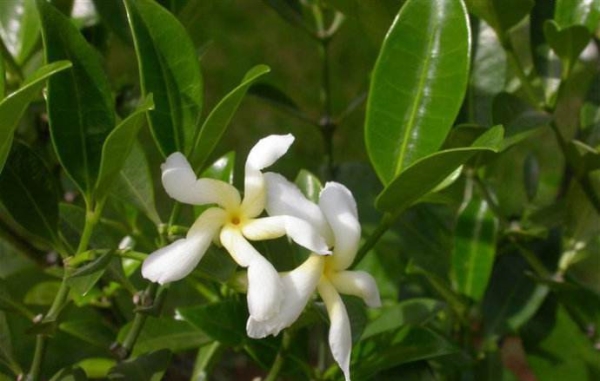
Crepe jasmine has white flowers, and when in bud they look like gardenia flowers. Although this flower's name is not very elegant, it is very lovely. So how do you grow crepe jasmine? Let's learn about the growing methods for crepe jasmine together.
Crepe Jasmine Pictures
I. How to Grow Crepe Jasmine
Crepe jasmine likes warmth and humidity, is not cold-tolerant, and prefers partial shade; it is best planted in fertile, well-drained acidic soil. Crepe jasmine is mainly propagated by cuttings, which can be done year-round in a greenhouse; outdoors, it is best to take cuttings from June to July. Select vigorous one-year-old crepe jasmine branches, cut 8-12 cm shoot tips, insert them into vermiculite, and be careful to keep them moist and shaded; they will root in about two weeks. The growing medium for crepe jasmine is ordinary garden soil or pond mud; it can be planted in the ground or in pots, but ground planting is preferred. Crepe jasmine has low soil requirements, is grown with fertilizer and water, and requires only rough management; fertilizing once a month is enough. During shaping and care, crepe jasmine should be pruned frequently to encourage more branching.
Crepe Jasmine Pictures
II. Care Methods for Crepe Jasmine
1. Soil: Crepe jasmine has low soil requirements, but grows best in fertile, well-drained acidic soil.
2. Watering: During normal care, crepe jasmine should keep the soil moist; water before it dries out completely. In summer, spray water around it frequently to increase the air humidity of the environment.
3. Temperature: After crepe jasmine is brought indoors at the end of October, generally water once every 5-7 days, just keeping the soil slightly moist, and maintain good light. The room temperature should be kept above 10°C, otherwise the leaves will turn yellow and fall off; below 0°C the branches will be frost-damaged.
4. Fertilizing: Crepe jasmine is fond of fertilizer and has a long flowering period, starting to bloom in May and continuing until September. During its growing period, alternately apply compound fertilizer and manure water every 7-10 days.
5. Repotting: Crepe jasmine is moved outdoors in April and repotted once every 1-2 years. When repotting, add compound fertilizer or soybean cake as a base fertilizer, prune dead and weak branches, then place it in partial shade.
Crepe Jasmine Pictures
The above isthe care methods for crepe jasmineshared. Crepe jasmine is quite lovely, with a faint floral fragrance on its flowers, and is very suitable for growing.
How to Grow Crepe Jasmine? Care Methods and Points for Attention for Crepe Jasmine
Crepe jasmine, also known as white dog tooth, lion flower, and tofu flower, is a shrub of the genus Tabernaemontana in the Apocynaceae family. Crepe jasmine has dense branches and leaves, a compact plant shape, and pure white, elegant, and simple flowers; it has high ornamental value and is very suitable for growing indoors in pots. So, how do you grow crepe jasmine? The care methods and points for attention for crepe jasmine are introduced below.
Image: Crepe Jasmine
I. Care Methods for Crepe Jasmine
1. Soil:Crepe jasmine is not strict about the soil in its growing environment, but it grows best in fertile, loose, well-drained acidic soil.
2. Watering:During daily care, keep the soil moist; do not wait until the potting soil is completely dry before watering. In summer, spray water around it frequently to increase air humidity.
3. Temperature:The suitable temperature for crepe jasmine growth is above 10°C. If it is lower than this temperature, the leaves of crepe jasmine will turn yellow; below 0°C the branches will suffer frost damage.
4. Light:Crepe jasmine likes warmth and humidity and prefers ample sunlight. During cultivation, maintain good light, otherwise the leaves will turn dull yellow and may even fall off.
5. Fertilizing:Crepe jasmine likes fertile soil, and its flowering period is relatively long, so it needs timely fertilizing. Alternately apply compound fertilizer and manure water every 7—10 days.
Image: Crepe Jasmine
II. Points for Attention in Crepe Jasmine Care
1. Water properly in winter:At the end of October, crepe jasmine needs to be moved indoors for growing; at this time, generally water once every 5—7 days, just keeping the soil slightly moist.
2. Repot on schedule:Move crepe jasmine outdoors in April and repot once every 1—2 years. When repotting, add compound fertilizer or soybean cake as a base fertilizer, prune dead and weak branches, then place it in partial shade for care.
3. Maintain light:Crepe jasmine likes an environment with ample light, so it should usually be placed in a spot with sunlight to absorb scattered sunlight. In summer, when the sun is scorching, place it in partial shade to avoid burning the leaves.
[Editor's Closing Words]Crepe jasmine likes a hot and humid environment and has low cold resistance, so special attention is needed during care. The above has introduced the care methods and points for attention for crepe jasmine, and I hope it can help everyone!