How to grow Gold Berry? Detailed methods and tips
1. Planting.
When planting Gold Berry, it is best to choose a large flower pot with a rim diameter of 30cm or more. For the soil, it is best to use loose, fertile soil with good drainage. Do not mix in old soil left over from repotting. When planting in the ground, it is also best to choose a new patch of ground and avoid ground where flowers have already been grown, so as to reduce pests and diseases and help Gold Berry grow well.
2. Fertilizing.
During the growing period, Gold Berry should be given a diluted liquid fertilizer once every 10 days to about half a month. During the flower bud stage, apply phosphorus and potassium fertilizer to promote the growth of flowers and fruit.
3. Watering.
In spring during the seedling stage, keep the roots half dry and half moist. Do not water frequently, so as not to lower the ground temperature and affect growth. If conditions allow, cover with plastic film to increase the temperature and promote root growth. During the growing period, water thoroughly and abundantly. When it blooms and bears fruit in summer and autumn, take even more care not to let it lack water.
4. Temperature and light.
Gold Berry is suited to an environment of 15-25°C. In winter, it can be moved indoors after Frost's Descent, and the indoor temperature should not be lower than 10°C.
5. Pruning and shaping.
When Gold Berry grows to 30-40cm tall, it should be pinched back 2-3 times. This encourages more side branches to grow, produces a full and well-proportioned plant shape, and also helps flowering and fruiting.
6. Pest and disease control.
Gold Berry is most vulnerable to cutworms and cabbage caterpillars. During the growing period, promptly clear fallen leaves and weeds from the ground, and frequently catch the insects and spray pesticide.
How to grow Gold Berry? Gold Berry growing methods and precautions
[Common question] How do you grow Gold Berry?
[Expert answer]
Gold Berry growing methods:
1. Soil:Gold Berry grows well in deep, loose, fertile, well-drained slightly acidic sandy loam, but it can also grow in neutral and slightly alkaline soil.
2. Fertilizing:When potting or repotting, apply sufficient base fertilizer. You can place 50 grams of hoof and horn pieces in each pot. During the seedling stage, apply more nitrogen fertilizer, with liquid fertilizer once every half month. After flowering and fruit set, mainly use phosphorus and potassium fertilizer, or spray a 0.2% potassium dihydrogen phosphate solution on the leaves, so that the fruit becomes plump and sturdy and the seeds are full.
3. Temperature:Gold Berry likes warmth and is not cold-tolerant. It needs to overwinter indoors, and 10°C to 25°C should be maintained. The optimum growing temperature is 20°C to 30°C. Growth slows at 5°C to 10°C, stops below 5°C, and it suffers cold damage below 0°C. In summer it can endure high temperatures of around 35°C, but not for too long.
4. Light:It likes plenty of sunlight and dislikes long periods of shade. It is best suited to growing in strong light. If light is insufficient, the plant will grow leggy and the leaves will turn yellow and fall off.
5. Water:Gold Berry likes moisture and dislikes drought and waterlogging. In summer, water once or twice a day to prevent the leaves from drying out and falling off and affecting growth. During the flowering period, overly wet soil easily causes flowers to drop and lowers the fruiting rate. During the fruit ripening period, the soil should be moist to prevent the fruit from drying yellow and losing its luster. In high temperatures and dry conditions, it easily produces flowers without fruit.
6. Dwarfing and fruit thinning:To fully dwarf a tall plant, when its stems and branches grow to 50cm tall, remove the terminal buds so the plant no longer grows taller and the side buds grow. When the side buds reach a suitable height, spray with paclobutrazol to inhibit height and promote flowering until the fruit ripens. After fruiting, if the plant has too much fruit, set up supports to prevent breaking and lodging. As long as it does not affect the ornamental value, appropriately thin the fruit to ensure the fruit is large.
7. Pests and diseases:Leaf spot and anthracnose often occur and cause damage. Spray with a 1,000-fold dilution of 10% antibacterial agent 401 acetic acid solution. Pests include aphids and whiteflies, which can be killed by spraying a 1,000-fold dilution of 2.5% rotenone emulsifiable concentrate. Gold Berry has relatively few pests and diseases during the growing period, with occasional damage from viral disease and red spider mites, which can be controlled with 70% thiophanate-methyl and 40% omethoate respectively.
Precautions:
Choose fertile, loose, well-drained sandy loam for planting. If drainage is poor, the roots rot very easily. Gold Berry likes fertilizer. During the growing period, fertilize once every half month, and from budding to the young fruit stage, apply phosphorus and potassium fertilizer 2-3 additional times. If the flowering period meets high temperatures and dry conditions, the pollen does not easily spread, affecting pollination and fruiting. Pay attention to watering and shading. In autumn, cut 50-60cm fruiting branches as cutting material, mainly using stems and fruit, remove the leaves, and place them in clean water to keep them fresh.
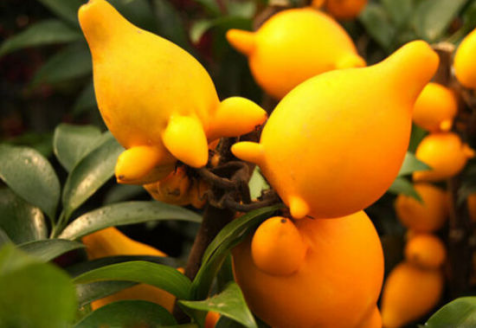
[Editor's comment] Gold Berry is a precious fruit-bearing ornamental plant with a peculiar fruit shape. The editor of First Agricultural Economics above introduced its growing methods and precautions for you. Its fruit-viewing period is very long. Friends who are interested can grow one themselves. I hope this article is helpful to you.
Gold Berry growing methods and precautions
Chinese scientific name: Gold BerryLatin scientific name: Solanum mammosum Linn.Other names: Five-fingered Eggplant, Five Generations Under One Roof Fruit, Nipple Eggplant, Frankincense Eggplant, Many-headed Eggplant, Ox-head Eggplant, Ox-horn EggplantKingdom: PlantaePhylum: AngiospermsClass: DicotyledoneaeSubclass: AsteridaeOrder: SolanalesFamily: SolanaceaeGenus: SolanumCategory: Erect branching small shrubEnglish name: Gold BerryFlower meaning: as one wishes, auspicious, high fortune, five generations under one roofGold Berry, formerly known as: nipplefruit eggplant, also known as five-fingered eggplant. Latin name: Solanum mammosum L. English name: Abiu, also known as caimito. It is an erect herb of the Solanaceae family and Solanum genus. The stems are covered with short soft hairs and flat prickles; the branchlets are covered with nodal long soft hairs, glandular hairs and flat prickles. The prickles are wax-yellow, glossy, light purple at the base, pointed at the tip, awl-shaped, straight or slightly curved. It is native to the Americas, and has now been successfully introduced to Guangdong, Guangxi and Yunnan. The fruit has a beautiful shape and is often cultivated for ornament. It likes a warm, moist and sunny environment. The optimum growing temperature is 15-25°C. It has a certain cold tolerance and fears waterlogging and drought. It can withstand low temperatures of 3-4°C. It is suited to fertile, loose, well-drained sandy loam. The winter temperature must not be lower than 12°C. It can be propagated by sowing and cuttings, and is widely used in cut flowers and potted flowers. The fruit does not change color or shrink for a long time, shining with golden light, symbolizing high fortune, five generations under one roof, and good luck and happiness as one wishes.1. Morphological characteristics
Erect herb, about 1 m tall. The stems have short soft hairs and flat prickles; the branchlets are covered with nodal long soft hairs, glandular hairs and flat prickles. The prickles are wax-yellow, glossy, light purple at the base, 3-5 mm wide, pointed at the tip, awl-shaped, straight or slightly curved, 4-12 mm long.