What are the precautions for growing Ctenanthe oppenheimiana?
1. Maintain temperature
When growing Ctenanthe oppenheimiana, be sure to control the temperature well; it is best to keep it between 18 and 25°C, as this temperature can ensure the plant's rapid growth as much as possible. If the summer weather is too hot, move it to a shady environment for shade, so that excessively high temperatures do not scorch and dehydrate the plant. In winter, the plant also needs to be moved onto a balcony to get more sun and keep warm.
2. Keep the environment humid
Ctenanthe oppenheimiana likes a moist growing environment, and the humidity around the plant should basically be kept at around 80%. A humid environment is better able to promote the growth of Ctenanthe oppenheimiana, so during care, water mist must often be sprayed around the plant's surroundings to keep it moist. Especially in summer, in addition to watering, spray water mist frequently to avoid dryness.
Growing methods and precautions for Ctenanthe oppenheimiana
Chinese scientific name: Jianyu Zhuyu (Ctenanthe oppenheimiana)Latin scientific name: Ctenanthe oppenheimianaOther names: Hongyu Zhuyu, Shuangxian ZhuyuKingdom: PlantaeFamily: MarantaceaeGenus: CtenantheCtenanthe oppenheimiana (Hongyu Zhuyu, Shuangxian Zhuyu), family Marantaceae, genus Ctenanthe, can reach a plant height of 150 cm. Its leaves stand at an angle and are arrow-shaped, hence the name Jianyu Zhuyu (arrow-feather prayer plant). It has extremely high ornamental value. It originates from places such as Brazil.1. Morphological characteristics
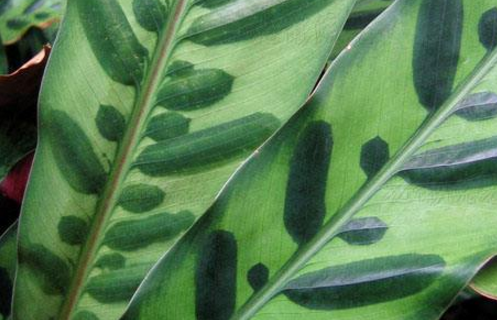
Perennial evergreen herbaceous foliage plant. Plant height can reach more than 100 cm. The leaves are oblong to lanceolate, with clearly wavy leaf margins. On the yellow-green leaf surface, on both sides of the main vein, regular oval and elliptical dark green patches alternate in a feather-like arrangement. Leaves are 25-30 cm long and 8-15 cm wide. The leaf underside and petioles are purplish red, and the leaves extend upward in an upright manner. The leaves stand at an angle and are arrow-shaped, and the stems have fine hairs.2. Growing environment
Native to Brazil and Costa Rica. It likes a warm, humid and semi-shaded environment. It dislikes intense summer heat and scorching sun exposure. It is suitable for loose, fertile loam with good drainage.3. Cultivation techniques
Propagation by division. In spring, combine this with repotting and changing the soil. After removing the plant from the pot, clear away the old soil from the root ball, and divide and repot in clumps of 3-5 plants each.For pot cultivation, use a growing medium mixed with leaf mold (or peat soil) and garden soil at a 1:1 ratio. During the growing season, take care to keep the soil moist, but do not let it become waterlogged. In hot, dry weather in summer and autumn, spray water on the leaf surface twice a day to help the leaves grow normally and increase their luster. Usually the fertilizer requirement is not large; excessive fertilization easily causes the plant to grow excessively, the leaf color to turn green rather than vivid, and even lodging, reducing ornamental value, so fertilization should be controlled. Generally, applying a thin fertilizer once a month during the growing season is enough. Stop fertilizing in late autumn and control watering. Move indoors in October for cold protection, and keep the winter room temperature above 10°C.
[Use] Place at hall entrances, on both sides of corridors, or in meeting room corners as decoration.
4. Pest and disease control
Red spider miteShuangxian Zhuyu has relatively few pests and diseases, but if ventilation is poor and the air is dry, red spider mite damage can also occur, and imidacloprid-series pesticides should be sprayed for control.
Anthracnose
Anthracnose lesions are yellow-brown. In the early stage of the disease, small yellow particles form near the leaf edges or in the center of the leaf, and gradually expand, deepen in color, and turn yellow-brown. The causes are high temperature and high humidity, poor air circulation, plants placed too densely, many weeds and rotten leaves in the cultivation environment, excessive nitrogen fertilizer application, and excessive plant growth. Tender tissues are more susceptible to the disease.
Strengthen fertilizer and water management, appropriately increase phosphorus and potassium fertilizer, apply less nitrogen fertilizer, and promote sturdy plant growth to enhance its own resistance. Promptly remove diseased and disabled leaves as well as weeds to reduce sources of infection. Plants should not be placed too densely; provide appropriate ventilation and light, and reduce environmental humidity to reduce disease occurrence. When disease occurs, spray pesticides for protection. The pesticides include: 50% carbendazim 600x-800x solution; or 75% chlorothalonil 600x-800x solution; 50% mancozeb 500x-600x solution, once every 7-10 days. Various pesticides should be used alternately to prevent the pathogen from developing resistance.
Does Ctenanthe oppenheimiana absorb formaldehyde? Can Ctenanthe oppenheimiana purify the air?
Most plants in the family Marantaceae have the function of absorbing formaldehyde and purifying the air, so in many public places, shortly after renovation, plants in the Marantaceae family are usually chosen to absorb harmful substances in the air to achieve air improvement. Ctenanthe oppenheimiana belongs to the Marantaceae family, and in appearance it is easily confused with Calathea makoyana and Calathea leopardina.
Does Ctenanthe oppenheimiana absorb formaldehyde?
Ctenanthe oppenheimiana has a certain formaldehyde-absorbing effect, but relying solely on plants to absorb formaldehyde in the air is not enough; it also needs to be combined with some other methods.
Can Ctenanthe oppenheimiana purify the air?
Ctenanthe oppenheimiana has a certain air-purifying effect and can absorb harmful substances in the air.
The effects and functions of Ctenanthe oppenheimiana
1. Landscape greening value of Ctenanthe oppenheimiana
The leaves of Ctenanthe oppenheimiana come in many colors and have strong ornamental value, and its ability to adapt to the environment is relatively strong, so Ctenanthe oppenheimiana can be seen in many places, such as courtyards, parks, and along roadsides. Its landscape greening value is very high, and it is used in mass planting, clump planting, or combined with other plants for landscape greening.
2. Indoor decorative value of Ctenanthe oppenheimiana
Ctenanthe oppenheimiana has relatively good shade tolerance and its leaves are also very beautiful, so it is often grown as an indoor decorative plant in public places such as hotels and shopping malls, and can also be kept as a small potted plant at home.
3. Medicinal value of Ctenanthe oppenheimiana
The rhizomes of Ctenanthe oppenheimiana contain a certain amount of starch components, which can not only be used as edible material, but also have good medicinal value, such as diuretic and heat-clearing effects.
4. Other values of Ctenanthe oppenheimiana
The appearance of Ctenanthe oppenheimiana is relatively beautiful, especially its leaves, whose colors are colorful, making it very suitable as floral arrangement material. One unique feature of Ctenanthe oppenheimiana is that its leaves have many neat and striking stripes, making it a very high-grade cut-leaf material that can be used directly in flower arrangements or as supporting material for flower arrangements.
Growing methods for Ctenanthe oppenheimiana
1. Temperature
Ctenanthe oppenheimiana originally comes from places such as Brazil and is a tropical plant. It relatively likes high-temperature and humid environments, and the best growing temperature should be kept at around 25°C. In summer, place it in a cool place, and in winter, pay attention to cold protection.
2. Light
Ctenanthe oppenheimiana grows better under diffused light and scattered light. In summer, direct sunlight very easily causes leaf scorch. If leaf scorch occurs, it should be moved immediately, and the scorched leaves should be removed.
3. Moisture
The most suitable growing humidity for Ctenanthe oppenheimiana is around 80%. Suitable air humidity is beneficial to biological growth, while air humidity that is too high or too low will cause unhealthy leaf growth. During the plant's growing season, water frequently, and in high temperatures often spray water on the leaf surface. The best watering method is to spray with water in the morning, water the potting soil at noon or in the afternoon, and water the whole plant in the evening.
4. Growing medium (potting soil)
The soil for Ctenanthe oppenheimiana needs to be fertile, well-drained and loose; generally, humus soil or coarse medium is used.
5. Fertilization
The fertilization principle for Ctenanthe oppenheimiana: apply frequently and lightly. During the peak growing season, applying fertilizer about once every two weeks is best. The fertilizer is mainly nitrogen fertilizer, and phosphorus fertilizer and potassium fertilizer can also be used. For Ctenanthe oppenheimiana, nitrogen fertilizer can make the leaves more beautiful.
Ctenanthe oppenheimiana can also play a role in air purification, but simply placing a few plants in a house that can absorb harmful substances and expecting to achieve complete formaldehyde removal is unrealistic. Only by combining opening windows for ventilation with the use of formaldehyde-removal instruments or tools can air quality improvement be ensured to a greater extent.