How to grow Calathea lancifolia? Master the growing methods and precautions
1. Fertile soil
If you want to grow Calathea lancifolia lush and thriving, the most important thing is a pot of fertile, loose, and well-draining soil. Only very breathable soil can make Calathea lancifolia grow faster. It is best to mix leaf mold, peat soil, and perlite in a ratio of 5:3:2. With this mix, the soil is not only loose and breathable but also very fertile.
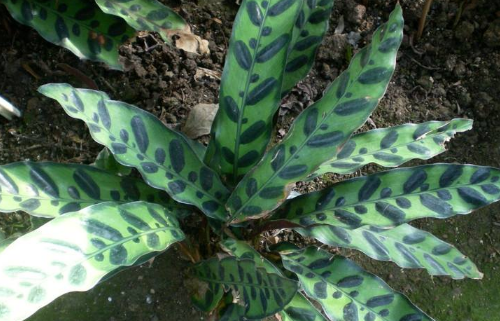
2. Moderate shading
Moderate shading is a very important issue. Although Calathea lancifolia likes sunlight, it cannot withstand excessive light, especially the scorching sun in summer, which will make the leaves turn yellow, dehydrate, and even wither. Usually, Calathea lancifolia must be placed in a diffused-light environment indoors.
3. Sufficient watering
Calathea lancifolia likes a moist growing environment, so when growing Calathea lancifolia, it must be watered sufficiently. Especially in the hot and dry summer, keep watering a small amount every morning to moisten the soil. In spring and autumn, water once every 2 to 3 days. In winter, watering should be significantly reduced, basically keeping the soil slightly dry, watering once every 7 days, and never allow waterlogging.
4. Apply fertilizer frequently and lightly
Do not apply too much fertilizer to Calathea lancifolia, especially since it does not like strong fertilizer. If too much fertilizer is applied, there is a risk of fertilizer burn. When growing it, be sure to apply fertilizer frequently and lightly. In spring, fertilize twice a month, mainly with nitrogen fertilizer, and occasionally apply a little potassium fertilizer and phosphorus fertilizer, but nitrogen fertilizer will make the leaf patterns more beautiful.
The above explains how to grow Calathea lancifolia. Now let us look at how Calathea lancifolia is propagated!
How to grow Calathea, how to care for Calathea?
How to grow Calathea, how to care for Calathea?Calathea is a perennial evergreen herb in the Marantaceae family. It is native to the tropical rainforest regions from South America to Central America.
There are many horticultural ornamental cultivars of Calathea, with dozens of common species and cultivars, such as Calathea picturata (also known as velvet Calathea), Calathea bella, Calathea makoyana, Calathea roseopicta (also known as rose Calathea), Calathea lancifolia, etc. Its horticultural cultivars include Calathea bicolor, Calathea lietzei, Calathea
amabilis, Calathea densiflora, etc. They form a large family in the Marantaceae.
Morphological characteristics: stems erect, plant height 30〜60, rhizomes fleshy. Leaves ovate or broadly lanceolate, varying by cultivar. Petioles long, leaves thin, leaf surface light green, gray-green, etc., with brilliant feather-like patterns or irregular patterns. The underside of the leaves is often purplish red or gray-green, and the leaf margins are flat or wavy. Flowers often have pale green bracts, with low ornamental value.
Growth habits: It likes a high-temperature and high-humidity environment. The suitable growth temperature is 18〜30. Below 10 it enters a dormant state, and some species have dry stems and leaves. It likes light, and in summer it should be kept in half shade. The soil should be loose, fertile, rich in humus, and well-draining loam.
Propagation method: Use division propagation, carried out in April to May each year when repotting and changing soil. Remove the mother plant from the pot, remove the old soil, cut and separate overly dense plants into clumps, then immediately replant them separately and strengthen watering management. When dividing, care should be taken to protect the roots in the soil-bearing part.
Pest and disease control: When Calathea grows in a poorly ventilated environment, it is often prone to damage by scale insects and red spider mites. When red spider mites are found, use 40% dimethoate emulsion at 800〜1000 times dilution and spray twice at weekly intervals for control. Scale insects should be treated at the nymph stage.
Horticultural use: Calathea has an elegant posture and varied leaf colors and patterns. It is an important indoor shade-tolerant foliage plant, suitable for indoor potted decoration at home, used to decorate living rooms, studies, and bedrooms. Indoors, as long as there is sufficient diffused light, it can grow normally and can be enjoyed year-round. In southern regions, it can be planted in semi-shaded outdoor areas as courtyard flowers and trees.
How to grow Calathea makoyana
How to grow Calathea makoyanaCalathea makoyana has beautiful and colorful leaves and strange patterns, like a lifelike peacock with its tail spread, with a unique style. At first glance, it is often mistaken for an artificial flower. It is not only the most beautiful among the species in the same family and genus, but also one of the most representative foliage plants popular around the world today. Potted plants placed in the living room or study immediately brighten the room with their unique brilliant patterns.
Calathea makoyana, also known as zebra plant, is a perennial evergreen herbaceous plant in the Marantaceae family. The plant is densely clustered and upright. The petiole grows from the rhizome, and the leaf is ovate-elliptic. The petiole is purplish red, and the leaf is thinly leathery. The semi-transparent leaf surface has different shades of green, and pear-shaped patches of alternating sizes radiate from the midrib. Its form closely resembles the tail feathers of a peacock with its tail spread, hence the name Calathea makoyana.
Commonly cultivated cultivars include Calathea bicolor, Calathea lancifolia, and Calathea picturata. Calathea makoyana is native to Brazil in South America. It likes a high-temperature, high-humidity, and semi-shaded environment, and is not cold-tolerant. It requires loose and fertile potting soil.
The potting soil should be loose, fertile, well-draining, and rich in humus. It can be prepared by mixing 6 parts leaf mold (or peat soil), 2 parts garden soil, and 2 parts river sand.
It is neither tolerant of high temperature nor cold. The suitable growth temperature is 18〜22 degrees, and the overwintering temperature is 3〜16 degrees. In winter, place it in a sunny spot and pay attention to cold protection. If it is below 10 degrees, the leaves will curl; below 5 ^: it is prone to cold damage, and in severe cases the whole plant may die.
It has strong shade tolerance. When cultivated outdoors, it should be shaded in summer, as it fears direct strong light, otherwise it is likely to cause leaf margin scorch. When grown at home, in spring and autumn it can be placed in a bright indoor spot. In summer, move the pot to a north-facing window, and in winter move the pot to a south-facing sunny window. If placed in a dim spot for a long time, the leaves will lose their distinctive luster.
Calathea makoyana is native to the tropical rainforest understory and has high requirements for air humidity. Usually maintain
70〜80“ relative air humidity. Because the indoor environment most of the time has relative air humidity
around 50“, maintaining high humidity in the surrounding environment is therefore the key to successfully cultivating Calathea makoyana. In summer, spray water on the leaf surface 2〜3 times a day to increase humidity and lower temperature, which benefits growth. If the temperature is high and humidity is low, or if it is exposed to sunlight, it will appear wilted and weak. Conversely, if the temperature is low and humidity is high, it will cause rotten leaves and roots. High temperature and high humidity are most favorable for its growth. When the temperature decreases, humidity should be reduced accordingly. After winter begins, strictly control water to help it overwinter safely.
. Calathea makoyana is mainly grown for its beautiful leaf color. Take care not to apply excessive nitrogen fertilizer, otherwise the leaf patterns will fade, and undesirable conditions such as thickened leaves and soft petioles will appear.
It is mainly propagated by division. The division time is best in late spring and early summer. Each separated daughter plant should retain at least 5 leaves. Rhizome cuttings can also be used, and they root easily.