How to propagate Calathea oppenheimiana? A detailed guide to common propagation methods
1. Division
Division propagation has the highest survival rate among the propagation methods for Calathea oppenheimiana, and it is best carried out in spring when everything comes back to life and the weather is warm. Choose a sunny day with a temperature of 18-22°C. Select a robust stem and cut it off together with the root section of the stem and leaves. Place this new plant in a cool, dry place to let the cut surface dry, then it can be planted directly as a new plant.
2. Cuttings
Propagating Calathea oppenheimiana by cuttings is relatively simple. Just in April to May each year, select the most robust shoot from the whole plant and cut off a 10-12 cm length with a small knife. Remove the leaves, keeping only the leaves at the top of the plant, then trim off 1/3 of the leaves. After soaking the shoot in rooting powder, insert it into the soil, water it with an appropriate amount of water, place it in a cool and ventilated environment, and wait for the plant to take root and sprout.
Through this article, I believe everyone has now mastered the cultivation and propagation of Calathea oppenheimiana. As long as you follow the steps above, you will surely be able to grow a beautiful and healthy Calathea oppenheimiana.
Cultivation methods and precautions for Calathea oppenheimiana
Chinese scientific name: Jianyu Zhuyu (Calathea oppenheimiana)Latin scientific name: Ctenanthe oppenheimianaAlso known as: Hongyu Zhuyu, Shuangxian ZhuyuKingdom: PlantaeFamily: MarantaceaeGenus: CtenantheCalathea oppenheimiana (Hongyu Zhuyu, Shuangxian Zhuyu), of the family Marantaceae and the genus Ctenanthe, can reach a height of 150 cm. Its leaves stand at an angle and are arrow-shaped, hence the name Jianyu Zhuyu (arrow-feather calathea). It has extremely high ornamental value. It originates from places such as Brazil.1. Morphological characteristics
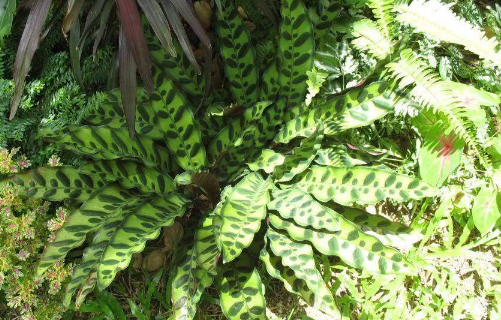
Perennial evergreen herbaceous foliage plant. The plant height can reach more than 100 cm. The leaves are oblong to lanceolate, with clearly wavy leaf margins. On the yellow-green leaf surface, on both sides of the main vein, regular oval and elliptical dark green patches alternate in a feather-like arrangement. The leaves are 25-30 cm long and 8-15 cm wide. The leaf underside and petioles are purplish red, and the leaves extend upward in an upright manner. The leaves stand at an angle and are arrow-shaped, and the stems have fine hairs.2. Growing environment
Native to Brazil and Costa Rica. It prefers a warm, humid and semi-shaded environment. It is averse to intense summer heat and scorching sun exposure. It is suitable for loose, fertile and well-drained loam.3. Cultivation techniques
Propagation by division. In spring, combine this with repotting and changing the soil. After removing the plant from the pot, clear away the old soil from the root ball, and divide and pot up 3-5 plants per clump.For potted cultivation, use a growing medium mixed with leaf mold (or peat soil) and garden soil at a 1:1 ratio. During the growing season, take care to keep the soil moist, but not waterlogged. In summer and autumn during hot and dry weather, spray water on the leaves twice a day to promote normal leaf growth and increase glossiness. Usually the fertilizer requirement is not large; excessive fertilization easily causes the plant to grow leggy, the leaf color to turn green rather than vivid, and even lodging, reducing ornamental value. Therefore, fertilization should be controlled; generally, applying a thin fertilizer once a month during the growing season is sufficient. Stop fertilizing in late autumn and control watering. Move indoors in October for cold protection, and keep the winter room temperature above 10°C.
[Use] Place at hall entrances, on both sides of corridors, or in meeting room corners as decoration.
4. Pest and disease control
Red spider miteShuangxian Zhuyu has relatively few pests and diseases, but if ventilation is poor and the air is dry, red spider mite damage can also occur. Spray with imidacloprid-series pesticides for control.
Anthracnose
Anthracnose lesions are yellow-brown. In the early stage of the disease, small yellow spots form near the leaf margins or in the center of the leaves, and gradually expand, deepen in color, and turn yellow-brown. The causes are high temperature and high humidity, poor air circulation, plants placed too densely, excessive weeds and rotten leaves in the cultivation environment, excessive nitrogen fertilizer application, and leggy plant growth. Tender tissues are more susceptible to the disease.
Strengthen fertilizer and water management, appropriately increase phosphorus and potassium fertilizer, and apply less nitrogen fertilizer, so as to promote substantial plant growth and enhance its own resistance. Remove diseased and disabled leaves as well as weeds in a timely manner to reduce sources of infection. Plants should not be placed too densely; provide appropriate ventilation and light, and lower the humidity of the environment, which can reduce disease occurrence. When the disease occurs, spray for protection. The pesticides include: 50% carbendazim 600x to 800x solution; or 75% chlorothalonil 600x to 800x solution; 50% mancozeb 500x to 600x solution, once every 7 to 10 days. Various pesticides should be used alternately to prevent the pathogen from developing resistance.
Precautions for cultivating Calathea oppenheimiana
1. Maintain temperature
When cultivating Calathea oppenheimiana, be sure to control the temperature well. It is best to keep it between 18-25°C; this temperature can ensure the plant's rapid growth as much as possible. If the summer weather is too hot, move it to a shaded environment for shade, so as to prevent excessively high temperatures from baking the plant and causing dehydration. In winter, the plant also needs to be moved onto a balcony to get more sun and keep warm.
2. Keep the environment humid
Calathea oppenheimiana likes a humid growing environment, basically keeping the humidity around the plant at about 80%. A humid environment can better promote the growth of the Calathea oppenheimiana plant, so during care, be sure to frequently spray water mist around the plant's environment to maintain humidity. Especially in summer, in addition to watering, also spray more water mist to avoid dryness.