How to propagate Malus micromalus? Introduction to common propagation methods
1. Grafting:
Malus micromalus grafting is divided into bud grafting and scion grafting, and the rootstock is mostly seedlings of the same genus. Bud grafting of Malus micromalus is best done in August, and scion grafting is best done in spring.
2. Division:
Division of Malus micromalus is suitable in early spring in March, before buds sprout. Around an older Malus micromalus, small seedlings will sprout; cut the seedlings off from the mother plant together with their roots and transplant them. After the small Malus micromalus seedlings are watered thoroughly, shade them appropriately and keep the soil moist; after 15 days, move to normal care.
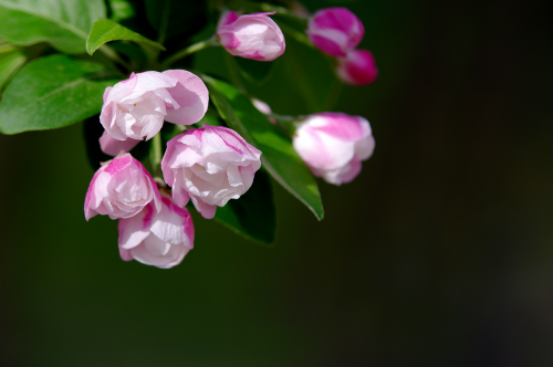
3. Root burial method:
In early spring in February, cut the roots of a mature crabapple into lengths of about 15 cm, lay them flat and bury them in soil, cover with 7-8 cm of soil, water thoroughly, and then keep the soil moist regularly; in early spring of the following year, cut them away from the mother plant and plant them separately. Conclusion: Malus micromalus suffers relatively few diseases, but has many insect pests, so attention should be paid to prevention and control.
How to grow Malus micromalus and how to propagate Malus micromalus
Malus micromalus, also known as Zimu crabapple, is one of China's traditional famous flowers. Today we will share with you how to grow Malus micromalus and how to propagate Malus micromalus.
How to grow Malus micromalus:
1. Planting. Malus micromalus is generally planted in the ground, and the time is best before budding in early spring or after leaf fall in early winter. Keeping the root system of the seedlings intact when leaving the nursery is the key to survival. Generally, large seedlings should be kept with a soil ball, and small seedlings should retain native soil depending on the situation. After planting, care and management should be strengthened, and the soil should often be kept loose and fertile.
2. Pruning. Prune once after leaf fall and before budding in early spring, cutting off dead and weak branches and diseased and pest-infested branches to keep the crown open and allow ventilation and light penetration. To promote vigorous flowering, the water sprouts should be cut back to reduce nutrient consumption during sprouting. Fruit-bearing branches and spurs do not need pruning. During the growing period, if the tips are pinched in time to limit vegetative growth early, the effect will be even more noticeable.
3. Watering and fertilizing. To make Malus micromalus flowers beautiful in color, it should be planted in well-drained, fertile and moist soil. The planting time is best before buds break in early spring, and fully decomposed organic fertilizer should be applied before planting. After leaf fall each autumn, dig an annular ditch around its root zone, apply fully decomposed organic fertilizer, cover with soil and water thoroughly, and it will grow luxuriant branches and leaves and produce many beautiful flowers. During the seedling stage, water frequently to keep the soil moist, but do not let water accumulate; in the rainy season, drain water promptly, and loosen the soil around the roots once every 2-3 weeks to improve aeration.
How to propagate Malus micromalus:
There are generally three propagation methods for Malus micromalus: grafting, division and root burial. Malus micromalus cuttings are difficult to root successfully.
1. Grafting: Malus micromalus grafting is divided into bud grafting and scion grafting, and the rootstock is mostly seedlings of the same genus. Bud grafting of Malus micromalus is best done in August, and scion grafting is best done in spring.
2. Division: Division of Malus micromalus is suitable in early spring in March, before buds sprout. Around an older Malus micromalus, small seedlings will sprout; cut the seedlings off from the mother plant together with their roots and transplant them. After the small Malus micromalus seedlings are watered thoroughly, shade them appropriately and keep the soil moist; after 15 days, move to normal care.
3. Root burial method: In early spring from February to March, cut the roots of a mature crabapple into lengths of about 15 cm, lay them flat and bury them in soil, cover with 7-8 cm of soil, water thoroughly, and then keep the soil moist regularly; in early spring of the following year, cut them away from the mother plant and plant them separately.
More informationHow to grow Malus micromalus
1. Light
Malus micromalus likes a sunny environment and can grow outdoors for a long time; it likes places with plenty of sunlight and good ventilation.
2. Watering
During the growing period in spring and summer, it needs appropriate extra watering. During hot summer high temperatures, watering should be timely and sufficient; if water is lacking, leaf edges tend to scorch. After autumn cools, gradually reduce watering; after leaf fall in winter, water even less to prevent root rot. It is a deciduous tree species, so it is not suitable to spray too much water on the branches and leaves
3. Temperature
Malus micromalus has no high temperature requirements; the suitable growing temperature is 10-25°C, and it is heat-tolerant and cold-tolerant.
4. Soil
Malus micromalus is not strict about soil, but it grows best in fertile, loose and well-drained sandy loam. During the growth of Malus micromalus, watering, fertilizing and pruning should be managed together as a whole.
5. Fertilizing
Malus micromalus likes fertilizer and can be given appropriately more, but attention should be paid to using nitrogen, phosphorus and potassium in combination. If too much nitrogen fertilizer is used, it easily causes luxuriant branches and leaves but sparse flowering. After flowering in spring, mainly apply nitrogen fertilizer to promote branch and leaf growth. In summer and autumn, apply more phosphorus and potassium fertilizer to help flower bud differentiation and ensure abundant flowers and bright colors. Fertilizers can include cake fertilizer, human manure and urine, bone meal, chicken manure, fishy water, etc.
6. Pruning
Malus micromalus has strong sprouting ability and grows quickly, so attention should be paid to shaping and pruning it. Before buds sprout in spring, cut off dead branches, diseased and pest-infested branches, thin and weak branches, crossing branches, overlapping branches and overly dense branches.