What are the cultivation methods and precautions for Rosa xanthina?
I. Fertilizing
First, it is necessary to apply one to two spadefuls of decomposed compost as a base fertilizer in the hole where the Rosa xanthina seedling is placed. Note here that after planting, Rosa xanthina needs to have a fairly large number of branches pruned and to be watered thoroughly, then watered again after about 3 days; this can greatly increase the survival rate of the young Rosa xanthina seedlings. Once Rosa xanthina has established, generally no further fertilizing is needed, but to keep it lush and leafy, a top dressing can be applied once every other year after flowering.
II. Watering
In the routine care of Rosa xanthina, water it promptly according to drought conditions, so as to avoid death caused by excessive drought and lack of water or by watering too frequently. In the rainy season, pay attention to drainage and waterlogging prevention; before frost, one more watering of antifreeze water is also needed.
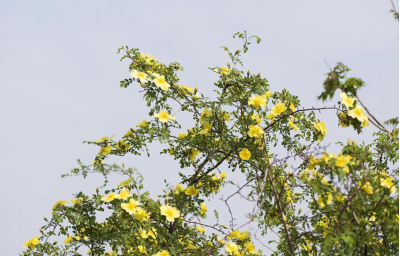
III. Pruning
After Rosa xanthina blooms, to reduce nutrient consumption, prune its flowering branches promptly and remove spent flowers and withered branches. Before Rosa xanthina buds and after leaf fall, pruning should be combined with division, cutting out dead old branches and overly dense, thin, weak branches so that it grows vigorously. For one- to two-year-old branches, shorten them as little as possible to avoid reducing the number of flowers.
IV. Other
The time for cultivating Rosa xanthina is generally from late March to early April. At the same time, it is worth noting that Rosa xanthina must be planted with a soil ball, that is, when transplanting Rosa xanthina, the dug-out seedling is not shaken free of the clump of soil tangled around the roots, and after cutting off part of the root system, this soil-covered root is trimmed into the shape of a round ball. Doing so can ensure the absorption of inorganic salts and water by the Rosa xanthina roots and greatly increase its survival rate.
Seen this way, Rosa xanthina is a very easy plant to keep alive. But even the easiest plant to keep alive can get sick, so how should a sick Rosa xanthina be cared for?
Cultivation methods and precautions for Rosa xanthina
Cultivation methods for Rosa xanthina
Soil requirements
When growing, Rosa xanthina is not strict about soil, is relatively tolerant of drought and poor soil, and can also grow in alkaline soil. However, because Rosa xanthina is not tolerant of waterlogging, the soil must have good drainage and be as loose and airy as possible.
Water and fertilizer management
When planting Rosa xanthina, first apply some decomposed compost as a base fertilizer; after it establishes, generally no further fertilizing is needed, but to keep it lush and leafy, a top dressing can be applied once every other year after flowering.
After planting, Rosa xanthina should first be watered thoroughly once, then watered again after about 3 days, and it will survive. In routine care, water it promptly according to drought conditions, so as to avoid wilting or even death caused by excessive drought and lack of water. In the rainy season, pay attention to drainage and waterlogging prevention; before frost, water once with antifreeze water.
Pruning
Rosa xanthina should be pruned regularly.
After flowering, prune to remove spent flowers and withered branches, so as to reduce nutrient consumption.
After leaf fall or before budding, pruning is also needed, cutting out old branches, dead branches and overly dense, thin, weak branches so that it grows vigorously. For 1- to 2-year-old branches, shorten them as little as possible to avoid reducing the number of flowers.
Precautions for cultivating Rosa xanthina
Propagation methods
When propagating, Rosa xanthina is mostly propagated by division, layering and cuttings.
Rosa xanthina has strong tillering ability and is suitable for propagation by division, because division produces seedlings quickly and has a high survival rate, while also keeping the plant's double-petaled trait unchanged.
Diseases
Rosa xanthina is easy to cultivate, requires extensive management, and has few pests and diseases. Generally, during the growth of Rosa xanthina, damage from powdery mildew occurs, mainly showing as lesions on both sides of the leaves, with a sparse white powdery mildew layer, causing the leaves to twist, and young leaves to turn purplish brown and die.
An introduction to the cultivation methods of Rosa xanthina, and the precautions in cultivation
Do you all know Rosa xanthina? Rosa xanthina has golden-yellow flowers and a captivating delicate fragrance. In May, right now is the time when Rosa xanthina is in full bloom. It has high ornamental value and is very beautiful when in flower. Today I will take you through the cultivation methods of Rosa xanthina.
Cultivation methods
1. Soil
When growing, Rosa xanthina is not strict about soil, is relatively tolerant of drought and poor soil, and can also grow in alkaline soil. However, because Rosa xanthina is not tolerant of waterlogging, the soil must have good drainage and be as loose and airy as possible.
2. Water and fertilizer
When planting Rosa xanthina, first apply some decomposed compost as a base fertilizer; after it establishes, generally no further fertilizing is needed, but to keep it lush and leafy, a top dressing can be applied once every other year after flowering. After planting, Rosa xanthina should first be watered thoroughly once, then watered again after about 3 days, and it will survive. In routine care, water it promptly according to drought conditions, so as to avoid wilting or even death caused by excessive drought and lack of water. In the rainy season, pay attention to drainage and waterlogging prevention; before frost, water once with antifreeze water.
3. Pruning
After flowering, prune to remove spent flowers and withered branches, so as to reduce nutrient consumption. After leaf fall or before budding, pruning is also needed, cutting out old branches, dead branches and overly dense, thin, weak branches so that it grows vigorously. For 1- to 2-year-old branches, shorten them as little as possible to avoid reducing the number of flowers.
4. Propagation
For propagation, cultivated species mostly use the division method; when dividing, first heavily prune the branches, keeping only 30-50 cm, then dig up the plant with its roots and split the roots with a sharp knife or axe. When splitting the roots, note that each divided clump should have 3-5 branches, and all branches should have good roots beneath them. In addition, the layering method can also be used for propagation; in recent years a cutting rooting method has also been worked out, mainly requiring the cutting bed to have bottom heat and to maintain relatively high humidity, and roots will grow well in about a month. Rosa xanthina should be cultivated in a sunny, dry place; in shaded places it often grows thin and weak due to insufficient light, with fewer flowers and smaller blooms, and fewer petals as well.
5. Pests and diseases
Rosa xanthina is easy to cultivate, requires extensive management, and has few pests and diseases. Generally, during the growth of Rosa xanthina, damage from powdery mildew occurs, mainly showing as lesions on both sides of the leaves, with a sparse white powdery mildew layer, causing the leaves to twist, and young leaves to turn purplish brown and die.
Precautions
1. When newly planted, apply an appropriate amount of organic fertilizer. For those heavily pruned and divided, if water and fertilizer are managed well after planting, they can flower very well the next year. After the flowers fade, it is advisable to cut off the spent flowers together with part of the branches, which both keeps the clump tidy and promotes new branching. Overly old branches should also be properly heavily pruned for renewal.
2. Rosa xanthina is very easy to cultivate, but dislikes waterlogging. When planting, apply a little base fertilizer in the hole, firm the soil after covering, water thoroughly, and mound soil for protection. Each spring before budding, cut off weak branches and dead branches. Older perennial branches can also be thinned or cut back for renewal. In the growing season, if there is frequent damage from stinging caterpillars or caterpillars, pay attention to controlling them.
The above are the cultivation methods and precautions for Rosa xanthina that I have compiled; I hope they can be helpful to the many flower lovers, and please continue to follow Duorou Huapu to learn more about flower care knowledge.