A detailed guide to growing society garlic - even beginners can learn it easily
1. Collecting seeds
Society garlic blooms in summer, and its capsules ripen in autumn. This is the time to collect seeds. Once the capsules split open, you can take out the seeds, sort them, and discard any damaged ones. It is best to store the seeds until the next spring for sowing.
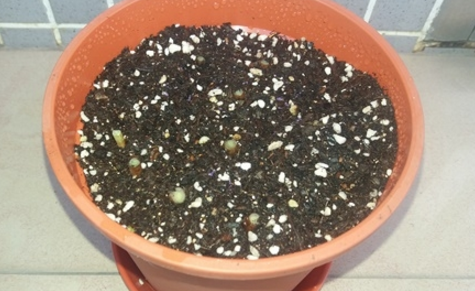
2. Soil
Society garlic needs fertile soil for growth. For cultivating society garlic, you can use nutrient-rich potting soil so that it grows more vigorously.
3. Sowing
Before sowing, immerse the pot filled with potting soil in water so that water slowly seeps into the potting soil through the bottom of the pot. Be careful not to let in too much water. Then scatter the seeds evenly over the surface of the soil, cover with a thin layer of soil, and keep it in a cool place for care. They will sprout within one month.
How do you grow society garlic? Society garlic growing techniques
[Frequently Asked Questions]How do you grow society garlic? Society garlic growing techniques
[Editor's answer]Society garlic (Tulbaghia violacea) is a perennial herbaceous plant in the Amaryllidaceae family and a bulbous flower. Because of its beautiful appearance, it can be used for ornamental purposes and is also edible, making it popular with many people. So how do we grow society garlic? Let the editor introduce the growing methods for society garlic.
Figure 1: Society garlic
I. Soil
Society garlic is not strict about soil and tolerates poor soil, but it grows best in fertile, well-drained sandy soil. For potted society garlic, the potting soil should preferably be mixed with leaf mold, sandy soil, and garden soil in a 1:1:1 ratio, and the bottom of the pot should be given sufficient fully decomposed compost and a small amount of bone meal as a base fertilizer.
II. Light and temperature
Society garlic is suitable for full sun to partial sun light conditions, but should not be shaded. Society garlic likes high temperatures and tolerates heat. The suitable growing temperature is 24-30°C.
Figure 2: Society garlic
III. Fertilizing
Society garlic is suited to nitrogen fertilizer, with soybean cake, rapeseed cake, farmyard compost, and nitrogen-phosphorus-potassium compound fertilizer being best. During the growing period of society garlic, loosen the soil and weed frequently, and carry out intertillage together with watering and fertilizing. Generally, apply diluted liquid fertilizer 2-3 times during the growing period to promote the growth and development of the seedlings. When flower buds are about to form and bloom, apply phosphorus and potassium fertilizer 1-2 times to ensure the seedlings have sufficient nutrition during the bud and flowering stages. This not only makes the flowers larger and more vividly colored, but also promotes the development of the bulbs.
IV. Watering
For society garlic, watering only needs to keep the potting soil moist, but during the peak growing season and in dry weather it should be watered appropriately and more frequently, and water should often be sprinkled around the flower pot to increase air humidity. The potting soil should not be too wet, otherwise the bulbs rot easily.
Figure 3: Society garlic
V. Repotting
Potted society garlic should be repotted once a year, replacing it with new potting soil and base fertilizer. In addition, during the growing period, the flower pot should be turned once a week. Otherwise the plant tends to grow lopsided, affecting its appearance.
VI. Pruning
To make the bulbs plump, spent flowers should be cut off promptly after blooming to reduce nutrient consumption. For large-scale planting, pay attention to ventilation and appropriate shading. If planting on a small scale or in pots, for ornamental varieties with many flowers and slender, weak stems, set up supports to prevent the flower stems from breaking.
Figure 4: Society garlic
[Editor's summary]Society garlic is also called xiebai, wild small garlic, and so on. It has a warming and tonifying effect. Regular consumption can strengthen the spleen and stimulate appetite, aid digestion, cut greasiness, and promote appetite. It is very good for the elderly and children. Keeping some society garlic at home lets you both enjoy it ornamentally and use it as food, so it can be said to be very good indeed.
Society garlic Tulbaghia violacea Society garlic illustrated guide: how to grow society garlic / how to propagate society garlic
Society garlic profileSociety garlic Tulbaghia violacea
Aliases: society garlic, foreign chive, foreign chives, wild garlic, African small lily
Classification: bulbous flower
Family and genus: Plantae, Angiosperms, Monocotyledoneae, Liliales, Amaryllidaceae, Tulbaghia
Peak flowering period: summer
Society garlic is a perennial herbaceous plant in the Amaryllidaceae family, a bulbous flower, with a plant height of 30-50 cm, bearing small cylindrical bulbs, and forming clumps as mature plants. Apart from the flower color being different from Chinese chives (Chinese chives generally have white flowers, while this flower is purple), its other characteristics are similar to Chinese chives, and the whole plant has a strong chive scent and can be eaten like Chinese chives, whether stir-fried, served cold, or made into soup, so it is also called foreign chive and foreign chives. The terminal umbel bears small purple-pink flowers. Society garlic has verdant foliage and pretty flowers with fleshy petals and a long flowering period, making it a rare flower in summer; it is suitable as a mid-border plant in flower borders, ...
Society garlic growing methods and precautions Introduction to society garlic
Society garlic is a perennial herbaceous plant in the Amaryllidaceae family, a bulbous flower, with a plant height of 30-50 cm, bearing small cylindrical bulbs, and forming clumps as mature plants.
Apart from the flower color being different from Chinese chives (Chinese chives generally have white flowers, while this flower is purple), the other characteristics of society garlic are similar to Chinese chives, and the whole plant has a strong chive scent and can be eaten like Chinese chives, whether stir-fried, served cold, or made into soup, so it is also called foreign chive and foreign chives. The terminal umbel bears small purple-pink flowers.
Society garlic has verdant foliage and pretty flowers with fleshy petals and a long flowering period, making it a rare flower in summer; it is suitable as a mid-border plant in flower borders, or as ground cover planted at the edge of woods or in lawns. It is also a good cut flower.
Society garlic flowers from May to July, and its flower meaning is "keep in mind."
Morphological characteristics of society garlic
Society garlic is a bulbous flower, with a plant height of 30-50 cm, bearing small cylindrical bulbs, and forming clumps as mature plants.
Apart from the flower color being different from Chinese chives (Chinese chives generally have white flowers, while this flower is purple), the other characteristics of society garlic are similar to Chinese chives, and the whole plant has a strong chive scent and can be eaten like Chinese chives, whether stir-fried, served cold, or made into soup, so it is also called foreign chive and foreign chives. The terminal umbel bears small purple-pink flowers.
The bulbs of society garlic are thick and fleshy, spherical, up to 2 cm in diameter, with white membranous leaf sheaths. The leaves are mostly semi-cylindrical, slightly hollow in the center, about 30 cm long and about 5 mm wide, with leaf sheaths 5-20 cm long.
The flower stem of society garlic is upright, 30-60 cm tall, with a spherical umbel bearing many flowers, 2-5 cm in diameter. The perianth is pink, and the perianth segments are ovate-oblong, 4-5 mm long, slightly joined at the base, blunt or acute at the tip, with a purplish-red keel; the stamens are longer than the perianth and inserted at the base of the perianth, with the lower part of the filaments flat and broad and slightly united at the base; the style is exposed; the stigma is small and not divided. Bulbous flower, plant height 30-50 cm, with small cylindrical bulbs, forming clumps as mature plants.
Both stems and leaves contain a chive flavor. The terminal umbel bears small purple-pink flowers. The fruit is a triangular capsule containing flat, hard black seeds.
Society garlic flowers from May to July.
Ecological habits of society garlic
Society garlic likes light. Full sun or partial sun is ideal for cultivation, but it should not be shaded. It likes high temperatures and tolerates heat. The suitable growing temperature is 24-30°C.
Society garlic is not strict about soil and tolerates poor soil, but blooms vigorously in fertile, well-drained sandy loam or loam.
Cultivation techniques for society garlic: field management
Soil
For growing society garlic, the soil should preferably be mixed with leaf mold, sandy soil, and garden soil in a 1:1:1 ratio, and the bottom of the pot should be given sufficient fully decomposed compost and a small amount of bone meal as a base fertilizer.
Fertilizing
Generally, apply diluted liquid fertilizer 2-3 times during the growing period to promote the growth and development of the seedlings. When flower buds are about to form and bloom, apply phosphorus and potassium fertilizer 1-2 times to ensure the seedlings have sufficient nutrition during the bud and flowering stages. This not only makes the flowers larger and more vividly colored, but also promotes the development of the bulbs. For large-scale planting, pay attention to ventilation and appropriate shading. If planting on a small scale or in pots, for ornamental varieties with many flowers and slender, weak stems, set up supports to prevent the flower stems from breaking.
Watering
For society garlic, watering only needs to keep the potting soil moist, but during the peak growing season and in dry weather it should be watered appropriately and more frequently, and water should often be sprinkled around the flower pot to increase air humidity. The potting soil should not be too wet, otherwise the bulbs rot easily.
Propagation methods for society garlic: scale propagation
That is, using scale cuttings to produce daughter bulbs. First select high-quality society garlic with large bulbs, good color, and intact with no pests or diseases as the stock. First use a bamboo knife to cut off the base of the bulb so the scales separate, then plant them in a seedbed of sunny sandy soil between September and October. Open furrows 10 cm deep, with row spacing of 30 cm and plant spacing of 35 cm, bury the scales in the furrows, cover with 4 cm of soil, and press lightly after burying. In the following spring, take out the scales and plant them again as propagation scales. When planting, the concave side of the scale can face downward, otherwise it is not easy for seedlings to emerge.
Bulb propagation
Also called division propagation. When harvesting society garlic in September-October, separate and collect the small bulbs beside the mother bulb and store them as propagation bulbs, mixing them with moist sand for storage. Take them out for planting in mid-April of the following year. When planting, the depth is 10-15 cm, and they sprout and emerge in 20-25 days. Larger bulbs can bloom in the same year, while smaller ones take 2-3 years of growing to bloom. There is also soilless seedling raising, in which the removed small bulbs are placed in a wooden box in a greenhouse, with a suitable temperature of 18°C-20°C. In this way, small lily seedlings can grow in 3-4 months and can be planted in March-April of the following year.
Bulbil propagation
Small bulbils grow in the leaf axils. After the flowers fade and before the bulbils fall off, collect the bulbils and plant them in the nursery. After one year they can form small bulbs and grow leaf buds, and after 2-3 years they can bloom. Sowing propagation is also possible, but because the seedlings grown from seeds grow slowly, it is mostly not used unless propagating on a large scale. There are 4 propagation methods: sowing, dividing small bulbs, scale cuttings, and dividing bulbils. You can choose any one according to your needs.
Sowing propagation
Sowing is sexual propagation, mainly used in breeding. Collect seeds in autumn and store them until the following spring for sowing. They germinate about 20-30 days after sowing. During the seedling stage, provide appropriate shade. In autumn, the underground part has already formed small bulbs, which can be dug out and planted separately. Depending on the species, some seed-grown seedlings bloom in 3 years, while others need many years of growing before they bloom. Therefore, this method is not suitable for home use.
Disease control for society garlic: mosaic disease
This disease is also called latent mosaic disease. When it occurs, leaves show uneven chlorotic spots or dead spots of varying depth. Affected plants are stunted, leaf margins curl, and leaves become smaller. Sometimes spindle-shaped light brown spots appear on the petals, the flowers are deformed, and they do not open easily.
Control methods: select virus-free bulbs to keep for seed; strengthen control of aphids and leafhoppers; promptly pull out and destroy diseased plants when found.
Leaf spot disease
When this disease first appears, small faded spots appear on the leaves, which after expanding become brown spots with dark brown edges. Later, many small black dots form in the center of the spots. In severe cases, the entire leaf area turns black and dies.
Control methods: remove diseased leaves and spray once with a 500-fold dilution of 65% zineb wettable powder to prevent spread.
Bulb rot
After onset, brown spots appear on the bulbs, and finally the entire bulb becomes brown and rots.
Control methods: in the early stage of the disease, drench with a 300-fold solution of 50% amobam.
Distribution area of society garlic
Society garlic is native to South Africa. There is large-scale introduction and planting in the Jiangsu area of China.
Uses and purposes of society garlic: ornamental value
Society garlic has verdant foliage and pretty flowers with fleshy petals and a long flowering period, giving it a certain ornamental value. It is suitable for courtyard planting, potting, or cut flowers.
Food therapy or medicinal value of society garlic
The medical information and health food therapy information on Huahu.com is for reference only and cannot be used as a basis for diagnosis or medical treatment. For any health problem, consult professional medical staff, and for the treatment of any disease, follow a doctor's advice.
Ultimate flower-care mission: to love yourself, start from reality and follow a doctor's advice. For illness, do not be careless, do not delay, do not give up hope, face it bravely, warm the silent world with love, and care for the flower field in your heart with care.
Medicinal value
Li Shizhen said: "Its roots are suitable for boiling, preserving in wine lees, and soaking in vinegar." The root is white and used medicinally, called zhanbai. Food nature and flavor: pungent, bitter, warm, slippery, non-toxic.
Main indications: chest impediment and heart pain, red and white dysentery. The qi and flavor of xie resemble garlic, hence the name wild garlic; the root is white, hence it is also called xiebai, used in traditional Chinese medicine.
Landscape uses of society garlic
Society garlic has verdant foliage and pretty flowers with fleshy petals and a long flowering period, making it a rare flower in summer; it is suitable as a mid-border plant in flower borders, or as ground cover planted at the edge of woods or in lawns.
The flower meaning of society garlic
The flower meaning of society garlic: keep in mind.
Society garlic pictures