What are the solutions for yellowing plant leaves?
Supplement light
Variegated greater periwinkle loves light, and only with sufficient sunlight will it grow vigorously.
Pay attention to soil
Choose a soil that greater periwinkle likes, a loose sandy soil, to grow greater periwinkle, so that its growth needs are met and yellowing leaves do not appear.
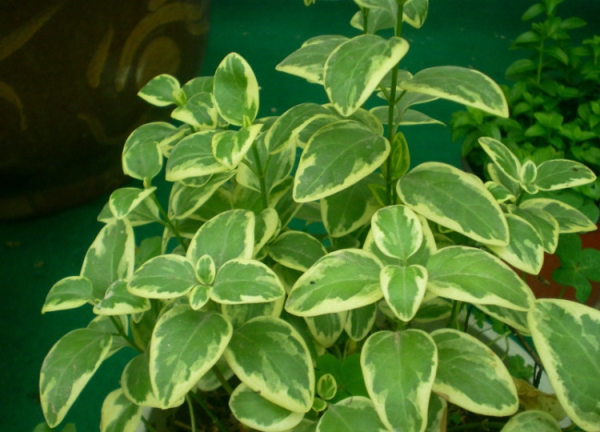
Control watering
Strictly control watering; it is best to water when the potting soil is dry, and water thoroughly. During its growing period, keep the soil moist.
Fertilize reasonably
Strictly determine the amount and frequency of fertilization according to the growth condition of greater periwinkle.
Is everyone clear now about the reasons for variegated greater periwinkle leaves turning yellow? During cultivation, be sure to provide sufficient light!
Reasons for yellowing leaves of pothos, solutions for yellowing leaves of pothos
Pothos is a typical foliage plant. Its leaves are emerald green, and it has a very good decorative effect when placed indoors. Pothos is also often placed in offices to soothe tense nerves and rest tired eyes. But many owners have found yellowing pothos leaves while growing pothos indoors. So why do pothos leaves turn yellow, and what should be done when pothos leaves turn yellow? Today the editor will introduce to everyone the reasons for yellowing pothos leaves and the solutions for yellowing pothos leaves.
I. Main reasons for yellowing pothos leaves:
Overall, when pothos leaves turn yellow, if it is grown in water, it is mostly because there are bacteria in the water; if it is grown in soil, then the roots may be rotting.
Relatively speaking, water-cultured pothos is more likely to develop yellow leaves than soil-cultured pothos. The specific factors for yellowing pothos leaves mainly include three aspects: improper watering, imbalanced light, and incorrect fertilization. Below, the editor will analyze in detail the conditions of the three major factors that cause yellowing pothos leaves.
1. Improper watering: Too much or too little watering can cause water-yellowing in pothos. If the leaf surface is dull yellow and lusterless, and newly grown tips shrink and stop growing, it may be due to overwatering. But if the leaf tips or edges become withered and dry, new leaves grow normally, while old leaves turn withered yellow and fall off, then it is due to insufficient watering.
Remove yellow leaves promptly when found
2. Sunlight: Pothos likes shade. Strong light exposure will cause the leaf tips and leaf margins of the plant to wither, and yellow spots will appear on the sun-facing parts of the leaves. On the contrary, if placed in a dark environment for a long time, the leaves cannot get enough sunlight and cannot form chlorophyll, which will also cause pothos leaves to turn yellow, so light should be supplemented promptly.
3. Fertilizer yellowing: Too much fertilization, too high concentration, or not being short of fertilizer can all cause pothos leaves to turn yellow. When there is too much fertilization, the pothos leaf surface is thick and lusterless, and the leaf surface looks cramped, with old leaves turning yellow and falling off; this can be reduced by flushing to reduce fertilizer. When fertilizer is lacking, the leaf surface color becomes lighter, appearing pale green or yellow, and fertilizer should be supplemented promptly; in severe cases, the potting soil should be changed.
II. Solutions for yellowing pothos leaves:
Once the problem is known, finding a solution is easy. As long as you prescribe the right remedy according to the actual cause of the yellowing pothos leaves and correct the cultivation
methods, pothos will regain its luster.
The solutions for yellowing pothos leaves should be adjusted in good time according to the cause of the yellowing. Because pothos can be propagated by cuttings, each node of its stem
has a leaf bud. Simply take one node for planting and it can grow. So when the leaves of cultivated pothos turn yellow severely, you can remove the rotten roots, pick off the yellow leaves, and replant cuttings. Note that when growing in water, change to fresh water. You can also cut off vines whose leaves have not yet turned yellow and replant them. During the cutting and planting process, bury two to three nodes; for water culture it is also two to three nodes, and change the water once every three to four days (cool boiled water is best). Just after planting, do not expose it to direct strong light; place it in a position with weaker light, and in about 20 days the newly planted pothos will take root and grow.
That is all for the discussion of the problem of yellowing pothos leaves. In summary, it comes down to three factors: light, water, and fertilization. As long as it is cared for properly, the easygoing pothos will not develop yellowing leaves. For leaves that have already turned yellow, remember to cut them off promptly.
Main reasons for yellowing pothos leaves. Solutions for yellowing pothos leaves
Many people like to grow pothos indoors. This plant is very suitable for indoor cultivation and is also very attractive, but during pothos cultivation, yellowing leaves are relatively likely to occur. So do you know the main reasons for yellowing pothos leaves and the solutions for yellowing pothos leaves?
I. Main reasons for yellowing pothos leaves
Overall, when pothos leaves turn yellow, if it is grown in water, it is mostly because there are bacteria in the water; if it is grown in soil, then the roots may be rotting. Relatively speaking, water-cultured pothos is more likely to develop yellow leaves than soil-cultured pothos. The specific factors for yellowing pothos leaves mainly include three aspects: improper watering, imbalanced light, and incorrect fertilization. Below, the editor will analyze in detail the conditions of the three major factors that cause yellowing pothos leaves.
1. Improper watering: Too much or too little watering can cause water-yellowing in pothos. If the leaf surface is dull yellow and lusterless, and newly grown tips shrink and stop growing, it may be due to overwatering. But if the leaf tips or edges become withered and dry, new leaves grow normally, while old leaves turn withered yellow and fall off, then it is due to insufficient watering.
2. Sunlight: Pothos likes shade. Strong light exposure will cause the leaf tips and leaf margins of the plant to wither, and yellow spots will appear on the sun-facing parts of the leaves. On the contrary, if placed in a dark environment for a long time, the leaves cannot get enough sunlight and cannot form chlorophyll, which will also cause pothos leaves to turn yellow, so light should be supplemented promptly.
3. Fertilizer yellowing: Too much fertilization, too high concentration, or not being short of fertilizer can all cause pothos leaves to turn yellow. When there is too much fertilization, the pothos leaf surface is thick and lusterless, and the leaf surface looks cramped, with old leaves turning yellow and falling off; this can be reduced by flushing to reduce fertilizer. When fertilizer is lacking, the leaf surface color becomes lighter, appearing pale green or yellow, and fertilizer should be supplemented promptly; in severe cases, the potting soil should be changed.
II. Solutions for yellowing pothos leaves
The solutions for yellowing pothos leaves should be adjusted in good time according to the cause of the yellowing. Because pothos can be propagated by cuttings, each node of its stem has a leaf bud. Simply take one node for planting and it can grow. So when the leaves of cultivated pothos turn yellow severely, you can remove the rotten roots, pick off the yellow leaves, and replant cuttings. Note that when growing in water, change to fresh water. You can also cut off vines whose leaves have not yet turned yellow and replant them. During the cutting and planting process, bury two to three nodes; for water culture it is also two to three nodes, and change the water once every three to four days (cool boiled water is best). Just after planting, do not expose it to direct strong light; place it in a position with weaker light, and in about 20 days the newly planted pothos will take root and grow.
The above is the related introduction in this article. I believe that after reading it you also have a simple understanding of this. If needed, you can continue to follow No. 1 Home Network to learn more information.