How to grow Chinese glossy privet? A detailed guide to Chinese glossy privet cultivation methods
1. Container
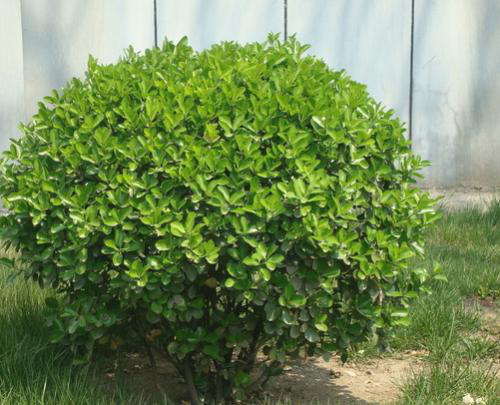
Chinese glossy privet is a large shrub, so when growing it as a potted plant, try to choose a somewhat larger flower pot; a purple clay pot or a ceramic pot will do. It is best to choose according to the shape of the Chinese glossy privet; a suitable pot can make the Chinese glossy privet and the container complement each other even better.
2. Potting soil
Chinese glossy privet has a well-developed root system and strong growth adaptability, and can adapt to all kinds of soil. As long as the soil is loose, fertile and rich in humus, it can meet the normal growth needs of Chinese glossy privet.
3. Watering
During the growing season of Chinese glossy privet, it should be watered frequently to maintain sufficient moisture, because Chinese glossy privet likes a humid growing environment. Watering should be done generously and thoroughly, and the area around the pot should also be kept moist. A lack of water will cause the branches and leaves of Chinese glossy privet to shrivel and turn yellow, seriously affecting its ornamental value.
4. Fertilizing
When repotting Chinese glossy privet, apply some base fertilizer. During the growing season, apply light fertilizer frequently. In spring and autumn, apply cake-water fertilizer twice each season to provide sufficient nutrients for the growth of Chinese glossy privet and promote growth.
5. Light
Chinese glossy privet likes light, so it should usually be placed on a balcony or in a sunny spot outdoors, but remember not to let strong light shine on it directly. Giving Chinese glossy privet appropriate shade will allow more greenery to burst forth.
Well, the above is an introduction to the daily cultivation methods of Chinese glossy privet. Next, let us look at the matters needing attention during the cultivation of Chinese glossy privet.
Cultivation methods of Chinese glossy privet
1. Seed collection: Chinese glossy privet blooms from April to May, and the seeds mature from November to December. When mature, the fruit skin is black. It should be harvested in good time. After the fruit matures, it does not fall off on its own. You can use long-reach pruners to cut off the fruit clusters, strip off the fruit, soak the fruit in water, rub off the fruit skin, wash clean, and dry in the shade. If not sown immediately, it can be bagged and stored dry, or stored mixed with 2 parts wet sand and 1 part seeds.
2. Raising seedlings: Chinese glossy privet can be propagated by two methods, sowing and cuttings, and sowing for seedling raising is more common. Sowing for seedling raising Sow from early March to mid-April. The soil requirements for the nursery site are not strict; as long as it is loose and fertile, it is fine. Before sowing, soak the peeled seeds in warm water for 1 day to 2 days, then sow, in drills or broadcast. The row spacing for drilling is 20 cm, the soil covering is 1.5 cm to 2 cm, and the sowing rate is about 7 kg per mu. Because Chinese glossy privet takes a long time to emerge, about 1 month, it is best to cover the seedbed surface with grass after sowing to preserve moisture. After the seedlings emerge, loosen the soil and weed in good time, and thin the seedlings when they are 5 cm tall. The seedlings are afraid of waterlogging, so pay attention to drainage, but they should also be irrigated when it is excessively dry. Apply topdressing 1 to 2 times according to conventional management. Weed once a month. One-year-old seedlings can reach 50 cm in height. If growing large seedlings, they need to be transplanted to another bed and can leave the nursery after 2 to 4 years.
Cultivation methods and precautions for Chinese glossy privet
Chinese scientific name: NüzhenLatin scientific name: Ligustrum lucidum Ait.Other names: Chinese wax tree, wintergreen, wax tree, nüzhen, zhenmu, general treeKingdom: PlantaePhylum: AngiospermsClass: DicotyledoneaeSubclass: SympetalaeOrder: ContortaeSuborder: OleineaeFamily: OleaceaeSubfamily: OleoideaeTribe: OleaeGenus: LigustrumSpecies: Ligustrum lucidumDistribution area: forests and valleys in China, South Korea and JapanEnglish name: Chinese Glossy PrivetChinese glossy privet (scientific name: Ligustrum lucidum), also known as wintergreen and others, is an evergreen shrub or tree of the genus Ligustrum in the family Oleaceae, reaching up to 25 m in height; the bark is grayish brown. The branches are yellowish brown, gray or purplish red, cylindrical, and sparsely covered with round or oblong lenticels. Chinese glossy privet is a subtropical tree species, with dense branches and leaves and a neat tree form. It is a commonly used ornamental tree species and can be planted alone or in groups in courtyards, as street trees, hedges, and so on. Chinese glossy privet is native to China and is widely distributed in the Yangtze River basin and areas to the south, and is also cultivated in North China and Northwest China. It can withstand low temperatures of about -10°C and is a native tree species widely used in landscaping. It is mainly distributed in Jiangsu and Zhejiang, Jiangxi, Anhui, Shandong, Sichuan and Guizhou, Hubei and Hunan, Guangdong and Guangxi, Fujian, and other places. It is propagated by sowing, cuttings and layering. The leaves can be distilled to extract wintergreen oil, which is used as an additive in sweet foods and toothpaste, and so on. The mature fruit is sun-dried to become the traditional Chinese medicine Nüzhenzi. It is cool in nature and sweet-bitter in taste, and can improve eyesight, darken hair, and tonify the liver and kidneys.1. Morphological characteristics
The leaves are evergreen, leathery, ovate, long-ovate or elliptic to broadly elliptic, 6-17 cm long and 3-8 cm wide, the apex acute to acuminate or obtuse, the base rounded or nearly rounded, sometimes broadly cuneate or gradually narrowed, the leaf margin flat, the upper surface shiny, both surfaces hairless, the midvein sunken above and raised below, the lateral veins 4-9 pairs, slightly raised on both surfaces or sometimes inconspicuous; the petiole 1-3 cm long, grooved above, hairless. The panicle is terminal, 8-20 cm long and 8-25 cm wide; the peduncle 0-3 cm long; the inflorescence axis and branch axes hairless, purple or yellow-brown, the fruit ridged; the bracts at the base of the inflorescence are often the same type as the leaves, the bracteoles lanceolate or linear, 0.5-6 cm long and 0.2-1.5 cm wide, deciduous; the flowers sessile or nearly sessile, not more than 1 mm long; the calyx hairless, 1.5-2 mm long, the teeth inconspicuous or nearly truncate; the corolla 4-5 mm long, the corolla tube 1.5-3 mm long, the lobes 2-2.5 mm long, reflexed; the filaments 1.5-3 mm long, the anthers oblong, 1-1.5 mm long; the style 1.5-2 mm long, the stigma club-shaped.The fruit is kidney-shaped or nearly kidney-shaped, 7-10 mm long and 4-6 mm in diameter, dark blue-black, turning red-black when mature, covered with white powder; the fruit stalk 0-5 mm long. The flowering period is May to July, and the fruiting period is July to May of the following year.
2. Growth habits
Chinese glossy privet has good cold resistance and resistance to waterlogging, likes a warm and humid climate, and likes light and tolerates shade. It is a deep-rooted tree species with well-developed fibrous roots, fast growth, strong sprouting ability, and tolerance to pruning, but it is not tolerant of barren soil. It has strong resistance to air pollution and strong resistance to sulfur dioxide, chlorine gas, hydrogen fluoride and lead vapor, and can also tolerate relatively high dust and smoke pollution. It has no strict requirements for soil and is best cultivated in sandy loam or clay loam, and can also grow in red and yellow loam soils. It grows in sparse and dense forests below 2,900 m above sea level. It has no strict requirements for climate and can withstand low temperatures of -12°C, but it is suitable for planting in moist, sheltered and sunny places, especially growing well in deep, fertile soil with high humus content. Chinese glossy privet is quite sensitive to highly toxic mercury vapor. Once exposed to it, the leaves, stems, corolla, pedicels and young buds will turn brown or black, and in severe cases the leaves and buds will drop. Chinese glossy privet can also absorb highly toxic hydrogen fluoride, sulfur dioxide and chlorine gas, and so on.3. Origin and distribution
Produced from south of the Yangtze River to the provinces and regions of South China and Southwest China, and extending northwest to Shaanxi and Gansu. It is also distributed in Korea, and cultivated in India and Nepal.4. Cultivation techniques
Propagation by sowing
Choose loam, sandy loam or light clay with shelter from wind and sun, fertile soil, convenient irrigation and drainage, and a deep plow layer for sowing. After applying base fertilizer, plow carefully and harrow finely so that the upper layer is loose and the lower layer is compact, and the land is level. The base fertilizer is mainly manure; applying more base fertilizer helps raise soil temperature, maintain soil moisture, and promote seed water absorption and germination. Use 50% phoxim emulsifiable concentrate at 6.0-7.5 L/hm2 plus 45 kg of fine soil, mix well, spread evenly on the ground surface before plowing, and bury it into the soil during land preparation to kill underground pests. The bed surface should be leveled.The seeds of Chinese glossy privet mature from November to December. After the seeds mature, they are often covered with a waxy white powder and should be harvested in good time. Choose trees with strong vigor, good tree form and strong resistance as mother trees for seed collection. You can use long-reach pruners to cut off the fruit clusters, strip off the fruit, soak them in water for 5-7 d, rub off the fruit skin, wash clean, and dry in the shade. You can use 2 parts wet sand and 1 part seeds for wet storage. In late March to early April of the following spring, soak the seeds in hot water, take them out and keep them moist for 4-5 d before sowing.
Winter sowing is carried out before the ground freezes, and generally does not require pregermination. Spring sowing is carried out after the thaw, and pregermination has a notable effect. To break the dormancy of Chinese glossy privet seeds, before sowing first soak the seeds in a 550 mg/kg gibberellin solution for 48 h, changing the water once a day, then take them out and dry them in the shade. After leaving them for 3-5 d, place them under conditions of 25-30°C and soak them in water to promote germination, taking care to change the water every day. For sowing and seedling raising, sow from early to mid-March to April. Before sowing, soak the peeled seeds in warm water for 1 day, use drilling with a row spacing of 20 cm, and cover with soil 1.5-2.0 cm thick. The sowing rate is about 105 kg/hm2. Chinese glossy privet takes a long time to emerge, about 1 month. After sowing, it is best to cover the seedbed surface with grass to preserve moisture.
Field management
After the seedlings emerge, loosen the soil and weed in good time, and thin the seedlings. Under conventional management, one-year-old seedlings can reach 50 cm in height. Chinese glossy privet is a plant that tends to like moisture, but too much water can easily cause disease, so water must be strictly controlled. Water should be sprayed every day to meet the needs of Chinese glossy privet for its growing environment. Spraying can be done using sprinkler irrigation facilities, which can both ensure the area over which water is dispersed, maintain ground humidity well, and reasonably control water so that it is not excessive. The best time for spraying is 8:00-10:00 or 16:00-18:00 each day. The seedlings are afraid of waterlogging, so pay attention to drainage. Chinese glossy privet does not need much fertilizer during the seedling stage. It is enough to appropriately apply foliar fertilizer. Water-soluble chemical fertilizer can be chosen, mixed at 5 g per 2 kg of water for spraying. The best time is 16:00-18:00, with the standard being to spray the leaves completely once. Do this once every 15 d.When the light is particularly strong, use a shade net to avoid the high temperature brought by strong light and its effect on the growth rate of the seedlings. Generally, weed once a month, and be extra careful when weeding to avoid damaging the roots of the plants. During the seedling stage, the plants are easily attacked by aphids. For aphids, prevention is the main approach. You can spray with a 800-fold dilution of omethoate, and the time can be chosen at 8:00-10:00 or after 16:00, with the dosage standard being to spray the leaves completely once.
Transplanting and pruning
The first is transplant pruning. When transplanting in the nursery, cut back the trunk by 1/3. Below the cut, only 1 strong bud may be retained to develop into the extended trunk shoot; the other bud opposite it must be removed. In order to prevent the production of competing shoots at the top, the 1st and 2nd pairs of buds below the cut should also be destroyed. The second is planting pruning. Before planting, cut back the current-year extended shoot of the central trunk of large seedlings by 1/3, retain a strong bud at the cut bud, and at the same time remove 1 bud from the 1st pair of buds below the cut. This ensures the apical dominance of the retained bud. In order to prevent competing shoots from forming at the top, destroy the 2nd to 3rd pairs of axillary buds below the cut. For the other branches located on the lower and middle parts of the central trunk, select and retain 3-4 main branches (determined by trunk height) that are spaced at a certain interval and staggered from one another. Each main branch should be cut back, retaining the lower bud and removing the upper bud, so as to expand the crown and maintain ventilation and light penetration within the crown. The remaining thin and weak branches can be left unpruned to support the growth of the trunk. Summer pruning mainly consists of cutting back the competing shoots on the central trunk to continuously weaken their growth vigor, while also cutting off the sprouting branches on the trunk and roots. In the second year's winter pruning, the extended shoot of the central trunk should still be cut back. However, the direction of the retained buds should be opposite to that of the first year. If competing shoots appear on the upper part of the central trunk, they should be cut back or headed back in good time to weaken their growth vigor.Pests and diseases
Diseases include rust disease and damping-off disease.5. Main value
Landscape use
Chinese glossy privet is graceful in all four seasons, with spreading branches and a lush canopy, dense branches and leaves, and a neat tree form. It is a commonly used ornamental tree species in gardens and can be planted alone or in groups in courtyards, and also used as a street tree. Because of its strong adaptability, fast growth and tolerance to pruning, it is also used as a hedge. Generally, after 3-4 years it can take shape and achieve a screening effect. Its propagation by sowing and seedling raising is easy, and it can also be used as a rootstock for grafting and propagating osmanthus, lilac, and the colored-leaf plant golden privet.Medicinal value
The fruit of Chinese glossy privet is used medicinally. The mature fruit is harvested and sun-dried, or blanched in hot water and then sun-dried, and is called Nüzhenzi in traditional Chinese medicine. It is cool in nature and sweet and bitter in taste. It has the effects of nourishing the liver and kidneys, strengthening the waist and knees, and darkening the hair and improving eyesight. It is used for symptoms such as dizziness and tinnitus, soreness and weakness of the waist and knees, premature graying of hair and beard, blurred vision, tinnitus and deafness, premature graying of hair and beard, and loose teeth.After the leaves of Chinese glossy privet are soaked for 24 hours, the fragrant wintergreen oil can be extracted by distillation. It is often added to sweet foods and toothpaste. Wintergreen oil is easily absorbed by the skin. It has astringent, diuretic and stimulant effects, and can be used to treat muscle pain.