What are the precautions for growing Plumbago auriculata
Plumbago auriculata grows on small hillsides and flat ground. It likes warmth and cannot tolerate cold. In North China and other temperate regions, it can be cultivated as a flowering plant. The suitable growth temperature is 25°C. It likes light, but should not be exposed to scorching sun. In summer, pay attention to providing appropriate shade. It requires a humid environment; dryness is bad for its growth, and it is not drought-tolerant. It is best grown in sandy loam rich in humus with good drainage.
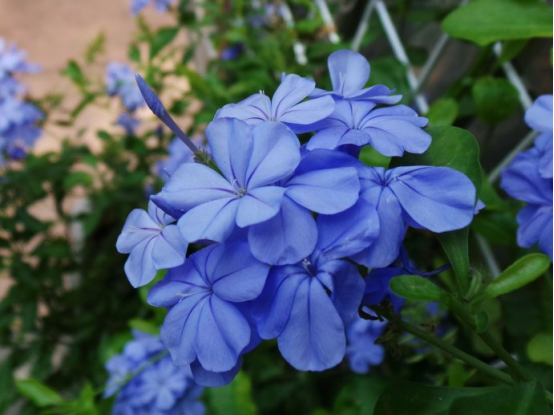
After reading this article, hasn't Plumbago auriculata captured your heart? Hurry and plant a few Plumbago auriculata! After successfully growing them, you might as well try the several propagation methods introduced above. I believe you will surely succeed!
How to grow Plumbago auriculata and precautions
How to grow Plumbago auriculata
Temperature and light
Plumbago auriculata likes a warm environment with plenty of light and is not cold-tolerant. The suitable temperature for growth is between 17°C and 25°C. In summer it should not exceed 35°C, and the overwintering temperature in winter should be above 7°C. Plumbago auriculata likes sunlight and is fairly shade-tolerant, and it should receive sufficient sunlight every day. However, do not expose it to strong sunlight in summer; note that it can be slightly shaded, and in winter make sure there is sufficient light.
Watering and fertilizing
During vigorous growth, Plumbago auriculata needs plenty of water. When temperatures are high, ensure air humidity and spray water on the plant. In summer the water demand is high, so you can water it every day and replenish moisture promptly. Water thoroughly when watering. In winter reduce watering, or even stop watering.
During the growth period, Plumbago auriculata needs plenty of water and fertilizer. In the spring and summer growing seasons, fertilize once a week. Liquid fertilizer is best. During the bud stage, you can also spray some flower fertilizer to make the flowers more colorful and extend the flowering period.
Soil and repotting
Plumbago auriculata should be repotted in spring. When repotting, choose sandy soil with good drainage. Take the plant out, prune it appropriately, and then repot it in fresh soil.
Precautions for growing Plumbago auriculata
Propagation methods
Plumbago auriculata is mainly propagated by cuttings, carried out in spring or summer.
As Plumbago auriculata grows into a mature plant, it needs to be pinched 2 to 3 times. Pinching can delay the flowering period by about 2 weeks.
Pests and diseases
Plumbago auriculata is susceptible to root-knot nematodes and scale insects. It can be controlled by spraying a diluted solution of 80% dibromochloropropane emulsifiable concentrate or by spraying 25% phosmet emulsifiable concentrate at 1000 times dilution.
Pruning
In spring, prune the branches of Plumbago auriculata and cut off the weak branches. New branches growing from old stems will bloom before long. For plants more than 3 years old, cut off the old branches, and after flowering cut off the spent flowers.
How to grow Plumbago auriculata:
1. Light
Plumbago auriculata is a plant that greatly likes light and can only bloom under long-day conditions. As long as a sufficient water supply is ensured, even exposure to the scorching summer sun is completely fine. Note that when light is insufficient, the number of flowers will decrease noticeably, and the branches will become thinner and softer, resulting in leggy growth.
2. Watering
The leaves of Plumbago auriculata have very soft fuzz, and when short of water they are easily sunburned. Therefore, during cultivation, be sure to maintain a sufficient water supply. If the pot is too small and dries out too quickly, besides changing to a larger pot, you can also place a tray under the pot to hold water.
3. Fertilizing
Because Plumbago auriculata blooms all year round and produces a large number of flowers, it needs a large supply of phosphorus fertilizer for flowering.
If you want to grow Plumbago auriculata into a tall shrub or even a flower wall, choose a general-purpose fertilizer with a balanced ratio of nitrogen, phosphorus, and potassium. If you want to control the plant shape of Plumbago auriculata, choose a flowering-type fertilizer high in phosphorus and potassium.
4. Pruning
Plumbago auriculata is an especially flexible plant. Its branches are slender and soft and tolerate pruning well, so whether it is a cute little herbaceous flower or a dreamy large flower wall, it is very easy to shape. We need to promptly cut off spent flowers so the plant sends out new flowering branches faster. Cut off excess branches that exceed the size we want it to grow to, and keep shaping it continuously.