How to grow Caragana? These care points you need to master
Caragana loves light, so place it in a spot with plenty of sunshine. For the soil, it is best to choose a fertile sandy soil with good drainage.
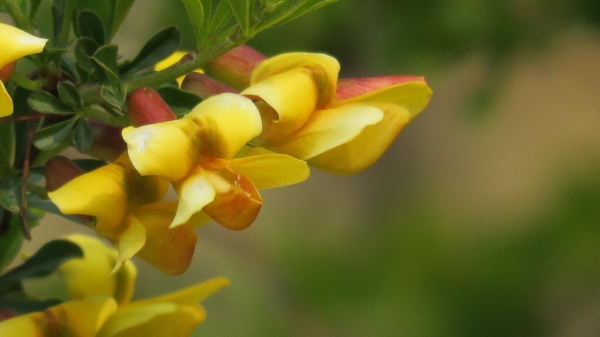
Have you learned the shaping methods for Caragana bonsai? For Caragana shaping, those with a single twisted trunk and an quaint, elegant posture are preferred, and it can also be trained into a form with branches and leaves drooping down in profusion; or with exposed roots and claws, showing its aged appearance, so as to achieve the effect of beautiful form and brilliant flowers.
Key cultivation points for Caragana
Caragana, also known as Huangque flower, Jinqui flower and so on, has more than 40 species in China. Caragana can not only be used for ornamental purposes or as a hedge, but its flowers are also edible, giving it relatively high economic value. Caragana has fairly strong adaptability and often grows on sunny hillsides and in thickets, so artificial cultivation is not very difficult.
Caragana
1. Light management
Jinque plum likes a semi-shaded environment. In autumn, winter and spring it can be given plenty of sunlight, but in summer it should be shaded by more than 50%. When keeping it indoors, place it in a spot with bright light as much as possible, such as a well-lit living room, bedroom or study. After keeping it indoors for a period (about one month), move it outdoors to a shaded spot (with cold protection conditions in winter) for a period (about one month), and alternate back and forth in this way.
2. Fertilizer and water management
For potted Jinque plum, in addition to adding organic fertilizer when potting, appropriate fertilizer and water management should also be carried out during routine care.
3. Bonsai making
Caragana is mainly produced in northern, central and eastern China, and is also distributed in the southwest. It has a very long history of being used as bonsai material.
Key care points for flowering shrubs in spring, winter and summer
Watering should be done at the right time according to changes in season and weather. In hot summer, watering around noon is most taboo, because at this time the soil temperature is high and the temperature difference with the water is large; watering at this time will cause the soil temperature to drop suddenly, and when the roots of the flowering shrub are stimulated by the low temperature, they will immediately hinder the normal absorption of water. So in hot weather, water before 10 a.m. or after 5 p.m. Conversely, in areas without frozen soil in winter, when field-grown flowering shrubs need watering in winter, it should be done around noon. In spring and autumn, it is best to water after 10 a.m. and before 4 p.m.
In the vast areas north of China's Yellow River basin, winters are cold. Before the soil freezes, cultivated flowering shrubs should all be watered thoroughly with "freezing water" to maintain soil moisture and allow the flowering shrubs to overwinter safely. In early spring, when the soil just begins to thaw, "greening water" should also be watered thoroughly in time to promote the flowering shrubs' sprouting.
What kind of water is most suitable for watering flowering shrubs? Logically speaking, it is best to be able to collect rainwater and snowmelt, especially rainwater from thunderstorms, because due to the electrochemical effect of electrical discharge, rainwater contains nitrogen that plants can absorb. However, due to environmental pollution, acid rain has appeared, and plants in areas where it occurs frequently are seriously harmed, so rainwater and snowmelt from severely polluted areas cannot be collected for watering flowers. River and pond water with severe pollution and groundwater with very high salinity are also not suitable for watering flowers. Household rice-washing water, salt water and water with grease or fishy or spicy matter cannot be used to water flowers. Under normal circumstances, using tap water or drinkable well water to water flowers is both convenient and safe.
Before using tap water or drinkable well water to water flowers, the water should be left in the sun for 1—2 days in advance. The benefits of doing this are, first, allowing the chlorine in tap water to volatilize, and second, raising the water temperature. Especially when watering indoor flowering shrubs in winter, the water temperature should be kept consistent with room temperature so that the flowering shrubs will not be harmed. For example, rhododendrons bloom during the Spring Festival, adding a festive atmosphere to the holiday, but rhododendron roots are slender and very sensitive to changes in soil temperature. If directly watered with tap water that has not been left to stand, it is prone to causing leaf drop and flower drop.
1. Requirements of flowering shrubs for soil acidity and alkalinity
What is usually called saline soil is soil containing relatively high chloride ions and sodium ions; alkaline soil is soil containing relatively high calcium ions and magnesium ions and few hydrogen ions; acidic soil is soil containing relatively high hydrogen ions and iron ions and few calcium ions and magnesium ions. The soil in northern China is mostly neutral to slightly alkaline, with some areas being saline-alkaline soil; the soil in southern China is mostly neutral to slightly acidic, with some areas being strongly acidic soil. This has a great influence on the selection and cultivation of flowering shrubs, but for potted flowering shrubs, because various special flower cultivation substrates are available on the market, the choice of flowering shrub varieties is not restricted by region.
In order to scientifically define the acidity and alkalinity of soil, the index of hydrogen ion content in soil (pH) is internationally used uniformly to express soil acidity and alkalinity. When the pH value = 7, it is neutral soil; when the pH value > 7, it is alkaline soil; when the pH value<7时为酸性土。通常,当土壤pH值>8.5 or pH value<5时,都不宜作为花木栽培的土壤。根据花木对土壤的适应性,可以分成3种花卉栽培类型:
(1) Acidic-soil flowering shrubs Such as camellia, rhododendron, Aglaia odorata, jasmine, palm, Michelia alba, kumquat, osmanthus, magnolia, Podocarpus macrophyllus, cycad, five-needle pine, croton, Dracaena fragrans and so on all belong to acidic-soil flowering shrubs. Their suitable soil pH value is 5—6.
(2) Neutral-soil flowering shrubs Most flowers can grow normally in weakly acidic to weakly alkaline soil. Their suitable soil pH value is 6—8.
(3) Alkaline-soil flowering shrubs Flowering shrubs native to North China and Northwest China can grow normally in relatively alkaline soil. Such as tamarisk, goji, Caragana, Prunus triloba, barberry, Rosa xanthina, hibiscus, Amur honeysuckle, Sabina vulgaris and so on; their tolerance for soil alkalinity is pH value 7.5—9.
2. Reasonable fertilization of flowering shrubs
Fertilization is a very important step in the process of flower cultivation and management. If you want the flowers you grow to have lush branches and leaves, brilliant flower colors and abundant fruits, you must master scientific fertilization methods.
1. Fertilize according to growth stage: Before the plant sprouts or at the early stage of leaf expansion, apply sprouting-promoting fertilizer; at this stage, fertilization should be mainly nitrogen fertilizer, supplemented by phosphorus and potassium fertilizer. From before the plant blooms to the flowering period, apply bud-promoting and flower-promoting fertilizer; at this stage, fertilization should be mainly phosphorus fertilizer. From after the plant blooms to the fruiting period, apply supplementary fertilizer; at this stage, apply compound fertilizer complete with the three elements nitrogen, phosphorus and potassium and trace elements. During the plant's dormancy or overwintering period, apply base fertilizer; combined with soil improvement measures, fertilization at this stage should be mainly organic fertilizer.
2. Fertilize according to fertilizer characteristics: At present, there are many special fertilizers for flowers on the market, and it is best for home flower growing to buy from among them, as it is both convenient and hygienic. Among inorganic fertilizers there are special fertilizers for flowers, fruits and foliage, as well as compound fertilizers. Among organic fertilizers there are decomposed poultry manure, as well as undecomposed soybean cake, sesame paste residue, horse hoof pieces and so on. Fertilization should be chosen according to different flower varieties and different growth stages. For example, flowering woody plants should be given compound fertilizer during the vegetative growth period, special flower-viewing fertilizer when entering the flowering period, and special fruit-viewing fertilizer when entering the fruiting period. Foliage woody plants should be given special foliage fertilizer.
3. Fertilize according to flower growth vigor: Different flowers need different soil environmental conditions. When environmental conditions differ greatly, the flowers will not adapt and their growth vigor will be weak. Fertilization should determine the application amount according to growth vigor. For the same variety, robust plants can be given sufficient fertilizer according to the fertilizer instructions, while weak-growing plants should have the application amount reduced as appropriate, and then gradually increased to the normal application amount. Weak-growing plants have a weak ability to absorb and tolerate fertilizer, and if the amount is too heavy, the result will be the opposite of what is desired.
In short, reasonable fertilization should follow the principles of balanced nutrient elements and the combination of organic fertilizer and inorganic fertilizer, and be applied flexibly according to the type and growth status of the flowers. At the same time, note that fertilization is not suitable when the temperature is high around noon, and do not apply concentrated fertilizer; when repotting or transplanting flowering shrubs, base fertilizer should be applied.
1234Next page